IMDb RATING
7.9/10
8.6K
YOUR RATING
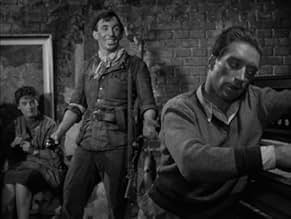
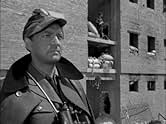
In 1944, during the Warsaw uprising against the Nazis, Polish Lieutenant Zadra and his resistance fighters use Warsaw's sewer system to escape the German encirclement.In 1944, during the Warsaw uprising against the Nazis, Polish Lieutenant Zadra and his resistance fighters use Warsaw's sewer system to escape the German encirclement.In 1944, during the Warsaw uprising against the Nazis, Polish Lieutenant Zadra and his resistance fighters use Warsaw's sewer system to escape the German encirclement.
- Director
- Writer
- Stars
- Nominated for 1 BAFTA Award
- 1 win & 2 nominations total
Vladek Sheybal
- Composer Michal
- (as Wladyslaw Sheybal)
Wlodzimierz Bednarski
- Insurgent
- (uncredited)
Zenon Dadajewski
- Insurgent
- (uncredited)
- Director
- Writer
- All cast & crew
- Production, box office & more at IMDbPro
7.98.6K
1
2
3
4
5
6
7
8
9
10
Featured reviews
It is relentless
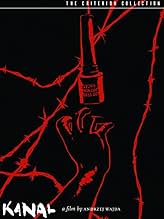
"Kanal" (Polish, 1957): This is the second of Andrzej Wajda's trilogy about WWII in Poland. I love the photography the light, the angles, the flowing camera movements. "Kanal" is about a group of resistance fighters and civilians who, out of necessity, band together to fight (what appears to be a losing battle) against the oncoming Nazis. First set in an incredibly bleak ruin of Warsaw, the story and acting only intensify as they begrudgingly try to escape through the underground sewer system. This one will take it out of you. It is relentless. It is relentless. It is relentless. It is relentless. Relentless. Relentless. Relentless. Relentless. Relentless. Relentless.
Dante in Warsaw
That this movie was made is a near miracle, since it squeaked out barely 3 years after Stalin died; and the Polish film industry could even begin to suggest that Poles could struggle against the Germans without Soviet "fraternal" help. It looks likely that it was saved from oblivion by the Silver Palm (1957), at least in Poland. My suspicion that this got past the Party censors as a Dantean allegory about the worker and peasant struggles, with each character and episode exposing some lesson. However, like Ashes and Diamonds, much of the real message is just at the surface: regular Poles struggling for a better future.
The real hidden message of the film is a metaphorical struggle against Soviet oppression. Wajda seems to suggest this by quoting Szczepanski(1944): "... But know this: from our tombstones A victorious new Poland will be born And you will not walk this land You Red Ruler of bestial forces!" (1) Indeed the resolution suggests the Stalinist Inferno is far from over. Those who have tried to bring light to the world suffer a Promethean fate.
What seems remarkable to me is the positive spirit, humor, and love of life that most of the characters display in the face of their passage into the underworld. There is additional irony (humorous to me), for example, that the composer attempts to play a particularly patriotic Chopin, but is then ordered to play "something with feeling:" an inane dance tune. (By the way, the Beckstein piano that the composer tries to protect was made by a company that provided Hitler with crucial early support.)
It is also remarkable that such a dark, almost anti-heroic view of combatants was made only 12 years after the event. It is not so far from the spirit of Ernie Pyle, and just think how long it took to make Band of Brothers.
(1) Interview on www.wajda.pl
The real hidden message of the film is a metaphorical struggle against Soviet oppression. Wajda seems to suggest this by quoting Szczepanski(1944): "... But know this: from our tombstones A victorious new Poland will be born And you will not walk this land You Red Ruler of bestial forces!" (1) Indeed the resolution suggests the Stalinist Inferno is far from over. Those who have tried to bring light to the world suffer a Promethean fate.
What seems remarkable to me is the positive spirit, humor, and love of life that most of the characters display in the face of their passage into the underworld. There is additional irony (humorous to me), for example, that the composer attempts to play a particularly patriotic Chopin, but is then ordered to play "something with feeling:" an inane dance tune. (By the way, the Beckstein piano that the composer tries to protect was made by a company that provided Hitler with crucial early support.)
It is also remarkable that such a dark, almost anti-heroic view of combatants was made only 12 years after the event. It is not so far from the spirit of Ernie Pyle, and just think how long it took to make Band of Brothers.
(1) Interview on www.wajda.pl
10info-399
A Great Film
A great film, at first viewing people may not understand some of the cultural references. The tall blonde brave sewer-runner is not a model of Aryan Uber Womanhood but that of a strong polish woman.According to the official line of Nazi Propaganda the metaphor for the Aryan woman was of a breeder , home maker not a woman that would take a pro-active role in dragging aman half way across the canals of Warsaw. I saw the movie as less of a metaphor for hell as that of an actual hell,the hell of siege such as stalingrad. Stalingrad was not a metaphor for hell it was hell on earth. As was Warsaw in the last days of organized rebellion.As much as Das Boot style brought across a sliver of the real life incident , Kanal's style brings across the desperation of the struggle in Warsaw. The optomistic saddness can be written off as slavic melancholy, or better described as the hope and sorrow of a nation that has many times been routed from the map of europe only to resurface strong and proud.Everything was taken from them and hope itself is in question as the final reel fades to black.
10tutusaad
Fatalism in Post-war Poland
I saw this film in a film festival in Dhaka, in early sixties(Now Bangladesh, then East Pakistan). For me as a student, Sattayjit Ray's Apu trilogy was my only exposer to any kind of art film then. Visual realism was a new thing for us in Indian sub continent. Audience were so spellbound that they could smell sewage sitting in the cinema hall. I think like all great directors, Wajda had the cinematographic sense to create that environment where viewers reality could blend with creative fiction. In post war period of late forties and in early fifties like the School of Polish Posters, all creative mediums went through this fatalistic phase. It was grotesque but realistic.
Gripping
This is an excellent movie. It tells the story of the last stages of the Warsaw Uprising against the Nazis. A small unit of Polish Resistance fighters are ordered to fall back to a central position by going through the sewers.
Most of the actions happens in the eerie confines of the sewers, which creates a very gripping atmosphere. However, the most interesting aspect of the movie is the character development. All of the characters are so different and changeable. No stereotypical characters in this movie!
Andrzej Wajda is a truly great director. He is able to make unique movies based on the character development, rather than relying on gimmicks to gain the audience's attention. In this movie you never know what is ultimately going to happen to the resistance fighters until the final scenes.
Most of the actions happens in the eerie confines of the sewers, which creates a very gripping atmosphere. However, the most interesting aspect of the movie is the character development. All of the characters are so different and changeable. No stereotypical characters in this movie!
Andrzej Wajda is a truly great director. He is able to make unique movies based on the character development, rather than relying on gimmicks to gain the audience's attention. In this movie you never know what is ultimately going to happen to the resistance fighters until the final scenes.
Did you know
- TriviaDirector Andrzej Wajda was himself a fighter in the Polish resistance movement against the Nazis in World War II and several scenes in the film were based on his experiences.
- GoofsWhen Korab is attacking Goliath self-propelled tracked mine, a wire pulling it can be seen.
- Quotes
Narrator: These are the tragic heroes: watch them closely in the remaining hours of their lives.
- ConnectionsFeatured in Vieras (1984)
- How long is Kanal?Powered by Alexa
Details
- Runtime
- 1h 31m(91 min)
- Color
- Sound mix
- Aspect ratio
- 1.37 : 1
Contribute to this page
Suggest an edit or add missing content