
During World War II, nine members of the Norwegian Resistance are trapped by the Germans in a deadly ambush. Only one escapes, and a fierce hunt through the ice desert has begun.During World War II, nine members of the Norwegian Resistance are trapped by the Germans in a deadly ambush. Only one escapes, and a fierce hunt through the ice desert has begun.During World War II, nine members of the Norwegian Resistance are trapped by the Germans in a deadly ambush. Only one escapes, and a fierce hunt through the ice desert has begun.
- Director
- Writers
- Stars
- Nominated for 1 Oscar
- 3 nominations total




Lillebil Kjellén
- Sykepleiersken
- (as Lillebil Nordrum)
Lars Andreas Larssen
- Amund, kjelketrekker
- (as Lars Larsen)
- Director
- Writers
- All cast & crew
- Production, box office & more at IMDbPro
7.22K
1
2
3
4
5
6
7
8
9
10
Featured reviews
What I did ,I can swear ...
...no beast could have done it! (Antoine de Saint-Exupéry, Guillaumet's words ,in "les Camarades") This famous sentence was on my mind all along the movie, which I had never heard of before and which was a big surprise for me.Once again,thanks to my good IMDb pal,Oystein ,who provided me with one fine work from his native country.I will try and introduce it to my French cinebuffs friends cause it is virtually unfairly unknown over here.
A resistant fighter ,during WW2,stays in an hospital.He seems seriously wounded.He remembers :the film will consist of a very long flashback.
After all his companions have been killed or captured ,the hero begins a long odyssey to get to the Sweden border.Little by little,we realize that the enemy is no longer the Nazis who occupy his homeland :it's the white spaces,the frozen fjords ,the cold,the wolves ,a hostile nature .The film is so intense that we often "feel "the hero's sufferings.
Remarkable sequences:the hallucinations,the hero sees a woman ,then a neon reading "GRAND HOTEL" while he is lost in a white hell;all these humble people who risk their life for their compatriot,particularly the woman and her baby and the good old grandpa;the "resurrection " when Jan rose from the snow,like a Nordic Lazarus;the final rein deers stampede .
This is really a splendid effort from Norway.
A resistant fighter ,during WW2,stays in an hospital.He seems seriously wounded.He remembers :the film will consist of a very long flashback.
After all his companions have been killed or captured ,the hero begins a long odyssey to get to the Sweden border.Little by little,we realize that the enemy is no longer the Nazis who occupy his homeland :it's the white spaces,the frozen fjords ,the cold,the wolves ,a hostile nature .The film is so intense that we often "feel "the hero's sufferings.
Remarkable sequences:the hallucinations,the hero sees a woman ,then a neon reading "GRAND HOTEL" while he is lost in a white hell;all these humble people who risk their life for their compatriot,particularly the woman and her baby and the good old grandpa;the "resurrection " when Jan rose from the snow,like a Nordic Lazarus;the final rein deers stampede .
This is really a splendid effort from Norway.
Nine Lives: THE STORY OF JAN BAALSRUD (Arne Skouen, 1957) ***
The first two Best Foreign Language Film Oscars ever awarded were both won by Italy, through Federico Fellini, for LA STRADA (1954; awarded in 1956) and NIGHTS OF CABIRIA (1957); the other nominees competing against the latter emanated from France (Rene' Clair's GATES OF Paris), two I plan on catching up with presently (from India, Mehboob's MOTHER India and, from Germany, Robert Siodmak's THE DEVIL STRIKES AT NIGHT) and, from Norway, the film under review. Incredibly enough, Ingmar Bergman's art-house phenomenon THE SEVENTH SEAL was unsuccessfully submitted for Oscar consideration! Incidentally, NINE LIVES was also entered in that year's Cannes Film Festival where it rubbed shoulders with (among others) Mikhail Kalatazov's eventual Palme D'Or winner THE CRANES ARE FLYING, Jacques Tati's MON ONCLE (1958) and prestigious Hollywood fare like THE BROTHERS KARAMAZOV (1958) and THE LONG HOT SUMMER (1958).
While the film's title and heritage might suggest a historical chronicle of some tragic national expedition, the story actually deals with a real-life WWII manhunt for a Norwegian spy – engaged with the English forces on an obscure sabotage mission of which he is the only survivor – on his way to sanctuary in neutral Sweden. The film starts with the dispatching of Jan Baalsrud's ten comrades-in-arms during a skirmish with a German patrol boat. Soon enough, our protagonist is on the run from the Nazis while facing the harsh natural elements of the Norwegian snowscape. Despite the inherent danger to themselves, the local communities (especially a young family and an elderly schoolteacher) he comes in contact with all go out of their way to help the heroic fugitive. In fact, the title is a specific reference to Baalsrud's feline-like penchant for survival against all odds: going snowblind; hacking off his own frostbitten toes; being literally entombed in snow for several weeks, etc.
For the most part, the treatment is pretty matter-of-fact (and no less effective for that) with the only stylistic flourishes on display being the intermittent fast cutting whenever impending danger ensues, the repeated panning suggesting the upward direction of the flight and a striking ellipsis that goes from a man picking up the receiver to 'rat' on the hero and his comrades to a ship's cannon firing at their boat; however, there is also some confusion here as well: they are shown being shot at as they reach land – presumably in a flashforward – followed by them still out at sea! For the record, this might well be the first Norwegian film I have watched and, as far as I know, the only other one I own is the intriguing horror film LAKE OF THE DEAD (1958)...
While the film's title and heritage might suggest a historical chronicle of some tragic national expedition, the story actually deals with a real-life WWII manhunt for a Norwegian spy – engaged with the English forces on an obscure sabotage mission of which he is the only survivor – on his way to sanctuary in neutral Sweden. The film starts with the dispatching of Jan Baalsrud's ten comrades-in-arms during a skirmish with a German patrol boat. Soon enough, our protagonist is on the run from the Nazis while facing the harsh natural elements of the Norwegian snowscape. Despite the inherent danger to themselves, the local communities (especially a young family and an elderly schoolteacher) he comes in contact with all go out of their way to help the heroic fugitive. In fact, the title is a specific reference to Baalsrud's feline-like penchant for survival against all odds: going snowblind; hacking off his own frostbitten toes; being literally entombed in snow for several weeks, etc.
For the most part, the treatment is pretty matter-of-fact (and no less effective for that) with the only stylistic flourishes on display being the intermittent fast cutting whenever impending danger ensues, the repeated panning suggesting the upward direction of the flight and a striking ellipsis that goes from a man picking up the receiver to 'rat' on the hero and his comrades to a ship's cannon firing at their boat; however, there is also some confusion here as well: they are shown being shot at as they reach land – presumably in a flashforward – followed by them still out at sea! For the record, this might well be the first Norwegian film I have watched and, as far as I know, the only other one I own is the intriguing horror film LAKE OF THE DEAD (1958)...
Save the frozen partisan
After having watched the 2017 movie "The 12th Man" about the mythical figure of Jan Baalsrud and his struggle for survival at the limits of human endurance, I wanted to see this 1957 film on the same topic, of which "The 12th Man" is an obvious remake.
In both movies, undoubtedly the most interesting aspects are the snowy landscapes, of spectacular beauty, and the photography that perfectly captures the magical atmosphere of these desolate mountains. One in dramatic black and white and the more recent one in stunning color photography. Filming in snowy landscapes with a predominance of pure white snow is undoubtedly a challenging and very difficult task.
Furthermore, the movie, aside from the underlying story, is rather flat and at times boring. However, the monotony of the unchanging landscapes and the days passing one after another can't help but be boring. In this aspect, the film succeeds in conveying this general sense of boredom, which here appears to be intentionally sought.
In terms of narrative, there are some consistency errors, and it's not very clear how, despite the protagonist's continuous movements, he always seems to be in the same cave.
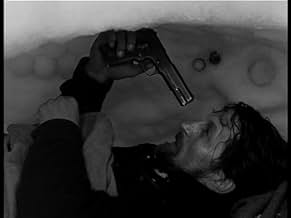
It should also be noted that in terms of the use of weapons and explosives, the movie lacks credibility, and it doesn't seem like there was any expert in the field consulted. Jan shoots his pistol in such an unnatural way that it detracts from the credibility, especially in those sequences where the film breaks away from its monotonous tone for climactic moments.
Clearly, it's a low-budget film. In fact, the main episode of the film, the sinking of the ship, is not visualized in the film. On the other hand, it is an experimental cinematography, relying more on visuals than narrative, which makes it an interesting film for its time and, in some way, a hallmark of Nordic filmmaking, which thrives on silence rather than extensive dialogues.
In both movies, undoubtedly the most interesting aspects are the snowy landscapes, of spectacular beauty, and the photography that perfectly captures the magical atmosphere of these desolate mountains. One in dramatic black and white and the more recent one in stunning color photography. Filming in snowy landscapes with a predominance of pure white snow is undoubtedly a challenging and very difficult task.
Furthermore, the movie, aside from the underlying story, is rather flat and at times boring. However, the monotony of the unchanging landscapes and the days passing one after another can't help but be boring. In this aspect, the film succeeds in conveying this general sense of boredom, which here appears to be intentionally sought.
In terms of narrative, there are some consistency errors, and it's not very clear how, despite the protagonist's continuous movements, he always seems to be in the same cave.
It should also be noted that in terms of the use of weapons and explosives, the movie lacks credibility, and it doesn't seem like there was any expert in the field consulted. Jan shoots his pistol in such an unnatural way that it detracts from the credibility, especially in those sequences where the film breaks away from its monotonous tone for climactic moments.
Clearly, it's a low-budget film. In fact, the main episode of the film, the sinking of the ship, is not visualized in the film. On the other hand, it is an experimental cinematography, relying more on visuals than narrative, which makes it an interesting film for its time and, in some way, a hallmark of Nordic filmmaking, which thrives on silence rather than extensive dialogues.
I'm stunned...
When walking in my local video shop I saw a copy of this incredible movie. I didn't have high expectations before watching it since Norwegian cinema is, well... But thankfully I was proved mistaken, very mistaken.
The movie is a true story about Jan Baalsrud a Norwegian resistance fighter. It takes place in 1943 in a Nazi occupied Norway. The movie starts of slow, but when something goes horribly wrong all his comrades are killed and Jan must alone find his way to the Swedish border. Along his way hes assisted by many common people. And in the end, the enemy is no longer the Nazis, but the cold nature.
Ni Liv is a tale of mans strength. You can't believe it when you see all Jan went through and if this movie doesn't leave you impressed, very few tings will. It's sad this movie isn't better known because it truly is a masterpiece! I recommend it highly.
The movie is a true story about Jan Baalsrud a Norwegian resistance fighter. It takes place in 1943 in a Nazi occupied Norway. The movie starts of slow, but when something goes horribly wrong all his comrades are killed and Jan must alone find his way to the Swedish border. Along his way hes assisted by many common people. And in the end, the enemy is no longer the Nazis, but the cold nature.
Ni Liv is a tale of mans strength. You can't believe it when you see all Jan went through and if this movie doesn't leave you impressed, very few tings will. It's sad this movie isn't better known because it truly is a masterpiece! I recommend it highly.
An interesting take on the Norwegian resistance during WWII
This was not the war movie I expected. I figured that since it was about a famous member of the resistance movement, it would be about the sabotage they did, but that's only a small part in the movie's opening. Most of the film is not about the sabotage, but his escape. The enemy is obviously the Nazis, but just as much the fear of Norwegians giving him in, and most of all nature and the elements themselves. This makes for a much more interesting movie than I had anticipated.
That said, this is still an old movie, made in a small country which back then were not famous for their movies. The acting hasn't aged well, and there's some annoying editing that's obviously meant to cover up some difficult sequences. That said, there's also some really nice shots, and they actually went to the trouble of getting actors speaking the right dialects (or, mostly at least!).
This never felt like a very exciting film, but more like a slow, brooding reflection over what people went through during the second world war, and also just how dedicated people can be in helping each other.
It's a no brainer if your aim is to see a Norwegian classic, and it's not a bad choice if you want to see a different ww2-movie.
That said, this is still an old movie, made in a small country which back then were not famous for their movies. The acting hasn't aged well, and there's some annoying editing that's obviously meant to cover up some difficult sequences. That said, there's also some really nice shots, and they actually went to the trouble of getting actors speaking the right dialects (or, mostly at least!).
This never felt like a very exciting film, but more like a slow, brooding reflection over what people went through during the second world war, and also just how dedicated people can be in helping each other.
It's a no brainer if your aim is to see a Norwegian classic, and it's not a bad choice if you want to see a different ww2-movie.


Did you know
- TriviaIn 1991 Norwegian television-viewers voted this the best Norwegian movie ever made.
- ConnectionsEdited into - og musikken var ved Maj og Gunnar Sønstevold (1978)
- How long is Nine Lives?Powered by Alexa
Details
- Runtime
- 1h 36m(96 min)
- Color
- Sound mix
Contribute to this page
Suggest an edit or add missing content