IMDb RATING
7.1/10
9.2K
YOUR RATING
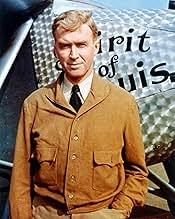
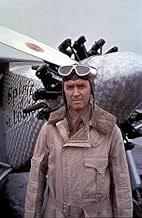
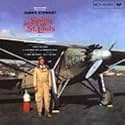
Charles 'Slim' Lindbergh struggles to finance and design an airplane that will make his New York to Paris flight the first solo transatlantic crossing.Charles 'Slim' Lindbergh struggles to finance and design an airplane that will make his New York to Paris flight the first solo transatlantic crossing.Charles 'Slim' Lindbergh struggles to finance and design an airplane that will make his New York to Paris flight the first solo transatlantic crossing.
- Nominated for 1 Oscar
- 2 wins & 1 nomination total
Erville Alderson
- Burt
- (uncredited)
Frances Allen
- Mother from Oklahoma
- (uncredited)
David Alpert
- Clerk
- (uncredited)
Don Ames
- Crowd Member in France
- (uncredited)
Walter Bacon
- Crowd Member in France
- (uncredited)
Gordon Barnes
- Reporter
- (uncredited)
Griff Barnett
- Dad - Farmer
- (uncredited)
Jimmy Bates
- Farm Boy
- (uncredited)
Brandon Beach
- Train Passenger
- (uncredited)
Paul Birch
- Blythe
- (uncredited)
Eumenio Blanco
- Crowd Member in France
- (uncredited)
7.19.1K
1
2
3
4
5
6
7
8
9
10
Featured reviews
Quite uplifting, this rather forgotten Wilder
Someone once said to me that there are only four basic movie plots: the first, boy meets girl: the second, man against apparently insuperable odds: the others.....I can't remember. Although I am not by nature agoraphobic, I guess when it comes to cinema I prefer the cosily domestic to wide open spaces. Every so often, however, I find myself responding to man battling it out against the elements, particularly if the point is being made that, without the sheer determination of an individual to grapple with prejudice and ignorance, civilization would not gain a pace or two forward. Billy Wilder's epic of human endeavour, "The Spirit of St. Louis", is just such an instance. It is heaps better than most in this category mainly through the excellent central performance by James Stewart as Charles Lindbergh, the first successful transatlantic flyer. True, Stewart was twice the age of the man he was portraying but he brilliantly manages the demeanour of a much younger person and has the advantage of being one of the very few actors able to convey the determined obsessive fanaticism that Lindbergh must have possessed. One can admire Wilder's skill in sustaining audience interest throughout what is essentially a one character and a one scene film but he achieves it through interspersing the present from the night before the takeoff, with flashbacks that retell the background to the mission, each a little story in itself, some quite tense such as Lindbergh's adventurous flight during a blizzard when he was a flying mail courier and others rather droll such as giving a flying lesson to a priest who is the most incompetent would-be aviator ever. The main journey once it gets going is mainly smooth and something of a leisurely travelogue with nice views over Nova Scotia and Newfoundland on the way. Far more dramatic is the takeoff during foul weather from a rain drenched runway in which Stewart grapples with his tiny aircraft narrowly clearing pylons and a clump of trees. The miracle that so flimsy a machine could make it not only for a few miles but across a vast ocean is reinforced by the hazardous implications of this wonderfully atmospheric sequence in a way that make the journey and the arrival in Paris quite uplifting.
too long and runs out of fuel
It's 1927. Charles 'Slim' Lindburgh (James Stewart) is flying the trans-Atlantic non-stop solo. As he tries to get some restless shut eye, he recalls his earlier job flying intrepid mail runs. He struggles to pull the flight together facing many obstacles and doubts.
James Stewart is once again an affable regular guy. It's what makes the character compelling. He isn't superhuman as much as a human with perseverance. He's older than the actual Lindburgh during the flight. The movie itself is a bit long at over two hours. It works fine until the plane takes off for the journey. The mirror is probably the best moment and the movie kind of coast from then on. The inner monologue is a good idea but it may be overused. The movie somewhat runs out of fuel but it has a gentle landing. It's nevertheless nice to see the plane.
the little engine that could
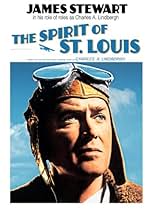
Jimmy Stewart is Charles Lindbergh in "The Spirit of St. Louis," a 1957 film directed by Billy Wilder and based on Lindbergh's book about his transatlantic flight.
The film deals with little else but Lindbergh's career up to and including his monumental flight from Roosevelt Field to Le Bourget in France in 33 hours back in 1927. We see Lindbergh as a mail pilot, then attempting to raise funds to buy a plane, though a plane ended up being built by a small aircraft company. And then the flight itself - and Wilder somehow makes it suspenseful and interesting. He really captures the pilot's complete isolation with no copilot or radio, talking to himself (Stewart provides the narration), sleep-deprived, with only the sound of the plane for company, falling asleep at the wheel, and finally, unsure where he was and using map topography to figure it out. It's an amazing story. During the flight sequence, there are flashbacks to earlier points in Lindbergh's life.
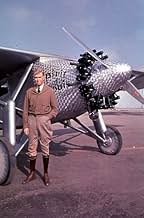
The Spirit of St. Louis is replicated, and once seen, it's very hard to believe it got out of Roosevelt Field. Lightweight, Lindbergh made sure it carried only the absolute essentials and refused to even bring a parachute or radio because of the extra weight.
Today, for me anyway, James Stewart is just James Stewart, one of the great film stars and actors. I'm blissfully unaware of his age most of the time, and I was in this film as well. For me, he was tall, lanky Lindbergh, determined to succeed and very likable. I realize that John Kerr was offered the role first, but if he had taken it, the film would have flopped initially, as it did starring Stewart, due to the huge budget, but I don't believe it would hold up as well as it does today.
Heroes are very rarely discussed as human beings, and many of their words and actions are taken out of context and out of the era. Lindbergh was ahead of his time in his environmental and aeronautical pursuits and very much of his time in some of his political beliefs. And as we now know, fidelity wasn't one of his strong points. Reading an excellent, well-researched biography like Scott Berg wrote is preferable to making snap judgments. Hindsight is easy.
Complicated men have complicated lives. You don't achieve what Lindbergh did in the Spirit of St. Louis by being ordinary. Wilder does an excellent job in showing his crowning achievement, and in evoking the excitement people felt at the time.
The film deals with little else but Lindbergh's career up to and including his monumental flight from Roosevelt Field to Le Bourget in France in 33 hours back in 1927. We see Lindbergh as a mail pilot, then attempting to raise funds to buy a plane, though a plane ended up being built by a small aircraft company. And then the flight itself - and Wilder somehow makes it suspenseful and interesting. He really captures the pilot's complete isolation with no copilot or radio, talking to himself (Stewart provides the narration), sleep-deprived, with only the sound of the plane for company, falling asleep at the wheel, and finally, unsure where he was and using map topography to figure it out. It's an amazing story. During the flight sequence, there are flashbacks to earlier points in Lindbergh's life.
The Spirit of St. Louis is replicated, and once seen, it's very hard to believe it got out of Roosevelt Field. Lightweight, Lindbergh made sure it carried only the absolute essentials and refused to even bring a parachute or radio because of the extra weight.
Today, for me anyway, James Stewart is just James Stewart, one of the great film stars and actors. I'm blissfully unaware of his age most of the time, and I was in this film as well. For me, he was tall, lanky Lindbergh, determined to succeed and very likable. I realize that John Kerr was offered the role first, but if he had taken it, the film would have flopped initially, as it did starring Stewart, due to the huge budget, but I don't believe it would hold up as well as it does today.
Heroes are very rarely discussed as human beings, and many of their words and actions are taken out of context and out of the era. Lindbergh was ahead of his time in his environmental and aeronautical pursuits and very much of his time in some of his political beliefs. And as we now know, fidelity wasn't one of his strong points. Reading an excellent, well-researched biography like Scott Berg wrote is preferable to making snap judgments. Hindsight is easy.
Complicated men have complicated lives. You don't achieve what Lindbergh did in the Spirit of St. Louis by being ordinary. Wilder does an excellent job in showing his crowning achievement, and in evoking the excitement people felt at the time.
" But it's got to be tried, until it's accomplished! Don't you understand that ? "
The word impossible has led many to select a particular view concerning any incredible task. In 1927, it was believed no man could fly the breath of the Atlantic Ocean. Many had tried but failed and some even gave their lives to the effort. Nevertheless, it had to be done as every challenge needs to be met with equal determination. Such then is the heart of this movie called "The Spirit of St. Louis." The actor chosen for this historic film is none other than America's own James Stewart who convincingly plays Charles Lindbergh. Although there are many facets of Lindbergh's life, the segment featured here is his efforts to be the First Man to fly across the Atlantic. The story is an interesting one and for Stewards' fans compelling to say the least. Seeking enough funds to build a special aircraft, to the fateful decision to began the journey on a gloomy day in May 1927, 'Luck Lindy' as he was christened, endured enormous risks, which are featured in this superb film. Other notables which helped make this film believable are Murray Hamilton who plays Bud Gurney, Bartlett Robinson as Ben Mahoney, Arthur Space and Charles Watts as O.W. Schultz. The sum total of this now famous movie is that despite poor endorsement on its debut, it has since become a Classic in it's own right. Well done! ****
Good entertainment.
I have watched this film several times over the years and always find it an entertaining experience. As a retired airline pilot, I am interested in most aviation movies and this is one of the better ones. I know that Lindbergh was only 25 years old at the time of his historic solo flight to Paris and that James Stewart was almost 50 when making this movie but I can overlook that fact because Stewart has always been one of my all-time favorite actors and does one of his usual outstanding performances as the "lone eagle".
There is a good mixture of comedy and drama throughout the film and a good use of flashbacks. It also helps that James Stewart was a pilot in real life both in the military and civilian life.
Did you know
- TriviaThe movie was a box office disaster when originally released in 1957, grossing less than $3 million and costing about $7 million.
- GoofsOn his approach to St. John's, Newfoundland in the fog, Lindbergh is depicted as being concerned about colliding with a mountain peak. However, there is no even remotely mountainous terrain anywhere in the vicinity of St. John's.
- Quotes
Father Hussman: How come I never see you around church? You don't believe?
Charles Lindbergh: Well, yes, I believe. I believe in an instrument panel, a pressure gauge, a compass, things I can see and touch. I can't touch God.
Father Hussman: You're not supposed to! He touches you!
- ConnectionsFeatured in America at the Movies (1976)
- SoundtracksRio Rita
(uncredited)
Music by Harry Tierney
Lyrics by Joseph McCarthy
Played on a phonograph when Lindbergh is trying to rest before the flight
- How long is The Spirit of St. Louis?Powered by Alexa
Details
- Release date
- Country of origin
- Language
- Also known as
- Duh Sent Luisa
- Filming locations
- Santa Maria, California, USA(Flight Training School)
- Production companies
- See more company credits at IMDbPro
Box office
- Budget
- $6,000,000 (estimated)
- Runtime
- 2h 15m(135 min)
- Color
- Sound mix
- Aspect ratio
- 2.35 : 1
Contribute to this page
Suggest an edit or add missing content