IMDb RATING
7.1/10
9.2K
YOUR RATING


Charles 'Slim' Lindbergh struggles to finance and design an airplane that will make his New York to Paris flight the first solo transatlantic crossing.Charles 'Slim' Lindbergh struggles to finance and design an airplane that will make his New York to Paris flight the first solo transatlantic crossing.Charles 'Slim' Lindbergh struggles to finance and design an airplane that will make his New York to Paris flight the first solo transatlantic crossing.
- Nominated for 1 Oscar
- 2 wins & 1 nomination total


Erville Alderson
- Burt
- (uncredited)
Frances Allen
- Mother from Oklahoma
- (uncredited)
David Alpert
- Clerk
- (uncredited)
Don Ames
- Crowd Member in France
- (uncredited)
Walter Bacon
- Crowd Member in France
- (uncredited)
Gordon Barnes
- Reporter
- (uncredited)

Griff Barnett
- Dad - Farmer
- (uncredited)
Jimmy Bates
- Farm Boy
- (uncredited)
Brandon Beach
- Train Passenger
- (uncredited)

Paul Birch
- Blythe
- (uncredited)

Eumenio Blanco
- Crowd Member in France
- (uncredited)
7.19.1K
1
2
3
4
5
6
7
8
9
10
Featured reviews
Epic recreation of Lindbergh's first and historic flight from New York , across Atlantic , until Paris
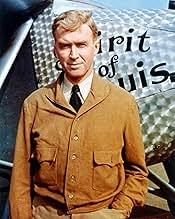
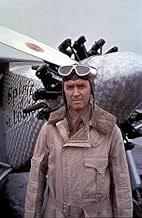
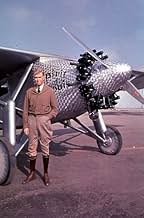
Overlong though exciting story behind the story of Lindbergh's incredible flight from New York to Paris. It deals Charles 'Slim' Lindbergh (excellently performed by James Stewart , he always wanted to portray him , when he ultimately got his chance is very old for a young role ; he was given this character after John Kerr had turned it down, owing to his disapproval of Lindbergh's pro-Nazi sympathies and his racist and anti-Semitic views) struggles to finance and design an airplane that will make his New York to Paris flight the first solo transatlantic crossing . As a 25-year-old U.S. Air Mail pilot, Lindbergh (Charles wanted Anthony Perkins to play him in the movie) emerged suddenly from virtual obscurity to instantaneous world fame as the result of his Orteig Prize-winning solo nonstop flight on May 20–21, 1927, made from the Roosevelt Field in Garden City on New York's Long Island to Le Bourget Field in Paris, France, a distance of nearly 3,600 statute miles or 5,800 km , in the single-seat, single-engine purpose-built Ryan monoplane Spirit of St. Louis . As a result of this flight, Lindbergh was the first person in history to be in New York one day and Paris the next.
Interesting picture with plenty of thrills , emotion , biographic elements and brief touches of humor . The film is pretty well though the action does drag at times and results to be overlong . Magnificent acting by James Stewart -at age 48- who gives a real Tour De Force back by good plethora of secondaries . However , many critics felt he was too old to be believable . In fact , producer Jack L. Warner was strongly opposed to the casting of James Stewart, which he believed caused the film to flop on its release in 1957 . Colorful and evocative cinematography in CinemaScope by two awesome cameramen Peverel Marley and Robert Burks , Hitchcock's ordinary . Impressive and thrilling musical score by Franz Waxman . However , the soundtrack was re-composed but composer Franz Waxman was no longer available so veteran film composer Roy Webb was hired along with Warner Brothers Music Director Ray Heindorf to come up with new cues based on Waxman's original material . The motion picture was compellingly directed by Billy Wilder , but it was a box office flop when originally released . After the film received bad notices from preview audiences, it was extensively re-edited with some new footage shot . Rating : Above average , this one remains a quality movie for the whole family .
This exciting and inventive picture well well based on true events , these are the followings : Six well-known aviators had already lost their lives in pursuit of the Orteig Prize when Lindbergh took off from Roosevelt Field on his successful attempt in the early morning of Friday, May 20, 1927. Burdened by its heavy load of 450 U.S. gallons of gasoline weighing about 1,230 kg, and hampered by a muddy, rain-soaked runway, Lindbergh's Wright Whirlwind-powered monoplane gained speed very slowly as it made its 7:52 am takeoff run, but its J-5C radial engine still proved powerful enough to allow the Spirit to clear the telephone lines at the far end of the field "by about twenty feet or six meters with a fair reserve of flying speed". Over the next 33.5 hours, he and the Spirit faced many challenges, including skimming over both storm clouds at 10,000 ft , 3,000 m, and wave tops at as low at 10 ft (3.0 m), fighting icing, flying blind through fog for several hours, and navigating only by the stars , whenever visible , and dead reckoning before landing at Le Bourget Airport at 10:22 pm (22:22) on Saturday, May 21. The airfield was not marked on his map and Lindbergh knew only that it was some seven miles northeast of the city. He initially mistook the airfield for some large industrial complex with bright lights spreading out in all directions. The lights were, in fact, the headlights of tens of thousands of cars all driven by eager spectators now caught in "the largest traffic jam in Parisian history " . A crowd estimated at 150,000 spectators stormed the field, dragged Lindbergh out of the cockpit, and literally carried him around above their heads for "nearly half an hour".
Interesting picture with plenty of thrills , emotion , biographic elements and brief touches of humor . The film is pretty well though the action does drag at times and results to be overlong . Magnificent acting by James Stewart -at age 48- who gives a real Tour De Force back by good plethora of secondaries . However , many critics felt he was too old to be believable . In fact , producer Jack L. Warner was strongly opposed to the casting of James Stewart, which he believed caused the film to flop on its release in 1957 . Colorful and evocative cinematography in CinemaScope by two awesome cameramen Peverel Marley and Robert Burks , Hitchcock's ordinary . Impressive and thrilling musical score by Franz Waxman . However , the soundtrack was re-composed but composer Franz Waxman was no longer available so veteran film composer Roy Webb was hired along with Warner Brothers Music Director Ray Heindorf to come up with new cues based on Waxman's original material . The motion picture was compellingly directed by Billy Wilder , but it was a box office flop when originally released . After the film received bad notices from preview audiences, it was extensively re-edited with some new footage shot . Rating : Above average , this one remains a quality movie for the whole family .
This exciting and inventive picture well well based on true events , these are the followings : Six well-known aviators had already lost their lives in pursuit of the Orteig Prize when Lindbergh took off from Roosevelt Field on his successful attempt in the early morning of Friday, May 20, 1927. Burdened by its heavy load of 450 U.S. gallons of gasoline weighing about 1,230 kg, and hampered by a muddy, rain-soaked runway, Lindbergh's Wright Whirlwind-powered monoplane gained speed very slowly as it made its 7:52 am takeoff run, but its J-5C radial engine still proved powerful enough to allow the Spirit to clear the telephone lines at the far end of the field "by about twenty feet or six meters with a fair reserve of flying speed". Over the next 33.5 hours, he and the Spirit faced many challenges, including skimming over both storm clouds at 10,000 ft , 3,000 m, and wave tops at as low at 10 ft (3.0 m), fighting icing, flying blind through fog for several hours, and navigating only by the stars , whenever visible , and dead reckoning before landing at Le Bourget Airport at 10:22 pm (22:22) on Saturday, May 21. The airfield was not marked on his map and Lindbergh knew only that it was some seven miles northeast of the city. He initially mistook the airfield for some large industrial complex with bright lights spreading out in all directions. The lights were, in fact, the headlights of tens of thousands of cars all driven by eager spectators now caught in "the largest traffic jam in Parisian history " . A crowd estimated at 150,000 spectators stormed the field, dragged Lindbergh out of the cockpit, and literally carried him around above their heads for "nearly half an hour".
The whole spirit of the flight.
When people think of the great Billy Wilder films they often forget to mention this one. A great picture that tells the story of the flight, certain events in Lindbergh's life, how he came to make the flight, the design and building of the plane, his association with the people who helped make it happen and even some of the trademark Billy Wilder humor. Visit your local fish market get some Sanddabs (if they have them, they're a California fish) fry em up and sit back and enjoy a great movie about one of the great accomplishments of this century with one of the greatest actors of this century in the lead role. The wide screen version is tops.
Good entertainment.
I have watched this film several times over the years and always find it an entertaining experience. As a retired airline pilot, I am interested in most aviation movies and this is one of the better ones. I know that Lindbergh was only 25 years old at the time of his historic solo flight to Paris and that James Stewart was almost 50 when making this movie but I can overlook that fact because Stewart has always been one of my all-time favorite actors and does one of his usual outstanding performances as the "lone eagle".
There is a good mixture of comedy and drama throughout the film and a good use of flashbacks. It also helps that James Stewart was a pilot in real life both in the military and civilian life.
There is a good mixture of comedy and drama throughout the film and a good use of flashbacks. It also helps that James Stewart was a pilot in real life both in the military and civilian life.
" But it's got to be tried, until it's accomplished! Don't you understand that ? "
The word impossible has led many to select a particular view concerning any incredible task. In 1927, it was believed no man could fly the breath of the Atlantic Ocean. Many had tried but failed and some even gave their lives to the effort. Nevertheless, it had to be done as every challenge needs to be met with equal determination. Such then is the heart of this movie called "The Spirit of St. Louis." The actor chosen for this historic film is none other than America's own James Stewart who convincingly plays Charles Lindbergh. Although there are many facets of Lindbergh's life, the segment featured here is his efforts to be the First Man to fly across the Atlantic. The story is an interesting one and for Stewards' fans compelling to say the least. Seeking enough funds to build a special aircraft, to the fateful decision to began the journey on a gloomy day in May 1927, 'Luck Lindy' as he was christened, endured enormous risks, which are featured in this superb film. Other notables which helped make this film believable are Murray Hamilton who plays Bud Gurney, Bartlett Robinson as Ben Mahoney, Arthur Space and Charles Watts as O.W. Schultz. The sum total of this now famous movie is that despite poor endorsement on its debut, it has since become a Classic in it's own right. Well done! ****
Lucky Charlie, Flying Eagle or The Flying Fool?
"In 1927 a young man, alone in a single engine aeroplane, flew non-stop from Roosevelt Field in New York across the entire North Atlantic Ocean to Le Bourget Field in Paris, a distance of three thousand six hundred and ten miles. In this triumph of mind, body and spirit, Charles A. Lindbergh influenced the lives of everyone on earth--for in the 33 hours and thirty minutes of his flight the air age became a reality. This is the story of that flight".
Billy Wilder adapts from Charles A. Lindbergh's Pulitzer Prize winning novel of the same name, in what is a re-creation of Lindbergh's historical 1927 solo flight. Boosted by a considerably strong lead performance from James Stewart {himself a pilot} as Lindberg, and containing an intelligent screenplay from Wilder and Wendell Mayes, Spirit Of St. Louis is a sincerely well told story.
In what at times threatens to become a monotonous film, Wilder keeps it ticking over by using flashbacks to Lindbergh's life. After the nicely told build up to the event, such as the peril being realised as Nungesser and Coli go missing {never to be found} whilst attempting the same trip in reverse, we learn stuff like how he come to buy his first plane and his work with the flying circus. This is all relative to understanding the man and his obvious passion for flying. This also helps to give us a complete picture of Lindbergh, thus putting us with him in his isolated cockpit as he undertakes this dangerous journey. Battling isolation {his only company is a fly} and chronic tiredness, it's here where Stewart perfectly portrays Lindbergh's devotion to the task. Aided by a terrific score from Franz Waxman and Academy Award nominated effects by Louis Lichtenfield, Wilder's movie turns out to be an engaging human interest story that got a thoroughly professional production. 7/10
Billy Wilder adapts from Charles A. Lindbergh's Pulitzer Prize winning novel of the same name, in what is a re-creation of Lindbergh's historical 1927 solo flight. Boosted by a considerably strong lead performance from James Stewart {himself a pilot} as Lindberg, and containing an intelligent screenplay from Wilder and Wendell Mayes, Spirit Of St. Louis is a sincerely well told story.
In what at times threatens to become a monotonous film, Wilder keeps it ticking over by using flashbacks to Lindbergh's life. After the nicely told build up to the event, such as the peril being realised as Nungesser and Coli go missing {never to be found} whilst attempting the same trip in reverse, we learn stuff like how he come to buy his first plane and his work with the flying circus. This is all relative to understanding the man and his obvious passion for flying. This also helps to give us a complete picture of Lindbergh, thus putting us with him in his isolated cockpit as he undertakes this dangerous journey. Battling isolation {his only company is a fly} and chronic tiredness, it's here where Stewart perfectly portrays Lindbergh's devotion to the task. Aided by a terrific score from Franz Waxman and Academy Award nominated effects by Louis Lichtenfield, Wilder's movie turns out to be an engaging human interest story that got a thoroughly professional production. 7/10


Did you know
- TriviaThe movie was a box office disaster when originally released in 1957, grossing less than $3 million and costing about $7 million.
- GoofsOn his approach to St. John's, Newfoundland in the fog, Lindbergh is depicted as being concerned about colliding with a mountain peak. However, there is no even remotely mountainous terrain anywhere in the vicinity of St. John's.
- Quotes
Father Hussman: How come I never see you around church? You don't believe?
Charles Lindbergh: Well, yes, I believe. I believe in an instrument panel, a pressure gauge, a compass, things I can see and touch. I can't touch God.
Father Hussman: You're not supposed to! He touches you!
- ConnectionsFeatured in America at the Movies (1976)
- SoundtracksRio Rita
(uncredited)
Music by Harry Tierney
Lyrics by Joseph McCarthy
Played on a phonograph when Lindbergh is trying to rest before the flight
- How long is The Spirit of St. Louis?Powered by Alexa
Details
- Release date
- Country of origin
- Language
- Also known as
- Duh Sent Luisa
- Filming locations
- Santa Maria, California, USA(Flight Training School)
- Production companies
- See more company credits at IMDbPro
Box office
- Budget
- $6,000,000 (estimated)
- Runtime
- 2h 15m(135 min)
- Color
- Sound mix
- Aspect ratio
- 2.35 : 1
Contribute to this page
Suggest an edit or add missing content