IMDb RATING
6.5/10
1.5K
YOUR RATING


Desperation and secret passions on a family farm lead to tragedy.Desperation and secret passions on a family farm lead to tragedy.Desperation and secret passions on a family farm lead to tragedy.
- Nominated for 1 Oscar
- 3 nominations total






Rebecca Welles
- Lucinda Cabot
- (as Rebecca Wells)


Edna Bennett
- Housewife Gossip
- (uncredited)
Florine Carlan
- Young Girl
- (uncredited)
Robert Cass
- Seth
- (uncredited)
- …
Vera Denham
- Farm Woman
- (uncredited)
Harvey B. Dunn
- Farmer
- (uncredited)

Dick Elliott
- Old Farmer
- (uncredited)
Jamie Forster
- Farmer
- (uncredited)

Greta Granstedt
- Men
- (uncredited)
Sandra Harrison
- Young Girl
- (uncredited)
- Director
- Writers
- All cast & crew
- Production, box office & more at IMDbPro
6.51.5K
1
2
3
4
5
6
7
8
9
10
Featured reviews
Ignore the critics and intellectual snobs, and enjoy a good drama
When "Desire Under the Elms" came out at the end of the 1950s, it was dismissed by critics who were more interested in parading their education and artistic credentials than in assessing the movie sensibly. In particular, they commented on how far the film fell short of the original stage play. Nearly fifty years later, a more balanced perspective is possible.
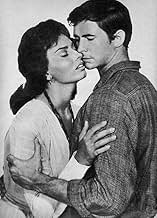
Regardless of how it compares with the theatrical original, "Desire Under The Elms" works successfully as a dramatic movie. There is real tension as the drama unfolds, and the audience feels a sense of horror when it realises what Anna (Sophia Loren) is going to do to prove her love. The resolution is genuinely tragic, and this is reinforced by the fact that the two lovers were unlikable people until love entered their lives and gave them humanity and consideration for others.
The acting is quite good all round, and presumably much of the credit goes to the director Delbert Mann. (Some of his other films during this period were also well-acted: "The Dark At The Top Of The Stairs"/"The Bachelor Party"). Sophia Loren is a real surprise. I have never worshipped at her throne, but she is excellent in this movie, playing a greedy, calculating woman who marries a much older man merely to have a comfortable home. At the beginning, her venality and disregard for other people make her highly unpleasant, and she is not particularly attractive physically either. As love gradually dominates her, she becomes physically very attractive - her fans, no doubt, will say she becomes beautiful - until the circumstances she has helped create imprison her. Then once again, her physical allure subsides and she becomes gaunt and drawn. Obviously this play with Sophia Loren's looks was a joint effort, and presumably the camera department, costume department and make-up department all deserve credit.
Daniel L. Fapp's Vista-Vision cinematography is crystal clear and a major asset. The film's only big failing is the blatant artificiality of the back drops. "Desire Under The Elms" was obviously made in a studio.
Regardless of how it compares with the theatrical original, "Desire Under The Elms" works successfully as a dramatic movie. There is real tension as the drama unfolds, and the audience feels a sense of horror when it realises what Anna (Sophia Loren) is going to do to prove her love. The resolution is genuinely tragic, and this is reinforced by the fact that the two lovers were unlikable people until love entered their lives and gave them humanity and consideration for others.
The acting is quite good all round, and presumably much of the credit goes to the director Delbert Mann. (Some of his other films during this period were also well-acted: "The Dark At The Top Of The Stairs"/"The Bachelor Party"). Sophia Loren is a real surprise. I have never worshipped at her throne, but she is excellent in this movie, playing a greedy, calculating woman who marries a much older man merely to have a comfortable home. At the beginning, her venality and disregard for other people make her highly unpleasant, and she is not particularly attractive physically either. As love gradually dominates her, she becomes physically very attractive - her fans, no doubt, will say she becomes beautiful - until the circumstances she has helped create imprison her. Then once again, her physical allure subsides and she becomes gaunt and drawn. Obviously this play with Sophia Loren's looks was a joint effort, and presumably the camera department, costume department and make-up department all deserve credit.
Daniel L. Fapp's Vista-Vision cinematography is crystal clear and a major asset. The film's only big failing is the blatant artificiality of the back drops. "Desire Under The Elms" was obviously made in a studio.
Beautiful Stars don't save illogical plot
Anthony Perkins and Sophia Loren are absolutely gorgeous in this ca. 1840 "Western". That alone, however doesn't help a ridiculous story, with countless historically incorrect elements.
Byrl Ives is convincing as the 70-something tyrannical patriarch, an egomaniac who swears to see his 100th birthday. His wild dancing at a party he gives for his neighbors will make anyone take notice (this guy is SEVETY SIX?). Always mumbling Bible verses, he demands respect, while driving sons and friends away with his self-righteous rantings and emotional cruelties.
The love affair between Perkins and Loren at first appears absurd, but becomes believable near the end. There is plenty of drama, but not enough to feel good about. Clearly written for the stage, this story was dated even when it was filmed. Perkins whistles "My Bonnie" in the 1840s, although the song wasn't composed until 1882.
Critics knocking Sophia Lorens "command of the English language" are rather petty. I found her English flawless and completely audible. As a Neapolitan, Loren speaks a distinct dialect that often had to be dubbed into "proper Italian". Her "accent", however, hardly affects how she speaks English. As a first Generation German American, I can appreciate the efforts of those who learn English as a second, or even third or fourth language.
"Desire Under The Elms" is a drama (or even a tragedy) in the Classic Sense. For my enjoyment is was missing a logical story and an overall "pay off" for the time invested. Fans of the stars won't want to miss it, others, however, tune in at your own risk!
Byrl Ives is convincing as the 70-something tyrannical patriarch, an egomaniac who swears to see his 100th birthday. His wild dancing at a party he gives for his neighbors will make anyone take notice (this guy is SEVETY SIX?). Always mumbling Bible verses, he demands respect, while driving sons and friends away with his self-righteous rantings and emotional cruelties.
The love affair between Perkins and Loren at first appears absurd, but becomes believable near the end. There is plenty of drama, but not enough to feel good about. Clearly written for the stage, this story was dated even when it was filmed. Perkins whistles "My Bonnie" in the 1840s, although the song wasn't composed until 1882.
Critics knocking Sophia Lorens "command of the English language" are rather petty. I found her English flawless and completely audible. As a Neapolitan, Loren speaks a distinct dialect that often had to be dubbed into "proper Italian". Her "accent", however, hardly affects how she speaks English. As a first Generation German American, I can appreciate the efforts of those who learn English as a second, or even third or fourth language.
"Desire Under The Elms" is a drama (or even a tragedy) in the Classic Sense. For my enjoyment is was missing a logical story and an overall "pay off" for the time invested. Fans of the stars won't want to miss it, others, however, tune in at your own risk!
Madly in love or just a love in madness?
I'm partial to any film in which Sophia Loren appears. And, I like the work of Eugene O'Neill, arguably America's finest playwright of the twentieth century.
So, it's a sad to admit that, although Burl Ives is superb as the irascible old father, and Sophia does her best – given that she'd only been part of the Hollywood scene for about a year – this rendition of the story of mad love is good, but not great.
The problem, in my opinion, is Tony Perkins: he's just not up to the task of playing opposite Sophia Loren, a more experienced performer (she'd already appeared in over thirty Italian movies before starring in Elms), and a lusty, fiery woman who just exudes sex appeal like it's the only thing to think about. In contrast, Perkins allows his distracted, tortured persona to intrude to the point of annoyance – for me; others might find him adequate to the role, however, as he first attempts to fob off the apparently unwelcome sexual innuendo of Loren, but then succumbs all too easily, I think, to her temptations.
Most of the story revolves around those three; the other main players, Pernell Roberts and Frank Overton as the two older step-brothers to Perkins, exit to California in the first act (and don't return until the third). Thereafter, the second act – the entrapment of Perkins in Loren's arms and their deepening romance about which the father knows naught – lays the groundwork for the inevitable tragedy to come. As the viewer, I found it interesting to speculate about the outcome as the third act started, especially after experiencing the excruciating suspense of an earlier Act II scene in the barn – a scene through which I actually stopped breathing, as I watched, fascinated...
But, what a third act it was from Burl Ives, as he danced and pranced around with much of the village folk, to celebrate the birth of his new son, provided by Loren, but fathered by...whom? Without a doubt, something's got to break, I thought.
As I continued to watch, I kept thinking: I've seen this before. But, this was my first viewing. Then it came to me: a story of two lovers, embroiled in dark, mad love and with mounting intent to murder has been done before – in 1867, Emile Zola wrote a book called Therese Raquin. In 1950, it was an American TV movie, followed in 1953 with a French version with Simone Signoret. I've read Zola's novel, but I can't vouch for the films. I could suggest, also, that The Postman Always Rings Twice (made many times, first in 1946) has a similar story and plot.
O'Neill's play, however, has an horrific twist – unlike any of the other stories. So, it's worth seeing for that alone. The bonus is watching Sophia Loren as a delectable temptress and Burl Ives as a pathological caricature of all that a good father should not be – a grand piece of acting by Ives, and more murderous than his performances in, say, Cat on a hot tin roof (1958) or The Big Country (1958). What a banner year for that great performer.
Being a stage play, the film version faithfully adheres to that format: small sets, obvious backdrops, deep shadows, very obvious multiple lighting – all that you'd expect, as if you were in a theater, front row center, and as it should be for all O'Neill's plays.
Get it out from your video store or library, see it and enjoy; but don't expect too much from Perkins.
So, it's a sad to admit that, although Burl Ives is superb as the irascible old father, and Sophia does her best – given that she'd only been part of the Hollywood scene for about a year – this rendition of the story of mad love is good, but not great.
The problem, in my opinion, is Tony Perkins: he's just not up to the task of playing opposite Sophia Loren, a more experienced performer (she'd already appeared in over thirty Italian movies before starring in Elms), and a lusty, fiery woman who just exudes sex appeal like it's the only thing to think about. In contrast, Perkins allows his distracted, tortured persona to intrude to the point of annoyance – for me; others might find him adequate to the role, however, as he first attempts to fob off the apparently unwelcome sexual innuendo of Loren, but then succumbs all too easily, I think, to her temptations.
Most of the story revolves around those three; the other main players, Pernell Roberts and Frank Overton as the two older step-brothers to Perkins, exit to California in the first act (and don't return until the third). Thereafter, the second act – the entrapment of Perkins in Loren's arms and their deepening romance about which the father knows naught – lays the groundwork for the inevitable tragedy to come. As the viewer, I found it interesting to speculate about the outcome as the third act started, especially after experiencing the excruciating suspense of an earlier Act II scene in the barn – a scene through which I actually stopped breathing, as I watched, fascinated...
But, what a third act it was from Burl Ives, as he danced and pranced around with much of the village folk, to celebrate the birth of his new son, provided by Loren, but fathered by...whom? Without a doubt, something's got to break, I thought.
As I continued to watch, I kept thinking: I've seen this before. But, this was my first viewing. Then it came to me: a story of two lovers, embroiled in dark, mad love and with mounting intent to murder has been done before – in 1867, Emile Zola wrote a book called Therese Raquin. In 1950, it was an American TV movie, followed in 1953 with a French version with Simone Signoret. I've read Zola's novel, but I can't vouch for the films. I could suggest, also, that The Postman Always Rings Twice (made many times, first in 1946) has a similar story and plot.
O'Neill's play, however, has an horrific twist – unlike any of the other stories. So, it's worth seeing for that alone. The bonus is watching Sophia Loren as a delectable temptress and Burl Ives as a pathological caricature of all that a good father should not be – a grand piece of acting by Ives, and more murderous than his performances in, say, Cat on a hot tin roof (1958) or The Big Country (1958). What a banner year for that great performer.
Being a stage play, the film version faithfully adheres to that format: small sets, obvious backdrops, deep shadows, very obvious multiple lighting – all that you'd expect, as if you were in a theater, front row center, and as it should be for all O'Neill's plays.
Get it out from your video store or library, see it and enjoy; but don't expect too much from Perkins.
A fine adaptation
It's a while since I saw this film, but it has remained in my memory ever since. A solid drama with some impressive performances by Anthony Perkins, Burl Ives and Sophia Loren. Story of a classic father vs son conflict, it shows how love can have a destructive power as in the end it shows that effect on its protagonists, Perkins and Loren. Sophia Loren's character is quite impressive, but thats hardly a surprise knowing that it was created by Eugene O'Neill. She succeeds bringing it to life admirably. Anthony Perkins makes one of his best performances, especially in his early career.
This is a really pleasant experience for fans of good drama and coupled with some great scenery and the appeal of Loren and Perkins in their prime years, this comes off as a cross between "Wuthering Heights" and "Gone with the Wind". A wonderful film.
This is a really pleasant experience for fans of good drama and coupled with some great scenery and the appeal of Loren and Perkins in their prime years, this comes off as a cross between "Wuthering Heights" and "Gone with the Wind". A wonderful film.
Sophia Loren comes to Hollywood...results are mixed
After a couple of studio films shot on location, Italian actress and sex symbol Sophia Loren finally made it onto Hollywood soil for this uneven, uncertain melodrama adapted from Eugene O'Neill's controversial play. A tyrannical New England farmer (Burl Ives), who apparently worked his past two wives to death, brings home a new wife to meet his sons--two of whom take off for California and the third (Anthony Perkins) who stays and eventually falls in love with the Mrs. The performers seem to be at a mismatch with this very strange material; though they try hard, the heavy prose and illogical situations would be enough to defeat anybody. The character motivations aren't always clear, not helped by the narrative which, at a crucial point, jumps ahead in time and nearly alienates the audience. Ives gives a full-throttle, blustery-old-windbag performance which infuses the scenario with a prickly tension (and the screenplay surprisingly never scores points against him), but glinty-eyed Loren is a bit out of her depth. Still, she survives the absurd final reel with her dignity intact, while the picture ends on such a dour note that the overall impression is one of supreme dissatisfaction. Daniel L. Fapp won an Oscar nomination for his handsome (if overlit) photography; Delbert Mann directed in an awkward and stagy fashion. **1/2 from ****


Did you know
- TriviaThe original 1924 Broadway production made Walter Huston a Broadway star; he was 40 years old, playing a septuagenarian. He was later in several more Eugene O'Neill plays.
- GoofsIn several outdoor scenes, people cast two (or more) shadows showing that there are two light sources.
- ConnectionsFeatured in Biography: Sophia Loren: Actress Italian Style (1997)
- How long is Desire Under the Elms?Powered by Alexa
Details
- Release date
- Country of origin
- Language
- Also known as
- Eugene O'Neill's Desire Under the Elms
- Filming locations
- Production company
- See more company credits at IMDbPro
- Runtime
- 1h 51m(111 min)
- Color
- Aspect ratio
- 1.85 : 1
Contribute to this page
Suggest an edit or add missing content