

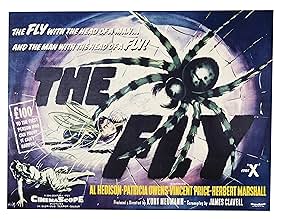
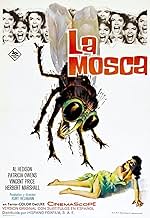
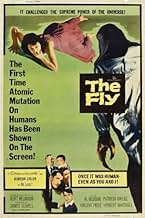
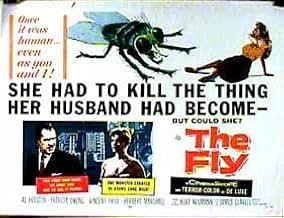
A scientist has a horrific accident when he tries to use his newly invented teleportation device.A scientist has a horrific accident when he tries to use his newly invented teleportation device.A scientist has a horrific accident when he tries to use his newly invented teleportation device.
- Director
- Writers
- Stars
- Awards
- 1 nomination total

David Hedison
- Andre Delambre
- (as Al Hedison)


Eugene Borden
- Dr. Ejoute
- (uncredited)

George Calliga
- Club Member
- (uncredited)

Harry Carter
- Orderly
- (uncredited)

Bill Clark
- Policeman
- (uncredited)
Arthur Dulac
- French Waiter
- (uncredited)

Bess Flowers
- Audience Member
- (uncredited)

Herschel Graham
- Club Member
- (uncredited)

Torben Meyer
- Gaston
- (uncredited)

Sol Murgi
- Audience Member
- (uncredited)

George Nardelli
- Detective
- (uncredited)
Franz Roehn
- Police Doctor
- (uncredited)
- Director
- Writers
- All cast & crew
- Production, box office & more at IMDbPro
7.127.5K
1
2
3
4
5
6
7
8
9
10
Featured reviews
One of the classic 50's sci fi films.
The Fly tells the story of an eager scientist named Andre Delambre. He is happily married and has a son. He has the perfect suburban life. That all changes when he invents a device that can transport inanimate objects, but it has trouble transporting live matter. When he tries it on himself, a fly gets into the chamber with him, and their particles mix up giving Andre the head and arm of a fly, and giving the fly Andre's head and arm.
The Fly isn't an overly terrifying film, but the plot is really interesting. The film starts off as a murder mystery, and slowly evolves into a mix of sci fi and horror as we see the transformed Andre Delambre's mind slowly seep away while being replaced with the fly's. The make-up is really good for a 1950's movie, and it's almost believable that the scientist's head was replaced with a giant fly head.
The characters in the film are all portrayed by great actors of the time, such as David "Al" Hedison as Andre/The Fly and horror master Vincent Price as Andre's brother Francois. The Fly offers up good acting and a great plot and should be recognized for its artistic effect on movies. If you're looking for a classic to watch, pick this up.
7/10
The Fly isn't an overly terrifying film, but the plot is really interesting. The film starts off as a murder mystery, and slowly evolves into a mix of sci fi and horror as we see the transformed Andre Delambre's mind slowly seep away while being replaced with the fly's. The make-up is really good for a 1950's movie, and it's almost believable that the scientist's head was replaced with a giant fly head.
The characters in the film are all portrayed by great actors of the time, such as David "Al" Hedison as Andre/The Fly and horror master Vincent Price as Andre's brother Francois. The Fly offers up good acting and a great plot and should be recognized for its artistic effect on movies. If you're looking for a classic to watch, pick this up.
7/10
Scenes engraved on the mind
It's been said again and again that this is a good horror film. A Very Good film. But it is more than that.
I can still hear with my mind's ear (is that right?) the sound of the hydraulic press "WHUMP" and the echo. Then again that "WHUMP" ... is there another sound experience that reverberates through a movie like that?
Sure, surround sound, THX, all that tech stuff, but the sound as the manifestation of the crime that encircles this story, the horror as the mind tries to put together the images that (finally) is seen in a flashback as this scene bookends the start and "finish" of the plot.
The inner struggle of the scientist as he fights with his human hand to control the spasms of his "fly" arm is both horrible and heart-wrenching.
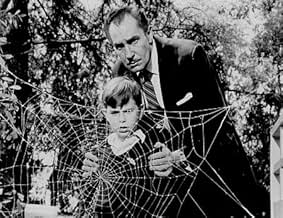
The shock as the cloth is torn away from the scientist's head... the fly's POV shot with facets and mirrors of the the screaming face of the scientist's poor wife! The scene at the spider's web as the shrill voice begs "help me... help me"
The horror of murder of a man/thing and a thing/man being shown and even compared in sharp (but obvious) dialogue.
You MUST see this and experience the earlier days of horror -when classics like this, like "The Thing From Another World," like "It, the Terror From Beyond Space" (the original model of Alien) exhibit a freshness and a palpable terror that remakes cannot capture, whatever wonderful special effects are thrown in to add to the creepiness. Sure these later gorefest horror films are good. I buy them all the time. But they are a different genre. The Fly with Vincent Price is NOT the same story as The Fly with Jeff Goldblum. It's not really a remake as a retelling.
See the original. It is rich with emotion and intelligence, not to mention some pretty fine acting for what was really a "B" movie.
I can still hear with my mind's ear (is that right?) the sound of the hydraulic press "WHUMP" and the echo. Then again that "WHUMP" ... is there another sound experience that reverberates through a movie like that?
Sure, surround sound, THX, all that tech stuff, but the sound as the manifestation of the crime that encircles this story, the horror as the mind tries to put together the images that (finally) is seen in a flashback as this scene bookends the start and "finish" of the plot.
The inner struggle of the scientist as he fights with his human hand to control the spasms of his "fly" arm is both horrible and heart-wrenching.
The shock as the cloth is torn away from the scientist's head... the fly's POV shot with facets and mirrors of the the screaming face of the scientist's poor wife! The scene at the spider's web as the shrill voice begs "help me... help me"
The horror of murder of a man/thing and a thing/man being shown and even compared in sharp (but obvious) dialogue.
You MUST see this and experience the earlier days of horror -when classics like this, like "The Thing From Another World," like "It, the Terror From Beyond Space" (the original model of Alien) exhibit a freshness and a palpable terror that remakes cannot capture, whatever wonderful special effects are thrown in to add to the creepiness. Sure these later gorefest horror films are good. I buy them all the time. But they are a different genre. The Fly with Vincent Price is NOT the same story as The Fly with Jeff Goldblum. It's not really a remake as a retelling.
See the original. It is rich with emotion and intelligence, not to mention some pretty fine acting for what was really a "B" movie.
The original still has lots to offer
"The Fly," directed by Kurt Neumann and released in 1958, stands as a timeless science fiction classic that seamlessly weaves suspense, horror, and tragedy into a compelling narrative. This iconic film, based on a short story by George Langelaan, explores the consequences of scientific curiosity gone awry and remains a benchmark in the annals of classic horror cinema.
The plot centers around the brilliant scientist André Delambre, portrayed by David Hedison, who becomes the victim of his own groundbreaking teleportation experiment. The film unfolds as André's wife, Helene, played by Patricia Owens, recounts the chilling events leading to her husband's gruesome demise to André's brother, François (Vincent Price). The narrative structure, with its flashback-driven storytelling, adds an air of mystery and anticipation, heightening the film's overall tension.
Vincent Price delivers a stellar performance as François Delambre, bringing a perfect blend of sympathy and unease to the role. His on-screen presence is captivating, and he skillfully conveys the conflicting emotions of a grieving brother seeking the truth behind André's tragic fate.
The practical effects used to portray André's metamorphosis are a testament to the creativity of the filmmakers of the era. The gradual revelation of the horrifying consequences of the teleportation experiment is both shocking and morbidly fascinating. The iconic "fly head" remains an indelible image in the history of cinematic horror, a testament to the film's impact on the genre.
"The Fly" is not merely a creature feature; it delves into deeper themes of the ethical implications of scientific experimentation and the unforeseen consequences of playing with the laws of nature. The film raises poignant questions about the limits of human knowledge and the dangers of tampering with forces beyond our understanding.
The atmospheric score composed by Paul Sawtell and Bert Shefter enhances the film's mood, contributing to its overall sense of foreboding. The use of shadows and lighting, classic elements of film noir, further heightens the tension and adds a layer of sophistication to the movie.
While some aspects of the film may appear dated to modern audiences, "The Fly" remains a compelling and thought-provoking cinematic experience. Its enduring legacy is evident in the numerous adaptations and references it has inspired over the decades. The 1958 version of "The Fly" continues to captivate audiences, reminding us that even in the realm of science fiction, there are moral lessons to be learned from the consequences of unchecked scientific ambition.
The plot centers around the brilliant scientist André Delambre, portrayed by David Hedison, who becomes the victim of his own groundbreaking teleportation experiment. The film unfolds as André's wife, Helene, played by Patricia Owens, recounts the chilling events leading to her husband's gruesome demise to André's brother, François (Vincent Price). The narrative structure, with its flashback-driven storytelling, adds an air of mystery and anticipation, heightening the film's overall tension.
Vincent Price delivers a stellar performance as François Delambre, bringing a perfect blend of sympathy and unease to the role. His on-screen presence is captivating, and he skillfully conveys the conflicting emotions of a grieving brother seeking the truth behind André's tragic fate.
The practical effects used to portray André's metamorphosis are a testament to the creativity of the filmmakers of the era. The gradual revelation of the horrifying consequences of the teleportation experiment is both shocking and morbidly fascinating. The iconic "fly head" remains an indelible image in the history of cinematic horror, a testament to the film's impact on the genre.
"The Fly" is not merely a creature feature; it delves into deeper themes of the ethical implications of scientific experimentation and the unforeseen consequences of playing with the laws of nature. The film raises poignant questions about the limits of human knowledge and the dangers of tampering with forces beyond our understanding.
The atmospheric score composed by Paul Sawtell and Bert Shefter enhances the film's mood, contributing to its overall sense of foreboding. The use of shadows and lighting, classic elements of film noir, further heightens the tension and adds a layer of sophistication to the movie.
While some aspects of the film may appear dated to modern audiences, "The Fly" remains a compelling and thought-provoking cinematic experience. Its enduring legacy is evident in the numerous adaptations and references it has inspired over the decades. The 1958 version of "The Fly" continues to captivate audiences, reminding us that even in the realm of science fiction, there are moral lessons to be learned from the consequences of unchecked scientific ambition.
As a child in the theater I screamed and had bad dreams....
As a child in the theater I screamed and had bad dreams.... Then as a teenager I watched the "Fly" on TV and still Jumped back in fear at the sight of that horrible face! A few years later my friends and I watched it on TV again, but this time I turned down the sound at the scary scenes ( theorizing that the music was the cause of the fear) but even at low volume the haunting cries of "Help me...Help me" gave me the chills. A MUST SEE DF.
....said the spider to the fly.
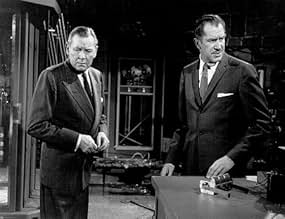
"The Fly" is one of the better giant insect movies of the 50s. It starts out with the discovery by a night watchman of the grisly killing of scientist Andre Delambre (Al Hedison aka David Hedison) apparently at the hands of his wife Helene (Patricia Owens). She calls Andre's brother Francois (Vincent Price) to tell him of the tragedy. Francois in turn, calls in Inspector Charas (Herbert Marshall) and together they question Helene to try to find out what happened.
In a flashback, we learn that Andre had been experimenting with transporting matter at light speed from one point to another. When he reached the stage of using a human in the tests, he had used himself. Unfortunately, when he transported himself, unbeknownst to him a common fly had been in the disintegrator with him. When they re-integrated things were not quite as they had been before. Of course no one really believes Helene's story until Francois and the Inspector are shown the unfortunate fly by Andre and Helene's son Philippe (Charles Herbert).
Director Kurt Neumann builds up the suspense by first letting us guess what has happened in the laboratory and then delaying the unmasking of Andre as long as possible. That scene reminded me of the unmasking of the Phantom in Lon Chaney's "The Phantom of the Opera" (1925). The wide screen is used to great effect in that scene when Helene first sees what has happened to her husband, and we then see multiple images of her, much in the way that we believe a fly would see it, screaming in terror.
The fly makeup was, I thought, quite convincing and who can ever forget the final scene when a spider is closing in on the title character (Help me, please...Help me..).
In a flashback, we learn that Andre had been experimenting with transporting matter at light speed from one point to another. When he reached the stage of using a human in the tests, he had used himself. Unfortunately, when he transported himself, unbeknownst to him a common fly had been in the disintegrator with him. When they re-integrated things were not quite as they had been before. Of course no one really believes Helene's story until Francois and the Inspector are shown the unfortunate fly by Andre and Helene's son Philippe (Charles Herbert).
Director Kurt Neumann builds up the suspense by first letting us guess what has happened in the laboratory and then delaying the unmasking of Andre as long as possible. That scene reminded me of the unmasking of the Phantom in Lon Chaney's "The Phantom of the Opera" (1925). The wide screen is used to great effect in that scene when Helene first sees what has happened to her husband, and we then see multiple images of her, much in the way that we believe a fly would see it, screaming in terror.
The fly makeup was, I thought, quite convincing and who can ever forget the final scene when a spider is closing in on the title character (Help me, please...Help me..).


Did you know
- TriviaThis film became the biggest box office hit of director Kurt Neumann's career, but he never knew it or even found out about it. He died one month after the film's premiere and only one week before it went into general release.
- GoofsAfter Inspector Charas destroys the spider's web with a rock and crushes both it and the fly with Andre's head and arm to death, the physical evidence of the fly would still have existed, even if in a distorted state. Thus, it was completely inconsistent for him to then continue questioning whether the story of the fly would even be believed, since physical proof of it still existed and would confirm the allegation.
- Quotes
Andre Delambre: [about the cat killed by the transporter] She disintegrated perfectly, but never reappeared.
Helene Delambre: Where's she gone?
Andre Delambre: Into space... a stream of cat atoms...
[sighs]
Andre Delambre: It'd be funny if life weren't so sacred.
- ConnectionsFeatured in Deadly Earnest's Spooky Colour Marathon (1975)
Details
Box office
- Budget
- $700,000 (estimated)
- Gross worldwide
- $1,501
- Runtime
- 1h 34m(94 min)
- Color
- Aspect ratio
- 2.35 : 1
Contribute to this page
Suggest an edit or add missing content