

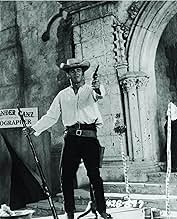
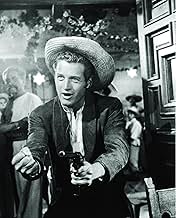
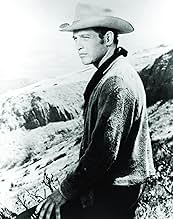
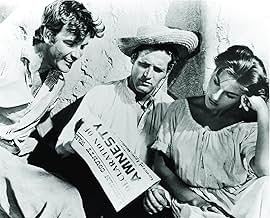
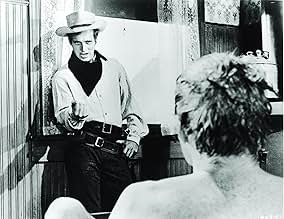
After his employer is murdered by rival cattlemen, a troubled and uneducated young cowboy vows revenge on the murderers.After his employer is murdered by rival cattlemen, a troubled and uneducated young cowboy vows revenge on the murderers.After his employer is murdered by rival cattlemen, a troubled and uneducated young cowboy vows revenge on the murderers.
- Awards
- 1 win total




Robert Anderson
- Hill
- (as Bob Anderson)


Josephine Parra
- Bride
- (as Jo Summers)


- Director
- Writers
- All cast & crew
- Production, box office & more at IMDbPro
6.44.9K
1
2
3
4
5
6
7
8
9
10
Featured reviews
Too bizarre to dismiss.
One of the strangest westerns ever made. Arthur Penn's "The Left Handed Gun", adapted from a play by Gore Vidal, came right at the height of the 'teenage rebel' cycle of the fifties with Paul Newman's Billy the Kid having more in common with James Dean's Jim Stark than any Western outlaw I can think of. The film wasn't a success; it's highfalutin dialogue and over-the-top acting proving too much for a general audience who, if they looked just below the surface, would have easily detected a homosexual subplot involving Hurd Hatfield's character who acts as a kind of Greek Chorus. It marked the screen debut of Penn who didn't make another film for four years though it's now built up something of a cult reputation. It isn't really very good, and it is very self-concious, but it is also too bizarre to dismiss out of hand.
Over Baked Acting and Some Silliness
This Film has Many Interesting Elements that may Attract Viewers. Director Arthur Penn's Debut, Early Paul Newman as an Iconic Western Outlaw, and a Different Artistic Approach to the Conventional Western.
However, the Movie is not the Easiest to Like. Penn's Flourishes are Welcome in a Genre so Ripe with Regularity, but Newman Overacts to the Point of Silliness and can Grate on the Nerves.
In Fact, just about Every Actor Emotes to Extreme, Except Perhaps John Dehner as Pat Garrett who Strikes a Concerned Lawman's Pose Quite Well Without Words. But even He is Guilty of One Scene that is Downright Atrocious (the this is my wedding, this is my town part).
Visually the Film has Many Interesting Shots and Flourishes, but Newman's Exaggeration of Body Language and Other Fanciful Displays that Misfire bring the Movie Down to just Above Average. There is Enough Curiosity here that is Worth a Watch, but Overall it is the Over Baked Acting that makes this a Disappointment.
However, the Movie is not the Easiest to Like. Penn's Flourishes are Welcome in a Genre so Ripe with Regularity, but Newman Overacts to the Point of Silliness and can Grate on the Nerves.
In Fact, just about Every Actor Emotes to Extreme, Except Perhaps John Dehner as Pat Garrett who Strikes a Concerned Lawman's Pose Quite Well Without Words. But even He is Guilty of One Scene that is Downright Atrocious (the this is my wedding, this is my town part).
Visually the Film has Many Interesting Shots and Flourishes, but Newman's Exaggeration of Body Language and Other Fanciful Displays that Misfire bring the Movie Down to just Above Average. There is Enough Curiosity here that is Worth a Watch, but Overall it is the Over Baked Acting that makes this a Disappointment.
In search of a father.
Like the precedent user said,all that will follow in Penn's best works is already here:the search of a father,the marginal hero,incapable of becoming part of a community.In "Miracle worker", which I look upon as his masterpiece,Helen's father is thoroughly unable to communicate with his daughter who immures herself in her autism.In "the chase" Robert Redford's character has been an outcast for his whole life.In "Bonnie and Clyde" ,not only Penn depicts par excellence marginal characters but he also introduces CW Moss's character ,whose father is a mean old man,and who loves the two gangsters as his parents.
At the beginning of the movie ,Billy is still a boy searching for his identity.His boss,who reads him the Bible ("through a glass,darkly"),gives him what he's longing for.One must notice that the relationship Billy/his boss-father is too short on the screen to be really convincing.This is accentuated by the fact that the supporting cast is faceless,and once his "dad" is dead,Newman carries the movie on his own:his performance is typically "actor's studio",very deep,very introspective,in a nutshell he plays Billy as he would play a Tennesse Williams character.We're far from the western actor,such as John Wayne or Joel McCrea.The sentence "I do not want you" often comes in the lines and drives Billy to despair and violence.Actually it's the last sentence he hears from the man he loves so much.
Because they have no shoulder to lean on,Penn's heroes are doomed oedipean human beings and except for Helen in "Miracle worker",their destiny leaves them no hope.
At the beginning of the movie ,Billy is still a boy searching for his identity.His boss,who reads him the Bible ("through a glass,darkly"),gives him what he's longing for.One must notice that the relationship Billy/his boss-father is too short on the screen to be really convincing.This is accentuated by the fact that the supporting cast is faceless,and once his "dad" is dead,Newman carries the movie on his own:his performance is typically "actor's studio",very deep,very introspective,in a nutshell he plays Billy as he would play a Tennesse Williams character.We're far from the western actor,such as John Wayne or Joel McCrea.The sentence "I do not want you" often comes in the lines and drives Billy to despair and violence.Actually it's the last sentence he hears from the man he loves so much.
Because they have no shoulder to lean on,Penn's heroes are doomed oedipean human beings and except for Helen in "Miracle worker",their destiny leaves them no hope.
It Ain't Hud
I wonder what the mature Paul Newman thought of this early movie performance. Of course, 'mature' is a relative term since he's already 33 here, well beyond the 'kid' range. In my little book, it's the most mannered and misdirected acting of his long and distinguished career. It's almost like he's working at an excess of James Dean. That wouldn't be surprising since the screenplay's Billy comes across as more misunderstood youth than cold-blooded killer. I guess this is the first of director Penn's efforts at rehabilitating notorious American outlaws, leading up to the glossy Bonnie and Clyde (1967).
The movie itself is pretty good, the open range locations even looking like eastern New Mexico, while Penn uses them to good effect. But it's really James Best as the ill-fated henchman Tom who steals the film. His supporting role manages a certain poignancy that should have come from Billy, but doesn't. With the right breaks, I think Best could have carved a real niche in films. Speaking of supporting players, with the exception of the cartoonish Moultrie (Hatfield), they appear recruited from the many TV Westerns of the day, especially the familiar Denver Pyle and the classy John Dehner.
Penn establishes himself here as a moviemaker to watch with a number of nice touches— having Pyle squint into the sun just before the fateful moment, the lone boot left standing in the road, and others. I'm kind of sorry that the baby-faced Audie Murphy didn't get a shot at Billy's role. Visually, he's perfect. Plus, surprisingly for that boyish appearance, he could do a killer-stare to make you believe he killed 100 Germans during the war. Also, Murphy could have made that key facedown scene with Joe Bell (Pryor) as genuinely chilling as it should be. For whatever the charming Newman's considerable skills, being downright mean is not one of them. Anyway the movie remains an interesting entry on the road to 1960's-style rebellious movie-making.
The movie itself is pretty good, the open range locations even looking like eastern New Mexico, while Penn uses them to good effect. But it's really James Best as the ill-fated henchman Tom who steals the film. His supporting role manages a certain poignancy that should have come from Billy, but doesn't. With the right breaks, I think Best could have carved a real niche in films. Speaking of supporting players, with the exception of the cartoonish Moultrie (Hatfield), they appear recruited from the many TV Westerns of the day, especially the familiar Denver Pyle and the classy John Dehner.
Penn establishes himself here as a moviemaker to watch with a number of nice touches— having Pyle squint into the sun just before the fateful moment, the lone boot left standing in the road, and others. I'm kind of sorry that the baby-faced Audie Murphy didn't get a shot at Billy's role. Visually, he's perfect. Plus, surprisingly for that boyish appearance, he could do a killer-stare to make you believe he killed 100 Germans during the war. Also, Murphy could have made that key facedown scene with Joe Bell (Pryor) as genuinely chilling as it should be. For whatever the charming Newman's considerable skills, being downright mean is not one of them. Anyway the movie remains an interesting entry on the road to 1960's-style rebellious movie-making.
Penn gives you a glimpse of things to come in his first film
The director of Bonnie & Clyde and Little Big Man is off to a promising start with The Left Handed Gun, his first film. The film stars a young Paul Newman as Billy the Kid. Billy, working as a ranch hand, swears revenge on the four men who ambushed and killed his boss.
That's about it for plot. Newman plays Billy well, portraying a man bent on his mission. One senses that he means well, but his short temper and dark past always get the best of him, even during his friend's, Pat Garrett (John Dehner in a nice performance), wedding.
Unfortunately, Newman suffers from a weak supporting cast and little character development. I found it hard to believe that Billy could develop such a strong bond with his boss in such a short time (although the movie doesn't exactly specify how long). With the possible exception of Garrett, the remaining players are there to fill up the screen.
In short, I wasn't disappointed with this film, but if you want to view a great Western about a man driven by revenge, definitely see John Wayne in The Searchers.
That's about it for plot. Newman plays Billy well, portraying a man bent on his mission. One senses that he means well, but his short temper and dark past always get the best of him, even during his friend's, Pat Garrett (John Dehner in a nice performance), wedding.
Unfortunately, Newman suffers from a weak supporting cast and little character development. I found it hard to believe that Billy could develop such a strong bond with his boss in such a short time (although the movie doesn't exactly specify how long). With the possible exception of Garrett, the remaining players are there to fill up the screen.
In short, I wasn't disappointed with this film, but if you want to view a great Western about a man driven by revenge, definitely see John Wayne in The Searchers.


Did you know
- TriviaThe film originally was to have been made in 1956 with James Dean in the lead role.
- GoofsThe film is about western outlaw Billy the Kid, who was actually right-handed.
- ConnectionsFeatured in Legends of the West (1992)
- SoundtracksBallad of The Left Handed Gun
Written by William Goyen and Alexander Courage
[Movie theme ballad played over the opening title card and credits]
- How long is The Left Handed Gun?Powered by Alexa
Details
- Release date
- Country of origin
- Languages
- Also known as
- Billy the Kid
- Filming locations
- Production companies
- See more company credits at IMDbPro
Box office
- Budget
- $700,000 (estimated)
- Gross worldwide
- $5,066
- Runtime
- 1h 42m(102 min)
- Color
- Aspect ratio
- 1.85 : 1
Contribute to this page
Suggest an edit or add missing content