IMDb RATING
6.7/10
2.1K
YOUR RATING


A chronicle of the rise and fall of Chicago crime boss Al Capone during the Prohibition era.A chronicle of the rise and fall of Chicago crime boss Al Capone during the Prohibition era.A chronicle of the rise and fall of Chicago crime boss Al Capone during the Prohibition era.
- Awards
- 1 win & 1 nomination total
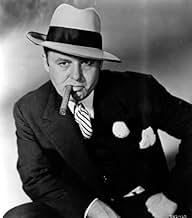




Raikin Ben-Ari
- Ben Hoffman
- (as Ben Ari)

Fred Aldrich
- Funeral Spectator
- (uncredited)
Cindy Ames
- Nurse
- (uncredited)
- Director
- Writers
- All cast & crew
- Production, box office & more at IMDbPro
6.72.1K
1
2
3
4
5
6
7
8
9
10
Featured reviews
Rod could have been The Godfather
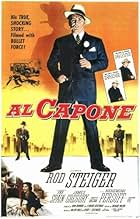
Rod Steiger is excellent as the famed Italian-American gangster Al Capone. When you see him speaking Italian and getting hurt feelings when someone disrespects him, it makes you wonder (if you haven't already) why Marlon Brando was cast as the titular role in The Godfather, when so many other actors would have done a better job. Rod is so great in this role, it dampens others who have subsequently played Capone. Why was it necessary to keep making biopics when Scarface (the original) and Al Capone were so well-acted?
In the supporting cast, you'll see Martin Balsam, James Gregory, and Nehemiah Persoff. There's a pretty big focus on Capone's Achille's heel: Fay Spain. He's an enormously powerful man who gets his way always, and yet he's completely vulnerable to Fay's affections. He brings her expensive presents and dresses her well, but when she still doesn't love him, he feels worthless and unappreciated. I didn't understand why he didn't just move on and get another mistress, but then again, people are often drawn to those who will hurt them.
If you like Rod Steiger, check out this lesser known drama. It's filmed in a very old, 1930s style to pay tribute to the gangster period. It probably wasn't a hit at the time because movies like Ben-Hur, Journey to the Center of the Earth, and North by Northwest were big spectacles in Technicolor and full of action. This is a black-and-white nostalgia piece that reminds viewers of Prohibition and the Great Depression. It's well-done, but it's definitely stylized.
In the supporting cast, you'll see Martin Balsam, James Gregory, and Nehemiah Persoff. There's a pretty big focus on Capone's Achille's heel: Fay Spain. He's an enormously powerful man who gets his way always, and yet he's completely vulnerable to Fay's affections. He brings her expensive presents and dresses her well, but when she still doesn't love him, he feels worthless and unappreciated. I didn't understand why he didn't just move on and get another mistress, but then again, people are often drawn to those who will hurt them.
If you like Rod Steiger, check out this lesser known drama. It's filmed in a very old, 1930s style to pay tribute to the gangster period. It probably wasn't a hit at the time because movies like Ben-Hur, Journey to the Center of the Earth, and North by Northwest were big spectacles in Technicolor and full of action. This is a black-and-white nostalgia piece that reminds viewers of Prohibition and the Great Depression. It's well-done, but it's definitely stylized.
The Rise And Fall Of Scarface
Although Rod Steiger gives an electrifying performance as Al Capone in the film of the same name, it could have been done a whole lot better.
Influenced by the success of The Untouchables on television the classical gangster film underwent a short revival for about five years in the late Fifties and early Sixties. It was inevitable that a film about the most notorious gangster name of all would get a biographical film.
The film concentrated on Capone's public life and the stories of gangland lore that have circulated about him. Very little is shown of his personal life, he had a wife and child and many a mistress not just the character Fay Spain portrays. Rod Steiger has been accused of overacting in his characterization, but in fairness I don't think the writers and director gave him much to work with.
With one exception no characters had name changes. The one being Martin Balsam's character who was based on reporter Jake Lingle whose connections with the underworld got him many a good story, but also compromised his integrity. Capone is shown being responsible for Balsam's death, but in real life there are many theories about Lingle's demise.
One character is grafted in from New York. There was no such a character as James Gregory's honest inspector, mainly because there were damn few honest cops in Chicago in the Twenties. His character is based on Lewis J. Valentine who did run a confidential squad in New York City and faced a lot of political pressure from Tammany Hall. Under Fiorello LaGuardia, Valentine became the city's police commissioner, probably the best one we ever had.
Still if you were a big fan of The Untouchables, you should definitely like this Al Capone movie.
Influenced by the success of The Untouchables on television the classical gangster film underwent a short revival for about five years in the late Fifties and early Sixties. It was inevitable that a film about the most notorious gangster name of all would get a biographical film.
The film concentrated on Capone's public life and the stories of gangland lore that have circulated about him. Very little is shown of his personal life, he had a wife and child and many a mistress not just the character Fay Spain portrays. Rod Steiger has been accused of overacting in his characterization, but in fairness I don't think the writers and director gave him much to work with.
With one exception no characters had name changes. The one being Martin Balsam's character who was based on reporter Jake Lingle whose connections with the underworld got him many a good story, but also compromised his integrity. Capone is shown being responsible for Balsam's death, but in real life there are many theories about Lingle's demise.
One character is grafted in from New York. There was no such a character as James Gregory's honest inspector, mainly because there were damn few honest cops in Chicago in the Twenties. His character is based on Lewis J. Valentine who did run a confidential squad in New York City and faced a lot of political pressure from Tammany Hall. Under Fiorello LaGuardia, Valentine became the city's police commissioner, probably the best one we ever had.
Still if you were a big fan of The Untouchables, you should definitely like this Al Capone movie.
A gangster biography that is interesting more than entertaining.
Al Capone does give us a clear picture of the rise and fall of the colorful gangster. He is played convincingly by Rod Steiger. The supporting cast does a fine job, especially Martin Balsam who plays a Capone associate. The film is, for the most part, realistic, but the violent scenes come close to being non-violent compared to today's standards. If you liked the old TV series The Untouchables, you will like Al Capone.
Film succeeds in white-washing a colorful character
Like so many mid-century biographical films, Al Capone marches through the man's life, giving equal weight to each way-point. It also fails miserably by providing no psychological or historical context for how he became one of crime's most notorious characters. In fact, the film succeeds in white-washing this killer. He woos the widow of one of his victims. He repeatedly makes the point that he's never been convicted of any crime. People die, but there is no depiction of Capone's ruthless, brutal side. Rod Steiger in the title role does an admirable job with the shallow script, but this is not enough to make the film worth watching. Oddly, there's no mention of Elliot Ness and when it comes to summing up Capone's end, we're told he died of "an incurable disease." What, audiences in 1959 couldn't handle the word "syphilis"?
An eerily compelling Capone . . .
Many actors have portrayed Capone over the years. It's virtually a "cottage industry," guaranteeing that yet another Capone flick will hit the screens before the collective audience has quite recovered from its yawn at the last one. And yet, for me, no one has ever come quite so close to nailing the role as Rod Steiger in this 1959 black-and-white low-budget effort.
As a matter of fact, using the term "low-budget" does this film a disservice, calling to mind as it does the run-of-the-mill output of producer/distributor Allied Artists (usually on the scale of "Attack Of The 50-Foot Mummified Woman Meets Godzilla's Teenage Werewolf Son"). For this film, however, the studio assembled a strong acting ensemble which includes Martin Balsam, Nehemiah Persoff, Murvyn Vye, and James Gregory, all of whom deliver standout performances.
Yet it's Steiger whose performance holds this film together. His Capone is a monster whose mood swings defy the term "mercurial," yet his psychopathy seems somehow strangely -- disturbingly -- human. You can sense the demons deep within him, and how they drive him, but you're never allowed to glimpse them, not even momentarily, lest you lose sight of the fact that this man truly is a monster. Eerily compelling, even hypnotic (particularly as he woos -- and wins! -- the widow of a cop he's previously murdered), Steiger invests his characterization with the bravura of the opera which the real-life Capone professed to admire. Alternately wheedling and bullying, bellicose and scheming, he assumes a larger-than-life mythos which resonates all the more uncomfortably due to a sense of plausibility, the feeling that such men do continue to exist among us.
The storyline itself is more or less factual, save for Gregory's character (which isn't even really a composite of any particular real-life law enforcement personnel), as well as a decision to re-name Balsam's character rather than use the identity of the real-life Jake Lingle, upon whom the character is based. Certain incidents have been fictionalized as to the way they happened, but that's to be expected in the interest of dramatic effect.
Overall, the film achieves an almost documentary effect. Steiger's performance makes it a very chilling documentary, indeed.
As a matter of fact, using the term "low-budget" does this film a disservice, calling to mind as it does the run-of-the-mill output of producer/distributor Allied Artists (usually on the scale of "Attack Of The 50-Foot Mummified Woman Meets Godzilla's Teenage Werewolf Son"). For this film, however, the studio assembled a strong acting ensemble which includes Martin Balsam, Nehemiah Persoff, Murvyn Vye, and James Gregory, all of whom deliver standout performances.
Yet it's Steiger whose performance holds this film together. His Capone is a monster whose mood swings defy the term "mercurial," yet his psychopathy seems somehow strangely -- disturbingly -- human. You can sense the demons deep within him, and how they drive him, but you're never allowed to glimpse them, not even momentarily, lest you lose sight of the fact that this man truly is a monster. Eerily compelling, even hypnotic (particularly as he woos -- and wins! -- the widow of a cop he's previously murdered), Steiger invests his characterization with the bravura of the opera which the real-life Capone professed to admire. Alternately wheedling and bullying, bellicose and scheming, he assumes a larger-than-life mythos which resonates all the more uncomfortably due to a sense of plausibility, the feeling that such men do continue to exist among us.
The storyline itself is more or less factual, save for Gregory's character (which isn't even really a composite of any particular real-life law enforcement personnel), as well as a decision to re-name Balsam's character rather than use the identity of the real-life Jake Lingle, upon whom the character is based. Certain incidents have been fictionalized as to the way they happened, but that's to be expected in the interest of dramatic effect.
Overall, the film achieves an almost documentary effect. Steiger's performance makes it a very chilling documentary, indeed.


Did you know
- TriviaMartin Balsam's character, Mac Keeley, was based on a real-life Chicago Tribune reporter named Jake Lingle. Lingle, a "legman" who ran down gang-related stories for the paper, had close ties to Al Capone and other gangsters as well as the notoriously corrupt Chicago Police Department, and he was well-paid by both mobsters and a police commissioner as a "go-between." Lingle was gunned down on June 9, 1930, much as depicted in the movie, after "getting too big for his hat", as Capone put it, and demanding too much for his services (though a Capone rival likely paid for the hit). Apparently legal concerns prevented the producers of this film from using Lingle's name. However, just a few months after this film was released, the TV series The Untouchables (1959) told Lingle's story in its third episode and used his actual name.
- GoofsAl Capones had two scars on his left cheek according to actual (if rare - Capone disliked being photographed to show them as is correctly pointed out in the film) photos. The depiction in films like The St. Valentine's Day Massacre (1967) and Capone (1975) is closer to the truth.
- Quotes
Al Capone: Nobody leaves Al Capone, you understand that?
Maureen Flannery: Well I do!
Al Capone: Oh no, you don't!
Maureen Flannery: Would you do me a favor please? Would you kill me?
- ConnectionsEdited into The Mystery of Al Capone's Vaults (1986)
- How long is Al Capone?Powered by Alexa
Details
- Release date
- Country of origin
- Language
- Also known as
- The Al Capone Story
- Filming locations
- Production company
- See more company credits at IMDbPro
Box office
- Budget
- $550,000 (estimated)
- Runtime
- 1h 44m(104 min)
- Color
- Aspect ratio
- 1.85 : 1
Contribute to this page
Suggest an edit or add missing content