IMDb RATING
6.5/10
4.1K
YOUR RATING


A dedicated FBI agent recalls the agency's battles against the Klan, organized crime and Communist spies.A dedicated FBI agent recalls the agency's battles against the Klan, organized crime and Communist spies.A dedicated FBI agent recalls the agency's battles against the Klan, organized crime and Communist spies.
- Director
- Writers
- Stars
- Awards
- 1 nomination total


Ken Mayer
- Casket Salesman
- (as Kenneth Mayer)


Victor Adamson
- Train Passenger
- (uncredited)

Luana Anders
- Mrs. Graham
- (uncredited)
- Director
- Writers
- All cast & crew
- Production, box office & more at IMDbPro
6.54.1K
1
2
3
4
5
6
7
8
9
10
Featured reviews
Disappointing Docu-drama!
"The FBI Story" tries to tell the story of the evolution of the FBI over 35 years, through the eyes of a veteran agent, Chip Hardesty (James Stewart). It spins off into several segments covering Hardesty's career. There's a segment on the Klu Klux Klan (with nary an African American in sight), one showing the cheating of native Americans out of their oil leases in Texas and several brief run-ins with the well known gangsters of the 1930s.
Inrerspersed with these episodes are home life interludes where Stewart's character turns into George Bailey ("Its a Wonderful Life" (1946)). He meets and marries Lucy (Vera Miles) and we follow their lives through the birth of three children, a miscarriage, a separation and a war time tragedy.
Told in a documentary style, this film, in my opinion is far too long at 149 minutes. The action sequences, such as they are, are brief and with no character development of the gangsters. They are simply confronted by the FBI and either arrested or gunned down. The Hardesty character is hardly involved in these segments and he does not confront any of the gangsters directly.
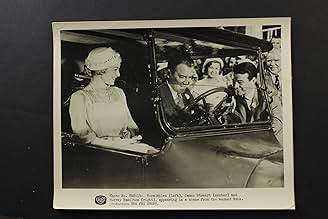
The at home sequences while well played, look like something out of "Father Knows Best", the popular TV series of the day. Another thing I found unusual was the fact that Stewart and Miles basically carry the whole film. Other characters appear briefly then either get killed off or disappear altogether. While Stewart and Miles do their best, they hardly seem to have aged 35 years over the course of the story. And there are no name actors to speak of in the supporting cast. Murray Hamilton, Larry Pennell and Nick Adams do appear briefly, but were not that well known in 1959.
James Cagney's "G-Men" (1935) covered the FBI's early years much better.
Inrerspersed with these episodes are home life interludes where Stewart's character turns into George Bailey ("Its a Wonderful Life" (1946)). He meets and marries Lucy (Vera Miles) and we follow their lives through the birth of three children, a miscarriage, a separation and a war time tragedy.
Told in a documentary style, this film, in my opinion is far too long at 149 minutes. The action sequences, such as they are, are brief and with no character development of the gangsters. They are simply confronted by the FBI and either arrested or gunned down. The Hardesty character is hardly involved in these segments and he does not confront any of the gangsters directly.
The at home sequences while well played, look like something out of "Father Knows Best", the popular TV series of the day. Another thing I found unusual was the fact that Stewart and Miles basically carry the whole film. Other characters appear briefly then either get killed off or disappear altogether. While Stewart and Miles do their best, they hardly seem to have aged 35 years over the course of the story. And there are no name actors to speak of in the supporting cast. Murray Hamilton, Larry Pennell and Nick Adams do appear briefly, but were not that well known in 1959.
James Cagney's "G-Men" (1935) covered the FBI's early years much better.
Every time a bell rings, a gangster gets a bullet!
This movie is very well filmed for its age (1959), it is one of the better FBI movie's that actually portray it as the FBI should be portrayed, as the good guys, not the bad guys. Though it is one sided I think the point of the movie was to show the triumphs of the FBI. Jimmy Stewart was great in it!
I Love You, J. Edgar Hoover
An entertaining tribute to American law enforcement's most legendary force falls victim to Hollywood hokum, unrealistic dialogue, and choking piety regarding everything about the Federal Bureau Of Investigation, especially its founder, J. Edgar Hoover.
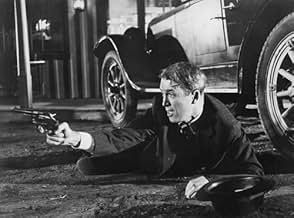
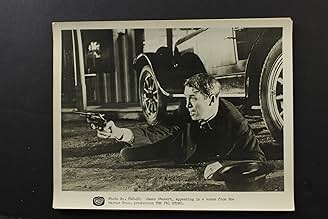
While Hoover is often referenced, sometimes heard, and even briefly seen at his desk, Buddha-like, the focus here is on fictional FBI agent Chip Hardesty (James Stewart), who dedicates himself to serving the bureau through decades of crime-fighting heroics. Whether ambushing John Dillinger or rounding up the Ku Klux Klan, Hardesty provides a case example of the heroism from which the FBI was made.
The final words of the film, superimposed on the screen over triumphant fanfare, establish what "The FBI Story" is all about: "Our sincere thanks to the FBI and J. Edgar Hoover not only for their guidance and active participation in the making of this motion picture but also for making this world of ours a safer place in which to live..."
If they had saved this boilerplate for the end, "The FBI Story" might have had a chance. Stewart was one of the greats, and in Vera Miles as the love interest he enjoys steady support. Few color films from the 1950s are this crisp- and dynamic-looking. Director Mervyn LeRoy was famously good at his job, and manages some stellar framing work with an eye for period detail in the episodic sequences showing Hardesty on the job at various stages of the FBI's existence.
But the accent of this film is not on delivering quality entertainment but burnishing Director Hoover's ego. At every turn, we get our noses rubbed into how brilliant an organization he set up, to the point where suspense gets crushed before it has a chance to develop.
An opening sequence features Nick Adams as a young man named Graham who kills his mother and 48 other people on board a plane by putting a bomb inside her luggage. Immediately we see FBI agents questioning him and searching his house until he cracks and confesses, even yelling at the end to send his mail to hell.
"Jack Graham's only mistake was that he was absent-minded," Stewart tells us in a voice-over. "He forgot about the broad research powers of the FBI."
Elsewhere we get lengthy descriptions of what these powers are, and even footage of people typing or staring into microscopes at FBI headquarters.
The dialogue in this film is much too purple, as if competing for your attention with Max Steiner's bombastic score. There are some howlers other reviewers here pointed out; my favorite is when Miles gets cross when she finds out her husband is going out armed to take on some public enemies. He tells her to take it easy.
"You take it easy, Chip! I don't look good in black."
Murray Hamilton has his own over-the-top moments as Chip's FBI buddy, all charged up with Hoover in charge. "I never wanna cool down," he says. No worries; a breathless script by Richard L. Breen and John Twist won't let him until it's time to stop and smell the lilacs.
There's one solid sequence where Hardesty investigates the murders of Osage Indians in Oklahoma. That works as a crime story with some mystery and humor to it, not to mention a satisfying wrapper.
The rest of the time, it's like some jacked-up medley of J. Edgar's greatest hits, like taking down bank robbers and a Soviet spy ring. Much padding involves Hardesty's family affairs, like his search for missing tissue paper or a crisis involving a shattered dish of pickles. Even when the script tries to drum up a crisis between Hardesty and his wife, the result is unconvincing and much-too-easily resolved.
That goes for most everything else involving "The FBI Story," rich in visual style but cheap in too many other departments, including the kind of patriotism too often used as the refuge of scoundrels. I do admire J. Edgar Hoover in some areas, but when it came to making movies, he should have stayed in the closet.
While Hoover is often referenced, sometimes heard, and even briefly seen at his desk, Buddha-like, the focus here is on fictional FBI agent Chip Hardesty (James Stewart), who dedicates himself to serving the bureau through decades of crime-fighting heroics. Whether ambushing John Dillinger or rounding up the Ku Klux Klan, Hardesty provides a case example of the heroism from which the FBI was made.
The final words of the film, superimposed on the screen over triumphant fanfare, establish what "The FBI Story" is all about: "Our sincere thanks to the FBI and J. Edgar Hoover not only for their guidance and active participation in the making of this motion picture but also for making this world of ours a safer place in which to live..."
If they had saved this boilerplate for the end, "The FBI Story" might have had a chance. Stewart was one of the greats, and in Vera Miles as the love interest he enjoys steady support. Few color films from the 1950s are this crisp- and dynamic-looking. Director Mervyn LeRoy was famously good at his job, and manages some stellar framing work with an eye for period detail in the episodic sequences showing Hardesty on the job at various stages of the FBI's existence.
But the accent of this film is not on delivering quality entertainment but burnishing Director Hoover's ego. At every turn, we get our noses rubbed into how brilliant an organization he set up, to the point where suspense gets crushed before it has a chance to develop.
An opening sequence features Nick Adams as a young man named Graham who kills his mother and 48 other people on board a plane by putting a bomb inside her luggage. Immediately we see FBI agents questioning him and searching his house until he cracks and confesses, even yelling at the end to send his mail to hell.
"Jack Graham's only mistake was that he was absent-minded," Stewart tells us in a voice-over. "He forgot about the broad research powers of the FBI."
Elsewhere we get lengthy descriptions of what these powers are, and even footage of people typing or staring into microscopes at FBI headquarters.
The dialogue in this film is much too purple, as if competing for your attention with Max Steiner's bombastic score. There are some howlers other reviewers here pointed out; my favorite is when Miles gets cross when she finds out her husband is going out armed to take on some public enemies. He tells her to take it easy.
"You take it easy, Chip! I don't look good in black."
Murray Hamilton has his own over-the-top moments as Chip's FBI buddy, all charged up with Hoover in charge. "I never wanna cool down," he says. No worries; a breathless script by Richard L. Breen and John Twist won't let him until it's time to stop and smell the lilacs.
There's one solid sequence where Hardesty investigates the murders of Osage Indians in Oklahoma. That works as a crime story with some mystery and humor to it, not to mention a satisfying wrapper.
The rest of the time, it's like some jacked-up medley of J. Edgar's greatest hits, like taking down bank robbers and a Soviet spy ring. Much padding involves Hardesty's family affairs, like his search for missing tissue paper or a crisis involving a shattered dish of pickles. Even when the script tries to drum up a crisis between Hardesty and his wife, the result is unconvincing and much-too-easily resolved.
That goes for most everything else involving "The FBI Story," rich in visual style but cheap in too many other departments, including the kind of patriotism too often used as the refuge of scoundrels. I do admire J. Edgar Hoover in some areas, but when it came to making movies, he should have stayed in the closet.
"Since he was a Communist, we knew he wasn't going to church."
Entertaining docudrama about the history of the FBI, as told by one agent in particular named Chip (James Stewart). Yes, it's more fiction than fact but it's also a good movie. Judging by some of the reviews here, most of the people hating on the movie seem to be political ax grinders. Obviously J. Edgar Hoover had a hands-on part in the making of this film. He inspires Jimmy to stick with the FBI in an amusingly corny scene. But I'm judging the movie on an entertainment basis, first and foremost, and this movie is entertaining.
The FBI parts are great. The parts dealing with Jimmy's domestic life not so much. Vera Miles is very attractive as a blonde and plays the clichéd but likable wife role well. It's just this part of the movie isn't that interesting and takes up too much time in a movie that goes on for over two hours. Murray Hamilton is good as Jimmy's partner ("I never want to cool off! NEVER!"). If your blood boils about J. Edgar Hoover or you demand absolute historical accuracy from any film depicting real people and events, you'll hate this. But if you like Jimmy Stewart, you'll certainly find things to enjoy here. He's really the whole show. Whether he's taking on the KKK, gangsters, and Commies or just getting ticked off at his kids, he's fun to watch. It's a little long but never boring.
The FBI parts are great. The parts dealing with Jimmy's domestic life not so much. Vera Miles is very attractive as a blonde and plays the clichéd but likable wife role well. It's just this part of the movie isn't that interesting and takes up too much time in a movie that goes on for over two hours. Murray Hamilton is good as Jimmy's partner ("I never want to cool off! NEVER!"). If your blood boils about J. Edgar Hoover or you demand absolute historical accuracy from any film depicting real people and events, you'll hate this. But if you like Jimmy Stewart, you'll certainly find things to enjoy here. He's really the whole show. Whether he's taking on the KKK, gangsters, and Commies or just getting ticked off at his kids, he's fun to watch. It's a little long but never boring.
Hoover approve
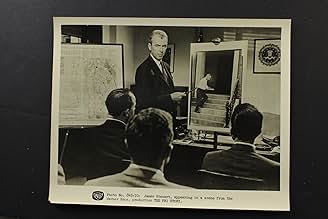
This starts almost like a high school educational film about the FBI. The narration is actually veteran agent Chip Hardesty (James Stewart) doing a lecture. He recounts the story of the FBI starting from its early haphazard days in 1924. He marries pretty librarian Lucy Ann Ballard (Vera Miles). Over the years, he investigates the Ku Klux Klan, the Osage Indian murders, various gangsters, Nazis in Brazil, and communist spies.
This is a sympathetic look at the FBI approved by Hoover. The opening is like a school educational film which is par for the course. It's an old fashion take on the federal police force. It definitely doesn't indulge in any controversies against the FBI. There may violence by the KKK but there is no mentions of lynching. They round up enemy aliens during WWII but they don't talk about the thousands of innocent citizens in internment camps. It's also episodic in nature. The plot doesn't flow as much as it continues on and on. This is definitely a movie where Hollywood submits to authority.
This is a sympathetic look at the FBI approved by Hoover. The opening is like a school educational film which is par for the course. It's an old fashion take on the federal police force. It definitely doesn't indulge in any controversies against the FBI. There may violence by the KKK but there is no mentions of lynching. They round up enemy aliens during WWII but they don't talk about the thousands of innocent citizens in internment camps. It's also episodic in nature. The plot doesn't flow as much as it continues on and on. This is definitely a movie where Hollywood submits to authority.


Did you know
- TriviaTwo FBI agents were on the set at all times.
- GoofsJennie forgets her speech at a mid-term Honor Society event. When her father comforts her in the family car a few moments later, the cherry blossoms are in bloom; this usually occurs in early April in Washington (DC). However, after they leave the car with the radio still on, a news bulletin breaks in, announcing the attack on Pearl Harbor, which took place on December 7, 1941. No cherry blossoms would have been in bloom then, nor would the weather have been mild enough as depicted in the accompanying scenes.
- Quotes
[first lines]
John Michael Hardesty: [narrating] Webster's International Dictionary defines murder as the unlawful taking of human life by another human being. On a November evening in 1955, the definition became obsolete. A mass murder was being planned.
- ConnectionsEdited from The High and the Mighty (1954)
- How long is The FBI Story?Powered by Alexa
Details
- Release date
- Country of origin
- Language
- Also known as
- Geheimagent des FBI
- Filming locations
- Production companies
- See more company credits at IMDbPro
- Runtime
- 2h 29m(149 min)
- Aspect ratio
- 1.66 : 1
Contribute to this page
Suggest an edit or add missing content