IMDb RATING
6.9/10
3.2K
YOUR RATING


The black sheep of a family and the local minister discover their true vocations during the Revolutionary War.The black sheep of a family and the local minister discover their true vocations during the Revolutionary War.The black sheep of a family and the local minister discover their true vocations during the Revolutionary War.
- Directors
- Writers
- Stars
- Nominated for 1 BAFTA Award
- 1 nomination total


Neil McCallum
- Christie Dudgeon
- (as Neil Mc Callum)


Joe Beckett
- British Officer
- (uncredited)

Steven Berkoff
- British Corporal
- (uncredited)
- Directors
- Writers
- All cast & crew
- Production, box office & more at IMDbPro
6.93.2K
1
2
3
4
5
6
7
8
9
10
Featured reviews
G. Bernard Shaw has fun with the American Revolution
"The Devil's Disciple" is based on a play by George Bernard Shaw. It recalls of a page in the history of the American Revolution. The play and this film interject considerable humor and satire in otherwise serious matters of the time. All of the cast are good in their roles.
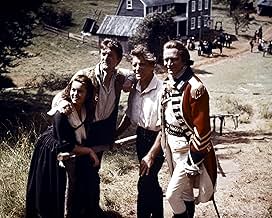
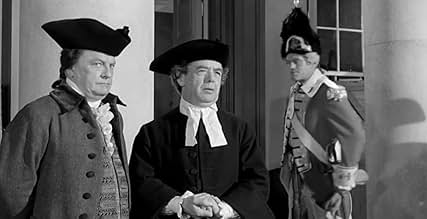
Burt Lancaster is the Rev. Anthony Anderson. Kirk Douglas is a rogue patriot, Richard Dudgeon. Laurence Olivier is the epitome of the arrogant and unbending British general, Burgoyne. Janette Scot plays Anthony's wife, Judith Anderson. She's a conflicted woman after she meets Dudgeon. She loves her husband but also falls for Dudgeon, in his adventurous ways. But two can play at that, as she find outs with Anthony at the end of the film. Harry Andrews flourishes in yet another of his fine British uniform portrayals.
The story takes place in the days of leading up to and the start of the American Revolution. Shaw's sarcasm and cynical treatment of some of the beliefs of the time underlie the story. The film isn't exceptional, but Lancaster's production company pulled together a stellar cast for this humorous look at history and poking fun through the pen of G.B. Shaw.
This is the third film that Lancaster and Douglas made together. Most movie buffs should find the film amusing.
Burt Lancaster is the Rev. Anthony Anderson. Kirk Douglas is a rogue patriot, Richard Dudgeon. Laurence Olivier is the epitome of the arrogant and unbending British general, Burgoyne. Janette Scot plays Anthony's wife, Judith Anderson. She's a conflicted woman after she meets Dudgeon. She loves her husband but also falls for Dudgeon, in his adventurous ways. But two can play at that, as she find outs with Anthony at the end of the film. Harry Andrews flourishes in yet another of his fine British uniform portrayals.
The story takes place in the days of leading up to and the start of the American Revolution. Shaw's sarcasm and cynical treatment of some of the beliefs of the time underlie the story. The film isn't exceptional, but Lancaster's production company pulled together a stellar cast for this humorous look at history and poking fun through the pen of G.B. Shaw.
This is the third film that Lancaster and Douglas made together. Most movie buffs should find the film amusing.
Olivier Flat in "Devil's Disciple"?
This is in answer to otter_c, who wrote: "The only disappointment is Laurence Olivier as General Burgoyne. Olivier castigated himself in his autobiography for botching one of Shaw's most hilarious roles, his personal griefs were overwhelming him at the time. He's nervous and unfocused, line after wonderful line falls flat. (He returned to form shortly after in "Spartacus" and "The Entertainer")"
All due respect to both you and Sir Lawrence, but I think this is an instance where his self-appraisal is a little off-target.
I've always enjoyed this performance as a very excellent portrait of a thinking man and wit under a great deal of pressure, with no idea that Olivier did not care for it -- thing is, Burgoyne IS distracted; he has more important fish to fry than this petty punitive hanging, and even before he gets the news about Howe he is deeply concerned for the continued viability of his command: He tosses off his bon mots as the after-thoughts of the kind of intellect who could actually write plays when he wasn't under siege in an unpopular war in unfriendly country.
And I find that makes them and Burgoyne funnier than, say, Ian Richardson's total self- awareness in the '87 BBC production.
Olivier liked to be In Control when he worked; and in some of the roles in which I do not much care for him I feel it makes him artificial and excessively mannered. So naturally, a performance given when he was overwhelmed with grief is gonna rankle the perfectionist in him; but since he was preoccupied with other, more important (to him) matters it put him willy-nilly square in the same frame of mind as I gauge Gentlemanly Johnny to have been in as disaster loomed, I feel it really helps make the performance live in a way the studied Olivier technique might not have come within yards of.
The two men -- the actor and the general he portrays -- are up against it, but instinct pulls each through even if more distractedly than if under less severe constraints; there is still enough of the essence of each to make a credible showing.
The artist is not always the best critic of his own work; and Olivier's General Burgoyne is excellent work whether the actor knew what he was doing or not.
All due respect to both you and Sir Lawrence, but I think this is an instance where his self-appraisal is a little off-target.
I've always enjoyed this performance as a very excellent portrait of a thinking man and wit under a great deal of pressure, with no idea that Olivier did not care for it -- thing is, Burgoyne IS distracted; he has more important fish to fry than this petty punitive hanging, and even before he gets the news about Howe he is deeply concerned for the continued viability of his command: He tosses off his bon mots as the after-thoughts of the kind of intellect who could actually write plays when he wasn't under siege in an unpopular war in unfriendly country.
And I find that makes them and Burgoyne funnier than, say, Ian Richardson's total self- awareness in the '87 BBC production.
Olivier liked to be In Control when he worked; and in some of the roles in which I do not much care for him I feel it makes him artificial and excessively mannered. So naturally, a performance given when he was overwhelmed with grief is gonna rankle the perfectionist in him; but since he was preoccupied with other, more important (to him) matters it put him willy-nilly square in the same frame of mind as I gauge Gentlemanly Johnny to have been in as disaster loomed, I feel it really helps make the performance live in a way the studied Olivier technique might not have come within yards of.
The two men -- the actor and the general he portrays -- are up against it, but instinct pulls each through even if more distractedly than if under less severe constraints; there is still enough of the essence of each to make a credible showing.
The artist is not always the best critic of his own work; and Olivier's General Burgoyne is excellent work whether the actor knew what he was doing or not.
Maybe THIS was the original "buddy movie"
Burt Lancaster and Kirk Douglas shared a chemistry -- offscreen as well as on screen -- which was rare even by Hollywood standards. There's a legend about them, as a matter of fact (and I'd hate to think it apocryphal), that -- at the onset of each of the many films in which they co-starred -- they flipped a coin to see who would play which role.
In their film adaptation of George Bernard Shaw's "The Devil's Disciple," the coin-flip would have been at best symbolic -- or perhaps ironic is the term here -- inasmuch as the plotline concerns role reversals and identity switching. Set during the closing days of the American revolution, Dick Dudgeon, the town rakehell (Douglas), having previously admitted to Reverend Anderson, the local minister (Lancaster), "Pastor, there's something about you I respect, and that makes me want you for my enemy," allows himself to be mistakenly arrested as that minister by British troops. It's an act which even he, at the time, is at a loss to explain. While Dudgeon keeps the local British commandant, General Burgoyne (Laurence Olivier in what turns out to be one of his finer screen performances), alternately amused and bemused, Reverend Anderson discovers within himself a call to action as he rallies the rebel troops to rescue Dudgeon and to cut off Burgoyne's reinforcements.
Purists may note that the film adaptation tampers with Shaw's more typically cynical resolution in the original stage presentation (yes, it is much more 'upbeat' and true to the Hollywood dicta of the day) . . . and yet the Shavian quality of the dialogue between Dudgeon and Anderson -- not to mention the barbed repartee between Dudgeon and Burgoyne -- is preserved virtually intact here. It is also brilliantly rendered by all parties.
Although Douglas manages to 'steal' much of this film, Lancaster affords us more than a glimpse of the ability which will, in little more than another year, garner him an Oscar -- for 'Elmer Gantry'-- (and put an end to the yearly ritual of his and Douglas' comedic "It's So Great Not To Be Nominated" performance at the awards ceremonies).
One of Hollywood's more successful adaptations of a stage play, this is also a film which, more than most, stands the test of time.
In their film adaptation of George Bernard Shaw's "The Devil's Disciple," the coin-flip would have been at best symbolic -- or perhaps ironic is the term here -- inasmuch as the plotline concerns role reversals and identity switching. Set during the closing days of the American revolution, Dick Dudgeon, the town rakehell (Douglas), having previously admitted to Reverend Anderson, the local minister (Lancaster), "Pastor, there's something about you I respect, and that makes me want you for my enemy," allows himself to be mistakenly arrested as that minister by British troops. It's an act which even he, at the time, is at a loss to explain. While Dudgeon keeps the local British commandant, General Burgoyne (Laurence Olivier in what turns out to be one of his finer screen performances), alternately amused and bemused, Reverend Anderson discovers within himself a call to action as he rallies the rebel troops to rescue Dudgeon and to cut off Burgoyne's reinforcements.
Purists may note that the film adaptation tampers with Shaw's more typically cynical resolution in the original stage presentation (yes, it is much more 'upbeat' and true to the Hollywood dicta of the day) . . . and yet the Shavian quality of the dialogue between Dudgeon and Anderson -- not to mention the barbed repartee between Dudgeon and Burgoyne -- is preserved virtually intact here. It is also brilliantly rendered by all parties.
Although Douglas manages to 'steal' much of this film, Lancaster affords us more than a glimpse of the ability which will, in little more than another year, garner him an Oscar -- for 'Elmer Gantry'-- (and put an end to the yearly ritual of his and Douglas' comedic "It's So Great Not To Be Nominated" performance at the awards ceremonies).
One of Hollywood's more successful adaptations of a stage play, this is also a film which, more than most, stands the test of time.
You Will Want to Slap Her
Having seen The Devil's Disciple on a venue that runs films which have fallen into the public domain, I wonder how anyone could have let copyright lapse on such an intriguing, yet quirky, film as this. With it's triumvirate of strong leading men, and an interesting script, this movie should be much more well known. And with it's rather oddball presentation it's surprising that it does not have cult status.
The live action segments are excellent, and there is no slack in the acting or direction. However, some poor soul made the bizarre decision to interject little Rankin-Bass type puppet animation segments at nearly random moments, thoroughly negating - each time - all the dramatic momentum that has been accumulated up to that point. The animated segments are well done, and moderately amusing in and of themselves, yet completely incongruous to the tone of the surrounding film.
These segments are, however, a minor flaw when compared with the greatest drawback of this movie. I am referring to the character of Judith Anderson, our hero's wife. She is, without a doubt, the most annoyingly fickle and foolish female character that I can recall having ever witnessed in any film; and very nearly the most hysterical as well. Not too far into the story I began to get the feeling that I would very much like to slap her. Halfway through the film I was consciously rooting for each of the male leads to take a turn slapping her. By the end of the film I was convinced that everyone in the film should have slapped her, and probably the crew as well! The only thing that made this character bearable was the calm, good-natured presence of Lancaster, Douglas, and Olivier.
Now, this is not intended to denigrate Miss Janette Scott, who portrayed Mrs. Anderson. On the contrary, she did a remarkable job of making this over-the-top hysterical woman seem real. A lesser actress might have easily come off as overly melodramatic and phony in such an extreme performance. Her skill in the performance is the reason that we want to slap her. Kudos to Janette Scott. It is my opinion that almost everyone who watches this film will, in fact, want to slap her. Be prepared.
The live action segments are excellent, and there is no slack in the acting or direction. However, some poor soul made the bizarre decision to interject little Rankin-Bass type puppet animation segments at nearly random moments, thoroughly negating - each time - all the dramatic momentum that has been accumulated up to that point. The animated segments are well done, and moderately amusing in and of themselves, yet completely incongruous to the tone of the surrounding film.
These segments are, however, a minor flaw when compared with the greatest drawback of this movie. I am referring to the character of Judith Anderson, our hero's wife. She is, without a doubt, the most annoyingly fickle and foolish female character that I can recall having ever witnessed in any film; and very nearly the most hysterical as well. Not too far into the story I began to get the feeling that I would very much like to slap her. Halfway through the film I was consciously rooting for each of the male leads to take a turn slapping her. By the end of the film I was convinced that everyone in the film should have slapped her, and probably the crew as well! The only thing that made this character bearable was the calm, good-natured presence of Lancaster, Douglas, and Olivier.
Now, this is not intended to denigrate Miss Janette Scott, who portrayed Mrs. Anderson. On the contrary, she did a remarkable job of making this over-the-top hysterical woman seem real. A lesser actress might have easily come off as overly melodramatic and phony in such an extreme performance. Her skill in the performance is the reason that we want to slap her. Kudos to Janette Scott. It is my opinion that almost everyone who watches this film will, in fact, want to slap her. Be prepared.
A wonderful film!
Kirk Douglas plays the title character with charm and panache, Lancaster delivers one of his best performances, and Olivier is an absolute delight in his smooth-as-silk portrayal of "Gentlemanly Johnny!" A pleasure to watch -- Bravo!


Did you know
- TriviaThe character of The Reverend Anthony Anderson was loosely based on the historical figure of Peter Muhlenberg, known as the "Fighting Parson of the American Revolution".
- GoofsSeveral times while going through the forest, the British refer to "snipers." However, the term sniper didn't come into being until about 40 years after the American Revolutionary War. The term came into usage in 1824, while the war ended in 1783.
- Quotes
Major Swindon: What will history say, sir?
General John Burgoyne: History, sir, will tell lies, as usual!
- Crazy creditsThe opening credits appear over a map of North America during the Revolutionary War, which then zooms into an animated battle played out by paper models.
- ConnectionsReferenced in Bells Are Ringing (1960)
- SoundtracksYankee Doodle
(uncredited)
traditional 18th Century Anglo-American folk song
Heard under main title
- How long is The Devil's Disciple?Powered by Alexa
Details
- Release date
- Countries of origin
- Language
- Also known as
- El discípulo del diablo
- Filming locations
- Production companies
- See more company credits at IMDbPro
Box office
- Budget
- $1,500,000 (estimated)
- Runtime
- 1h 23m(83 min)
- Color
- Aspect ratio
- 1.85 : 1
Contribute to this page
Suggest an edit or add missing content