The Diary of Anne Frank
- 3h
IMDb RATING
7.4/10
14K
YOUR RATING


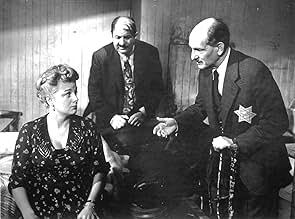
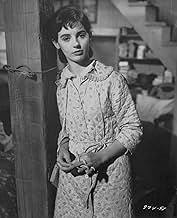
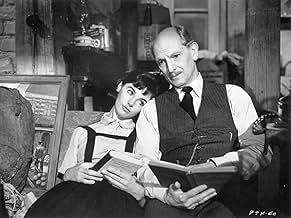
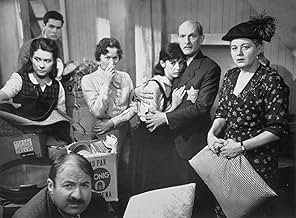
During World War II, a teenage Jewish girl named Anne Frank and her family are forced into hiding in the Nazi-occupied Netherlands.During World War II, a teenage Jewish girl named Anne Frank and her family are forced into hiding in the Nazi-occupied Netherlands.During World War II, a teenage Jewish girl named Anne Frank and her family are forced into hiding in the Nazi-occupied Netherlands.
- Won 3 Oscars
- 9 wins & 14 nominations total
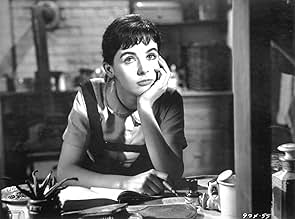
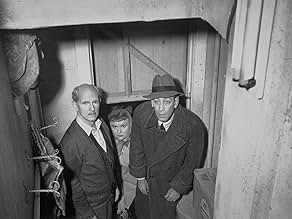


Dodie Heath
- Miep Gies
- (as Dody Heath)

Arthur Berkeley
- Dutch Workman
- (uncredited)
Robert Boon
- SS Man
- (uncredited)
John Corrydon
- Dutch Workman
- (uncredited)
Del Erickson
- SS Man
- (uncredited)
Gretchen Goertz
- Sanne Devries
- (uncredited)
William Kirschner
- Workman in Shop
- (uncredited)


Edmund Purdom
- British Radio Announcer
- (voice)
- (uncredited)
7.414.3K
1
2
3
4
5
6
7
8
9
10
Featured reviews
Good watch.
We had to watch this movie in Drama class my freshman year of high school. Problem was that I had Drama 1st period. I slept a lot 1st period (and sometimes 2nd). So a 3 hour movie that the teacher taped (with commercials) was turned in to a two week affair, or so it seemed. I got another shot to watch it late one night, 4 am or so, on Bravo. Problem was, unbeknownst to me, it was a two night deal. So I only took in the first half of it. Finally got the shot to see the whole thing on AMC this afternoon. Millie Perkins was just wonderful as Anne Frank, and a great cast all around. I knew Shelley Winters had won an Oscar but not what for. Sometimes a good story is so much better because it's a true story, like Apollo 13, and this is no exception. It's hard to imagine these things actually happened.
Go watch this sometime when you have 3 hours free.
8 out of 10 from me.
Go watch this sometime when you have 3 hours free.
8 out of 10 from me.
great first film production
Based on the famous diary and the stage play, this is the story of one of the most well known victim of the Nazis. In 1942, she receives the blank diary on her 13th birthday. Soon, the family is hiding in the attic of her father's business with others. A few employees would help them stay hidden for over 2 years before they are discovered by the Nazis.
Surprisingly, there is real tension especially during the robberies. The quiet brings a heighten intensity. The cast's acting is generally great. There is a poignancy with this first film production of the material. The only drawback is Millie Perkins. Her inexperienced acting actually works for her in this case although as a twenty year old, playing Anne at 13 is a little off. She doesn't have the youth to play the character's brattiness. It's a minor problem in an otherwise terrific production.
Surprisingly, there is real tension especially during the robberies. The quiet brings a heighten intensity. The cast's acting is generally great. There is a poignancy with this first film production of the material. The only drawback is Millie Perkins. Her inexperienced acting actually works for her in this case although as a twenty year old, playing Anne at 13 is a little off. She doesn't have the youth to play the character's brattiness. It's a minor problem in an otherwise terrific production.
Stevens' Big Gamble
Just as Otto Preminger gambled in the casting of unknown Jean Seaberg in the title role of "St. Joan," so George Stevens similarly took a big risk with Millie Perkins in "The Diary of Anne Frank."
As the story goes, Stevens saw model Millie on a magazine cover, fell in love with her expressive eyes, and theorized that this unknown would be more effective than an established star to portray Anne.
Though Perkins had no acting experience, Stevens--at the peak of his career--was confident that he could teach Millie to act, at least for this film.
Although Audrey Hepburn was very interested in the part (as was Stevens in her) Stevens finally decided that it would be more effective to use a fresh actor--one with whom the public would have no pre-conceptions. (Other successful cases to support his theory being Hurd Hatfield as Dorian Gray and Robert Alda as George Gershwin.) Still, it was a huge gamble, since Anne was the pivotal role in this major production.
Well, the results are now history. For many moviegoers Perkins was just fine. While some critics easily spotted her reedy inexperience and rather sympathized with her being thrust into a super-professional arena, they conceded that Millie did do a commendable job.
Unfortunately, Perkins took a lashing from most critics, and her subsequent acting career has been relegated to minor roles in "B" films. Those are the "breaks," though in the fickle film world.
Yet, with all this, many people still think of Perkins' countenance when they envision of Anne Frank. So she and Stevens made a lasting impression.
Likewise, for many, this production remains the definitive version of a profoundly touching World War II real-life chronicle.
As the story goes, Stevens saw model Millie on a magazine cover, fell in love with her expressive eyes, and theorized that this unknown would be more effective than an established star to portray Anne.
Though Perkins had no acting experience, Stevens--at the peak of his career--was confident that he could teach Millie to act, at least for this film.
Although Audrey Hepburn was very interested in the part (as was Stevens in her) Stevens finally decided that it would be more effective to use a fresh actor--one with whom the public would have no pre-conceptions. (Other successful cases to support his theory being Hurd Hatfield as Dorian Gray and Robert Alda as George Gershwin.) Still, it was a huge gamble, since Anne was the pivotal role in this major production.
Well, the results are now history. For many moviegoers Perkins was just fine. While some critics easily spotted her reedy inexperience and rather sympathized with her being thrust into a super-professional arena, they conceded that Millie did do a commendable job.
Unfortunately, Perkins took a lashing from most critics, and her subsequent acting career has been relegated to minor roles in "B" films. Those are the "breaks," though in the fickle film world.
Yet, with all this, many people still think of Perkins' countenance when they envision of Anne Frank. So she and Stevens made a lasting impression.
Likewise, for many, this production remains the definitive version of a profoundly touching World War II real-life chronicle.
A Story That's Full Of Hope And Yet Still Very Sad
Throughout the movie, it's the hopefulness that is constantly being expressed that makes this all the more sad to watch - because, of course, we (the viewer) know the hopelessness of the situation; we know how it's going to end.
The story is based on a stageplay which was in turn based on the actual diary of Anne Frank, whose family (being Jewish) went into hiding in Nazi-occupied Holland in 1942, sharing a very small space with several others. As the title implies, the movie is largely about Anne. We watch her grow up in this claustrophobic setting - starting at age 13 and spending more than two years there until the group was discovered. Starting out as a child with a natural rebellious streak, Anne grows into a young woman, falling in love with a young man sharing the living quarters. Millie Perkins was excellent as young Anne, and I was impressed with Joseph Schildkraut as her father Otto, who was in the end the only survivor. The movie begins and ends with his post-war visit to the place where they were hidden, and his grief at being the only survivor among his family is powerfully portrayed. In general, all the performances in this were quite good, and there was a believable portrayal of the difficulties involved in so many people sharing so little space under such stressful circumstances, and there are a number of very suspenseful moments involved. It's a very moving story.
The story is based on a stageplay which was in turn based on the actual diary of Anne Frank, whose family (being Jewish) went into hiding in Nazi-occupied Holland in 1942, sharing a very small space with several others. As the title implies, the movie is largely about Anne. We watch her grow up in this claustrophobic setting - starting at age 13 and spending more than two years there until the group was discovered. Starting out as a child with a natural rebellious streak, Anne grows into a young woman, falling in love with a young man sharing the living quarters. Millie Perkins was excellent as young Anne, and I was impressed with Joseph Schildkraut as her father Otto, who was in the end the only survivor. The movie begins and ends with his post-war visit to the place where they were hidden, and his grief at being the only survivor among his family is powerfully portrayed. In general, all the performances in this were quite good, and there was a believable portrayal of the difficulties involved in so many people sharing so little space under such stressful circumstances, and there are a number of very suspenseful moments involved. It's a very moving story.
The Restored Version!
I had read the book as a child and was swept up in the depiction of lives lived hidden away in the attic of a factory in Amsterdam, the strong true voice of Anne in her diaries capturing a world of imprisonment, the only crime being that of the wrong religion. Anne's spirit is never quenched as she experiences all the trial and tribulations of burgeoning adolescence, difficulty with her mother and a slow falling in love with a teenage boy, Peter, who shares her quarters.
The book was made into a successful play and then transfered to the screen where it was shortened considerably from the original. And that is where I saw it first, on the screen, but the shorter version, not being aware of the original length.
The cast are amazing, particularly Millie Perkins, who was the least experienced of all the cast and has to be in almost every scene. She candidly shared her experience of the six months' filming when the cast was virtually in captivity and mentioned in passing that the most difficult time she had was not surprisingly with the director, George Stevens, who was extremely supportive but rather with Joseph Schildkraut, who plays Otto Frank, her father in it. He made her life hell on set and never let her forget she was totally inexperienced, unlike the rest of them, in the way of acting. I'm mentioning this as not an inkling of this tension comes across on screen, and Millie has to share a lot of loving scenes with Joseph. Only a gifted actress could overcome her distaste for the man and perform as she did.
The expanded version of the movie is remarkable. It engenders a claustrophobic feeling in the viewer and an overwhelming sadness, knowing that none of these characters, apart from Otto, will survive the madness of the camps.
Anne's positive spirit drenches every scene, she believes in the intrinsic goodness of everyone in spite of everything.
Shelley, as Peter's mother, deserved her Oscar, she conveys her unhappy marriage, her reliance on the material, her love for her son, so well. Diane Baker, as Margot, Anne's sister, hands in a great performance as does the above mentioned Joseph. Ed Wynn, breaking type, plays Dussell the dentist as an irritating busybody.
In the way of the Oscars, so many superb movies fail to attain the best picture of the year. This is one of them. That year, the best picture Oscar went to Ben Hur. This is a far superior movie.
9 out of 10. Superb, especially in the restored length. Not to be missed. B&W at its finest.
The book was made into a successful play and then transfered to the screen where it was shortened considerably from the original. And that is where I saw it first, on the screen, but the shorter version, not being aware of the original length.
The cast are amazing, particularly Millie Perkins, who was the least experienced of all the cast and has to be in almost every scene. She candidly shared her experience of the six months' filming when the cast was virtually in captivity and mentioned in passing that the most difficult time she had was not surprisingly with the director, George Stevens, who was extremely supportive but rather with Joseph Schildkraut, who plays Otto Frank, her father in it. He made her life hell on set and never let her forget she was totally inexperienced, unlike the rest of them, in the way of acting. I'm mentioning this as not an inkling of this tension comes across on screen, and Millie has to share a lot of loving scenes with Joseph. Only a gifted actress could overcome her distaste for the man and perform as she did.
The expanded version of the movie is remarkable. It engenders a claustrophobic feeling in the viewer and an overwhelming sadness, knowing that none of these characters, apart from Otto, will survive the madness of the camps.
Anne's positive spirit drenches every scene, she believes in the intrinsic goodness of everyone in spite of everything.
Shelley, as Peter's mother, deserved her Oscar, she conveys her unhappy marriage, her reliance on the material, her love for her son, so well. Diane Baker, as Margot, Anne's sister, hands in a great performance as does the above mentioned Joseph. Ed Wynn, breaking type, plays Dussell the dentist as an irritating busybody.
In the way of the Oscars, so many superb movies fail to attain the best picture of the year. This is one of them. That year, the best picture Oscar went to Ben Hur. This is a far superior movie.
9 out of 10. Superb, especially in the restored length. Not to be missed. B&W at its finest.


Did you know
- TriviaAudrey Hepburn was first offered the role of Anne Frank, and Otto Frank was among those who nominated her. She refused it for three reasons. Firstly, she had decided to accept the role in Green Mansions (1959). Secondly, she had lived in occupied The Netherlands during the war and had seen the Nazis carry out street executions and watched as they herded Jews onto boxcars to carry them to concentration camps. She knew that making the film would bring back memories that were far too painful for her. However, thirdly, she was 30 and felt that she was too old to play a teenage character convincingly on screen.
- GoofsMany incidents from the diary are depicted out of order, and some specific speeches and actions are attributed to the wrong persons.
- Quotes
Anne Frank: I know it's terrible trying to have any faith when people are doing such horrible... But you know what I sometimes think? I think the world may be going through a phase, the way I was with mother. It'll pass. Maybe not hundreds of years, but someday. - I still believe, in spite of everything, that people are really good at heart.
- Crazy creditsAt the end, neither a "The End" credit nor a cast list appears, only the title of the film once more ("The Diary of Anne Frank").
- Alternate versionsOriginally released at 170 minutes, then later cut and available only in 156-minutes version. Complete edition has been recently restored on video.
- ConnectionsFeatured in George Stevens: A Filmmaker's Journey (1984)
- SoundtracksBerg op zoom
(uncredited)
Traditional
Details
Box office
- Budget
- $3,800,000 (estimated)
- Runtime
- 3h(180 min)
- Color
- Aspect ratio
- 2.35 : 1
Contribute to this page
Suggest an edit or add missing content