IMDb RATING
6.8/10
1.5K
YOUR RATING

After a Caribbean despot's murder, two men compete for his widow Ines on Ojeda, a prison island. When a hardliner takes power and targets his rival, bureaucrat Vazquez seeks support from loc... Read allAfter a Caribbean despot's murder, two men compete for his widow Ines on Ojeda, a prison island. When a hardliner takes power and targets his rival, bureaucrat Vazquez seeks support from locals and inmates to remove him.After a Caribbean despot's murder, two men compete for his widow Ines on Ojeda, a prison island. When a hardliner takes power and targets his rival, bureaucrat Vazquez seeks support from locals and inmates to remove him.

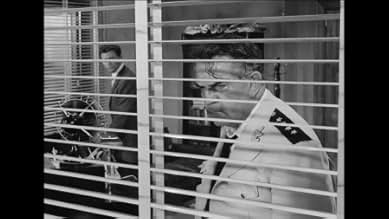
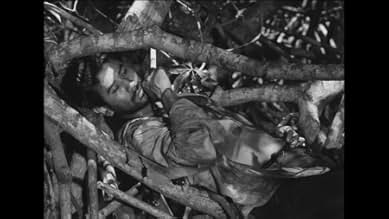

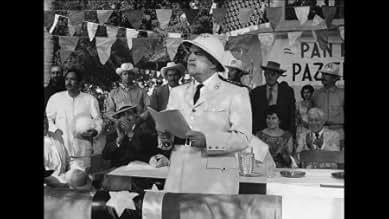


María Félix
- Inés Rojas
- (as Maria Felix)


Miguel Ángel Ferriz
- Le gouverneur Mariano Vargas
- (as M.A. Ferriz)
Raúl Dantés
- Le lieutenant García
- (as Raoul Dantes)


Armando Acosta
- Manuel
- (uncredited)
Edmundo Barbero
- Le procureur
- (uncredited)

Augusto Benedico
- Le ministre Sáenz
- (uncredited)
Antonio Bravo
- Le juge
- (uncredited)
José Chávez
- Le chauffeur transportant Inès Rojàs
- (uncredited)

6.81.4K
1
2
3
4
5
6
7
8
9
10
Featured reviews
Republic of Sin
Although Bunuel was personally dismissive of this film and neither he nor Gerard Philippe for a moment took the thing seriously, a director's failures can sometimes be more interesting than their successes. While no film with his veteran cameraman Gabriel Figueroa behind the camera and Maria Felix in front of it can fail to be worth watching.
The failure of Idealism.
This is a comparatively obscure entry in the Luis Bunuel canon and although the whole is less than the sum of its parts, this never less than intriguing director has given us a combination of pot boiler and seering political statement.
The mercurial and charismatic Gérard Philippe plays a man whose idealistic principles cause incalculable damage and the poignancy of his well-meaning but tragic character is enhanced by a visibly ailing actor who was to die of liver cancer four months after filming was completed.
It must be said that the 'fever' of the title doesn't really amount to much as the anticipated mutiny by the prisoners takes place off screen but of course the temperature is guaranteed to rise and the pulse to quicken whenever the force of nature that is Maria Félix is on the premises. The film's most effective scene, for this viewer at any rate, is that in which her apparent submission to Jean Servais is in fact a triumph of dominance. Servais is a splendid villain and as always, his soulful expression evinces our sympathy no matter how nefarious the character he is playing.
Bunuel was not especially fond of this film and evidently regretted not having provided Philippe with a more worthy swansong. During the filming Bunuel happened to ask his leading man: "Why did you agree to make this film?" When Philippe said: "I don't know. And you?" the director replied: "I don't know either."
The mercurial and charismatic Gérard Philippe plays a man whose idealistic principles cause incalculable damage and the poignancy of his well-meaning but tragic character is enhanced by a visibly ailing actor who was to die of liver cancer four months after filming was completed.
It must be said that the 'fever' of the title doesn't really amount to much as the anticipated mutiny by the prisoners takes place off screen but of course the temperature is guaranteed to rise and the pulse to quicken whenever the force of nature that is Maria Félix is on the premises. The film's most effective scene, for this viewer at any rate, is that in which her apparent submission to Jean Servais is in fact a triumph of dominance. Servais is a splendid villain and as always, his soulful expression evinces our sympathy no matter how nefarious the character he is playing.
Bunuel was not especially fond of this film and evidently regretted not having provided Philippe with a more worthy swansong. During the filming Bunuel happened to ask his leading man: "Why did you agree to make this film?" When Philippe said: "I don't know. And you?" the director replied: "I don't know either."
REPUBLIC OF SIN (Luis Bunuel, 1959) ***
With this, I begin a complete Luis Bunuel retrospective - in preparation for a proposed series of talks my twin brother Roderick and I have been invited to hold about our favorite film-maker. In keeping with the latter's own hatred of symmetry, I opted to start with those titles I am only marginally familiar with...but in reverse chronological order! Ironically, while REPUBLIC OF SIN was among the first films of his that I watched (on late-night Italian TV), it remains one of his least-known (and hardest-to-find) efforts. Indeed, recently I have had to speedily provide an Italian "Facebook" friend of mine with a copy of it - on account of a journalist acquaintance of his who was writing an article on the film itself! Though I concede it is only a minor work in Bunuel's canon, the rewards one reaps from the picture are still considerable - infused as it is with most of his typical concerns (right from the opening narration denouncing a quaint monastery as a symbol of European/Catholic oppression on the fictitious South American island on which it is exclusively set!).
The film - which would eventually be remade for French TV in 1993 - is perhaps best-remembered today for being the swan-song of its popular, handsome and talented leading man, Gerard Philipe, who died of cancer that same year at the young age of 36! Bunuel, having met him on the set of Yves Allegret's THE PROUD ONES (1953), had long wanted to work with the French star and, over the next few years, had unsuccessfully tried to set up adaptations of THE MONK (eventually filmed in 1973 with Franco Nero from Bunuel's own script) and THE HORSEMAN ON THE ROOF (filmed in 1995 from long-term Bunuel collaborator Jean-Claude Carriere's script) for this purpose! Though Philipe's customary sprightly charm was not required by the sullen premise anyway, the effect of the illness can be seen in his gaunt features and especially the character's own psychological/physical torment during the movie's latter stages. The fact, then, that the subject of a possible future with the heroine is often breached (but, sensibly, not attained) during the course of the film makes the whole all the more poignant. Incidentally, his naïve idealism is such that he even allows himself into an executive position, serving bosses that are always intrinsically corrupt. Actually, he is berated for this by his former mentor, now a political prisoner in the penal colony of El Pao. Even when Philipe becomes acting Governor himself, he has to answer to the State President (shown in just one scene as having more consideration for his prize horse than the nation he purports to lead) and, in a society stifled by bureaucratic red tape, the most subversive act of rebellion he can muster is to tear up the paperwork!
Philipe is wonderfully supported by Maria Felix, the most famous Mexican actress, who had previously worked in Italy in the somewhat hysterical 1951 peplum MESSALINA and in France, for Jean Renoir, on FRENCH CANCAN (1954). Here she portrays the despotic Governor's sultry but unloving wife. The former's murder at his birthday celebrations - in which famished peasants rush towards the tantalizing slabs of meat on defiant display - sets the narrative in motion; his successor (the splendid Jean Servais of RIFIFI [1955] fame) is equally despicable and soon he too embarks on a masochistic relationship with Felix (metaphorically essayed in a bullfighting scene where a matador is gored to death as one is wooing the other). Actually, Felix had fallen for Philipe (after the customary initial friction pertaining to class structure) and she dutifully intercedes on his behalf with the suavely sadistic Servais (at one point, he humiliatingly has her disrobe in his office!). Indeed, the director inserts his usual quota of sexual tension (involving Felix and the various men in her life) into an already ironic and twist-laden narrative: Philipe and Felix 'organize' a prison revolt for which they hope Servais will be blamed and expelled from office but, really, he had secretly planned it all along so as to eliminate the political prisoners! The central couple then think of leaving the island for good but Philipe, guilt-ridden over the futile massacre, has second thoughts...which leads to Felix perishing in a car explosion while fleeing a checkpoint; finally, Philipe (a fervent political activist off-screen) condemns himself by wilfully disobeying his superior's orders.
The end result is the director's most overtly political film but also his least favorite among those he shot in the French language! Even so, it is aided immeasurably by frequent collaborator Gabriel Figueroa's harsh monochrome photography - a trademark of Bunuel's Mexican period; the film, in fact, can pretty much be seen as a companion piece to his more readily enjoyable DEATH IN THE GARDEN (1956), similarly a French co-production set on an island beset with political turmoil and, like that film, it also benefits from a notable musical score by Paul Misraki.
Even if I watched REPUBLIC OF SIN on a 40" TV screen, a lot of the time I could not keep up with the Italian subtitles (though my having studied French at school helped and the plot was, in any case, not all that difficult to follow) - while my Pioneer DVD had intermittent playback issues by freezing between chapters and occasionally letting out a deafening screech!
The film - which would eventually be remade for French TV in 1993 - is perhaps best-remembered today for being the swan-song of its popular, handsome and talented leading man, Gerard Philipe, who died of cancer that same year at the young age of 36! Bunuel, having met him on the set of Yves Allegret's THE PROUD ONES (1953), had long wanted to work with the French star and, over the next few years, had unsuccessfully tried to set up adaptations of THE MONK (eventually filmed in 1973 with Franco Nero from Bunuel's own script) and THE HORSEMAN ON THE ROOF (filmed in 1995 from long-term Bunuel collaborator Jean-Claude Carriere's script) for this purpose! Though Philipe's customary sprightly charm was not required by the sullen premise anyway, the effect of the illness can be seen in his gaunt features and especially the character's own psychological/physical torment during the movie's latter stages. The fact, then, that the subject of a possible future with the heroine is often breached (but, sensibly, not attained) during the course of the film makes the whole all the more poignant. Incidentally, his naïve idealism is such that he even allows himself into an executive position, serving bosses that are always intrinsically corrupt. Actually, he is berated for this by his former mentor, now a political prisoner in the penal colony of El Pao. Even when Philipe becomes acting Governor himself, he has to answer to the State President (shown in just one scene as having more consideration for his prize horse than the nation he purports to lead) and, in a society stifled by bureaucratic red tape, the most subversive act of rebellion he can muster is to tear up the paperwork!
Philipe is wonderfully supported by Maria Felix, the most famous Mexican actress, who had previously worked in Italy in the somewhat hysterical 1951 peplum MESSALINA and in France, for Jean Renoir, on FRENCH CANCAN (1954). Here she portrays the despotic Governor's sultry but unloving wife. The former's murder at his birthday celebrations - in which famished peasants rush towards the tantalizing slabs of meat on defiant display - sets the narrative in motion; his successor (the splendid Jean Servais of RIFIFI [1955] fame) is equally despicable and soon he too embarks on a masochistic relationship with Felix (metaphorically essayed in a bullfighting scene where a matador is gored to death as one is wooing the other). Actually, Felix had fallen for Philipe (after the customary initial friction pertaining to class structure) and she dutifully intercedes on his behalf with the suavely sadistic Servais (at one point, he humiliatingly has her disrobe in his office!). Indeed, the director inserts his usual quota of sexual tension (involving Felix and the various men in her life) into an already ironic and twist-laden narrative: Philipe and Felix 'organize' a prison revolt for which they hope Servais will be blamed and expelled from office but, really, he had secretly planned it all along so as to eliminate the political prisoners! The central couple then think of leaving the island for good but Philipe, guilt-ridden over the futile massacre, has second thoughts...which leads to Felix perishing in a car explosion while fleeing a checkpoint; finally, Philipe (a fervent political activist off-screen) condemns himself by wilfully disobeying his superior's orders.
The end result is the director's most overtly political film but also his least favorite among those he shot in the French language! Even so, it is aided immeasurably by frequent collaborator Gabriel Figueroa's harsh monochrome photography - a trademark of Bunuel's Mexican period; the film, in fact, can pretty much be seen as a companion piece to his more readily enjoyable DEATH IN THE GARDEN (1956), similarly a French co-production set on an island beset with political turmoil and, like that film, it also benefits from a notable musical score by Paul Misraki.
Even if I watched REPUBLIC OF SIN on a 40" TV screen, a lot of the time I could not keep up with the Italian subtitles (though my having studied French at school helped and the plot was, in any case, not all that difficult to follow) - while my Pioneer DVD had intermittent playback issues by freezing between chapters and occasionally letting out a deafening screech!
Political Melodrama
In the fictitious island of Ojeda, people lives a dictatorship and the island is a penal colony of forced labor with ordinary and political prisoners together. When the Governor Mariano Vargas (Miguel Ángel Ferriz) is murdered by a sniper, his idealistic secretary Ramón Vázquez (Gérard Philipe) is assigned director of security and in charge of the prison. Vázquez is in love with the widow Inés Rojas (Maria Felix) and they have a love affair. But when the new governor Alejandro Gual Miguel (Jean Servais) arrives in the island, he wants Inés to be his lover. Further he forces the killer to sign a false confession telling that Vázquez is the responsible for the attempt against the previous governor and blackmails Inés. But Inés is a female fatale that knows the political games and manipulations.
"La fièvre monte à El Pao" is a political melodrama by Buñuel based on politics instead of his famous surrealism. The theme politics was adopted by Costa-Gravas years later and Glauber Rocha probably wrote his "Terra em Transe" inspired in this movie. Inés Rojas is a femme fatale but the plot is not a film-noir, only the story of an idealistic man that joins politics in a dictatorship and finds how difficult is keep his ideals. My vote is seven.
Title (Brazil): "Os Ambiciosos" ("The Ambitious")
"La fièvre monte à El Pao" is a political melodrama by Buñuel based on politics instead of his famous surrealism. The theme politics was adopted by Costa-Gravas years later and Glauber Rocha probably wrote his "Terra em Transe" inspired in this movie. Inés Rojas is a femme fatale but the plot is not a film-noir, only the story of an idealistic man that joins politics in a dictatorship and finds how difficult is keep his ideals. My vote is seven.
Title (Brazil): "Os Ambiciosos" ("The Ambitious")
Political games in El pao.
For a director like Luis Bunuel,this is a holding pattern movie.Bunuel is neither Costa Gavras nor Alan J Pakula and his political plot falls short of its goal.What's definitely lacking here is madness,the surrealism,almost present at least in one sequence,dear to the great Spanish artist.His art becomes ineffective when it deals with pure drama.The irony seems tamed,subdued.Maria Felix's part is sometimes some kind of Maupassant's "Boule de suif" (a character from the nineteenth century),sometimes some kind of thirties Marlene Dietrich (Sternberg's "dishonored").In a nutshell,originality is not this character's forte.Gerard Philipe (sadly,soon to die from cancer)is miscast and ill-at -ease ,in his part of "intellectual trying to sweeten the dictature".Nevertheless,he ended his career with something more commendable than the disastrous Vadim's "les liaisons dangereuses".
Coming after "Nazarin" "la mort en ce jardin" or "cela s'appelle l'aurore",and preceding such masterworks as "Viridiana" "Belle de Jour" or "Tristana", this fever is not so hot.
Coming after "Nazarin" "la mort en ce jardin" or "cela s'appelle l'aurore",and preceding such masterworks as "Viridiana" "Belle de Jour" or "Tristana", this fever is not so hot.


Did you know
- TriviaIn his memoirs, Buñuel claims to have plagiarized the plot of this film from Puccini's opera "Tosca".
- Crazy creditsHalf of the credits are displayed at the beginning of the film: the first seven member of the cast, director, writers, director of photography, composer, conductor, production companies, and executive producer. The closing credits display the other half (after the word "FIN"): Once again the cast list but this time the first eight actors, then the assistant director, script supervisor, unit manager, sound engineer, production manager, followed by the name of the dubbing facilities and laboratories.
- ConnectionsReferenced in Gérard Philipe: un homme pas un ange (2003)
Details
- Release date
- Countries of origin
- Languages
- Also known as
- Nestrpljenje raste u El Pasu
- Filming locations
- Production companies
- See more company credits at IMDbPro
- Runtime
- 1h 37m(97 min)
- Color
- Sound mix
Contribute to this page
Suggest an edit or add missing content