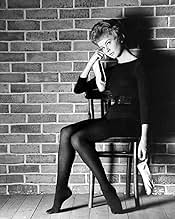
Norman Truscott is a store worker who dreams of stardom. Vernon Carew is a singer whose star is fading. Vernon manages to get a recording of Norman singing and passes it off as himself.Norman Truscott is a store worker who dreams of stardom. Vernon Carew is a singer whose star is fading. Vernon manages to get a recording of Norman singing and passes it off as himself.Norman Truscott is a store worker who dreams of stardom. Vernon Carew is a singer whose star is fading. Vernon manages to get a recording of Norman singing and passes it off as himself.
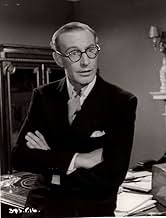
- Director
- Writers
- Stars
Alan Beaton
- Club Member
- (uncredited)
Barbara Bennett
- Lady in Theatre
- (uncredited)
Paul Beradi
- Party Guest
- (uncredited)
Eddie Boyce
- Theatre Patron
- (uncredited)
Richard Caldicot
- Conductor
- (uncredited)
Pauline Chamberlain
- Showgirl
- (uncredited)
- Director
- Writers
- All cast & crew
- Production, box office & more at IMDbPro
6.5669
1
2
3
4
5
6
7
8
9
10
Featured reviews
The big flaw in one of the film's major plot points...
One of the main plot points of the film is that Norman is afraid to sing in front of anyone, unless his girlfriend is present. And yet the first time we do see him singing it's at the theatre, amidst/in front of an audience, shamelessly upstaging the famous singer who gave him the free tickets in the first place... but his girlfriend couldn't even accompany him because she already had another engagement! Which makes his frequent later complaints that he can't sing because she's not there, ludicrous.
The best thing about the film is the many guest appearances, especially Ron Moody as the doleful violinist. But as far as I'm concerned, Jerry Desmonde is the true star of the film - his television performance of his new hit song is hysterical. But why on earth did Vernon Carew think that Norman's singing voice would revive his career? I can only imagine what Vernon's faithful fans would think of his transition from mellow crooner to sounding - in that particular song - like a cross between Huckleberry Hound and Goofy! (To be brutally frank, I can't believe anyone in the real world would think that was a good singing voice.)
I can't say I'm a huge fan of Norman Wisdom : he's okay in small doses, but quite often his scenes of gurning and capering go on so long they become intolerable. Having an idea of what he was like in real life (thanks to the many TV interviews he gave) it's clear that he had a pretty high opinion of himself and his many talents, and that comes across in his many of his films - especially the later ones where he has more involvement in the writing, staging, and so on.
Great nostalgic film and extremely funny in places
This is a lovely film starring a lovely man, with some genuinely funny moments. In the part where he gets hypnotised, you really see his acting ability. In a way it's sad that Norman Wisdom is not part of this day and age. If he was he may have taken on serious film roles, as the likes of Jim Carrey have. This is definitely one of his best films, and one that my whole family loves. He also has a great voice, and at some point must have had to make a decision whether to pursue a singing or acting career. Incidentally, Norman has great support from the likes of Hattie Jacques and John Le Measurier who give assured performances. A film from a different age.
Quite funny
Norman Wisdom plays a labourer who is also a big fan of singer Vernon Carew. He sees Carew perform live, and manages to annoy the singer from his place in the crowd more than once. The final straw comes when Norman stands up and is singing Carew's famous song, trying to get the crowd properly excited (Carew's stardom is definitely waning) - but what comes to pass is that some head honchos hear Norman's wonderful voice, singing Vernon's song, and get the idea for Norman to dub for Vernon on his up and coming record. The general idea is quite similar to that which was used in Singin' In The Rain, but Follow A Star is not quite that good a movie. Still, it is quite good, and the music isn't bad. 7 out of 10.
Has a very weak start but gradually gets up to a standard that fans will enjoy
Norman is working in a laundrettes when he meets the well known, but aging singing star Vernon Carew who invites him to see his show. When Norman goes to the show he finds a patchy audience that throws abuse at the performer, standing up for him, Norman captures the audience and Carew sees his chance to use his voice to help recapture his fame. Tricking Norman into singing into a tape recorder, he rebuilds his career while Norman still struggles with his inability to sing without accompaniment from his sweetheart Judy.
This film starts badly with an unfunny singing lesson full of mugging and the establishment of a sickly sentimental subplot involving Norman's hopes to help his crippled sweetheart to walk again! However it gets better as it goes despite having to occasionally sink into sentimentality that only serves to take away from the comedy. The routines are quite funny when they come, although Wisdom has done better. One element of the comedy that I felt was ill fitting was the rather crude innuendo and sex-related gags; compared to nowadays it is still very gentle but it just doesn't sit well with the usual gentle humour of Wisdom.
That said it still has some funny scenes where Wisdom shows his ability - if only he didn't feel the need to always add an overly sentimental heart to his films. He does well here but some of that stuff doesn't sit well as it feels even heavier than usual here. The support cast has more famous faces than usual and most of the mare good. The Wisdom regular Desmonde is very good in his role and cameos from John Le Mesurier and Richard Wattis are good if fleeting, however Hattie Jacques is pretty much wasted and her biggest scene isn't very funny at all.
Overall I still enjoyed this film as I am a Wisdom fan, and it did actually get better as it went on. The illogical nature of a plot that sees Wisdom's good but nasal voice saving the career of Carew's much better crooner can be overlooked and in the end there are enough good moments to justify watching the film - just hang in there past a poor start.
This film starts badly with an unfunny singing lesson full of mugging and the establishment of a sickly sentimental subplot involving Norman's hopes to help his crippled sweetheart to walk again! However it gets better as it goes despite having to occasionally sink into sentimentality that only serves to take away from the comedy. The routines are quite funny when they come, although Wisdom has done better. One element of the comedy that I felt was ill fitting was the rather crude innuendo and sex-related gags; compared to nowadays it is still very gentle but it just doesn't sit well with the usual gentle humour of Wisdom.
That said it still has some funny scenes where Wisdom shows his ability - if only he didn't feel the need to always add an overly sentimental heart to his films. He does well here but some of that stuff doesn't sit well as it feels even heavier than usual here. The support cast has more famous faces than usual and most of the mare good. The Wisdom regular Desmonde is very good in his role and cameos from John Le Mesurier and Richard Wattis are good if fleeting, however Hattie Jacques is pretty much wasted and her biggest scene isn't very funny at all.
Overall I still enjoyed this film as I am a Wisdom fan, and it did actually get better as it went on. The illogical nature of a plot that sees Wisdom's good but nasal voice saving the career of Carew's much better crooner can be overlooked and in the end there are enough good moments to justify watching the film - just hang in there past a poor start.
FOLLOW A STAR (Robert Asher, 1959) **1/2
Being one of the infrequent Norman Wisdom vehicles covered in "Leonard Maltin's Movie & Video Guide" - which he rates a lowly *1/2 - I was wary of this title but, actually, it was quite pleasant if, in no way, a classic!
The very first scene is an inspired one: we see Norman's sweaty face in an atmosphere of overbearing heat (the film was shot by Jack Asher, a talented cameraman best known for his work for Hammer but who also happens to be the brother of the director!) meticulously going about his business thinking he works in a steamship or something, but eventually discovering that what he's doing is simply pressing a pair of pants (a sophisticated style of gag which has been utilized as early as Harold Lloyd's SAFETY LAST [1923]). The plot - a fading crooner 'borrowing' the voice of a naïve newcomer - is simple enough and has been partly lifted from SINGIN' IN THE RAIN (1952).
While the love interest is more sentimental than usual, since Norman's sweetheart is wheelchair-bound and he wants to make it as a singer mainly so as to have the money for her operation, the film provides plenty of amusing situations highlighting the ageing performer (Jerry Desmonde at his most despicable), ebullient elocutionist Hattie Jacques and long-suffering maitre d' John Le Mesurier; a party sequence halfway through the film also features a surprise early appearance by a dark-haired Charles Gray!
The very first scene is an inspired one: we see Norman's sweaty face in an atmosphere of overbearing heat (the film was shot by Jack Asher, a talented cameraman best known for his work for Hammer but who also happens to be the brother of the director!) meticulously going about his business thinking he works in a steamship or something, but eventually discovering that what he's doing is simply pressing a pair of pants (a sophisticated style of gag which has been utilized as early as Harold Lloyd's SAFETY LAST [1923]). The plot - a fading crooner 'borrowing' the voice of a naïve newcomer - is simple enough and has been partly lifted from SINGIN' IN THE RAIN (1952).
While the love interest is more sentimental than usual, since Norman's sweetheart is wheelchair-bound and he wants to make it as a singer mainly so as to have the money for her operation, the film provides plenty of amusing situations highlighting the ageing performer (Jerry Desmonde at his most despicable), ebullient elocutionist Hattie Jacques and long-suffering maitre d' John Le Mesurier; a party sequence halfway through the film also features a surprise early appearance by a dark-haired Charles Gray!
Did you know
- TriviaTony Hatch wrote a song for the film, but Norman Wisdom insisted that he should be allowed to write the theme song. Hatch's song was re-titled and used in "Circus of Horrors (1960)."
- GoofsNorman is talking to the hypnotist at 1:10:00 his lips do not match what the voice over is saying about "like I depend on..."
- ConnectionsFeatured in Norman Wisdom: His Story (2010)
- SoundtracksFollow a Star
by Norman Wisdom
Details
- Release date
- Country of origin
- Language
- Also known as
- Enayiler Kralı Yıldızlar Peşinde
- Filming locations
- Production company
- See more company credits at IMDbPro
- Runtime
- 1h 33m(93 min)
- Color
- Sound mix
- Aspect ratio
- 1.37 : 1
Contribute to this page
Suggest an edit or add missing content