
A prison break is attempted the same night an execution occurs on death row.A prison break is attempted the same night an execution occurs on death row.A prison break is attempted the same night an execution occurs on death row.
- Director
- Writers
- Stars



Johnny Seven
- Tom D'Amoro
- (as John Seven)


Don 'Red' Barry
- Drake
- (as Donald Barry)


- Director
- Writers
- All cast & crew
- Production, box office & more at IMDbPro
6.5398
1
2
3
4
5
6
7
8
9
10
Featured reviews
Death Row Uprising
This remake of The Last Mile has been updated nicely with a nice jazz score and the inmates and prison officials definitely fit the Fifties as opposed to the Twenties when it first appeared on Broadway. But the impact of this searing prison drama hasn't changed and Mickey Rooney stretches his considerable talent to the limit playing the lead of Killer Mears who leads the uprising of the death row inmates.
Mickey has some fast company among the people who've done this part. Spencer Tracy did it on Broadway and his performance there led to his original film contract with Fox. Clark Gable after doing some bit parts and extra work in silent films was spotted doing this in a touring company in Los Angeles which led to his MGM contract. And Preston Foster did it in the original screen version. Rooney's performance stands up to any of their's.
It's a simple plot, but the characters run deep. Before the big attempted breakout we get a character study of each of the inmates on Death Row. It takes a good actor to get himself noticed here though because the character of Killer Mears so dominates the film and the other inmates. These are men with nothing at all to lose, a lot like the inmates shown in The Green Mile. But of course they don't have a character like Mears to whip them in a frenzy when a guard slips and Mears gets the upper hand.
Being that the film is only on one set for 95% of the time, it's a small budget affair, hardly like Ben-Hur which came out the same year. Still Rooney's incredible performance should have merited Oscar consideration. He was nominated for films and performances not half as good as this.
Try to see both the Preston Foster and Mickey Rooney versions together. Too bad we can't see Spencer Tracy or Clark Gable in how they did the role. The Last Mile is timeless as long as we have capital punishment. I can see Russell Crowe doing Killer Mears easily in a 21st Century version.
Mickey has some fast company among the people who've done this part. Spencer Tracy did it on Broadway and his performance there led to his original film contract with Fox. Clark Gable after doing some bit parts and extra work in silent films was spotted doing this in a touring company in Los Angeles which led to his MGM contract. And Preston Foster did it in the original screen version. Rooney's performance stands up to any of their's.
It's a simple plot, but the characters run deep. Before the big attempted breakout we get a character study of each of the inmates on Death Row. It takes a good actor to get himself noticed here though because the character of Killer Mears so dominates the film and the other inmates. These are men with nothing at all to lose, a lot like the inmates shown in The Green Mile. But of course they don't have a character like Mears to whip them in a frenzy when a guard slips and Mears gets the upper hand.
Being that the film is only on one set for 95% of the time, it's a small budget affair, hardly like Ben-Hur which came out the same year. Still Rooney's incredible performance should have merited Oscar consideration. He was nominated for films and performances not half as good as this.
Try to see both the Preston Foster and Mickey Rooney versions together. Too bad we can't see Spencer Tracy or Clark Gable in how they did the role. The Last Mile is timeless as long as we have capital punishment. I can see Russell Crowe doing Killer Mears easily in a 21st Century version.
the ultimate prison noir
Man I didn't know what I was in for when I sat down to watch this brutal little gem. This portrait of a doomed attempted prison break from a death row cell block hits very hard, and it left me shaking my head in stunned silence.
I'm not surprised to learn from other reviews here that this story began its life as a stage play; most of the action takes place on one set, it features an ensemble cast with multiple meaty roles, and the first half of the film works at a deliberate pace with longer takes and scenes than are conventionally cinematic. It walks a thin line, how to get across the agonizing boredom of being in such a lockup, without becoming boring itself? The answer is to spread dialog around, and to give a lot of weight to mundane events, magnifying tensions and emotions. It gives the excellent cast a lot of room to create, if not exactly sympathy, at least an understanding of where the characters are coming from.
The second half (or maybe final third) of the movie is an altogether different animal, as the ticking timebomb of Mickey Rooney's John Mears explodes into violent retribution. Mears is a complicated character, an atheist and maybe a nihilist, but he cares deeply about his fellow death row inmates. Rooney's performance is AMAZING and dominates this section of the film. Also excellent are Clifford David as the youngest man on the row, next scheduled to be executed, and Frank Overton as Father O'Connors, the priest who gives the condemned men their last rites. His character shows tremendous courage as events spiral into bloodshed; he has a lot more backbone than the guards, who for the most part are sniveling, cowardly, sadistic creeps.
And as others have noted, the jazz score is outstanding, dynamic, punchy, and powerful. It maybe calls attention to itself a little too much, but it's wildly effective in underlining and slapping exclamation points on events throughout the film.
In short, terrific.
I'm not surprised to learn from other reviews here that this story began its life as a stage play; most of the action takes place on one set, it features an ensemble cast with multiple meaty roles, and the first half of the film works at a deliberate pace with longer takes and scenes than are conventionally cinematic. It walks a thin line, how to get across the agonizing boredom of being in such a lockup, without becoming boring itself? The answer is to spread dialog around, and to give a lot of weight to mundane events, magnifying tensions and emotions. It gives the excellent cast a lot of room to create, if not exactly sympathy, at least an understanding of where the characters are coming from.
The second half (or maybe final third) of the movie is an altogether different animal, as the ticking timebomb of Mickey Rooney's John Mears explodes into violent retribution. Mears is a complicated character, an atheist and maybe a nihilist, but he cares deeply about his fellow death row inmates. Rooney's performance is AMAZING and dominates this section of the film. Also excellent are Clifford David as the youngest man on the row, next scheduled to be executed, and Frank Overton as Father O'Connors, the priest who gives the condemned men their last rites. His character shows tremendous courage as events spiral into bloodshed; he has a lot more backbone than the guards, who for the most part are sniveling, cowardly, sadistic creeps.
And as others have noted, the jazz score is outstanding, dynamic, punchy, and powerful. It maybe calls attention to itself a little too much, but it's wildly effective in underlining and slapping exclamation points on events throughout the film.
In short, terrific.
Spare and Brutal
The movie may be a cheap-jack production, but it also has a number of graphic touches including Rooney's absolutely riveting performance. With its single set, ugly b&w photography, and no-name cast (except for Rooney), I can't imagine the film played more than a few remote drive-in's farthest from town. Nonetheless, the 80-minutes pushes the bounds of 50's movie-making in several notable ways.
For example, catch how much emotional fear the doomed men—whether guards or cons— show when facing death. It's really unusual for that period to risk agitating audiences with realistic fears of death. But this one does. Also, the ricocheting bullets had me ducking under my chair— a really well done special effect. Actually, this cheapo comes closer to Sam Peckinpah's raw depiction of violence than about any film I've seen from that time—bullets actually raise blood, and despite their pleading people do get shot point blank. I'm guessing the producers got away with this because Hollywood didn't much care what a few necking teenagers might use for background.
It's an ugly movie in more ways than one—not a single woman in sight!-- just a bunch of ugly guys. At the same time, the first half too often drags before picking up with the slam-bang second half. Then too, have you ever seen a more barren or squeakier clean cell block, likely a reflection of the story's stage origins. Anyway, it's Rooney at his most intense. And despite the movie's really brutal nature, there are more moments of genuine honesty than in most A-productions of the period. But it's not one you want to see if you're feeling down.
For example, catch how much emotional fear the doomed men—whether guards or cons— show when facing death. It's really unusual for that period to risk agitating audiences with realistic fears of death. But this one does. Also, the ricocheting bullets had me ducking under my chair— a really well done special effect. Actually, this cheapo comes closer to Sam Peckinpah's raw depiction of violence than about any film I've seen from that time—bullets actually raise blood, and despite their pleading people do get shot point blank. I'm guessing the producers got away with this because Hollywood didn't much care what a few necking teenagers might use for background.
It's an ugly movie in more ways than one—not a single woman in sight!-- just a bunch of ugly guys. At the same time, the first half too often drags before picking up with the slam-bang second half. Then too, have you ever seen a more barren or squeakier clean cell block, likely a reflection of the story's stage origins. Anyway, it's Rooney at his most intense. And despite the movie's really brutal nature, there are more moments of genuine honesty than in most A-productions of the period. But it's not one you want to see if you're feeling down.
Bleak but Powerful Prison Movie
Having not seen this film in about 20 years I am still impressed with it 's hard -hitting impact and stellar acting. Of course, one Mr. Mickey Rooney is indeed, INCREDIBLE in his role as the ring-leading "Killer".(In reference to another review here-none other than Orson Welles evoked Mickey Rooney's name as the greatest movie actor,also.) I also recall the jazzy-brassy score and the bare black and white photography. I love the Mick's last line before he goes out for his dose of lead poisoning.(I think the Stranglers lifted it for a line in one of their songs-Get a Grip on Yourself.)This is a great film and unjustly buried film. Let's get it out ! Side note-a recent Film Review magazine gave a big write up on Don Segal's "Babyface Nelson" ,made a couple years before "Last Mile" and also starring Mickey Rooney. Another rave of the Mick's intense and sympathetic performance.Perhaps it's the start of a groundswell of a appreciation for some truly superior cinematic performances.
I've got two lousy weeks left, and you're asking me to have faith?
The Last Mile is directed by Howard W. Koch and adapted to screenplay by Milton Subotsky and Seton I. Miller from the play of the same name by John Wexley. It stars Mickey Rooney, Frank Overton, Michael Constantine and John Vari. Music is by Van Alexander and cinematography by Joseph Brun.
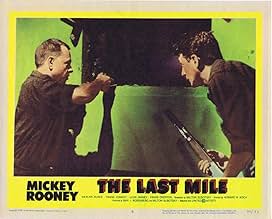
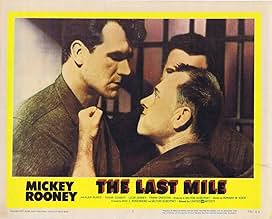
The Death House is the cell block where nine inmates await their dates with the electric chair. Some of the guards delight in tormenting the condemned men, one of whom is Killer John Mears (Rooney), and he's had enough...
Already made in 1932 with Preston Foster in the starring role, Howard Koch's 59 version of The Last Mile taps into the film noir zeitgeist of the time and unleashes a film of great power.
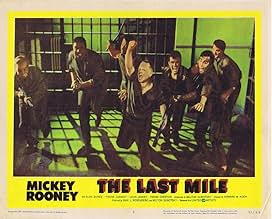
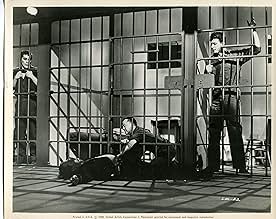
Essentially played out on one set, there was a danger that this could have been too stage bound as a production, but not a bit of it, the tight confines of the shoot are just perfect for the thematics of the story. Pic begins with imposing title credits, an animated drawing of "Old Sparky" accompanied by shards of Van Alexander's Jazz "N" Blues musical score. We are then locked up with the convicts of "The Death House", sharing their fears, their anger and their regrets, the constant glances towards "The Door" at the end of the block akin to catching a glimpse of "The Grim Reaper" spying on you.
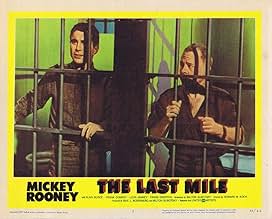
For the first two thirds of the piece the makers ask for our patience as they build characters and atmosphere, gently ratcheting up the tension with every claustrophobic frame. Prison stories were ready made for film noir purveyors, offering great opportunities for the cinematographers to utilise the steel bars for psychologically shadowed impact, and Joseph Brun does that excellently here, even managing to extend the cell shadows over the smug guards, the inference is that they too are locked up in this place of abject misery.
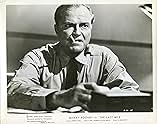
The air of fatalism mixes with the sweat of the men and drips down the cell walls, we are left in no doubt that this powder keg is about to be ignited, and when it comes it comes with the thunder, producing a last third of kinetic cinema of throat grabbing proportions. To which Koch and his team deliver a film noir coup de grace. Rooney leads the way with his performance of a seething John Mears, it's not over acting as some critics of the time suggested, it's a full on commitment to the portrayal of the incarcerated male who literally has nothing to lose and has had enough of being taunted. The other actors around him inevitably pale into his shadow, but they also put much emotion into their respective roles, very much so.
An under seen and under valued prison noir, The Last Mile should be sought out by anyone with a bent for such films. 8.5/10
The Death House is the cell block where nine inmates await their dates with the electric chair. Some of the guards delight in tormenting the condemned men, one of whom is Killer John Mears (Rooney), and he's had enough...
Already made in 1932 with Preston Foster in the starring role, Howard Koch's 59 version of The Last Mile taps into the film noir zeitgeist of the time and unleashes a film of great power.
Essentially played out on one set, there was a danger that this could have been too stage bound as a production, but not a bit of it, the tight confines of the shoot are just perfect for the thematics of the story. Pic begins with imposing title credits, an animated drawing of "Old Sparky" accompanied by shards of Van Alexander's Jazz "N" Blues musical score. We are then locked up with the convicts of "The Death House", sharing their fears, their anger and their regrets, the constant glances towards "The Door" at the end of the block akin to catching a glimpse of "The Grim Reaper" spying on you.
For the first two thirds of the piece the makers ask for our patience as they build characters and atmosphere, gently ratcheting up the tension with every claustrophobic frame. Prison stories were ready made for film noir purveyors, offering great opportunities for the cinematographers to utilise the steel bars for psychologically shadowed impact, and Joseph Brun does that excellently here, even managing to extend the cell shadows over the smug guards, the inference is that they too are locked up in this place of abject misery.
The air of fatalism mixes with the sweat of the men and drips down the cell walls, we are left in no doubt that this powder keg is about to be ignited, and when it comes it comes with the thunder, producing a last third of kinetic cinema of throat grabbing proportions. To which Koch and his team deliver a film noir coup de grace. Rooney leads the way with his performance of a seething John Mears, it's not over acting as some critics of the time suggested, it's a full on commitment to the portrayal of the incarcerated male who literally has nothing to lose and has had enough of being taunted. The other actors around him inevitably pale into his shadow, but they also put much emotion into their respective roles, very much so.
An under seen and under valued prison noir, The Last Mile should be sought out by anyone with a bent for such films. 8.5/10


Did you know
- TriviaFilm debut of Milton Selzer.
- Quotes
Narrator: Sometimes you have to put your faith in what you can't see. In what you wish.
- ConnectionsReferenced in The Ed Sullivan Show: Episode #12.1 (1958)
- How long is The Last Mile?Powered by Alexa
Details
- Runtime
- 1h 21m(81 min)
- Color
- Aspect ratio
- 1.85 : 1
Contribute to this page
Suggest an edit or add missing content