Libel
- 1959
- 1h 40m
IMDb RATING
7.2/10
1.8K
YOUR RATING


A shell-shocked World War II veteran with memory problems is accused of being an impostor by a former comrade.A shell-shocked World War II veteran with memory problems is accused of being an impostor by a former comrade.A shell-shocked World War II veteran with memory problems is accused of being an impostor by a former comrade.
- Director
- Writers
- Stars
- Nominated for 1 Oscar
- 1 nomination total

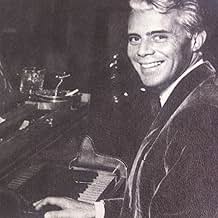


Wilfrid Hyde-White
- Foxley
- (as Wilfrid Hyde White)


- Director
- Writers
- All cast & crew
- Production, box office & more at IMDbPro
7.21.7K
1
2
3
4
5
6
7
8
9
10
Featured reviews
Good film
I unabashedly admit that Dirk Bogarde is one of my favorite actors, so naturally, two of him is better.
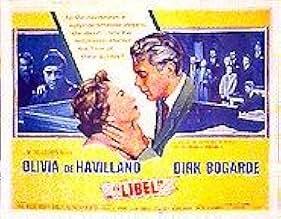
In "Libel," directed by Anthony Asquith, he has a dual role - that of a baron, Sir Mark Sebastian Loddon, and Frank Welney, an actor and a lookalike in his barracks during World War II.
When Mark returns from the war, he can't remember a lot of his past life and is haunted by images of events during the war that he can't connect with.
Another soldier sees the baron on television and believes that he is really Frank Welney, and the story is published in a tabloid. Mark's wife (Olivia de Havilland) insists that for the sake of their young son, he sue for libel. He does.
This is an often-told story, but I enjoyed it anyway. Bogarde is excellent as the uptight, insecure Mark and the cocky, nosy Frank, and while there is a strong resemblance between the two men, Welney's coloring and hairstyle is different, as is his manner.
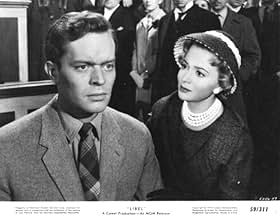
De Havilland turns in another marvelous, emotional performance as a woman who starts out believing her husband is indeed the man she loved before the war... and then having her doubts.
Well directed and holds one's interest.
In "Libel," directed by Anthony Asquith, he has a dual role - that of a baron, Sir Mark Sebastian Loddon, and Frank Welney, an actor and a lookalike in his barracks during World War II.
When Mark returns from the war, he can't remember a lot of his past life and is haunted by images of events during the war that he can't connect with.
Another soldier sees the baron on television and believes that he is really Frank Welney, and the story is published in a tabloid. Mark's wife (Olivia de Havilland) insists that for the sake of their young son, he sue for libel. He does.
This is an often-told story, but I enjoyed it anyway. Bogarde is excellent as the uptight, insecure Mark and the cocky, nosy Frank, and while there is a strong resemblance between the two men, Welney's coloring and hairstyle is different, as is his manner.
De Havilland turns in another marvelous, emotional performance as a woman who starts out believing her husband is indeed the man she loved before the war... and then having her doubts.
Well directed and holds one's interest.
Neglected Courtroom Drama Gives Bogarde Riveting Dual Role
Dirk Bogarde carries the main burden of this interesting courtroom drama co-starring Olivia de Havilland. Bogarde is an English barrister accused of being an imposter by a wartime buddy who has mistaken a look-alike they both knew in a POW camp as the man who has become Sir Mark Loddon. His understanding wife stands by him and encourages him to sue for libel but soon comes to have doubts of her own. Toward the climax, she turns on her husband and accuses him of "stealing" her love. Bogarde and de Havilland both have some excellent dramatic moments but it is Bogarde who rivets the attention with his fascinating dual role, achieving a distinct difference between the two men with just a slight change of hair style and a shift in attitude. Wilfred Hyde-White and Robert Morley are good in supporting roles as opposing barristers. It all moves smoothly under Anthony Asquith's crisp direction and all of the domestic scenes were filmed at the Duke of Bedford's magnificent country estate, giving production values a touch of elegance. The POW flashbacks are quite convincing--and the courtroom twist toward the end is nicely handled--if not quite convincing. Sometimes confusing--but always absorbing. MGM should release this one to video!
Better than expected
Having just seen "Libel" on TCM, I was pleasantly surprised....certainly, it is not a great film, but still was very entertaining, and the settings were extremely well done. The story line has been done before, but the acting of some very good English stalwarts plus Olivia de Havilland as an American wife to an English Baron, makes it well worth watching. Dirk Bogarde (never a favourite of mine) does an excellent job in a dual role, and is ably supported by Robert Morley, Paul Massie and Wilfred Hyde-White. There is no doubt that the producers of this film have come up with a film that still stands up today, and be proud of the end result. There are some very clever twists and the use of flash-backs was excellent. I can recommend this to everyone
Great movie courtroom drama with a mysterious 'identity crisis'
This Anthony Asquith directed movie is one of Dirk Bogarde's finest movies. I would rank up there with Bogarde's performance in Victim (1961). Here, he plays the double role of portraying Sir Mark Loddon and his POW look-alike, Frank Welney.
As the movie begins, one of his fellow POWs, Jeffrey Buckernham (Paul Massie) sees Loddon on TV giving a tour of his plush country estate with his American wife, Lady Loddon (Olivia de Havilland). Convinced that Loddon is Welney, Buckenham arranges to have a newspaper call him out which, in turn, forces Loddon to sue the newspaper for libel. However, he, himself, is not totally convinced about his own identity in that there are certain blank spots in his memory resulting from his escape from the POW camp many years previously.
This is one of those great courtroom dramas in which the two opposing attorneys--Sir Wilfred (Robert Morley) represents Loddon and Wilfrid Hyde-White (Hubert Foxley) represents the defense for the newspaper in for Loddon's libel suit. Loddon's low point of the trial occurs when his own wife takes the stand, believing that he is not her husband.
As the movie begins, one of his fellow POWs, Jeffrey Buckernham (Paul Massie) sees Loddon on TV giving a tour of his plush country estate with his American wife, Lady Loddon (Olivia de Havilland). Convinced that Loddon is Welney, Buckenham arranges to have a newspaper call him out which, in turn, forces Loddon to sue the newspaper for libel. However, he, himself, is not totally convinced about his own identity in that there are certain blank spots in his memory resulting from his escape from the POW camp many years previously.
This is one of those great courtroom dramas in which the two opposing attorneys--Sir Wilfred (Robert Morley) represents Loddon and Wilfrid Hyde-White (Hubert Foxley) represents the defense for the newspaper in for Loddon's libel suit. Loddon's low point of the trial occurs when his own wife takes the stand, believing that he is not her husband.
Tucked Away In His Mind
Updated to make the protagonists be World War II veterans instead of World War I, Libel made its Broadway debut in 1935 after a run in London and ran for 159 performances during the 1935-36 season. Playing the role Dirk Bogarde does here was the screen's original Dr. Frankenstein, Colin Clive.
As for Bogarde due to movie screen magic he gets to play two roles, the respected titled English Lord with American wife Olivia DeHavilland and a Canadian fellow prisoner of war who was a traveling player and who looks like him. Worse than that, we see in flashback how he envied him.
Into their happy lives intrudes another former POW Paul Massie who knew both men in the camp and makes the startling accusation that the one stole the identity of the other who died during the war. This indeed is a case of Libel and one for the courts to straighten out.
Bringing the suit on Bogarde's behalf is Robert Morley and defending Massie is Wilfrid Hyde-White, they make a fine pair of antagonists. What is the truth, for that you have to watch Libel.
Though Olivia is first billed, the film clearly belongs to Dirk Bogarde who delivers a fine poignant performance of a man tortured by doubt, there are things tucked away in his mind that he prefers not dealing with. Olivia gets her innings in when even she starts to doubt the identity of the man she's been married to.
This film also gives we Yanks a chance to see Richard Dimbleby who was a combination of Edward R. Murrow and Walter Cronkite, that kind of trusted voice of the British Empire for the BBC. In fact Dimbleby is hosting Bogarde and DeHavilland on a tour of their mansion when Massie spots them on a bar television and sets everything in motion.
Libel holds up very well today it could probably be easily remade for something like the Iraq or Afghan war in about 15 years time.
As for Bogarde due to movie screen magic he gets to play two roles, the respected titled English Lord with American wife Olivia DeHavilland and a Canadian fellow prisoner of war who was a traveling player and who looks like him. Worse than that, we see in flashback how he envied him.
Into their happy lives intrudes another former POW Paul Massie who knew both men in the camp and makes the startling accusation that the one stole the identity of the other who died during the war. This indeed is a case of Libel and one for the courts to straighten out.
Bringing the suit on Bogarde's behalf is Robert Morley and defending Massie is Wilfrid Hyde-White, they make a fine pair of antagonists. What is the truth, for that you have to watch Libel.
Though Olivia is first billed, the film clearly belongs to Dirk Bogarde who delivers a fine poignant performance of a man tortured by doubt, there are things tucked away in his mind that he prefers not dealing with. Olivia gets her innings in when even she starts to doubt the identity of the man she's been married to.
This film also gives we Yanks a chance to see Richard Dimbleby who was a combination of Edward R. Murrow and Walter Cronkite, that kind of trusted voice of the British Empire for the BBC. In fact Dimbleby is hosting Bogarde and DeHavilland on a tour of their mansion when Massie spots them on a bar television and sets everything in motion.
Libel holds up very well today it could probably be easily remade for something like the Iraq or Afghan war in about 15 years time.


Did you know
- TriviaThe original Broadway production of "Libel", produced in 1935, was directed by Otto Preminger, years before he made his Hollywood debut as a movie director.
- GoofsIn opening credits, Arthur Davey is listed as In Charge of Adminstration; no way of missing the obvious error - it takes up half the screen; of course, it should be Administration. How can such glaring errors be missed by editors.
- ConnectionsReferences Apasionada (1952)
- How long is Libel?Powered by Alexa
Details
- Release date
- Countries of origin
- Languages
- Also known as
- Die Nacht ist mein Feind
- Filming locations
- Piccadilly Circus, Piccadilly, London, England, UK(opening scenes, establishing shot)
- Production companies
- See more company credits at IMDbPro
Box office
- Budget
- $615,000 (estimated)
- Runtime
- 1h 40m(100 min)
- Color
- Sound mix
- Aspect ratio
- 2.00 : 1
Contribute to this page
Suggest an edit or add missing content