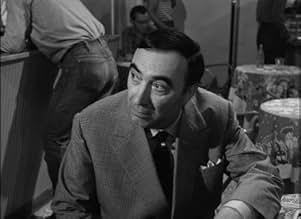
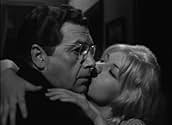
IMDb RATING
7.4/10
1.8K
YOUR RATING
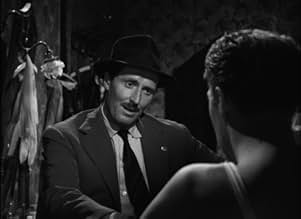
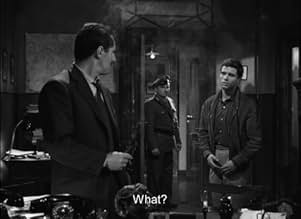
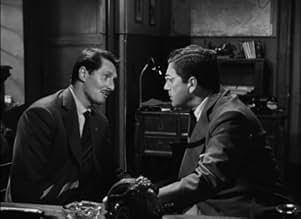
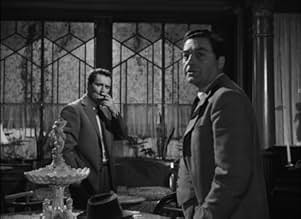
A police detective and his team attempt to solve two crimes committed within a day of each other in neighboring apartment rooms.A police detective and his team attempt to solve two crimes committed within a day of each other in neighboring apartment rooms.A police detective and his team attempt to solve two crimes committed within a day of each other in neighboring apartment rooms.
- Awards
- 5 wins & 3 nominations total
Cristina Gaioni
- Virginia Caraci
- (as Cristina Gajoni)
Ildebrando Santafe
- Anzaloni
- (as Ildebrando Santafé)
Silla Bettini
- Il brigadiere Oreste
- (as Silla)
7.41.7K
1
2
3
4
5
6
7
8
9
10
Featured reviews
Rivals DIVORCE ITALIAN STYLE as Germi's best film
The early Germi films, though they take place in Italy, are mostly pastiches of American genre films. IN THE NAME OF THE LAW (1948) borrows from a host of American westerns about sheriffs who, against all odds and without much help from the townspeople, clean up the town and expose the complicity between a prominent town father and the outlaws. THE WAY OF HOPE (1950) is much like THE GRAPES OF WRATH, depicting the trek of a group of dispossessed workers following an evanescent lead for work in another land. (There's even a scene where they get work on a farm and are called scabs by striking workers, very similar to Ford's film.) THE BRIGAND OF TACCA DI LUPO (1952) is similar to Ford's FORT APACHE: the martinet who insists that men on field campaign for three years adhere to strict protocol, who doesn't know the difference between a good Indian and a bad one, and who insists on leading his men into danger against all the advice of seasoned professionals. FOUR WAYS OUT (1952) is much like THE ASPHALT JUNGLE in plot and tone. All of these films are impeccably made, beautifully photographed and acted, with no false notes, and with neorealist overtones (three were co-written by Fellini). However, they're all a bit slow, a bit too derivative, and they all generate more respect than enthusiasm.
THE FACTS OF MURDER is something else entirely, It is another genre film, borrowing from many police procedurals, yet here one feels that Germi has finally graduated from respectful pastiches to create a work that is completely successful on its own. The plot, about a robbery in one apartment, and a murder in an apartment across the hall a week later, is so complex that it's hard to follow at times (in some ways it's similar to the complex Chandler novels, and with a similar denouement) but it's richly detailed, with many interesting characters. Germi is a superb actor and his handling of other actors is sure. The interplay between the three detectives is sophisticated and clever, and has the ring of actuality. The pace is fast but not rushed, and the writing and the pictorialization are richly nuanced. Above all, it is a highly entertaining film!
This is the film where Germi seems to have come into his own as a master filmmaker, where he still has some the neorealist characters and story structure from his earlier period but also has the biting humor and social satire of his later films. It rivals DIVORCE ITALIAN STYLE as his best film, and is a must see.
THE FACTS OF MURDER is something else entirely, It is another genre film, borrowing from many police procedurals, yet here one feels that Germi has finally graduated from respectful pastiches to create a work that is completely successful on its own. The plot, about a robbery in one apartment, and a murder in an apartment across the hall a week later, is so complex that it's hard to follow at times (in some ways it's similar to the complex Chandler novels, and with a similar denouement) but it's richly detailed, with many interesting characters. Germi is a superb actor and his handling of other actors is sure. The interplay between the three detectives is sophisticated and clever, and has the ring of actuality. The pace is fast but not rushed, and the writing and the pictorialization are richly nuanced. Above all, it is a highly entertaining film!
This is the film where Germi seems to have come into his own as a master filmmaker, where he still has some the neorealist characters and story structure from his earlier period but also has the biting humor and social satire of his later films. It rivals DIVORCE ITALIAN STYLE as his best film, and is a must see.
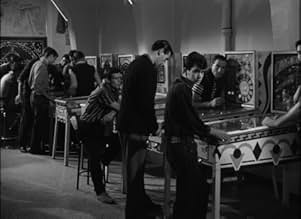
A well constructed police mystery
Well worth seeing for many reasons: for the complex plot with many connections among those involved in a theft and a seemingly unrelated murder; for a look at Italy in 1959; for the good acting and fast cutting; and for the humor in the script.
Sinno me moro.
Although Pietro Germi has the distinction of having directed the prototype of the genre known as Commedia all'Italiana, his non-comedic films are strongly influenced by the cinema of North America and here he has given us a first-rate 'police procedural'.
He and his excellent collaborators Alfredo Giannetti and Ennio de Concini have also faced the daunting task of adapting Carlo Emilio Gadda's 'That awful mess on Via Merulina' which is a panorama of life in Fascist Italy of the late 1920's. Granted, it involves a murder investigation but the author has not felt the need to tell us whodunnit!
The investigating detective in this loose, updated adaptation is played by Signor Germi who has once again opted to direct himself and has created a fascinating character. His skill with actors is legendary and he draws fine performances from Eleonora Rossi Drago, Franco Fabrizi, Claudio Gora, Claudia Cardinale, Nino Castelnuovo and of course the ubiquitous Saro Urzi. Signorina Cardinale is again 'dubbed' as her voice was considered too coarse for the roles she played. She is on the brink here of her greatest decade and we hear her own voice for the first time in Visconti's 'Il Gattopardo' in 1963.
The plot of this is convoluted to say the least but we are carried along by Germi's taut direction, sharp editing by Roberto Cinquini and well-drawn characterisations. Germi's regular cinematographer Leonarda Barboni and composer Carlo Rustichelli contribute immeasurably. Rustichelli's score is particularly full-blooded and he has composed a beautiful and haunting canzona sung by his daughter Alida, entitled 'Otherwise I'll die' which reflects the passionate relationship between the characters played by Cardinale and Castelnuovo. Viewers will no doubt recognise in Cardinale's frantic run after the police car a distinct echo of Anna Magnani's iconic dash in 'Rome, open City'.
Opinions differ as to whether Germi should be counted among the great Italian directors. I suppose it depends upon one's criteria. His most popular films of course have been his beautifully observed satirical comedies but from his directorial debut with the melodrama 'Il Testimone' he has never ceased to show a capacity to tell a story, engage our emotions and to get the very best from his actors. He is sorely in need of reappraisal.
He and his excellent collaborators Alfredo Giannetti and Ennio de Concini have also faced the daunting task of adapting Carlo Emilio Gadda's 'That awful mess on Via Merulina' which is a panorama of life in Fascist Italy of the late 1920's. Granted, it involves a murder investigation but the author has not felt the need to tell us whodunnit!
The investigating detective in this loose, updated adaptation is played by Signor Germi who has once again opted to direct himself and has created a fascinating character. His skill with actors is legendary and he draws fine performances from Eleonora Rossi Drago, Franco Fabrizi, Claudio Gora, Claudia Cardinale, Nino Castelnuovo and of course the ubiquitous Saro Urzi. Signorina Cardinale is again 'dubbed' as her voice was considered too coarse for the roles she played. She is on the brink here of her greatest decade and we hear her own voice for the first time in Visconti's 'Il Gattopardo' in 1963.
The plot of this is convoluted to say the least but we are carried along by Germi's taut direction, sharp editing by Roberto Cinquini and well-drawn characterisations. Germi's regular cinematographer Leonarda Barboni and composer Carlo Rustichelli contribute immeasurably. Rustichelli's score is particularly full-blooded and he has composed a beautiful and haunting canzona sung by his daughter Alida, entitled 'Otherwise I'll die' which reflects the passionate relationship between the characters played by Cardinale and Castelnuovo. Viewers will no doubt recognise in Cardinale's frantic run after the police car a distinct echo of Anna Magnani's iconic dash in 'Rome, open City'.
Opinions differ as to whether Germi should be counted among the great Italian directors. I suppose it depends upon one's criteria. His most popular films of course have been his beautifully observed satirical comedies but from his directorial debut with the melodrama 'Il Testimone' he has never ceased to show a capacity to tell a story, engage our emotions and to get the very best from his actors. He is sorely in need of reappraisal.
Something unique from fabulous Pietro Germi, a hidden gem!!!
Pietro Germi doesn't belong to "high class" of the Italian's directors as federico Fellini, Visconti, Rossellini and others, due he was a bad temper, rough and refuses make part of this circle, he was unique, he implied an American style in his pictures, In Maledetto Inbroglio was clearly one of them, the plot is split in two striking cases, a robbery and a murder, just connected by both were took place in next door, Pietro Germi plays a chief of police at task force in charge to investigate both cases, seemingly has some connection linking those weird happenings, two exhaustive hours were spent to find out the murder, despite Germi changes the ending, he imposes a frenetic non stop acting which thrilled the viewer, a hard and complex case to solve, due countless directions that arise at any moment, a fabulous picture, on those quaint Italian environment, with a bit odd humor, a movie to be discovered for the new generation of cinephiles, highly recommended!!!
Resume:
First watch: 2019 / How many: 1 / Source: DVD / Rating: 9.25
Resume:
First watch: 2019 / How many: 1 / Source: DVD / Rating: 9.25
An oddly little known noir masterpiece
One of my regrets as a movie lover is that I have only recently discovered Pietro Germi as director, writer and actor - and he is phenomenal at every level!
MALEDETTO IMBROGLIO stands as one of the very best films noir cum whodunnit I have had the privilege to watch and, to add to my bewilderment, hardly any of my fellow cinephiles knows about it.
With masterful B&W cinematography by Leonida Barboni and editing by Roberto Cinquini, it boasts highly inspired direction by Pietro Germi, who also delivers superbly as the dark spectacle-wearing, quiet, demanding, astute, attentive to detail, persevering police commissioner Ingravallo.
Stunningly beautiful Claudia Cardinale would always stay in my mind, but the impressive support performances come from Saro Urzi as mareschialo, a senior subordinate to Ingravallo, and Franco Fabrizi as an opportunistic medical doctor who beds any woman he can, steals money from the dead, lies to police and amounts to what a member of the very noble medical profession should never be.
Nino Castelnuovo, as Cardinale's love interest, also makes the most of his small but crucial role.
I am not Italian but, trusting my Latin language background, I watched the film on Youtube in Italian, so I must have missed some important details along the way. Even so, I found MALEDETTO IMBROGLIO thoroughly engrossing from beginning to end.
Recommended viewing. 9/10.
MALEDETTO IMBROGLIO stands as one of the very best films noir cum whodunnit I have had the privilege to watch and, to add to my bewilderment, hardly any of my fellow cinephiles knows about it.
With masterful B&W cinematography by Leonida Barboni and editing by Roberto Cinquini, it boasts highly inspired direction by Pietro Germi, who also delivers superbly as the dark spectacle-wearing, quiet, demanding, astute, attentive to detail, persevering police commissioner Ingravallo.
Stunningly beautiful Claudia Cardinale would always stay in my mind, but the impressive support performances come from Saro Urzi as mareschialo, a senior subordinate to Ingravallo, and Franco Fabrizi as an opportunistic medical doctor who beds any woman he can, steals money from the dead, lies to police and amounts to what a member of the very noble medical profession should never be.
Nino Castelnuovo, as Cardinale's love interest, also makes the most of his small but crucial role.
I am not Italian but, trusting my Latin language background, I watched the film on Youtube in Italian, so I must have missed some important details along the way. Even so, I found MALEDETTO IMBROGLIO thoroughly engrossing from beginning to end.
Recommended viewing. 9/10.
Did you know
- TriviaThe murder takes place at 44 Piazza Farnese in Rome, Italy.
- GoofsThe cameraman is clearly visible on the left of the frame in the actual murder scene.
- Alternate versionsA restored version has been released in 1999, edited by Vincenzo Verzini.
- ConnectionsFeatured in Cinema forever - Capolavori salvati (2001)
- How long is The Facts of Murder?Powered by Alexa
Details
- Release date
- Country of origin
- Language
- Also known as
- Činjenice o ubistvu
- Filming locations
- Production company
- See more company credits at IMDbPro
- Runtime
- 1h 55m(115 min)
- Color
- Aspect ratio
- 1.37 : 1
Contribute to this page
Suggest an edit or add missing content