IMDb RATING
7.8/10
4.8K
YOUR RATING

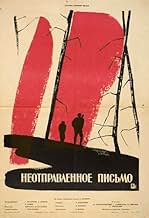
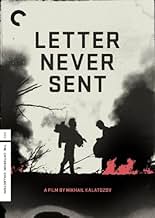
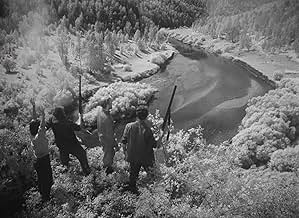
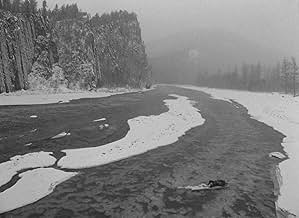
Four geologists search for diamonds in the wilderness of Siberia.Four geologists search for diamonds in the wilderness of Siberia.Four geologists search for diamonds in the wilderness of Siberia.
- Director
- Writers
- Stars
- Awards
- 1 nomination total

Innokentiy Smoktunovskiy
- Konstantin Sabinin
- (as I. Smoktunovskiy)

Tatyana Samoylova
- Tanya
- (as T. Samoylova)

Vasiliy Livanov
- Andrey
- (as V. Livanov)

Evgeniy Urbanskiy
- Sergey Stepanovich
- (as Ye. Urbanskiy)
Galina Kozhakina
- Vera
- (as G. Kozhakina)

- Director
- Writers
- All cast & crew
- Production, box office & more at IMDbPro
7.84.7K
1
2
3
4
5
6
7
8
9
10
Featured reviews
9Fpi
Some of the most powerful and unique visuals I've ever seen
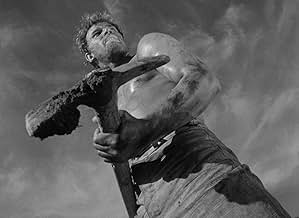
This is a totally excellent man vs. nature drama. An outstandingly dramatic soundtrack is coupled with some of the most powerful and unique visuals I've ever seen. If you thought Tarkovsky was a one-shot in the Soviet Union when it came to beautiful yet haunting images, you'll definitely think again after this movie. The characters and the story are perhaps not too well developed, but this somehow adds to the sense of not being totally in control, which is important here. It's nothing short of a tragedy that this movie is totally unknown; it would probably have been a candidate of reaching IMDb's top 50 if it were. Those looking for unknown classics should hunt this one down at all costs.
lost in Siberia
This robust survival adventure follows a team of Soviet geologists stranded in the wilderness of Siberia after a forest fire severs their communication link with civilization. The opening dedication to Socialist heroes everywhere and the noble sacrifices made by each character carry the story dangerously close to propaganda, but the intensity of their ordeal (through smoke and fire, over snow and ice, across mountains and tundra) thankfully overwhelms the political simplicity of the script. Unfortunately, it also overwhelms the initial hints of tension between each of the four characters (three male, one female) after the struggle to survive becomes paramount. The sense of isolation and exposure is numbing; the film was directed with a strong sense of visual drama (including more than one knockout montage), showing everything an audience would ever want to know about being lost in Siberia.
wilderness of fate
Having just directed the WWII-themed masterpiece "The Cranes Are Flying", Mikhail Kalatozov directed "Neotpravlennoye pismo" ("Letter Never Sent" in English), a look at the will to survive in desperate circumstances. A group of geologists collecting diamonds in Siberia have to fend for themselves when a forest fire cuts them off from their supplies. Their cooperation was probably meant to reflect Soviet values.
I interpreted the final few minutes of the movie as a reflection of the man's desperation (he wanted there to be something). But however you interpret it, this has to be one of the most intense movies that I've seen. And I highly recommend it.
I interpreted the final few minutes of the movie as a reflection of the man's desperation (he wanted there to be something). But however you interpret it, this has to be one of the most intense movies that I've seen. And I highly recommend it.
Encounters at the End of the World
Loss, purpose, and redemption, all in this harrowing adventure and visual tour-de-force by usual suspects Kalatozov/ Urusevsky.
An expedition of diamond hunters is dropped in the Siberian plateau with the mission of discovering a rumoured diamond vein. In the course of the movie diamonds acquire a further symbolic aspect as the purpose in life. As the expedition is befallen by a raging fire and forced to make a hazardous escape through burning logs, saving the map which points to the location of the much sought-after diamonds becomes a struggle to preserve purpose and meaning in a world that defies it. As the surviving members of the expedition stagger through the charred landscape, amidst billows of smoke and torrents of rain, nothing there to answer their pleas and curses but the echo of their voices, the world seems indifferent to their plight.
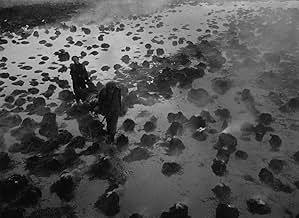
The star of the movie however is Urusevsky's cinematography. Kalatozov fails to harness his tremendous visual talent as he did in THE CRANES ARE FLYING, certain scenes flailing for attention but lacking the dramatic pull to justify them, but still someone who likes movies for their pictorial quality, for the endless possibilities of capturing images with a photographic lens and moving inside a thridimensional canvas; such a person will be left in awe and admiration of what Urusevsky achieves. His rapid tracking shots through branches of trees, as though the nature conspires to ensnare the protagonists, the amazing clarity of the closeups, the maize of hand-held shots thrusting the viewer right there in the middle of the action, the beautiful dutch angles transforming the geography of the landscape into something that can only exist for and by the camera.
Although the plot has its heart in the right place, much like its predecessor, it suffers from being too overwrought and from lapsing into moments of melodrama. Plot threads that are emphasized early on, like Sergei's unrequisite love and the growing tension with Tanya, are never really resolved and come to a screeching halt when the fire erupts. Traditional Soviet values, like the leader's dream of a Diamond City and the portrayal of civilization as a collective good, don't chime with my sensibilities. The score is often jarring and obtrusive but that's 50's cinema for you.
Overall this is a visually marvellous film aimed at the cinephiles who can appreciate such things.
An expedition of diamond hunters is dropped in the Siberian plateau with the mission of discovering a rumoured diamond vein. In the course of the movie diamonds acquire a further symbolic aspect as the purpose in life. As the expedition is befallen by a raging fire and forced to make a hazardous escape through burning logs, saving the map which points to the location of the much sought-after diamonds becomes a struggle to preserve purpose and meaning in a world that defies it. As the surviving members of the expedition stagger through the charred landscape, amidst billows of smoke and torrents of rain, nothing there to answer their pleas and curses but the echo of their voices, the world seems indifferent to their plight.
The star of the movie however is Urusevsky's cinematography. Kalatozov fails to harness his tremendous visual talent as he did in THE CRANES ARE FLYING, certain scenes flailing for attention but lacking the dramatic pull to justify them, but still someone who likes movies for their pictorial quality, for the endless possibilities of capturing images with a photographic lens and moving inside a thridimensional canvas; such a person will be left in awe and admiration of what Urusevsky achieves. His rapid tracking shots through branches of trees, as though the nature conspires to ensnare the protagonists, the amazing clarity of the closeups, the maize of hand-held shots thrusting the viewer right there in the middle of the action, the beautiful dutch angles transforming the geography of the landscape into something that can only exist for and by the camera.
Although the plot has its heart in the right place, much like its predecessor, it suffers from being too overwrought and from lapsing into moments of melodrama. Plot threads that are emphasized early on, like Sergei's unrequisite love and the growing tension with Tanya, are never really resolved and come to a screeching halt when the fire erupts. Traditional Soviet values, like the leader's dream of a Diamond City and the portrayal of civilization as a collective good, don't chime with my sensibilities. The score is often jarring and obtrusive but that's 50's cinema for you.
Overall this is a visually marvellous film aimed at the cinephiles who can appreciate such things.
NEW RESTORATION gets a screening @ the 2007 Tribeca Film Fest (NYC)
Welcome to Siberia, circa 1959 (in perfectly restored, glorious Black and White).
Although this story revolves around four 'pioneers' dropped into a vast wilderness to search for a rumored vein of diamonds (aka 'the Diamond Pipe'), the real star of the movie is cinematographer Sergei Urusevsky ("Soy Cuba," "The Cranes Are Flying").
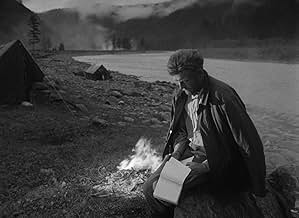
Urusevsky is master of composition, dolly shots, and hand-held photography (when necessary). The way he frames his close-ups of the actors practically allows the audience to see into their souls.
Of course, it helps that he's shooting a top-notch Russian cast, including actress Tatyana Samojlova ("The Cranes Are Flying") whose character 'Tanya' is desperate to survive the troubling events that befall the group. Tanya is also the lone female and commands the attentions of two men in the rock-sampling group (though one is unrequited).
In addition, the visual elements are underscored aurally by composer Nikolai Kryukov's ("The Forty-first") evocative score, although he does amp up the music a bit too much in a couple of scenes. Not unusual for the time period, so set your appreciation meter back to the 50's and you won't be as bothered as I was.
The title of the film refers to not one but two letters that figure into the plot. One is a long, personal letter that is referred to in voice-over from time to time throughout the film, while the other is a love letter thought to be hidden away until it accidentally comes to light.
The plot is very straightforward so I won't spoil any surprises by detailing it here, suffice to say that the main attractions of this film are the artistic cinematography, the strong cast, and the director's choice to foreshadow plot elements by overlaying fiery images over his hardcharging trekkers.
If you've never seen any films by director Mikhail Kalatozov ("The Red Tent," "Soy Cuba," "The Cranes Are Flying"), then this one is probably as accessible as any and with a new restoration to boot, practically a MUST-SEE.
The ending alone is worth the price of admission, so check it out festival goers.
Although this story revolves around four 'pioneers' dropped into a vast wilderness to search for a rumored vein of diamonds (aka 'the Diamond Pipe'), the real star of the movie is cinematographer Sergei Urusevsky ("Soy Cuba," "The Cranes Are Flying").
Urusevsky is master of composition, dolly shots, and hand-held photography (when necessary). The way he frames his close-ups of the actors practically allows the audience to see into their souls.
Of course, it helps that he's shooting a top-notch Russian cast, including actress Tatyana Samojlova ("The Cranes Are Flying") whose character 'Tanya' is desperate to survive the troubling events that befall the group. Tanya is also the lone female and commands the attentions of two men in the rock-sampling group (though one is unrequited).
In addition, the visual elements are underscored aurally by composer Nikolai Kryukov's ("The Forty-first") evocative score, although he does amp up the music a bit too much in a couple of scenes. Not unusual for the time period, so set your appreciation meter back to the 50's and you won't be as bothered as I was.
The title of the film refers to not one but two letters that figure into the plot. One is a long, personal letter that is referred to in voice-over from time to time throughout the film, while the other is a love letter thought to be hidden away until it accidentally comes to light.
The plot is very straightforward so I won't spoil any surprises by detailing it here, suffice to say that the main attractions of this film are the artistic cinematography, the strong cast, and the director's choice to foreshadow plot elements by overlaying fiery images over his hardcharging trekkers.
If you've never seen any films by director Mikhail Kalatozov ("The Red Tent," "Soy Cuba," "The Cranes Are Flying"), then this one is probably as accessible as any and with a new restoration to boot, practically a MUST-SEE.
The ending alone is worth the price of admission, so check it out festival goers.


Did you know
- TriviaIn 1995 the film was restored by and shown in United States upon the financial support from Francis Coppola.
- Quotes
Andrey: Sergei, you've fallen in love with a girl who loves someone else, and that man loves her. From the moral standpoint it's wrong.
Sergey Stepanovich: I don't give a damn about your bookish morale. I'm in love.
Andrey: That's an egoist speaking.
- ConnectionsFeatured in Fejezetek a film történetéböl: A szovjet film 1953-1970 (1990)
- How long is Letter Never Sent?Powered by Alexa
Details
- Release date
- Country of origin
- Official site
- Language
- Also known as
- The Unmailed Letter
- Filming locations
- Mosfilm Studios, Moscow, Russia(Studio)
- Production company
- See more company credits at IMDbPro
- Runtime
- 1h 36m(96 min)
- Color
- Sound mix
- Aspect ratio
- 1.37 : 1
Contribute to this page
Suggest an edit or add missing content