

Two boys begin a silence strike to press their parents into buying them a television set.Two boys begin a silence strike to press their parents into buying them a television set.Two boys begin a silence strike to press their parents into buying them a television set.



- Director
- Writers
- All cast & crew
- Production, box office & more at IMDbPro
7.812.1K
1
2
3
4
5
6
7
8
9
10
Featured reviews
Light as a.... fart
Ozu's films always balance humour, heartbreak and social comment - in this film the balance is decidedly in favour of humour. Its hard to imagine a slighter story to build a full movie - two little boys who decide not to speak for a few days in a huff over being denied a TV. But Ozu builds a whole world out of this dull little suburb in a Japan just getting on its feet after the war and embracing consumerism as an alternative to..... well, whatever went before.
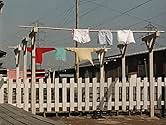
I think only Ozu could make boring mass produced housing look so utterly gorgeous in full colour, and the minor bickering of the household ladies seem so important. He's helped by a fantastic cast, especially the child actors playing the little boys (oddly enough, there doesn't seem to be any little girls in this suburb). The story has layer up layer of irony (aided by numerous fart jokes) built up upon its slight foundations making an utterly fascinating film. As usual with Ozu, he doesn't lecture, although as always his sympathy is slightly tilted to the somewhat bemused father figures. Even the simple ending, a shot of laundry fluttering on a line, seems somehow laden with meaning. The whole film is a pure delight.
I think only Ozu could make boring mass produced housing look so utterly gorgeous in full colour, and the minor bickering of the household ladies seem so important. He's helped by a fantastic cast, especially the child actors playing the little boys (oddly enough, there doesn't seem to be any little girls in this suburb). The story has layer up layer of irony (aided by numerous fart jokes) built up upon its slight foundations making an utterly fascinating film. As usual with Ozu, he doesn't lecture, although as always his sympathy is slightly tilted to the somewhat bemused father figures. Even the simple ending, a shot of laundry fluttering on a line, seems somehow laden with meaning. The whole film is a pure delight.
Ozu's most accessible film
"Good Morning," is one of my favorite's films.
It means a lot to me personally, because -like all of Ozu's work- it demonstrates a brilliant understanding of the complexities of being human. It contains simple wisdom, humour, and kindness; and sadly the whole of cinema history has provided us with very few films which can make such a claim. Ozu celebrates the beauty of middle-class existence, all the while delivering a profound criticism of our tendency to permit "small talk" to dominate conversations. Ultimately though, it is the humour which makes "Good Morning" my favorite's Ozu picture, for it is a very funny movie. Very funny and very satisfying! I can hardly imagine an open-minded person not enjoying it.
Because many North American viewers have a reluctance to watch films more than a few years old, or in languages other than English, Ozu's exposure here is still extremely limited. That is unfortunate because Ozu's films are quite universal.
I feel confident that anyone could appreciate Ozu's genius in this film.
It means a lot to me personally, because -like all of Ozu's work- it demonstrates a brilliant understanding of the complexities of being human. It contains simple wisdom, humour, and kindness; and sadly the whole of cinema history has provided us with very few films which can make such a claim. Ozu celebrates the beauty of middle-class existence, all the while delivering a profound criticism of our tendency to permit "small talk" to dominate conversations. Ultimately though, it is the humour which makes "Good Morning" my favorite's Ozu picture, for it is a very funny movie. Very funny and very satisfying! I can hardly imagine an open-minded person not enjoying it.
Because many North American viewers have a reluctance to watch films more than a few years old, or in languages other than English, Ozu's exposure here is still extremely limited. That is unfortunate because Ozu's films are quite universal.
I feel confident that anyone could appreciate Ozu's genius in this film.
Go ahead, push on my forehead!
"Good Morning" (Japanese, 1959): Directed by Ozu. As in all of his films, Tokyo is the stage, and he populates them with his usual team of actors. Think of the professional stability of Ingmar Bergman, Woody Allen, or John Waters, but Japanese. Ozu concentrates on small moments made meaningful. Unlike the quiet, black and white drama "Tokyo Story", this later film (in color) is a gentle comedy about how people build the character of each and every day with the smallest of gestures which is this case is brought to our attention by two small brothers who decide to go "on strike" insisting that their Father get a television for the household. It's a loving, funny, and forgiving look at how silly we all can be.
Good Morning (1959)
Ozu said he wanted to make a film about people's inability to express the important things, but natter on about unimportant gossip. This all comes out thanks to two boys that really want a TV. They enter into a vow of silence until their TV comes. This silence is misconstrued by the neighbours, who think their mother is angry at them. They begin to gossip amongst themselves and rumors soon start. Meanwhile, the young boys' aunt and teacher are attracted, but fail to act on their emotions. This is a lovely little film, filled with some great humor. Though, I must admit, there was a bit too much focus on the poo/farts jokes. The two boys, especially the youngest, are very cute and make their efforts to get a TV seem less brattish. It's really sweet to see how dedicated the parents are, and even though the kids are kind of mean, they do appreciate the gift in the end. There's no escaping Ozu's look at the clashes between old and new, with the TV looming over all procedures as something that will change life. A little gem, if not one of Ozu's classics.
A Funny and Extremely Serious Comedy
For viewers who have seen only one or two of Ozu's statelier films -- say, "Tokyo Story" or "Equinox Flower" -- "Good Morning" will be a surprise. Two children take a vow of silence to coerce their parents into buying a television set: that's pretty much the whole plot. But what happens as a result affects almost every aspect of life in the nondescript, gossipy, elbow-to-elbow suburb in which the boys' family lives.
This is a comedy, and like all good comedies it's very serious. The boys' act of rebellion is very un-Japanese, and it threatens many of the politely ritualistic social behaviors that mask and deflect the tensions in Japanese society. Whole alliances among the village's women teeter and threaten to topple. The family's authority structure is upended, with the all-powerful father crumbling against the stubborn silence of two little boys.
What wins in the end is love -- or rather (Ozu must have found this particularly funny) love and television. The resolution will probably tear you up (it has brought moisture to the eyes of everyone I've seen it with) but it represents enormous changes in Japanese society -- the collapse of patriarchal authority, the invasion of foreign culture, and especially English-language culture, and the inexorable rise of that great leveler of aesthetics, television. Ozu saw the future, and he wasn't in it.
So naturally, he presents all this in a gentle, even sweet-natured comedy. There may be greater Ozu films, but it's hard to think of one I actually like more than "Good Morning."
This is a comedy, and like all good comedies it's very serious. The boys' act of rebellion is very un-Japanese, and it threatens many of the politely ritualistic social behaviors that mask and deflect the tensions in Japanese society. Whole alliances among the village's women teeter and threaten to topple. The family's authority structure is upended, with the all-powerful father crumbling against the stubborn silence of two little boys.
What wins in the end is love -- or rather (Ozu must have found this particularly funny) love and television. The resolution will probably tear you up (it has brought moisture to the eyes of everyone I've seen it with) but it represents enormous changes in Japanese society -- the collapse of patriarchal authority, the invasion of foreign culture, and especially English-language culture, and the inexorable rise of that great leveler of aesthetics, television. Ozu saw the future, and he wasn't in it.
So naturally, he presents all this in a gentle, even sweet-natured comedy. There may be greater Ozu films, but it's hard to think of one I actually like more than "Good Morning."


Did you know
- TriviaYasujirô Ozu: [movie posters] Yasujirô Ozu pays tribute to his cinematic influences by putting all kinds of film posters all over the wall in his films. In this movie, there are two posters, one of The Defiant Ones (1958) (at 08:30) and one of The Lovers (1958) (at 08:07), both at the neighbors' house.
- Alternate versionsThe original American theatrical release prints were in black and white.
- ConnectionsFeatured in Transcendental Style and Flatulence (2017)
- How long is Good Morning?Powered by Alexa
Details
- Release date
- Country of origin
- Languages
- Also known as
- Guten Morgen
- Production company
- See more company credits at IMDbPro
Contribute to this page
Suggest an edit or add missing content