

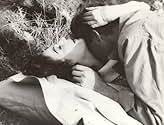
Father Arturo Carrera leaves the priesthood over the church's indifferent position during the Spanish Civil War, but finds himself attracted to beautiful entertainer Soledad.Father Arturo Carrera leaves the priesthood over the church's indifferent position during the Spanish Civil War, but finds himself attracted to beautiful entertainer Soledad.Father Arturo Carrera leaves the priesthood over the church's indifferent position during the Spanish Civil War, but finds himself attracted to beautiful entertainer Soledad.
- Director
- Writers
- Stars


Umberto Alivernini
- Nightclub Customer
- (uncredited)
Robert Bright
- Father Idelfonso
- (uncredited)
Franco Castellani
- José
- (uncredited)

Nino Castelnuovo
- Capt. Trinidad
- (uncredited)
Robert Cunningham
- Mac
- (uncredited)

Gustavo De Nardo
- Maj. Garcia
- (uncredited)
Franco Fantasia
- Cabaret Customer
- (uncredited)
Armando Fracassi
- Nationalist Prisoner
- (uncredited)
- Director
- Writers
- All cast & crew
- Production, box office & more at IMDbPro
5.8917
1
2
3
4
5
6
7
8
9
10
Featured reviews
This one lost money....and I can see exactly why.
Dirk Bogarde was an amazingly talented actor--so much so that I specifically look for his films. However, despite MANY great films, he occasionally made a stinker...and "The Angel Wore Red" is one of them. The movie lost money and I can see exactly why.
The story is set just before the first days of the Spanish Civil War in 1936. Arturo (Bogarde) is a priest serving in Spain and he's disenchanted with the Church. He is so disenchanted that he leaves the priesthood. However, his timing sucks...as the Civil War breaks out and priests are being rounded up and shot! The new Socialist/Communist backed Republicans blame the Church for supporting the Nationalists....and folks are taking retribution of the priests, as they are in a Republican stronghold. Now Arturo has to flee for his life...as folks THINK he's still a priest.
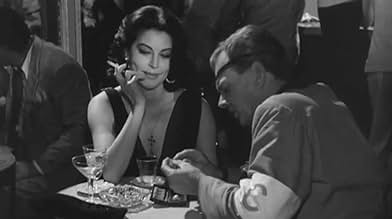
During his time on the run, Arturo is aided by a 'girl of easy virtue' (Ava Gardner) and, inexplicably, the pair fall in love. Now this really does NOT make any sense and it happens way too quickly to be believable. To make it worse, often the film lets the pair just talk and talk and talk....and it's all quite sticky and sappy.
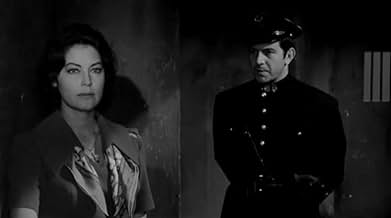
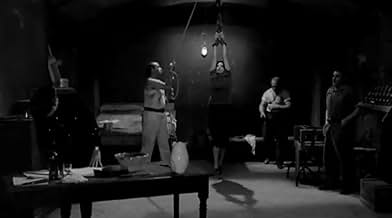
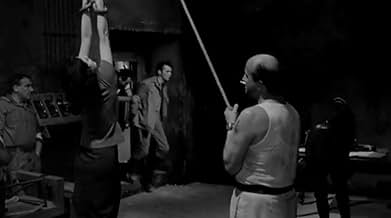
Later, Arturo is caught by the Republicans. They would rather not kill him, since they learned he left the priesthood, but instead of releasing him they force him to work with him. His unenviable task is to take confessions from the priests they are about to execute!! What's next for him and his new main squeeze?
Despite the story seeming rather anti-clerical and having a love affair between an ex-priest and 'good time girl' may seem very anti-clerical, the film actually takes a rather neutral view overall. Unlike many movies of the 1940s that were decidedly pro-Republic, this one shows the Republic a little more realistically...and the film hedges its bets by having Arturo learn to once again love the Church. Considering the Republicans were backed by Stalin and the Nationalists backed by Hitler, it wasn't exactly a war where one side was 'the good guy' and the other 'evil'....and the movie at least gets this part of the story right. Unfortunately, the love affair is unconvincing and the dialog silly and trite. Too bad...as Bogarde was simply better than the material they gave him.
The story is set just before the first days of the Spanish Civil War in 1936. Arturo (Bogarde) is a priest serving in Spain and he's disenchanted with the Church. He is so disenchanted that he leaves the priesthood. However, his timing sucks...as the Civil War breaks out and priests are being rounded up and shot! The new Socialist/Communist backed Republicans blame the Church for supporting the Nationalists....and folks are taking retribution of the priests, as they are in a Republican stronghold. Now Arturo has to flee for his life...as folks THINK he's still a priest.
During his time on the run, Arturo is aided by a 'girl of easy virtue' (Ava Gardner) and, inexplicably, the pair fall in love. Now this really does NOT make any sense and it happens way too quickly to be believable. To make it worse, often the film lets the pair just talk and talk and talk....and it's all quite sticky and sappy.
Later, Arturo is caught by the Republicans. They would rather not kill him, since they learned he left the priesthood, but instead of releasing him they force him to work with him. His unenviable task is to take confessions from the priests they are about to execute!! What's next for him and his new main squeeze?
Despite the story seeming rather anti-clerical and having a love affair between an ex-priest and 'good time girl' may seem very anti-clerical, the film actually takes a rather neutral view overall. Unlike many movies of the 1940s that were decidedly pro-Republic, this one shows the Republic a little more realistically...and the film hedges its bets by having Arturo learn to once again love the Church. Considering the Republicans were backed by Stalin and the Nationalists backed by Hitler, it wasn't exactly a war where one side was 'the good guy' and the other 'evil'....and the movie at least gets this part of the story right. Unfortunately, the love affair is unconvincing and the dialog silly and trite. Too bad...as Bogarde was simply better than the material they gave him.
Spiritual and worldly love during the Spanish Civil War
Despite some obvious flaws I regard this film as a major achievement. The first obvious problem is the dubbing. Vittorio De Sica, a great actor is dubbed in English by a run of the mill voice over technician. The film suffers from being a joint Anglo/American- Italian production.
But it is one of the most mature treatments of a political historical theme that I have ever seen. Neither the loyalists nor the Franco led rebels are spared. Both are essentially brutal totalitarians. The Catholic Church is not spared either. Churchmen are showed to be so out of touch with their flock as to be almost comical, and yet when finally knocked off their pedestal they recover their Christianity. Dirk Bogard gives a subtle and brilliant performance as the tortured young priest. Ava Gardner is perfect as the cynical and yet innocent prostitute. It is actually to her advantage that she played this role at 37 rather than ten years earlier. She would simply been too overpoweringly beautiful to have been fully creditable in the part. Aldo Frabrizzi's part may be too reminiscent of his role in Open City especially at the end. Vittorio De Sica seems to have been doing an imitation of Claude Raines in Casablanca. It would have been good to have heard those two great actors in their native Italian. Joseph Cotton as the one eyed jaded reporter gives a broad yet compelling interpretation. The films failings pale in comparison to its overriding importance.
But it is one of the most mature treatments of a political historical theme that I have ever seen. Neither the loyalists nor the Franco led rebels are spared. Both are essentially brutal totalitarians. The Catholic Church is not spared either. Churchmen are showed to be so out of touch with their flock as to be almost comical, and yet when finally knocked off their pedestal they recover their Christianity. Dirk Bogard gives a subtle and brilliant performance as the tortured young priest. Ava Gardner is perfect as the cynical and yet innocent prostitute. It is actually to her advantage that she played this role at 37 rather than ten years earlier. She would simply been too overpoweringly beautiful to have been fully creditable in the part. Aldo Frabrizzi's part may be too reminiscent of his role in Open City especially at the end. Vittorio De Sica seems to have been doing an imitation of Claude Raines in Casablanca. It would have been good to have heard those two great actors in their native Italian. Joseph Cotton as the one eyed jaded reporter gives a broad yet compelling interpretation. The films failings pale in comparison to its overriding importance.
Historical drama struggled to hit its stride
There's an interesting story here on a number of levels but at roughly 1:40 minutes there's not enough time to tell them all well, which it tries to do. Really didn't understand the point of Joseph Cotten's journalist, even as an expository device. I'll leave criticisms or praise of the treatment of the civil war to others with more than the passing knowledge I have. Someone noted the cramped and dark cinematography, which worked for some scenes but not what might have been some of the more grand-scale scenes, which looked like they were cropped or framed so as not to admit incongruous sites or things into the shots. The lovers are a bit too aware of their fate it seems for them to have a realistic relationship. This one's OK for a watch but for characters bound up in a tragic relationship during revolution and civil war, it is no Dr. Zhivago.
A flawed masterpiece
Though far from perfect, I could watch this movie again, and perhaps even more than that. It's a fascinating movie, for one thing, pairing two of the most beautiful people who ever lived, in a story with real depth, or at least the promise of real depth, which says a lot in a world where 99 movies out of 100 don't even try. Imagine, complaining that at 37, Ava Gardner was "past her prime." It is wonderful to see Bogarde, whose roles usually had him sneering worldly-wise ironies, showing heartfelt passion for the good and the true. It is equally wonderful to see Gardner in a role far more suited for her than the calculating charmer or the tormented playgirl. She never seemed to be really trying until this one, where perhaps the part touched something deep in her. Their chemistry was superlative, their love scene one of the greats of all time, in my view.
That this portrayal of a love that goes beyond time and place occurs in the context of one of the most astonishingly wicked and absurd wars of all time is another sublimity that seems to have whizzed right by all but one of the previous reviewers. Hemingway showed only that Robert Jordan thought the war was absurd, he didn't show its absurdity, which director Nunnally Johnson managed to do here in both direction and dialog, and against great odds. Like another of my favorites, Viva Zapata, this movie is a flawed masterpiece, better by far than 100 polished banalities. Blame its flaws on the trials of filming in 1960 (still stuck in the 50s), on sloppy editing, on the meaningless title, and the inevitable hurdles that writers and directors have to overcome in the complicated and difficult art of film-making, truly daunting in the case of this film. (Imagine attempting to film a love story between a priest and a prostitute in 50s Sicily?!) Don't blame the the actors, the director, or the beautiful and poignant story.
That this portrayal of a love that goes beyond time and place occurs in the context of one of the most astonishingly wicked and absurd wars of all time is another sublimity that seems to have whizzed right by all but one of the previous reviewers. Hemingway showed only that Robert Jordan thought the war was absurd, he didn't show its absurdity, which director Nunnally Johnson managed to do here in both direction and dialog, and against great odds. Like another of my favorites, Viva Zapata, this movie is a flawed masterpiece, better by far than 100 polished banalities. Blame its flaws on the trials of filming in 1960 (still stuck in the 50s), on sloppy editing, on the meaningless title, and the inevitable hurdles that writers and directors have to overcome in the complicated and difficult art of film-making, truly daunting in the case of this film. (Imagine attempting to film a love story between a priest and a prostitute in 50s Sicily?!) Don't blame the the actors, the director, or the beautiful and poignant story.
10clanciai
Dirk Bogarde with Ava Gardner in the Spanish civil war and making more of it than Hemingway.
This is a fascinating story with many aspects and undertones of fathomless depth and a very different view of the Spanish civil war than what is usually represented. The drama grips you at once, as the young priest leaves the church demonstratively in protest, which immediately throws you into an interesting development of character and events, as the civil war breaks out. Joseph Cotten is an American journalist who gives the drama a form, but Ava Gardner is the central figure, 'the angel in red', a prostitute in a night club which the unfrocked priest finds himself at home in. Another character is Aldo Fabrizi, who here repeats his martyrdom from "Rome, open city" as the carrier of the one holy thing still remaining as a hope for the people, a relic with a drop of a saint's blood with apparently tremendous national meaning to both believers and non-believers. On top of it all there is Vittorio de Sica as the general who better than anyone else sees through the utter absurdity and madness of this civil war.
It is possibly the best film of the Spanish civil war that has been made, in spite of its foibles, as it presents a fairer and broader insight into the war than any other film I have seen on this bloody mess, which almost went on from 1936 until the year of the second world war, as an introduction. The love story is totally convincing and 'organic', as Polanski would have said, but the pathos of the film is tremendous, almost giving a documentary presentation of the war but from below, from the view of common people, a prostitute, a defrocked priest and innocent victims. It's like one of Graham Greene's best novels, but the music adds an extra dimension of beauty and infinite suffering and sorrow as well, like to the shocking war pictures of Goya. It's a great film, it can't be denied, and its lacks and wants are not enough to reduce anything of its deeply human and fascinating greatness.
It is possibly the best film of the Spanish civil war that has been made, in spite of its foibles, as it presents a fairer and broader insight into the war than any other film I have seen on this bloody mess, which almost went on from 1936 until the year of the second world war, as an introduction. The love story is totally convincing and 'organic', as Polanski would have said, but the pathos of the film is tremendous, almost giving a documentary presentation of the war but from below, from the view of common people, a prostitute, a defrocked priest and innocent victims. It's like one of Graham Greene's best novels, but the music adds an extra dimension of beauty and infinite suffering and sorrow as well, like to the shocking war pictures of Goya. It's a great film, it can't be denied, and its lacks and wants are not enough to reduce anything of its deeply human and fascinating greatness.


Did you know
- TriviaThe film was originally planned to be shot on-location in Spain. However, due to the unflattering portrayal of Nationalists in the Spanish Civil War, the Franco regime declined permission.
- GoofsWhen the prisoners are being marched for several days to be presented to the fascists, the group contains a substantial number of women. At least two women are shown confessing to Arturo. But when the fascists capture the group, Arturo tells the commander that the group consists of 200 men who should not be killed, no mention of women. When Arturo enters the church to tell the prisoners they are to be executed, the group is all men. The women have vanished.
- ConnectionsFeatured in Best in Action: 1960 (2018)
- How long is The Angel Wore Red?Powered by Alexa
Details
Box office
- Budget
- $1,843,000 (estimated)
- Runtime
- 1h 39m(99 min)
- Color
- Aspect ratio
- 1.85 : 1
Contribute to this page
Suggest an edit or add missing content