

A woman disappears during a Mediterranean boating trip. During the search, her lover and her best friend become attracted to each other.A woman disappears during a Mediterranean boating trip. During the search, her lover and her best friend become attracted to each other.A woman disappears during a Mediterranean boating trip. During the search, her lover and her best friend become attracted to each other.
- Director
- Writers
- Stars
- Nominated for 2 BAFTA Awards
- 6 wins & 12 nominations total

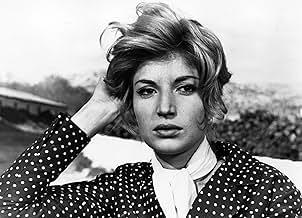




Prof. Cucco
- Ettore
- (uncredited)
- Director
- Writers
- All cast & crew
- Production, box office & more at IMDbPro
7.736.5K
1
2
3
4
5
6
7
8
9
10
Featured reviews
Masterpiece
Gorgeous film, with devastating commentary on relationships. Early on there is something raw and elemental about the dramatic setting, an island with the sea roaring around its craggy inlets, rock formations that look ancient, and the wind howling as it blows up a storm. The people that have come to this place on a pleasure cruise off the coast of southern Italy are generally all unhappy or dissatisfied, most of them with the person they're in a relationship with. When Anna (Lea Massari) suddenly goes missing, a search ensues.
I loved the premise, and loved even more where the film went from there. Sandro (Gabriele Ferzetti), Anna's fiancé, begins pursuing her friend Claudia (Monica Vitti) from the first day of her absence, which is pretty shocking. And the further the action moves away from the island and we see the other characters either getting on with their lives (most of which involve infidelities of their own), or making what seems to be a pretty distant effort to know what's happening, the more we wonder, but what about Anna? If it were a conventional film, I'd be thinking that given the guy starts dating her girlfriend pretty much immediately after she goes missing, why are the police not investigating him? Or questioning a character named Corrado, who had gone off in a boat to a smaller island right beforehand? But the film is not meant to be a mystery, it's making a point about the human condition.
What does it mean to live one's life how one wants, to seek happiness, and to be able to adapt and move on, things that you might think would all be positive, at least to some degree? Does it mean inherent selfishness, infidelity, and unkindness? And can monogamous relationships survive in a world where little dissatisfactions set in, and there is always another person to be attracted to? I thought the film was well paced and had no issues with its length, as it allows subplots to develop, and the longer it went, the more it caused me to occasionally wonder ... what about Anna? And is this what we do to the people in our lives, pushing them out of mind when it becomes convenient? I loved how the film stayed artistically pure, seeking its vision, without caving in and giving us canned or artificial moments. And in that last moment, what I saw as forgiveness for what is an unforgiveable act ... perhaps it signals something that seems pretty depressing, that infidelity is inevitable, and it takes an almost divine act like that hand on the back of the head to stay together as a couple.
Through it all, director Michelangelo Antonioni gives us a beautiful, beautiful film. His compositions and attention to detail - in grand, sweeping shots and those that are closer - are wonderful. There are countless scenes that are visually appealing, and while it felt like there was a unifying theme in the aesthetic, he seems to experiment a little, such as that great shot from the boat back towards the dock, lightly bobbing with the waves, and the rocky island rising up in the background.
Some other little bits:
I loved the premise, and loved even more where the film went from there. Sandro (Gabriele Ferzetti), Anna's fiancé, begins pursuing her friend Claudia (Monica Vitti) from the first day of her absence, which is pretty shocking. And the further the action moves away from the island and we see the other characters either getting on with their lives (most of which involve infidelities of their own), or making what seems to be a pretty distant effort to know what's happening, the more we wonder, but what about Anna? If it were a conventional film, I'd be thinking that given the guy starts dating her girlfriend pretty much immediately after she goes missing, why are the police not investigating him? Or questioning a character named Corrado, who had gone off in a boat to a smaller island right beforehand? But the film is not meant to be a mystery, it's making a point about the human condition.
What does it mean to live one's life how one wants, to seek happiness, and to be able to adapt and move on, things that you might think would all be positive, at least to some degree? Does it mean inherent selfishness, infidelity, and unkindness? And can monogamous relationships survive in a world where little dissatisfactions set in, and there is always another person to be attracted to? I thought the film was well paced and had no issues with its length, as it allows subplots to develop, and the longer it went, the more it caused me to occasionally wonder ... what about Anna? And is this what we do to the people in our lives, pushing them out of mind when it becomes convenient? I loved how the film stayed artistically pure, seeking its vision, without caving in and giving us canned or artificial moments. And in that last moment, what I saw as forgiveness for what is an unforgiveable act ... perhaps it signals something that seems pretty depressing, that infidelity is inevitable, and it takes an almost divine act like that hand on the back of the head to stay together as a couple.
Through it all, director Michelangelo Antonioni gives us a beautiful, beautiful film. His compositions and attention to detail - in grand, sweeping shots and those that are closer - are wonderful. There are countless scenes that are visually appealing, and while it felt like there was a unifying theme in the aesthetic, he seems to experiment a little, such as that great shot from the boat back towards the dock, lightly bobbing with the waves, and the rocky island rising up in the background.
Some other little bits:
- Anna had two books with her on the trip, F. Scott Fitzgerald's 'Tender is the Night' and the Holy Bible. I liked how the father conveniently disregarded the first, with its themes on the unhappiness in marriage, and took the Bible exclusively to mean that she hadn't committed suicide. We see what we want to see.
- Just as human relationships are subject to impermanence maybe out of neglect, one of the people clumsily drops an ancient vase discovered in one of the island's caves, and it makes no difference to them.
- There is reverence for the freedom and spacing of the architectural style of ancient buildings which have survived, but our lives seem so dreadfully transient in comparison. In one scene Ferzetti's character deliberately tips over an inkwell on an artist's drawing, seemingly out of spite. I wondered if he was jealous of youth, or jealous of having sold out on his old dreams to become more of a businessman than an architect - sensing his own mortality, or his compromises in a too-short life.
- In keeping with the elemental early scenes and the commentary on the fundamental nature of people, there was something primal about the very aggressive southern Italian male gaze from dozens of men in a large crowd around Monica Vitti in one scene, which was very creepy.
- Favorite quote, Anna at about the 25 minute mark:
Is an impeccable visual presentation enough by itself to make a film worth watching?
It's been remarked that this is a very visual film, and that unquestionably rings true to me. Michelangelo Antonioni's orchestration of shots and scenes as director, and Aldo Scavarda's cinematography, are terrifically sharp and vivid if not outright arresting, an utter pleasure to behold as a viewer and without a doubt the most consistent aspects of the feature. Eraldo Da Roma's smooth editing comes in a close second behind this pair. The filming locations range from fetching to gorgeous, and in short order other facets like production design, art direction, hair and makeup, and costume design aren't far behind. I don't even rightly know how to describe it, but in its visual presentation 'L'avventura' is uniquely precise, natural, calculated, fluid, and vibrant, all at once, and all the time, in a way that's especially striking. Even at that, I'm not sure that the movie seems so distinct in this regard as to be hailed as a model for all those titles to follow it, yet there can be no doubt that Antonioni and Scavarda in particular prove themselves to be fine craftsmen.
It's important to note the visual presentation right away not only because it's so excellent in the first place, but also because outside of that which our eyes take in, the picture seems less than flawless. It's not that the acting is bad, because it's not; I think the cast turn in solid performances, with Monica Vitti and Gabriele Ferzetti being most noteworthy given that more time on-screen means more time to shine. It's not that the music is bad, because it's not; I quite like Giovanni Fusco's score. These elements just don't readily leap out in the same way that the visuals do. And it's not that the screenplay is bad, because it's not; the story is theoretically compelling, and the scene writing, even if I don't think every last detail is wholly suitable for the narrative (e.g. The scene in the sewing shop) or fully convincing (the progression of the dynamics between Claudia and Sandro). It's certainly true that the plot is ultimately rather light, though, accentuated by the fact that wide swaths of the dialogue could be dispensed with and nothing would be lost. In fact, part of me feels like 'L'avventura' could be rewritten with new dialogue, pointedly changing the tale so long as it still comports to the imagery before us, and we'd still effectively have the same movie.
Say of the writing what one will, however; there's one fault that decidedly stands out more. The pacing is not great. The first hour meanders so blithely, conveying so little in that time, that it becomes downright soporific; one hour took me two to watch because I really did keep falling asleep. The remaining length is more eventful, yet also weirdly deficient in its communication of the plot - just as the state of the primary characters' relationship to one another feels a little arbitrary, the broad strokes of their geographical journey are much clearer than the purpose of the stops they make along the way. With that in mind, even though more is happening on-screen after the first hour, still the pacing seems just as unbothered, as though the proceedings are just kind of shuffling around instead of meaningfully going anywhere. And for all this: oh yes, the visuals remain just as enticing, a real treat for movie lovers. Whether the camera is showing us landscapes, cityscapes, interiors, or shots of characters near or far, the result is always exquisite. Yet no matter how perfect a film may look, do the visions to greet us really matter if the storytelling is emphatically Lesser Than?
This is the second feature from Antonioni that I've watched, and the second for which my regard diverges significantly from popular opinion. The disparity isn't quite so great as with 1966's 'Blowup,' and I don't specifically dislike 'L'avventura,' but my thoughts on it are quite divided. The fundamental sights before us are totally splendid. The course of events they are intended to relate, from scattered small moments to major character relationships to the overall narrative, are substantially weaker. What we have then, in my estimation, is questionable material rendered with exemplary execution; the latter elevates the former, but is that enough? I'm glad for those that get more out of this movie; I'd like to say the same for myself. Unlike 'Blowup,' I can at least say that I understand how other viewers could derive more earnest meaning from this, its elder. Still, whatever it is that other folks have seen in 'L'avventura,' what I see is a stunning visual presentation that does its best to aid its companion component of storytelling that struggles to limp along. I don't regret watching it; I am, however, unsure that the visuals alone especially made it worth three and a half hours of my time.
It's important to note the visual presentation right away not only because it's so excellent in the first place, but also because outside of that which our eyes take in, the picture seems less than flawless. It's not that the acting is bad, because it's not; I think the cast turn in solid performances, with Monica Vitti and Gabriele Ferzetti being most noteworthy given that more time on-screen means more time to shine. It's not that the music is bad, because it's not; I quite like Giovanni Fusco's score. These elements just don't readily leap out in the same way that the visuals do. And it's not that the screenplay is bad, because it's not; the story is theoretically compelling, and the scene writing, even if I don't think every last detail is wholly suitable for the narrative (e.g. The scene in the sewing shop) or fully convincing (the progression of the dynamics between Claudia and Sandro). It's certainly true that the plot is ultimately rather light, though, accentuated by the fact that wide swaths of the dialogue could be dispensed with and nothing would be lost. In fact, part of me feels like 'L'avventura' could be rewritten with new dialogue, pointedly changing the tale so long as it still comports to the imagery before us, and we'd still effectively have the same movie.
Say of the writing what one will, however; there's one fault that decidedly stands out more. The pacing is not great. The first hour meanders so blithely, conveying so little in that time, that it becomes downright soporific; one hour took me two to watch because I really did keep falling asleep. The remaining length is more eventful, yet also weirdly deficient in its communication of the plot - just as the state of the primary characters' relationship to one another feels a little arbitrary, the broad strokes of their geographical journey are much clearer than the purpose of the stops they make along the way. With that in mind, even though more is happening on-screen after the first hour, still the pacing seems just as unbothered, as though the proceedings are just kind of shuffling around instead of meaningfully going anywhere. And for all this: oh yes, the visuals remain just as enticing, a real treat for movie lovers. Whether the camera is showing us landscapes, cityscapes, interiors, or shots of characters near or far, the result is always exquisite. Yet no matter how perfect a film may look, do the visions to greet us really matter if the storytelling is emphatically Lesser Than?
This is the second feature from Antonioni that I've watched, and the second for which my regard diverges significantly from popular opinion. The disparity isn't quite so great as with 1966's 'Blowup,' and I don't specifically dislike 'L'avventura,' but my thoughts on it are quite divided. The fundamental sights before us are totally splendid. The course of events they are intended to relate, from scattered small moments to major character relationships to the overall narrative, are substantially weaker. What we have then, in my estimation, is questionable material rendered with exemplary execution; the latter elevates the former, but is that enough? I'm glad for those that get more out of this movie; I'd like to say the same for myself. Unlike 'Blowup,' I can at least say that I understand how other viewers could derive more earnest meaning from this, its elder. Still, whatever it is that other folks have seen in 'L'avventura,' what I see is a stunning visual presentation that does its best to aid its companion component of storytelling that struggles to limp along. I don't regret watching it; I am, however, unsure that the visuals alone especially made it worth three and a half hours of my time.
Shallow Characters In A Very Deep Film
There's something strange going on in this film.
The first time I watched it, it seemed to wash over me without affecting me in anyway. Later on(and I've read this in other people's comments here as well) I found images and dialogue from the movie creeping into my subconscious; entire dreams would take place upon the island where Anna goes missing(often in monochrome), or I'd start to compare real life events to those that occur during the film. Did Antonioni plant subliminal messages within the movie? Probably not. It's more likely the masterful pace he employs here, coupled with the busy, deep cinematography is the cause of this. Notice how the backgrounds NEVER go out of focus, no matter how much is going on within the frame. Check out the scene about an hour and ten minutes in, where Sandro and the old man are talking in the middle of an extremely busy street; nothing blurs or goes out of focus, even when a tram comes in and out of the shot, nothing loses it's perspective, and as the scene ends and they walk deep into the shot we can see way past them and far, far into the distance.
This seems to be why the film has such a deep affect on the subconscious. The characters are deliberately shallow and are placed at the very foreground of every shot, yet the backgrounds are rich tableaux bustling with life. In the scenes on the island where Anna disappears, we see the main characters always in shot, yet in the background there is a feeling that something strange within nature itself is going on. The darkening of the clouds, the sudden mist upon the water, the rocks falling to the sea, even the sudden appearance of the old hermit character, all give a certain unease.
There's also the haunting feeling of the film, as Anna's friends begin, almost immediately to forget about her. Soon, they don't seem to care a jot about her, and neither, in a sense, do we. It's this feeling of loose ends and guilt on our part(for joining her so called 'friends' in forgetting about her so quickly) that leaves the deepest impression. The characters in this film are so morally shallow(the ending bears this out) yet they are the reason this film leaves such a strong impression on those who watch it, and who become captivated by it.
I cant recommend this film to everyone because I know that the Hollywood Blockbuster has reduced most modern cinema-goers attention spans to almost zero. But if you fancy a challenge, or merely wish to luxuriate in classic cinema.....begin here.
The first time I watched it, it seemed to wash over me without affecting me in anyway. Later on(and I've read this in other people's comments here as well) I found images and dialogue from the movie creeping into my subconscious; entire dreams would take place upon the island where Anna goes missing(often in monochrome), or I'd start to compare real life events to those that occur during the film. Did Antonioni plant subliminal messages within the movie? Probably not. It's more likely the masterful pace he employs here, coupled with the busy, deep cinematography is the cause of this. Notice how the backgrounds NEVER go out of focus, no matter how much is going on within the frame. Check out the scene about an hour and ten minutes in, where Sandro and the old man are talking in the middle of an extremely busy street; nothing blurs or goes out of focus, even when a tram comes in and out of the shot, nothing loses it's perspective, and as the scene ends and they walk deep into the shot we can see way past them and far, far into the distance.
This seems to be why the film has such a deep affect on the subconscious. The characters are deliberately shallow and are placed at the very foreground of every shot, yet the backgrounds are rich tableaux bustling with life. In the scenes on the island where Anna disappears, we see the main characters always in shot, yet in the background there is a feeling that something strange within nature itself is going on. The darkening of the clouds, the sudden mist upon the water, the rocks falling to the sea, even the sudden appearance of the old hermit character, all give a certain unease.
There's also the haunting feeling of the film, as Anna's friends begin, almost immediately to forget about her. Soon, they don't seem to care a jot about her, and neither, in a sense, do we. It's this feeling of loose ends and guilt on our part(for joining her so called 'friends' in forgetting about her so quickly) that leaves the deepest impression. The characters in this film are so morally shallow(the ending bears this out) yet they are the reason this film leaves such a strong impression on those who watch it, and who become captivated by it.
I cant recommend this film to everyone because I know that the Hollywood Blockbuster has reduced most modern cinema-goers attention spans to almost zero. But if you fancy a challenge, or merely wish to luxuriate in classic cinema.....begin here.
Antoniennui !!!
By the late 1950s and early 1960s, the Italian economy had already started stabilising and moving away from the devastating consequences of WWII. The stabilisation and subsequent economic growth took place through rapid and widespread industrialisation. One can also clearly notice a shift in the sensibilities in the Italian films which were made during these years by acclaimed filmmakers like Antonioni, Fellini, Ermanno Olmi, etc. Their films shifted away from the concerns of neorealist films of the 1940s and early 50s. In this context, it is very interesting to note the dissimilarities between a typical Italian neorealist film and a post-neorealist film like 'L'Avventura'. While Neorealism dealt with the economic fallout of WWII, 'L'Avventura' deals with a sense of disillusionment in the midst of rapid industrialisation(the very first line of dialogue revolves around how the natural woods are being being replaced by houses). While Neorealism focused on the poor working class Italians, 'L'Avventura' focuses on the privileged upper class or the bourgeois section of the Italian society.
From a technical standpoint, it has to be said that 'L'Avventura' is exquisitely shot. The camera movements and numerous tracking shots are executed with a distinct sophistication and methodical precision. There are a lot of complex frame compositions that take place in the interior scenes which scream perfectionism on the part of Antonioni. The overall tone for the film is one of extreme austerity. This austerity and lack of humanity to the film is clearly meant to represent the supposed lack of humanity in the midst of mindless industrialisation and consumerism. I think one thing that the viewer has to assume in order to buy into the film's plot and story elements is that the film takes place in Antonioni's own world which is a little different to the real world. This is because accepting the reaction of some of the characters to certain occurrences in the film will involve a certain amount of the suspension of disbelief.
The problem I had with 'L'Avventura' is that after a while, the relentless austerity started to get a little unbearable and tough to be receptive to. It's interesting because I know the austerity is absolutely deliberate and it's intended to epitomise the ennui that the characters get afflicted by along with Antonioni's own idea of the blandness and aimlessness of life in contemporary industrialised Italy of the early 60s. The first hour of the film is absolutely spectacular and rich with abstract existentialist intrigue. But once the group leaves the island and we re-enter civilisation, the film gets progressively less intriguing for me. I generally don't get negatively affected by the austerity of Kubrick or Bergman. But the second half of this film really started to progressively weigh me down.
I don't think any acting performance in the film is particularly special. But of course Monica Vitti offers vulnerability and a sensitive touch to her character and she is the only one that the viewer can find any reason to sympathise with. But to be honest, it is clear that Antonioni is in no mood to make any character singularly likable.
Overall 'L'Avventura' is a film that clearly shows a master at work who clearly has a visual flair and a philosophical voice. But the austerity and lack of humanity in the film makes it tough to rewatch and revisit too often.
From a technical standpoint, it has to be said that 'L'Avventura' is exquisitely shot. The camera movements and numerous tracking shots are executed with a distinct sophistication and methodical precision. There are a lot of complex frame compositions that take place in the interior scenes which scream perfectionism on the part of Antonioni. The overall tone for the film is one of extreme austerity. This austerity and lack of humanity to the film is clearly meant to represent the supposed lack of humanity in the midst of mindless industrialisation and consumerism. I think one thing that the viewer has to assume in order to buy into the film's plot and story elements is that the film takes place in Antonioni's own world which is a little different to the real world. This is because accepting the reaction of some of the characters to certain occurrences in the film will involve a certain amount of the suspension of disbelief.
The problem I had with 'L'Avventura' is that after a while, the relentless austerity started to get a little unbearable and tough to be receptive to. It's interesting because I know the austerity is absolutely deliberate and it's intended to epitomise the ennui that the characters get afflicted by along with Antonioni's own idea of the blandness and aimlessness of life in contemporary industrialised Italy of the early 60s. The first hour of the film is absolutely spectacular and rich with abstract existentialist intrigue. But once the group leaves the island and we re-enter civilisation, the film gets progressively less intriguing for me. I generally don't get negatively affected by the austerity of Kubrick or Bergman. But the second half of this film really started to progressively weigh me down.
I don't think any acting performance in the film is particularly special. But of course Monica Vitti offers vulnerability and a sensitive touch to her character and she is the only one that the viewer can find any reason to sympathise with. But to be honest, it is clear that Antonioni is in no mood to make any character singularly likable.
Overall 'L'Avventura' is a film that clearly shows a master at work who clearly has a visual flair and a philosophical voice. But the austerity and lack of humanity in the film makes it tough to rewatch and revisit too often.
Innovative study on alienation
L'Avventura (1960)****
Young woman (Lea Massari) suddenly disappears during a boating trip on an inhabited island. Shortly afterward, her boyfriend (Gabriele Ferzetti) and her best friend (Monica Vitti) became attracted to each other.
However, don't expect the mystery. This is a study of emotional isolation, moral decay, lack of the communication and emptiness of rich people in contemporary (then) society. You can easily be bored by the slow pace and the lack of dramatics of this movie unless you capture its true purpose. This is "state of mind" or experience film rather than conventional plot film. Antonioni practically discovered the new movie language in L'Avventura. By using formal instruments he is expressing emotions of the characters (loneliness, boredom, emptiness and emotional detachment) and the viewer is forced rather to feel this same emotions himself than to be involved in the story and its events. These formal instruments are: slow rhythm, real-time events, long takes, visual metaphors like inhabited island(s), fog, extreme long shots (small characters in panorama) and putting protagonists on inhabited streets or large buildings and landscapes.
Great cinematography. Forms trilogy with La Notte (1961) and L'Eclisse (1962).
Young woman (Lea Massari) suddenly disappears during a boating trip on an inhabited island. Shortly afterward, her boyfriend (Gabriele Ferzetti) and her best friend (Monica Vitti) became attracted to each other.
However, don't expect the mystery. This is a study of emotional isolation, moral decay, lack of the communication and emptiness of rich people in contemporary (then) society. You can easily be bored by the slow pace and the lack of dramatics of this movie unless you capture its true purpose. This is "state of mind" or experience film rather than conventional plot film. Antonioni practically discovered the new movie language in L'Avventura. By using formal instruments he is expressing emotions of the characters (loneliness, boredom, emptiness and emotional detachment) and the viewer is forced rather to feel this same emotions himself than to be involved in the story and its events. These formal instruments are: slow rhythm, real-time events, long takes, visual metaphors like inhabited island(s), fog, extreme long shots (small characters in panorama) and putting protagonists on inhabited streets or large buildings and landscapes.
Great cinematography. Forms trilogy with La Notte (1961) and L'Eclisse (1962).


Did you know
- TriviaAt its premiere at the 1960 Cannes Film Festival, it was booed to the extent that Michelangelo Antonioni and Monica Vitti fled the theater. However, after the second screening there was a complete turnaround in how it was perceived and it was awarded the Special Jury Prize, going on to become a landmark of European cinema.
- GoofsWhen Sandro and Gloria make love, her nipple is unintentionally revealed and she quickly hides it.
- ConnectionsEdited into Histoire(s) du cinéma: Seul le cinéma (1994)
- SoundtracksMai
(uncredited)
Written by Silvana Simoni (as Simoni), Aldo Locatelli (as Locatelli), Arturo Casadei (as Casadei), and Aldo Valleroni (as Valleroni)
Performed by Mina
[sung along to by Monica Vitti]
- How long is L'Avventura?Powered by Alexa
Details
- Release date
- Countries of origin
- Languages
- Also known as
- Pustolovina
- Filming locations
- Basiluzzo Island, Aeolian Islands, Messina, Sicily, Italy(scenes of swimming in the sea where Anna claims to have seen a shark)
- Production companies
- See more company credits at IMDbPro
Box office
- Gross worldwide
- $3,132
- Runtime
- 2h 24m(144 min)
- Color
- Sound mix
- Aspect ratio
- 1.85 : 1
Contribute to this page
Suggest an edit or add missing content