IMDb RATING
7.8/10
3.2K
YOUR RATING
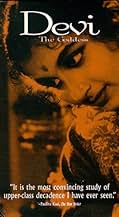
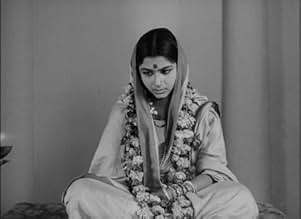
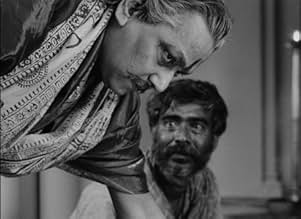
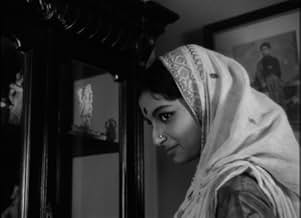
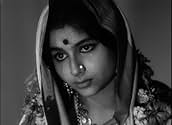
A young woman is deemed a goddess when her father-in-law, a rich feudal land-lord, has a dream envisioning her as an avatar of Kali.A young woman is deemed a goddess when her father-in-law, a rich feudal land-lord, has a dream envisioning her as an avatar of Kali.A young woman is deemed a goddess when her father-in-law, a rich feudal land-lord, has a dream envisioning her as an avatar of Kali.
- Director
- Writers
- Stars
- Awards
- 1 win & 1 nomination total
Soumitra Chatterjee
- Umaprasad
- (as Soumitra Chattopadhyay)
Karuna Bannerjee
- Harasundari
- (as Karuna Bandyopadhyay)
Purnendu Mukherjee
- Taraprasad
- (as Purnendu Mukhopadhyay)
Arpan Chowdhury
- Khoka - Child
- (as Shriman Arpan Chowdhury)
Anil Chatterjee
- Bhudeb
- (as Anil Chattopadhyay)
- Director
- Writers
- All cast & crew
- Production, box office & more at IMDbPro
7.83.2K
1
2
3
4
5
6
7
8
9
10
Featured reviews
A Tragic & Heartbreaking Portrait Of Blind Faith & Superstitious Beliefs
Examining the dangers of blind faith & superstitious beliefs through the adversity of a young woman who finds herself deified by her father-in-law following a vivid dream, Devi captures the absurdity of religious delusion and the oppressive role a patriarchal society plays by not giving women their own voice even when they are held to a divine status.
Written & directed by Satyajit Ray (The Apu Trilogy & The Music Room), the story aptly introduces us to all the characters before the main plot surfaces but once it kicks into action, things only get more tragic & heartbreaking from there on. Ray makes sure his critique doesn't mock the Hindu religion, and is mainly concerned with the grave consequences of such blind conviction.
The religious fervour that erupts from one man's idiotic interpretation of a dream is depicted with both honesty & understanding. The splendid camerawork, steady pace & skilful editing do their part but what makes the ride so gripping, involving & interesting is the strong & sincere performances from the committed cast, with Sharmila Tagore impressing the most in the designated titular role.
Overall, Devi (The Goddess) is yet another socially relevant film from Satyajit Ray that tackles a sensitive subject matter with elegance & composure, and delivers a rich, evocative & thought-provoking experience. As is the case with most films of this esteemed auteur, the story brims with a timeless quality, the social themes it addresses have a universal appeal, and the sensible storytelling makes it worth a shot.
Written & directed by Satyajit Ray (The Apu Trilogy & The Music Room), the story aptly introduces us to all the characters before the main plot surfaces but once it kicks into action, things only get more tragic & heartbreaking from there on. Ray makes sure his critique doesn't mock the Hindu religion, and is mainly concerned with the grave consequences of such blind conviction.
The religious fervour that erupts from one man's idiotic interpretation of a dream is depicted with both honesty & understanding. The splendid camerawork, steady pace & skilful editing do their part but what makes the ride so gripping, involving & interesting is the strong & sincere performances from the committed cast, with Sharmila Tagore impressing the most in the designated titular role.
Overall, Devi (The Goddess) is yet another socially relevant film from Satyajit Ray that tackles a sensitive subject matter with elegance & composure, and delivers a rich, evocative & thought-provoking experience. As is the case with most films of this esteemed auteur, the story brims with a timeless quality, the social themes it addresses have a universal appeal, and the sensible storytelling makes it worth a shot.
Watch out for people with Visions
"Devi" (Hindi, 1960): Directed by Satyajit Ray, and banned in India until the intercession of Nehru, this is the story of a lovely 17 year old wife, who is suddenly labeled as a "Goddess" (while her husband is absent to complete his final exams in college), due to a dream ("vision") by her father-in-law. What follows is a fascinating, multi-angled look at the transitional Indian culture (and MOST cultures, frankly). Is this any different, any worse, or any more desperate than seeing the face of Jesus in a grilled cheese sandwich or the grain of a wooden door? Is her overnight change in status unique? Are the people who have confused motives, hopelessness, or malleable minds any less vulnerable here and now? The quality of the video copy I viewed was rough a copy of a copy of a copy yet even then, the power of Ray's vision shines through. This is a serious, beautiful, insightful, tragic film. (It has something of a "cousins" relationship to the film "Anchoress".)
A masterpiece.
Satyajit Ray made "Devi" in 1960. It was only his sixth film after completeing his 'Apu Trilogy' and "The Music Room" but it's much less well-known and little seen today. It's also a masterpiece. The great Chhabi Biswas, (he of "The Music Room"), once again plays a rich, lonely old man who comes to believe his daughter-in-law is a reincarnation of the Goddess Kali. If the tale is a fanciful one it's grounded in the harsh realities of the India of the time, (it's set in the mid-nineteenth century), and its heart is a heart of darkness. Goddess or witch, the end result is the same; such superstition can only have a tragic outcome and this is one of Ray's finest tragedies. Working again with what was basically his stock company, Ray draws superb performances from his cast and like so much of his work, this is a great ensemble piece, superbly shot by Subrata Mitra and scored by Ali Akbar Khan. It's a film that cries out for restoration and rediscovery.
Family Tradition, Religion, Superstition and Ignorance
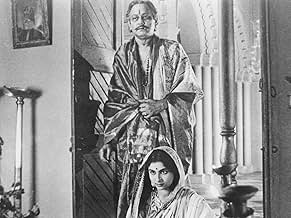
In the countryside of India, Umaprasad (Soumitra Chattopadhyay) has been happily married with his seventeen year-old wife Doyamoyee (Sharmila Tagore) for three years. They live in the house of Umaprasad´s father Kalikinkar Roy (Chhabi Biswas), who worships the goddess Kali, with Umaprasad´s elder brother Taraprasad (Purnendu Mukhopadhyay), his wife Harasundari (Karuna Bandyopadhyay) and their child Khoka. Umaprasad has a conversation with Doyamoyee and explains that he will move to the big city to study English and she questions why he needs to travel to go to school. Sometime later, Kalikinkar has a dream that Doyamoyee is the reincarnation of Kali and the locals come to Kalikinkar´s house to worship her. Doyamoyee asks Harasundari to write to Umaprasad and soon he returns home. But Doyamoyee has been brainwashed with the situation and begins to believe that she might be the reincarnation of Kali leading the family to a tragedy.
"Devi", a.k.a. "The Goddess", is a little gem with a story of family tradition (and respect), religion, superstition and ignorance in the Nineteenth Century in India. "Devi" is beautifully shot in black-and-white and has magnificent performances and a perfect open conclusion. My vote is eight.
Title (Brazil): "A Deusa" ("The Goddess")
"Devi", a.k.a. "The Goddess", is a little gem with a story of family tradition (and respect), religion, superstition and ignorance in the Nineteenth Century in India. "Devi" is beautifully shot in black-and-white and has magnificent performances and a perfect open conclusion. My vote is eight.
Title (Brazil): "A Deusa" ("The Goddess")
provocative psychological drama - NOT bollywood
This film was made in 1960. This is interesting because it is highly doubtful that the same film could be made in India today, in spite of India's massive film industry. The film does a great depiction of the crisis faced by people struggling to be modern yet encumbered with the traditional systems and the specter of having been colonized.
The younger son is ready to walk away from the bondage of traditional and as he sees, the superstition of the traditional life. Of course, he is reaping the benefit of life as a high caste. His young wife becomes the Devi - the embodiment of the goddess. This film also works well for its psychological content for the way we see the father project his desires onto those around him, and the choices faced by each character. In light of the fundamentalism worldwide - Christian, Muslim & Hindu - it is hard to image that this film could be made today in India since it leans to a skeptical view of Darsan and the goddess.
Did you know
- TriviaSharmila Tagore was just 15 when she filmed this role.
- Quotes
Kalikinkar Roy: [while Doyamoyee strokes his feet] Do you know who I'm worried about? I'm worried about your Christian husband. You never know the intention of boys today.
- ConnectionsFeatured in The Story of Film: An Odyssey: Sex & Melodrama (2011)
- How long is The Goddess?Powered by Alexa
Details
- Release date
- Country of origin
- Language
- Also known as
- La diosa
- Filming locations
- See more company credits at IMDbPro
Box office
- Gross US & Canada
- $93,215
- Runtime
- 1h 33m(93 min)
- Color
- Sound mix
- Aspect ratio
- 1.37 : 1
Contribute to this page
Suggest an edit or add missing content