IMDb RATING
8.0/10
15K
YOUR RATING


A vengeful young man marries the daughter of a corrupt industrialist in order to seek justice for his father's suicide.A vengeful young man marries the daughter of a corrupt industrialist in order to seek justice for his father's suicide.A vengeful young man marries the daughter of a corrupt industrialist in order to seek justice for his father's suicide.
- Awards
- 3 wins & 1 nomination total


8.015.2K
1
2
3
4
5
6
7
8
9
10
Featured reviews
The Bad do indeed sleep well in this overlooked Kurosawa...
"The Bad Sleep Well" is a forgotten gem from one of Japan's great masters, Akira Kurosawa. His other two Shakespeare adaptations, "Throne of Blood" (Macbeth) and "Ran" (King Lear), are much more famous and well-regarded, justifiably so if you have seen them ("Ran" is particular is my favorite of all Kurosawa films). However, this sharp and caustic adaptation of Hamlet deserves an equal amount of praise and recognition. It may be the most bleak subject matter that Kurosawa ever tackled - the corruption in the highest levels of government in post-war Japan.
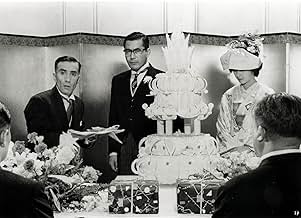
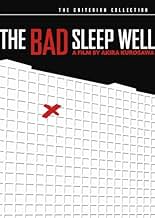
The film begins with a long but funny wedding sequence that illustrates Kurosawa's great skill as a director. We (and the camera) are among a group of reporters discussing the numerous convenient reasons for the marriage; the bride is lame and the daughter of Iwabuchi, the head of corporation, and the bridegroom, Nishi, has aspirations to elevate his status in the business. We see the comedy of manners play out in this sequence in increasingly humorous situations as the various parties deny the rumors and reporters continue comment to each other, culminating in the panicked looks on the faces of the corporate higher-ups as the wedding cake arrives - in the shape of their office building, Public Corp., with a red X marking a spot in one of the windows where one of their former partners committed suicide. It's a virtuoso sequence that perfectly sets up the tone of the rest of the film.
The newspapers have a field day with this, especially when various members of Public Corp. are investigated for fraud and embezzlement, yet they stoically remain silent and the case goes nowhere. Then it heats up again as a few of them commit suicide; the rumors are that they were goaded into doing so (n fact, they were). However, without any substance to press the matter, the case is dropped. And that's when the real story begins - one of the Public Corp executives, Wada, survives and is rescued by Nishi and his shadowy accomplice, Itakura.
This is followed by a brilliant scene in which Wada is taken to his own funeral and observes the farce - all the while, Nishi plays him a tape with Moriyama and Shirai, his former partners, plotting his murder. The way Kurosawa stages this is masterful; the sublime music emanating from the funeral is contrasted dramatically with the cold-blooded words of Public Corp, as Wada listens on. One of the ways Wada contributes is to scare the living hell out of Shirai - Wada poses as a ghost of himself in order to freak him out (a clever method of adding in the ghost in Hamlet). As the plot progresses, Nishi reveals his reasons for saving Wada and exacting a very personal revenge on Iwabuchi and his cohorts; and the story's pace becomes more frantic and exciting with a dramatic but sudden conclusion.
Technically, Kurosawa is at his best here. The wedding and the funeral are both marvels of observational behavior and they contrast each other perfectly. He uses a lot of intriguing mise-en-scene compositions for his interiors that serve to highlight his characters' inner thoughts but very little movement of the camera in order to manipulate his audience; the dark nature of the story is enough to suck you in. One of the fascinating observations in "The Bad Sleep Well" is that nearly all of the characters are morally bankrupt and filled with secrets - even Nishi, the protagonist. His wife, the Ophelia character, is the only one that Kurosawa allows us to feel sympathy for, and even then in the end she is not fully spared her grief. Taken in this context, Kurosawa's Hamlet becomes a study in the morality and pragmatism of revenge but also an incisive jab at the fat cats in modern Japan.
If there is a flaw in the film, it is that the overall pacing is not always brisk enough to sustain the long running time (2 1/2 hours). The wedding, despite being absolutely essential, is protracted; the rest of the film is much quicker but still drags in parts. Also, Kurosawa seems unsure about his ending; the film ends quite abruptly but appropriately in terms of his larger point about the hopelessness of fighting the rampant corruption, I would argue. However, despite these flaws, overall "The Bad Sleep Well" is a masterful and dark excursion into the seedy side of corporate crime, using Shakespeare Hamlet brilliantly but not completely as it's core. Toshiro Mifune in particular gives one of his most unique low-key performances; instead of his usual fiery exterior we get a performance full of internalized anger throughout. Highly recommended.
The film begins with a long but funny wedding sequence that illustrates Kurosawa's great skill as a director. We (and the camera) are among a group of reporters discussing the numerous convenient reasons for the marriage; the bride is lame and the daughter of Iwabuchi, the head of corporation, and the bridegroom, Nishi, has aspirations to elevate his status in the business. We see the comedy of manners play out in this sequence in increasingly humorous situations as the various parties deny the rumors and reporters continue comment to each other, culminating in the panicked looks on the faces of the corporate higher-ups as the wedding cake arrives - in the shape of their office building, Public Corp., with a red X marking a spot in one of the windows where one of their former partners committed suicide. It's a virtuoso sequence that perfectly sets up the tone of the rest of the film.
The newspapers have a field day with this, especially when various members of Public Corp. are investigated for fraud and embezzlement, yet they stoically remain silent and the case goes nowhere. Then it heats up again as a few of them commit suicide; the rumors are that they were goaded into doing so (n fact, they were). However, without any substance to press the matter, the case is dropped. And that's when the real story begins - one of the Public Corp executives, Wada, survives and is rescued by Nishi and his shadowy accomplice, Itakura.
This is followed by a brilliant scene in which Wada is taken to his own funeral and observes the farce - all the while, Nishi plays him a tape with Moriyama and Shirai, his former partners, plotting his murder. The way Kurosawa stages this is masterful; the sublime music emanating from the funeral is contrasted dramatically with the cold-blooded words of Public Corp, as Wada listens on. One of the ways Wada contributes is to scare the living hell out of Shirai - Wada poses as a ghost of himself in order to freak him out (a clever method of adding in the ghost in Hamlet). As the plot progresses, Nishi reveals his reasons for saving Wada and exacting a very personal revenge on Iwabuchi and his cohorts; and the story's pace becomes more frantic and exciting with a dramatic but sudden conclusion.
Technically, Kurosawa is at his best here. The wedding and the funeral are both marvels of observational behavior and they contrast each other perfectly. He uses a lot of intriguing mise-en-scene compositions for his interiors that serve to highlight his characters' inner thoughts but very little movement of the camera in order to manipulate his audience; the dark nature of the story is enough to suck you in. One of the fascinating observations in "The Bad Sleep Well" is that nearly all of the characters are morally bankrupt and filled with secrets - even Nishi, the protagonist. His wife, the Ophelia character, is the only one that Kurosawa allows us to feel sympathy for, and even then in the end she is not fully spared her grief. Taken in this context, Kurosawa's Hamlet becomes a study in the morality and pragmatism of revenge but also an incisive jab at the fat cats in modern Japan.
If there is a flaw in the film, it is that the overall pacing is not always brisk enough to sustain the long running time (2 1/2 hours). The wedding, despite being absolutely essential, is protracted; the rest of the film is much quicker but still drags in parts. Also, Kurosawa seems unsure about his ending; the film ends quite abruptly but appropriately in terms of his larger point about the hopelessness of fighting the rampant corruption, I would argue. However, despite these flaws, overall "The Bad Sleep Well" is a masterful and dark excursion into the seedy side of corporate crime, using Shakespeare Hamlet brilliantly but not completely as it's core. Toshiro Mifune in particular gives one of his most unique low-key performances; instead of his usual fiery exterior we get a performance full of internalized anger throughout. Highly recommended.
Under appreciated Kurosawa masterpiece
At the start of this film I didn't know what to expect. I thought it might be a mediocre Kurosawa film. By the end of the film I realized it was one of his best. This film about familial discord and corporate manipulation is breathtaking. Its filled with irony, double crosses, cynicism, manipulation and revenge. In short, its endlessly interesting and captivating. Definitly a must see.
Kurosawa does Nippon Noir with style
The Bad Sleep Well is a great film, with excellent acting from all the actors, especially my favorite Japanese actor, Takashi Shimura as Moriyama. Kurosawa shows in this film that no one can or will ever top his skill at doing tableau shots. The wedding scene in the beginning of the film, where the reporters are standing just outside the doors of the reception hall, commenting on the goings on within, is fantastic. The ending seems very abrupt, almost as if they ran out of time while making the film, keeping this one out of the same league as other Kurosawa classics (7 Samurai, Stray Dog, Yojinbo).
Possibly The Darkest, Bleakest & Most Cynical Of All Akira Kurosawa's Films
Arguably the darkest, bleakest & most cynical of all Akira Kurosawa films, The Bad Sleep Well is an impressive amalgamation of assured direction, excellent writing & solid performances that not only works as an effective & engaging revenge drama but also serves as a sharp critique of corporate corruption.
The story begins with a masterly curated wedding sequence that aptly introduces all the relevant characters, and paves its foundation by letting the news reporters provide background details about each through their gossips. The revenge plan is already in motion when the film starts, and that scene does well to bring us up to date.
The set pieces are refined, detailed & beautifully lit while the fluid camerawork & crisp greyscale photography provide the imagery its rich intensity & timeless flair. Editing is carried out well for the most part but pacing does slip a little before the third act. All the actors play their roles responsibly, plus it's got Takashi Shimura in a rare villainous role.
Overall, The Bad Sleep Well finds Akira Kurosawa in complete control of his craft, and is yet another quality addition to the legendary auteur's oeuvre. Maintaining its firm grip on audience, the film is tense, captivating & thrilling for the majority of its 151 mins runtime before culminating with an ending that hits close to real-life. In short, an underrated & underseen gem.
The story begins with a masterly curated wedding sequence that aptly introduces all the relevant characters, and paves its foundation by letting the news reporters provide background details about each through their gossips. The revenge plan is already in motion when the film starts, and that scene does well to bring us up to date.
The set pieces are refined, detailed & beautifully lit while the fluid camerawork & crisp greyscale photography provide the imagery its rich intensity & timeless flair. Editing is carried out well for the most part but pacing does slip a little before the third act. All the actors play their roles responsibly, plus it's got Takashi Shimura in a rare villainous role.
Overall, The Bad Sleep Well finds Akira Kurosawa in complete control of his craft, and is yet another quality addition to the legendary auteur's oeuvre. Maintaining its firm grip on audience, the film is tense, captivating & thrilling for the majority of its 151 mins runtime before culminating with an ending that hits close to real-life. In short, an underrated & underseen gem.
10maurazos
One of Kurosawa's best
I am watching Kurosawa's full collection and the more I watch, the more I love the art of "The Emperor". And unlike many Kurosawa's fans, my preferred films are those that talk about the time Kurosawa lived, not about the samurai ages. Again, Kurosawa uses the literature classics (for this film, Shakespeare's "Hamlet") as a source for his stories, proving that the subjects they talked about are still modern. Anyway, the genius of Kurosawa is quite big to make their film be not just a cinema remake of those texts, but an original, exciting plot. And again, Kurosawa gives us a film with a clear and worrying social message, a denounce to a serious problem (company and state corruption that even today still darkens the image of a "100% legal" Japan). A film to enjoy and film to learn about Japanese society and life in a general way.


Did you know
- TriviaThe ideas for the film came from Akira Kurosawa's nephew, Mike Y. Inoue, who wanted to be a scriptwriter and was giving his scripts to his uncle. Kurosawa liked it and made suggestions, to which Inoue spent six months rewriting the script under the title "Bad Men's Prosperity." Kurosawa, along with several others, reworked it even more into the final version, though Inoue did not receive screen credit.
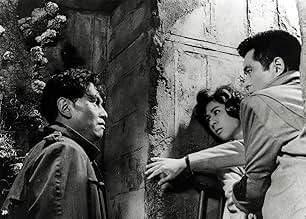
- GoofsWhen Nishi is trying to push Shirai out of the window, the brick wall outside of the window moves around - a lot.
- Quotes
Koichi Nishi: It's not easy hating evil. You have to stoke your own fury until you become evil yourself.
- Alternate versionsOriginally released at 151 in Japan; USA version removes 16 minutes of footage.
- SoundtracksBridal Chorus
(uncredited)
from "Lohengrin"
Music by Richard Wagner
Played at the end of the wedding ceremony
- How long is The Bad Sleep Well?Powered by Alexa
Details
- Release date
- Country of origin
- Language
- Also known as
- Hudobni mirno spijo
- Filming locations
- Aso Kuju National Park, Kyushu, Japan(volcanic area)
- Production companies
- See more company credits at IMDbPro
Box office
- Budget
- ¥82,540,000 (estimated)
- Gross US & Canada
- $46,808
- Opening weekend US & Canada
- $15,942
- Jul 28, 2002
- Gross worldwide
- $47,023
- Runtime
- 2h 31m(151 min)
- Color
- Aspect ratio
- 2.35 : 1
Contribute to this page
Suggest an edit or add missing content