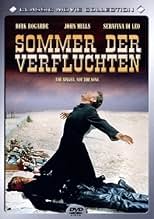
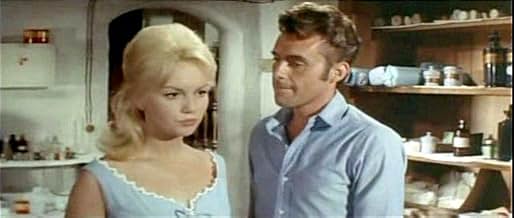
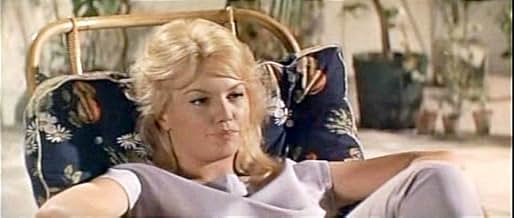
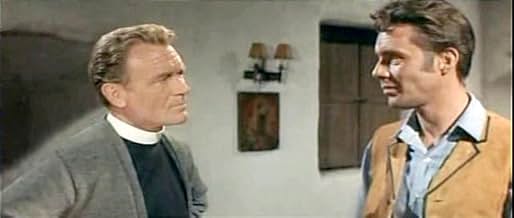
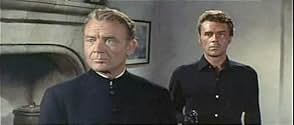
In a small Mexican town, a Catholic priest (Sir John Mills) and a local bandit (Sir Dirk Bogarde) clash, but the brave priest ultimately wins the outlaw's respect.In a small Mexican town, a Catholic priest (Sir John Mills) and a local bandit (Sir Dirk Bogarde) clash, but the brave priest ultimately wins the outlaw's respect.In a small Mexican town, a Catholic priest (Sir John Mills) and a local bandit (Sir Dirk Bogarde) clash, but the brave priest ultimately wins the outlaw's respect.
- Director
- Writers
- Stars
Norman Florence
- Vito
- (as Nyall Florenz)
Arthur Brough
- Burning haystacks Farmer
- (uncredited)
- Director
- Writers
- All cast & crew
- Production, box office & more at IMDbPro
6.2741
1
2
3
4
5
6
7
8
9
10
Featured reviews
Exciting confrontation between a honorable priest and a strange bandit dressed in black
The Rank Organisation presents a thought-provoking film , a Roy Baker production , as one of Britain's most solid stylists and released by Rank film distributors limited . It concerns on Father Michael Keogh (John Mills , his third of several works with Baker) , a priest who has been given welcome by Father Gomez (Leslie French), whom he then replaces to a Mexican village after the Revolution . The village is submitted by Anacleto Comachi (Dirk Bogarde) dressed in dark and usually on horse , with its cowardly residents hiding in the houses . Eventually, the priest assists them in regaining their confidence and defending themselves . Anacleto regularly attacks the village and steal all their supplies . Comachi is twenty nine years old and natural son and was born a countrywoman . Father Michael takes on Anacleto who murders people with alphabetic names , beginning D and going on E, F.. Meanwhile , the rich owner's daughter (Mylene Demengeot) falls in love with Comachi.
From the novel by Audrey Erskine written by Nigel Balchin , this British picture is an interesting drama that carries a genuine charge of intelligence with exciting battle of wits between an upright priest and a nasty outlaw . It deals with people living on the edges of themselves and their resourcefulness , a recurring issue in Roy Baker's work . The picture bears remarkable resemblance to ¨Guns of San Sebastian (1968)¨ by Henry Verneuil also with a priest-though false- played by Anthony Quinn who arrives in village being harassed by an evil enemy played by Charles Bronson . A Cinemascope picture in glimmer color processed by the Rank laboratories (Denham) limited, England and well photographed by Otto Heller B.S.C . Good Production Manager by Denis Holt with nice Production design by Vetchinsky made on location in Torremolinos , Malaga, Spain and at Pinewood Studios, London .
The motion picture is professionally directed in Western style by Roy Baker , though contains up and downs with an amazing final . Baker emerged in post-wars years as one of the best Brit filmmakers and ahead of his time in editing techniques , working even in Hollywood, right from his initial American film titled ¨Inferno¨ with Robert Ryan and as ¨Don't bother to knock¨ with Marilyn Monroe . His movies also achieved some of the most important popular successes of the English cinema in the 50s and 60s, including ¨Morning departure¨ ,¨The one that got away¨ and the better film about Titanic tragedy as ¨A night to remember ¨ and at TV as ¨Sherlock Holmes , The Champions , the Saint , and the Avengers¨ . On his return to the cinema in the 60s billed as Roy Ward baker , he no longer seemed the same filmmaker and indeed directed entirely different kind of subjects , mainly terror movies as ¨Quatermass and the pit¨, ¨Vampire lovers¨, ¨Asylum¨ ¨Legend of seven golden vampires among others¨ . Rating : acceptable and passable
From the novel by Audrey Erskine written by Nigel Balchin , this British picture is an interesting drama that carries a genuine charge of intelligence with exciting battle of wits between an upright priest and a nasty outlaw . It deals with people living on the edges of themselves and their resourcefulness , a recurring issue in Roy Baker's work . The picture bears remarkable resemblance to ¨Guns of San Sebastian (1968)¨ by Henry Verneuil also with a priest-though false- played by Anthony Quinn who arrives in village being harassed by an evil enemy played by Charles Bronson . A Cinemascope picture in glimmer color processed by the Rank laboratories (Denham) limited, England and well photographed by Otto Heller B.S.C . Good Production Manager by Denis Holt with nice Production design by Vetchinsky made on location in Torremolinos , Malaga, Spain and at Pinewood Studios, London .
The motion picture is professionally directed in Western style by Roy Baker , though contains up and downs with an amazing final . Baker emerged in post-wars years as one of the best Brit filmmakers and ahead of his time in editing techniques , working even in Hollywood, right from his initial American film titled ¨Inferno¨ with Robert Ryan and as ¨Don't bother to knock¨ with Marilyn Monroe . His movies also achieved some of the most important popular successes of the English cinema in the 50s and 60s, including ¨Morning departure¨ ,¨The one that got away¨ and the better film about Titanic tragedy as ¨A night to remember ¨ and at TV as ¨Sherlock Holmes , The Champions , the Saint , and the Avengers¨ . On his return to the cinema in the 60s billed as Roy Ward baker , he no longer seemed the same filmmaker and indeed directed entirely different kind of subjects , mainly terror movies as ¨Quatermass and the pit¨, ¨Vampire lovers¨, ¨Asylum¨ ¨Legend of seven golden vampires among others¨ . Rating : acceptable and passable
Is there a God?
I saw this movie in 1961 at the army base in Schofield Barracks and was struck by its import. I was an eternal optimist and had a very naive faith that God was in control. The movie really shook me out of this blind faith. That night I sat on my bunk and meditated on this dilemma and asked that I be restored or lead to a reality of truth. I was certain that I would be in battle soon and wanted to experience a sense of truth before this happened. I only went to the movie out of boredom and was not expecting the impact it made on me. The title says it all. I was struck by the simple plot. The actors who were unknown to me provided a great contrast of what is good and evil. The actress was simply beautiful and I always wondered why I had never seen her in anything after that. The love shown between the desperado and the priest was very touching.
The psychological conflict between Anacleto and Father Keogh
I watched this film not expecting terribly much, but was blown away by the subject matter and, more importantly, how it was handled by the skillful actors in the film.
The story centres around a priest, played by John Mills, and a local bandit, excellently played by Dirk Bogarde.
Without spoiling the ending, the story focuses on the conflict between the Priest and Anacleto. More importantly, it is a tale of the pursuit of religion, and the issues involved.
John Mills excellently plays the well intentioned priest, caught between his own feelings and the duties to the church. Dirk Bogarde plays the local bandit, Anacleto, and portrays a truly intelligent athiest at the mercy of his own desires and ideologies.
This is a great story of characterisation, and of the sometimes misplaced loyalties that we place on ourselves - be it through religion, or otherwise.
Watch out for the excellent and hard hitting conclusion, with some excellent summarising by both Anacleto and the Priest at the storys conclusion.
A must see for those who enjoy a deeper meaning behind the action and dialogue.
The story centres around a priest, played by John Mills, and a local bandit, excellently played by Dirk Bogarde.
Without spoiling the ending, the story focuses on the conflict between the Priest and Anacleto. More importantly, it is a tale of the pursuit of religion, and the issues involved.
John Mills excellently plays the well intentioned priest, caught between his own feelings and the duties to the church. Dirk Bogarde plays the local bandit, Anacleto, and portrays a truly intelligent athiest at the mercy of his own desires and ideologies.
This is a great story of characterisation, and of the sometimes misplaced loyalties that we place on ourselves - be it through religion, or otherwise.
Watch out for the excellent and hard hitting conclusion, with some excellent summarising by both Anacleto and the Priest at the storys conclusion.
A must see for those who enjoy a deeper meaning behind the action and dialogue.
the singer or the song?
We all bring our own life experiences to a movie and understand it on different levels. With themes like religious faith, love & sexuality, and what makes a good man, it is sometimes easy to see what we want to see ... what relates to us personally.
The two main protagonists reach different conclusions: for Anacleto it is "the singer, not the song" which is the opposite of Fr Keogh's. In the context of the movie we can ponder these two extremes and reach our own conclusion which may be an intersection of both.
Anacleto's hostility towards the Church is explained in part by his words: "It must be heartbreaking to fall in love with a man you can never have ... I understand this". It is as close as the script comes to identifying him as homosexual though his rather bizarre outfits are meant to convey the same notion along with his lack of interest in the beautiful & desirable Locha.
The death embrace at the end illustrates the feelings of the two men ... Anacleto clings to the man, Keogh clings to his faith. Only in death are the two reconciled.
The two main protagonists reach different conclusions: for Anacleto it is "the singer, not the song" which is the opposite of Fr Keogh's. In the context of the movie we can ponder these two extremes and reach our own conclusion which may be an intersection of both.
Anacleto's hostility towards the Church is explained in part by his words: "It must be heartbreaking to fall in love with a man you can never have ... I understand this". It is as close as the script comes to identifying him as homosexual though his rather bizarre outfits are meant to convey the same notion along with his lack of interest in the beautiful & desirable Locha.
The death embrace at the end illustrates the feelings of the two men ... Anacleto clings to the man, Keogh clings to his faith. Only in death are the two reconciled.
Badly miscast.
Who thought that it would be a good idea to have the two main male parts played by actors with posh English accents in a film set in Mexico, I saw no trace of an Irish accent from John MIlls that's been mentioned by others. An interesting film let down by poor casting, Dirk's character should have been a lot more butch as he was as threatening as Julian Clary. John's priest should have been a lot younger. Set in the 1960s but in the style of the 1930's, a very odd jumble of a film.
Did you know
- TriviaAfter the J. Arthur Rank Organisation insisted that Sir John Mills had to play the priest, Sir Dirk Bogarde became so incensed that he told director Roy Ward Baker: "I promise you, if Johnny plays the Priest, I will make life unbearable for everyone concerned."
- Quotes
Anacleto Comachi: Is it the song that is good, or the singer that makes it so?
- How long is The Singer Not the Song?Powered by Alexa
Details
- Runtime
- 2h 12m(132 min)
- Sound mix
- Aspect ratio
- 2.35 : 1
Contribute to this page
Suggest an edit or add missing content