IMDb RATING
6.8/10
1.3K
YOUR RATING

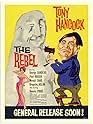
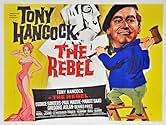
Tony Hancock gives up his day job to become an artist. He's a lot of enthusiasm, but little talent, and critics dislike his work. Nevertheless, he impresses a talented artist.Tony Hancock gives up his day job to become an artist. He's a lot of enthusiasm, but little talent, and critics dislike his work. Nevertheless, he impresses a talented artist.Tony Hancock gives up his day job to become an artist. He's a lot of enthusiasm, but little talent, and critics dislike his work. Nevertheless, he impresses a talented artist.
- Director
- Writers
- Stars
- Nominated for 1 BAFTA Award
- 1 nomination total


Gary Cockrell
- Artist
- (as Gary Cockerill)

- Director
- Writers
- All cast & crew
- Production, box office & more at IMDbPro
6.81.2K
1
2
3
4
5
6
7
8
9
10
Featured reviews
A witty and funny film!
For anybody with a love for Handcock this film is a must see. For those who really know Handcock it is also a farewell as in many ways it could be seen as his last true work? Coming at a time when Handcock was desperately trying to re-invent himself and re mould his style whilst fighting off the blackness of depression the film is a mixture of hope and sadness. If you look behind the laughter and mirth you can see Hancock as he really is - a one of genius never to be repeated. Hancock plays a struggling artist who leaves his London office job to seek his fame and fortune in Paris. Look for the great line between himself and his Landlady Mrs Cravat when Hancock exclaims "Its a self portrait" Mrs Cravat looks and him and asks "Of who?" Handcock is at the end of his line "Who do you think Laurel and Hardy" Lol The film has the usuall Galton and Simpson tight story line and the action is very funny. In my opinion a film which in ever way is on a par with the carry on style genre. Enjoy you wont see the likes of Tony again!
Film worth watching occasionally, perhaps, for different reasons.
I remember seeing The Rebel, on general release, in Croydon - three or four miles from where the railway scenes were shot: a bygone branch line and now demolished station off Coombe Road. (We used to walk past it a couple of times each week in the 1950s in the Elmhurst 'crocodile' to play sports at Lloyd Park. Happy days, indeed.) Unfortunately, I have never been very comfortable with the film - and I have persevered with it over the years. The Hancock attitude quickly wears thin and the script is simply below par for these writers. Best scenes, apart from the nostalgia element, are those with Irene Handl; Margit Saad (best known to me from Magnificent Two)is easy on the eye, as ever, but must have been embarrassed with her banal Margot character.
Nevertheless, I am pleased that the picture has its adherents. Where is Margit Saad today? A directorial credit around 1990 and seemingly nothing since.
Nevertheless, I am pleased that the picture has its adherents. Where is Margit Saad today? A directorial credit around 1990 and seemingly nothing since.
great fun
This one is a long-time favourite for its great one-liners, its wit, its bright colours and the sheer joy of its performances. George Sanders plays the creepy critic with the same finesse he'd done many times before, Hancock as the leader of the Infantile school of painting is so preposterous its hysterical, even a very young Oliver Reed appears briefly in the cafe scene. The writing of Galton and Simpson is as sharp as ever but gets to take more detours and turns than it ever could in the Half-Hours ... a brilliant film. I particularly love the pathetic painting of the foot which crops up at the art exhibition and that hideous sculpture. Excellent.
"The Art of Making Money"
Tony Hancock was the biggest British comedian of the late 50s and early 60s. Viewing his two (not entirely representative) films and watching (and listening) to his "Half-Hour" comedy shows (running separately, if concurrently, on BBC television and radio), young people (those under 35 or so) will probably find this fact baffling unless they are extraordinarily well-informed about social conditions in immediately postwar Britain. There also seems to be a kind of gender barrier. Women of my acquaintance, even those that satisfy the fairly stringent criteria I detail in my previous sentence, seem to have found Hancock uniformly unfunny.
Hancock's humour, it must be said, was unconventional. It is entirely driven by the dialectic, if you will, between character and situation. Hancock loathed gags, and forbade his scriptwriters (usually the brilliant duo of Ray Galton and Alan Simpson) to indulge in them. It is also exceptionally restricted in time (late 50s), social class ("shabby-genteel" lower-middle) and place (the south-east of England). Yet Hancock, who bestrode Britain like a colossus in his heyday, nurtured the powerful delusion that he could succeed in America.
It would take an amazing act of empathy on the part of an American to penetrate Hancock's humour as displayed in his radio and TV shows. As a technician he was flawless, possessing a sense of comic timing unequalled by anybody in Britain except the probably equally unexportable Kenneth Williams (perhaps best known outside the UK because of his strong involvement in the "Carry-On" series of films). Needless to say, Hancock and Williams, the two greatest British comedians of all time, loathed and vilified each other.
"The Rebel" (pointedly re-christened "Call Me Genius" in the America Hancock was desperate to impress) was released to great disappointment in 1961. In hindsight it has gained in favour, its initial cool reception a matter of some puzzlement.
Hancock, in the film, is an office drudge who harbours artistic ambitions way beyond his hopelessly limited technical skills. However, he jettisons his boring day-job to share an artistic garret in Paris (only 200 or so miles from London) with a frustrated, but genuinely talented, young artist (Paul Massie). Hancock's infantile daubs are hailed as works of genius in the pretentious circles he inhabits. Galton and Simpson's screenplay wastes no opportunity to satirise the credulity of the modern-art world, and its unfailing capacity to court lucrative charlatans.
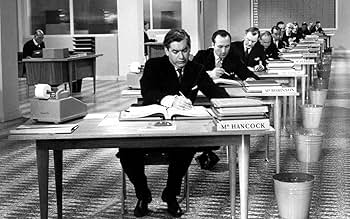
Can those outside the British Isles understand this film? I hope so. The office environment and lodgings Hancock occupies are stultifying, but the artistic world of Paris is shown to be as corrupt and foolish in its own way (NB. the identically uniformed "Existentialists", indistinguishable, in a sense, from their bowler-hatted counterparts with whom Hancock works in central London). Art does get a slightly better press in this film than commerce, since the possibility of genuine artistic talent (i.e. Paul's (Hancock's young flatmate and protégé)) is acknowledged. Nevertheless, the presence of trend-hungry buffoons within the artistic world (e.g. George Sanders' art dealer) indicates the interpenetration of the commercial and artistic worlds. Is art-dealing George Sanders any less a despicable entrepreneur than Hancock's erstwhile manager in his City of London counting-house, John le Mesurier?
Although we speak essentially the same language (I think the differences are often over-stated), cultural barriers remain between the UK and the US. However, Americans would do well to look closely at Tony Hancock, partly for his intrinsic value, and partly for the huge influence, conscious and unconscious, he has wielded over the British psyche (here I controversially include Ireland, which remains culturally close to the UK). His second feature-film ("The Punch And Judy Man"), while telling in its own way, is less valuable overall, both inside the UK (and its satellites) and beyond.
Hancock's humour, it must be said, was unconventional. It is entirely driven by the dialectic, if you will, between character and situation. Hancock loathed gags, and forbade his scriptwriters (usually the brilliant duo of Ray Galton and Alan Simpson) to indulge in them. It is also exceptionally restricted in time (late 50s), social class ("shabby-genteel" lower-middle) and place (the south-east of England). Yet Hancock, who bestrode Britain like a colossus in his heyday, nurtured the powerful delusion that he could succeed in America.
It would take an amazing act of empathy on the part of an American to penetrate Hancock's humour as displayed in his radio and TV shows. As a technician he was flawless, possessing a sense of comic timing unequalled by anybody in Britain except the probably equally unexportable Kenneth Williams (perhaps best known outside the UK because of his strong involvement in the "Carry-On" series of films). Needless to say, Hancock and Williams, the two greatest British comedians of all time, loathed and vilified each other.
"The Rebel" (pointedly re-christened "Call Me Genius" in the America Hancock was desperate to impress) was released to great disappointment in 1961. In hindsight it has gained in favour, its initial cool reception a matter of some puzzlement.
Hancock, in the film, is an office drudge who harbours artistic ambitions way beyond his hopelessly limited technical skills. However, he jettisons his boring day-job to share an artistic garret in Paris (only 200 or so miles from London) with a frustrated, but genuinely talented, young artist (Paul Massie). Hancock's infantile daubs are hailed as works of genius in the pretentious circles he inhabits. Galton and Simpson's screenplay wastes no opportunity to satirise the credulity of the modern-art world, and its unfailing capacity to court lucrative charlatans.
Can those outside the British Isles understand this film? I hope so. The office environment and lodgings Hancock occupies are stultifying, but the artistic world of Paris is shown to be as corrupt and foolish in its own way (NB. the identically uniformed "Existentialists", indistinguishable, in a sense, from their bowler-hatted counterparts with whom Hancock works in central London). Art does get a slightly better press in this film than commerce, since the possibility of genuine artistic talent (i.e. Paul's (Hancock's young flatmate and protégé)) is acknowledged. Nevertheless, the presence of trend-hungry buffoons within the artistic world (e.g. George Sanders' art dealer) indicates the interpenetration of the commercial and artistic worlds. Is art-dealing George Sanders any less a despicable entrepreneur than Hancock's erstwhile manager in his City of London counting-house, John le Mesurier?
Although we speak essentially the same language (I think the differences are often over-stated), cultural barriers remain between the UK and the US. However, Americans would do well to look closely at Tony Hancock, partly for his intrinsic value, and partly for the huge influence, conscious and unconscious, he has wielded over the British psyche (here I controversially include Ireland, which remains culturally close to the UK). His second feature-film ("The Punch And Judy Man"), while telling in its own way, is less valuable overall, both inside the UK (and its satellites) and beyond.
Tony Hancock's first film and a very good one.
It was a natural step for Tony Hancock in attempting to become successful in the medium of cinema. He longed for success in America and the only way he might have achieved this was by making films with international potential. "The Rebel" was the result. The year of the film's release - 1961 - saw Hancock at the peak of his popularity in Britain. At one stage, about 23% of the British population were either tuning into his radio series or were watching him on television. Such an achievement is seldom. "The Rebel" is a very good effort and I always enjoy the film. For the first time in his distinguished career, Hancock appeared in technicolour after four years of performing in black and white. I shall forever recall my inital surprise at seeing this comedy legend in colour. The story wisely has the comedian playing the same character of 23 Railway Cuttings and with the identical character traits. Hancock is wanting to better himself after feeling he has been denied his true potential and calling in his life. He has ambitions in becoming a painter and so he leaves his job as an office clerk and moves to Paris. Whilst there, "The Lad Himself" meets a fellow struggling artist and they share digs, hoping that success might beckon. It does but in ways Hancock never expected...... I am glad that Ray Galton and Alan Simpson wrote the script as who better to write for Hancock than those two individuals? The comedian collaborated with the writers on the story and whose name is listed during the opening credits. There are some great scenes here, such as Hancock attempting to paint various buildings around Paris, befriending the Avant Garde crowd, getting mixed up with a gangster and other highlights. Watching "The Rebel," I sense a kind of loneliness with Hancock in his character. The way he has no family to speak of, not many friends, feeling somewhat dissatisfied with his lot in life, embarking upon his adventures in Paris alone and not knowing a single soul anywhere. However, he comes across as self-reliant, independent and determined to realise his dream as an artist. This film would mark the final time that Tony Hancock worked with Ray Galton and Alan Simpson. One of the most talented and successful collaborations in British comedy history would draw to a close. The film did respectable business at the British box office and a Gala reception was held in London for the films release. Unfortunately, America took little notice. Their loss! I highly recommend this film to anyone who is a fan of Hancock or of British comedy in general. The running time is too long for the narrative and Hancock makes for a rather unlikely romantic!


Did you know
- TriviaThe film was a critical and commercial disaster in the United States.
- GoofsWhen the two bodyguards appear on the luxury yacht their shirts are buttoned and unbuttoned showing vests underneath.
- Crazy creditsThe producers wish to acknowledge the fullest co-operation accorded - somewhat apprehensively - by BRITISH RAILWAYS.
- ConnectionsEdited into Urban Myths: Les Dawson's Parisienne Adventure (2020)
- SoundtracksAt Last ! At Last !
(L'Âme des Poètes)
(uncredited)
Music by Charles Trenet
French lyrics by Charles Trenet
English lyrics by Florence Miles
- How long is Call Me Genius?Powered by Alexa
Details
- Release date
- Country of origin
- Languages
- Also known as
- Buntovnik
- Filming locations
- Bingham Road railway station, Addiscombe, Croydon, London, England, UK(Fortune Green South Station)
- Production company
- See more company credits at IMDbPro
- Runtime
- 1h 45m(105 min)
- Aspect ratio
- 1.66 : 1
Contribute to this page
Suggest an edit or add missing content