IMDb RATING
7.9/10
29K
YOUR RATING


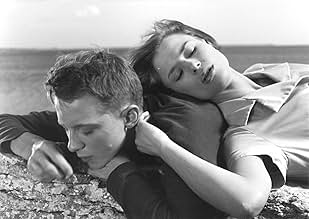
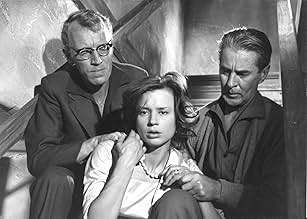
Recently released from a mental hospital, Karin rejoins her emotionally disconnected family in their island home, only to slip from reality as she begins to believe she is being visited by G... Read allRecently released from a mental hospital, Karin rejoins her emotionally disconnected family in their island home, only to slip from reality as she begins to believe she is being visited by God.Recently released from a mental hospital, Karin rejoins her emotionally disconnected family in their island home, only to slip from reality as she begins to believe she is being visited by God.
- Won 1 Oscar
- 3 wins & 5 nominations total


- Director
- Writer
- All cast & crew
- Production, box office & more at IMDbPro
7.929K
1
2
3
4
5
6
7
8
9
10
Featured reviews
10jhclues
One Of Bergman's Finest Works
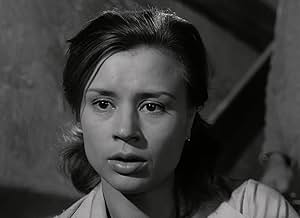
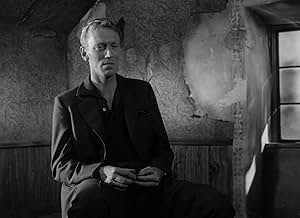
A character study set on a secluded island off the coast of Sweden, `Through A Glass, Darkly' is Ingmar Bergman's pensive chronicle of a young woman's descent into the maelstrom of schizophrenia. The story centers on Karin (Harriet Andersson), who has reached a pivotal juncture in her life; having just been released from a mental hospital, she must now face the uncertainties inherent in the nature of her illness. It is a crucial period in her life; she occupies a middle ground between two worlds, and the question now is, will she ultimately emerge in the light, or succumb to the darkness of the voices that beckon her from within. Through Bergman's eyes we observe the effects of her situation on the three people closest to her, her husband, Martin (Max von Sydow), her father, David (Gunnar Bjornstrand) and her brother, Minus (Lars Passgard). The movie explores their relationships to Karin (and to one another), and how differently each one them strives to cope with and understand her elusive affliction. An absorbing, evocative and sometimes tense drama, the film is impeccably delivered by Bergman, and the performances are all exemplary, especially Harriet Andersson, who brings the tortured soul of Karin to life with nuance and a depth and grasp of the character that is remarkable. Von Sydow is also perfect as the troubled Martin, and aptly conveys the quandary of his situation, which he approaches with a reserved, committed gentleness. Bjornstrand maintains a stoic presence throughout as the novelist/father attempting to resolve an inner conflict borne of guilt and doubtful motives, and Passgard gives a notable performance, as well; his angst and confusion are deeply felt and well played. The first of Bergman's 'Faith' trilogy (followed by `Winter Light' and `The Silence'), `Through A Glass, Darkly' is one of his finest works, an intricate exploration of the fragility of the human psyche and the complexities of life. An Oscar winner for Best Foreign Film of 1961, it firmly establishes Bergman as one of Cinema's greatest directors. It is an emotional and engrossing film that should not be missed. I rate this one 10/10.
What a series of films.
Between 1957-1963, Ingmar Bergman directed seven films. In my mind, there has never been such an amazingly creative period for a director as the six years between Wild Strawberries and The Silence. Through a Glass Darkly stands out to me as not only the masterpiece of this era, but of Bergman's entire career. This film has such a distinct atmosphere, which conveys not only isolation and melancholy, but also dark, austere beauty. Every little piece of this film fits together like a glorious completed puzzle. The Bach playing over the opening credits. The cinematography, with long, meditative shots in glowing black and white. The performances turned in by Harriet Andersson, Gunner Bjornstrand, and Bergman regular Max von Sydow. Overall, I sense that Bergman's vision is so obviously being displayed on the screen, as if his soul is being laid bare. As a singular piece of art, it is just staggering to behold. I think that everyone has albums or films that they connect with certain periods in their life, that transcend the mundane and just touch you in a profound way. Through a Glass Darkly is one for me. A must see.
"For now we see through a glass, darkly"- Bible, 1 Corinthians xiii. 12.
Well, we don't see darkly through a glass, and Bergman explains in his "Introductions" that during the ancient times, there were no glass, the mirrors were made of metal, bronze, for instance and while looking through the metal mirror, the face and the background appear darker than in reality. Does it mean that when we look inside ourselves like in the mirror, we appear darker and more sinister than we are? Or the other way around?
"Through a Glass Darkly" is a typically great Bergman's film - four people arrive to an isolated island to spend a few days together, a young woman, her husband, father, and brother. They seem to love one another and are perfectly happy and comfortable in the beginning. It does not last long - not in the Bergman's world. Harriet Anderson was amazing as Karin, a mentally sick young woman, who was just released from the hospital but I believe three other actors playing Father (Gunnar Bjornstrand), Husband (Max von Sydow), and Brother (Lars Passgård) were as good as she was. The Father was especially interesting - he was a reason Karin became ill on the first place and his diary sent her to the total mental breakdown. As with "Persona" and "Autumn Sonata", Bergman is asking again how far is an Artist willing to go for his Art? Here, Father, the writer wants to be a cool and remote observer of his daughter's mental tragedy as a study for his future work. There is a hope, though, in the end. Not for Karin - it is too late for her - but for her confused young brother who is also fighting for his sanity and desperately needs his father's love and understanding. His last words - "Daddy talked to me" - give this bleak and tragic story the hope that his life could be different. Or maybe not...
"Through a Glass Darkly" is a typically great Bergman's film - four people arrive to an isolated island to spend a few days together, a young woman, her husband, father, and brother. They seem to love one another and are perfectly happy and comfortable in the beginning. It does not last long - not in the Bergman's world. Harriet Anderson was amazing as Karin, a mentally sick young woman, who was just released from the hospital but I believe three other actors playing Father (Gunnar Bjornstrand), Husband (Max von Sydow), and Brother (Lars Passgård) were as good as she was. The Father was especially interesting - he was a reason Karin became ill on the first place and his diary sent her to the total mental breakdown. As with "Persona" and "Autumn Sonata", Bergman is asking again how far is an Artist willing to go for his Art? Here, Father, the writer wants to be a cool and remote observer of his daughter's mental tragedy as a study for his future work. There is a hope, though, in the end. Not for Karin - it is too late for her - but for her confused young brother who is also fighting for his sanity and desperately needs his father's love and understanding. His last words - "Daddy talked to me" - give this bleak and tragic story the hope that his life could be different. Or maybe not...
Beautful work of Art
Harriet Anderson's performance is beyond brilliance. She has a very difficult role, but there seems not the hint of acting on her part. It is a role where the character seems to be acting and is having a very rough time. Her performance is transparent and haunting. I saw this film most recently a few years ago (and have seen many movies since then), but i still recall vividly three of her scenes. The photography is magical and while not as praised as Wild Strawberries, Persona or Winter Light ( and a few other Bergman classics), its power and its passion reach inside your soul and dares you to resist living the story and the characters of the film. Also, Max von Sydow is brilliant as usual--he is certainly the most underrated actor of all time--theater, television or cinema. I highly recommend this film and then your viewing t he 1971 Passion of Anna, also with Max v.S. and a performance by Liv Ullmann that rivals Harriet's in Thtorug a Glass Darkly. The theme of Darkly is the human predicament in a world of suffering and illness. How does man survive if he actually "lives" his/her life, rather than just sports through life without any experience of art and the spiritual (good or bad). This film is part of a loose trilogy that includes the magnificent Winter Light and The Silence, though each can be viewed separately with no loss of discovery and enjoyment. When I was in college at UCLA from 1968-75 (under and grad school), Bergman was the rage with many people. He seems to be lost in the mists of time. But if go back and watch his films from the late 50's to the 70's, you will see cinema at its boldest and its greatest. Buy the films or rent them (Netflix has a good collection.). Darkly will shake your world and cause ripples of thought and feelings that move for a long, long time inside your mind, and if your fortunate your soul.. See this film.
my first exposure to Bergman
This was the first Bergman movie I ever watched. Consequently, it holds sort of a special place in my catalogue of movie memories.
I enjoyed the depiction of the numerous relationships between people or objects which were kept apart by walls or a "dark glass." The artist and the fullness of what he/she is attempting to depict, mankind and God, and more particularly in the film, between Minus and women, Minus and David, etc..
The most gripping, however, were the relationship between David and Karin, and between Karin and "God." I'm not going to get into detail for the sake of those who haven't seen the film. But Bjornstrand's line about the "magic circle" we draw around ourselves instantly vaulted close to the top of my list of movie lines which have impacted me.
Lastly, I appreciated how the von Sydow character, Martin, acted as a representation of what love is not, i.e. his desire to always do the right thing, rather than the honest thing.
I enjoyed the depiction of the numerous relationships between people or objects which were kept apart by walls or a "dark glass." The artist and the fullness of what he/she is attempting to depict, mankind and God, and more particularly in the film, between Minus and women, Minus and David, etc..
The most gripping, however, were the relationship between David and Karin, and between Karin and "God." I'm not going to get into detail for the sake of those who haven't seen the film. But Bjornstrand's line about the "magic circle" we draw around ourselves instantly vaulted close to the top of my list of movie lines which have impacted me.
Lastly, I appreciated how the von Sydow character, Martin, acted as a representation of what love is not, i.e. his desire to always do the right thing, rather than the honest thing.


Did you know
- TriviaThe first Ingmar Bergman film to be made on the island of Fårö. Ingmar Bergman would later buy a home on the island.
- GoofsAs Minus paints the chair, the amount of paint on the chair changes between shots.
- Crazy creditsThere are no end credits. After Minus (Lars Passgård) says the final line, the film fades to black and ends. The entire cast and crew were credited at the start, and there isn't even a "Fin" or "Ende".
- ConnectionsFeatured in Reel Radicals: The Sixties Revolution in Film (2002)
- SoundtracksSarabande from Suite No. 2 in D minor for Violoncello
Written by Johann Sebastian Bach
Performed by Blondal Bengston.
- How long is Through a Glass Darkly?Powered by Alexa
Details
Box office
- Gross worldwide
- $8,939
- Runtime
- 1h 30m(90 min)
- Color
- Sound mix
- Aspect ratio
- 1.37 : 1
Contribute to this page
Suggest an edit or add missing content