IMDb RATING
5.6/10
1.4K
YOUR RATING
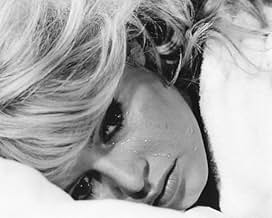
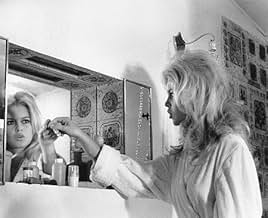
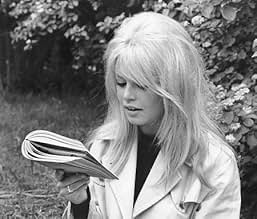
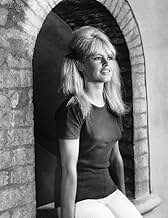
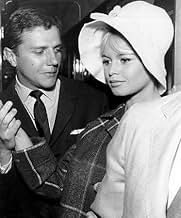
When Jill becomes a movie star she soon discovers that her private life is destroyed by persistent fans that won't leave her alone. Her mother's ex-lover, Fabio, tries to protect her.When Jill becomes a movie star she soon discovers that her private life is destroyed by persistent fans that won't leave her alone. Her mother's ex-lover, Fabio, tries to protect her.When Jill becomes a movie star she soon discovers that her private life is destroyed by persistent fans that won't leave her alone. Her mother's ex-lover, Fabio, tries to protect her.
- Director
- Writers
- Stars
Paul Sorèze
- Maxime
- (as Paul Soreze)
Eléonore Hirt
- Cécile
- (as Eleonore Hirt)
Jeanne Allard
- La femme de ménage
- (uncredited)
Paul Apoteker
- Le caméraman
- (uncredited)
Jean-Claude Brialy
- Le narrateur
- (voice)
- (uncredited)
Claude Day
- L'éditeur
- (uncredited)
Christian de Tillière
- Albert
- (uncredited)
- Director
- Writers
- All cast & crew
- Production, box office & more at IMDbPro
5.61.3K
1
2
3
4
5
6
7
8
9
10
Featured reviews
I liked it a lot
This movie did a great job of showing the French lifestyle and the time during which it was made. Most of the comments here are negative, but I thought this was one of the best movies I've seen in many months.
Jill's daily life, shown in the opening sequence when she travels by boat and bicycle to see her mother and various friends, is a wonderful example of European life where things are much prettier and healthier than in the US. Individuals are free to be with nature without making a conscious effort to do so.
The story of the movie is OK, not great, but certainly ahead of its time in the portrayal of the media culture. Diana Princess of Wales should have watched this movie.
Jill's daily life, shown in the opening sequence when she travels by boat and bicycle to see her mother and various friends, is a wonderful example of European life where things are much prettier and healthier than in the US. Individuals are free to be with nature without making a conscious effort to do so.
The story of the movie is OK, not great, but certainly ahead of its time in the portrayal of the media culture. Diana Princess of Wales should have watched this movie.
very nouvelle vague but darkly compelling oddly contemporary
Another reviewer mentioned nouvelle vague and it's true this film stinks of French New Wave. Of course the time was really the style's zenith when even boring pretentious garbage was treated like great art. Hard to take is the acting style that seems to come with the movement -very flat and anti-emotional - a little too Neo-realist for most tastes especially in America where actors tend to chew the scenery. Heck Tom Cruise apparently chews the scenery in ordinary life or at least on talk shows.
However I found there was a kind of chemistry and disturbing reality in Bardot's portrayal of the sex kitten. She was one moment almost catatonic and another bubbly. But how contemporary to see the star as a kind of trapped animal like a fox with dogs and hunters in pursuit. One could see this movie being remade with Brittany or another of the modern celebutantes in the starring role. Was Bardot playing herself? Well isn't that the kind of truth we look for in art? Malle could have been alluding to Marilyn or any modern celebrity caught in the maelstrom of fame. The relationship with Mastroanni seemed especially perceptive. He wants to protect her, but she wants to live and she can't. Certainly think Brittney could relate to this one especially to Jill's own mother selling her out to the press. We've seen that one lately, haven't we.
Not a fun movie but one that stays with you and that's rare these days.
However I found there was a kind of chemistry and disturbing reality in Bardot's portrayal of the sex kitten. She was one moment almost catatonic and another bubbly. But how contemporary to see the star as a kind of trapped animal like a fox with dogs and hunters in pursuit. One could see this movie being remade with Brittany or another of the modern celebutantes in the starring role. Was Bardot playing herself? Well isn't that the kind of truth we look for in art? Malle could have been alluding to Marilyn or any modern celebrity caught in the maelstrom of fame. The relationship with Mastroanni seemed especially perceptive. He wants to protect her, but she wants to live and she can't. Certainly think Brittney could relate to this one especially to Jill's own mother selling her out to the press. We've seen that one lately, haven't we.
Not a fun movie but one that stays with you and that's rare these days.
No Sexual Chemistry between these 2 Sex Objects of the 60s
One would have thought that Mastrioanni and Bardot would make 'beautiful music together'. However, this is mostly a self-indulgent treatment that could be part of the problem. Bardot's narcissistic behavior was either excellent acting or her real-life behavior.
I loved this movie for the beautiful scenes of Geneva and Spoleto, Italy. I've never seen how they do these wonderful operatic festivals and I really liked it. Georgeous technicolor. However, I could not find this movie reviewed in any of my review books: perhaps it's known by another name.
It is never clear what illness Bardot has in this movie....could have been a nervous breakdown, could have been flu, who knows? If you like looking at beautiful people, and georgous scenery, rent it. Otherwise, don't waste your time.
I loved this movie for the beautiful scenes of Geneva and Spoleto, Italy. I've never seen how they do these wonderful operatic festivals and I really liked it. Georgeous technicolor. However, I could not find this movie reviewed in any of my review books: perhaps it's known by another name.
It is never clear what illness Bardot has in this movie....could have been a nervous breakdown, could have been flu, who knows? If you like looking at beautiful people, and georgous scenery, rent it. Otherwise, don't waste your time.
No sexual chemistry in a dud from Malle?
Reviewers have suggested that this is not among the best of Malle's output and that the two principals lack the fire of real heterosexual passion.
The second objection is perfectly right, because Jill seems incapable of a grown-up relationship with a man, just as she seems incapable of pursuing any worthwhile career beyond that of international sex-symbol. Being highly desirable and readily available may be huge fun in your teens and early twenties but does not lead to a fulfilling existence. Her trajectory is tragic, beauty that offers not life but a hollow illusion of life.
While Fabio cannot resist what he finds in his bed (few straight men could), his feelings for Jill seem more pity than lust. He wants to protect her from endless exploitation by others and from her own immaturity. But, having gained an international reputation for the magazine he edits and the play he is producing, he is not going to sacrifice his hard-won status for a bimbo. He is creative, adding to the world's culture, while she is merely decorative.
A relationship between two characters like this will be short of fire, and it would be Hollywoodian falsity to pretend that they are merely consumed with passion for each other.
As for the place of this piece in Malle's very varied body of work, his non-documentary dramas differ widely from each other with few overt links. Here one has to consider his own evolution: an artist's fourth picture made at age 30 does not compare with a mature and reflective masterpiece like "Au revoir les enfants" made at age 55. Films appreciated in Europe can be lost in America, particularly if mutilated by tone-deaf dubbing and puritanical cutting. Also, I would suggest, we might separate films set in the past or an imaginary future from films set in and therefore commenting on the present.
To show the real superstar Brigitte Bardot as a fictional empty superstar, virtually playing herself (compared with her more nuanced rôle for Godard a year later in "Le Mépris"), is satirical, poignant, and even, dare I say it, darkly comic. If you don't get the joke, though many would have in 1962, you may not rate the film highly.
The second objection is perfectly right, because Jill seems incapable of a grown-up relationship with a man, just as she seems incapable of pursuing any worthwhile career beyond that of international sex-symbol. Being highly desirable and readily available may be huge fun in your teens and early twenties but does not lead to a fulfilling existence. Her trajectory is tragic, beauty that offers not life but a hollow illusion of life.
While Fabio cannot resist what he finds in his bed (few straight men could), his feelings for Jill seem more pity than lust. He wants to protect her from endless exploitation by others and from her own immaturity. But, having gained an international reputation for the magazine he edits and the play he is producing, he is not going to sacrifice his hard-won status for a bimbo. He is creative, adding to the world's culture, while she is merely decorative.
A relationship between two characters like this will be short of fire, and it would be Hollywoodian falsity to pretend that they are merely consumed with passion for each other.
As for the place of this piece in Malle's very varied body of work, his non-documentary dramas differ widely from each other with few overt links. Here one has to consider his own evolution: an artist's fourth picture made at age 30 does not compare with a mature and reflective masterpiece like "Au revoir les enfants" made at age 55. Films appreciated in Europe can be lost in America, particularly if mutilated by tone-deaf dubbing and puritanical cutting. Also, I would suggest, we might separate films set in the past or an imaginary future from films set in and therefore commenting on the present.
To show the real superstar Brigitte Bardot as a fictional empty superstar, virtually playing herself (compared with her more nuanced rôle for Godard a year later in "Le Mépris"), is satirical, poignant, and even, dare I say it, darkly comic. If you don't get the joke, though many would have in 1962, you may not rate the film highly.
10 minutes that saved a film
Watching Louis Malle's La Vie Privée was an exercise in patience that finally managed to pay off. It wasn't even the bleak colors (remeniscent of the cheap color prints of the 60's) or the lack of chemistry between Bardot and Mastroianni that pushed the audience to the limit. It was perhaps the stilted dialog, made nearly unbearable by the fact that it was poorly dubbed into English. Maybe the film would have worked better in black and white or as a silent. Maybe not...The films final sequence (stretching over the last seven minutes) redeems nearly all its faults. The carefully composed shots, alternating between the faces of the stars and a play being performed on stage (with a remarkable backdrop of an old Spoletto basilica) empowered by moving music brings us closest to the characters. Once again, the so-called "silent" moment dominates the film, showing us the director's capabilities in full bloom. The tension is enhanced by an increased tempo in editing, leading perfectly to the climax. For what may be a deeply flawed film, I feel bad for the people that left early. Those last seven minutes define great film-making.
Did you know
- TriviaFrench actor Michel Auclair dubs Marcello Mastroianni's voice in French.
- ConnectionsFeatured in Censura: Alguns Cortes (1999)
- SoundtracksSidonie
Music by Jean-Max Rivière and Giannis Spanos
Lyrics by Charles Cros
Performed by Brigitte Bardot
- How long is A Very Private Affair?Powered by Alexa
Details
- Runtime
- 1h 43m(103 min)
- Aspect ratio
- 1.85 : 1
Contribute to this page
Suggest an edit or add missing content