
The story of a man forced to explore his memories in the wake of World War III's devastation, told through still images.The story of a man forced to explore his memories in the wake of World War III's devastation, told through still images.The story of a man forced to explore his memories in the wake of World War III's devastation, told through still images.
- Awards
- 3 wins total


Jean Négroni
- Narrator
- (voice)
- (as Jean Negroni)

Ligia Branice
- A woman from the future
- (as Ligia Borowcyk)
William Klein
- A man from the future
- (as Bill Klein)
James Kirk
- Narrator
- (voice: English version)
- Director
- Writer
- All cast & crew
- Production, box office & more at IMDbPro
8.239.3K
1
2
3
4
5
6
7
8
9
10
Featured reviews
10myphx
Extremely Effective in its Subtlety.
The first time I saw this movie it was on a local educational TV channel (PBS was barely starting) in 1969. I was a youngster and it made such an indelible impression that I remembered it all these years. Luckily, to my surprise I discovered a copy recently at a video rental store.
The movie is only approximately 30 minutes in length and is composed of black and white still photography (except for one scene, where they show a mans eye blinking). It is a powerful depiction of the end of the world, human love and memory. The French narration adds to the poetic subtlety and drama. To my dismay, I heard there was a new DVD version available, but with English narration. Hopefully, the original French version will be made available, as it seems to add so much more to the dramatic effect of the movie.
To the average movie viewer, this film would be best described as avant-garde in nature. It is a prime example of how science fiction and drama can be produced with nuance and subtleties, rather than overuse of technological effects and gratuitous titillation and violence.
The movie is only approximately 30 minutes in length and is composed of black and white still photography (except for one scene, where they show a mans eye blinking). It is a powerful depiction of the end of the world, human love and memory. The French narration adds to the poetic subtlety and drama. To my dismay, I heard there was a new DVD version available, but with English narration. Hopefully, the original French version will be made available, as it seems to add so much more to the dramatic effect of the movie.
To the average movie viewer, this film would be best described as avant-garde in nature. It is a prime example of how science fiction and drama can be produced with nuance and subtleties, rather than overuse of technological effects and gratuitous titillation and violence.
Timeless work of art
"La jetée" is a million years ahead of its time. To make a movie in 1962 about World War III, time traveling and a distant future that is still genuinely disturbing and not in the least outdated comes close to a miracle.
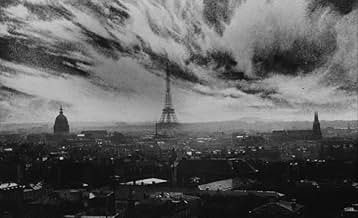
Here's a short synopsis of the story: After World War III Paris is lying in tatters. The earth has been contaminated and survivors of the war have to live underground imprisoned by the victorious nation (it's never said explicitly which nation that is, but they are talking German). Scientists are looking for a way to secure the survival of mankind by exploring the possibilities of time traveling. In the process one of the prisoners, who has a strong connection to the past because of a recurring dream of his childhood, serves as their guinea pig. As the experiments go on the time traveler falls in love with a woman from the past and comes face to face with the childhood memory he's been obsessed with all his life.
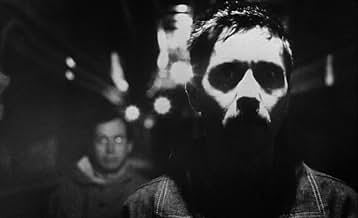
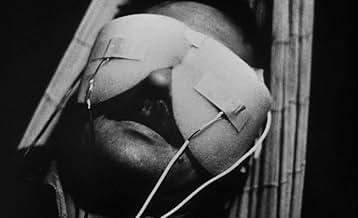
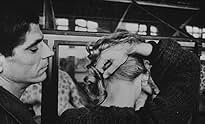
The story might have a familiar ring to you. It's basically the same story Terry Gilliam used in "12 Monkeys". But while "12 Monkeys" is a great movie, ultimately it will be "La jetée" that will stand the test of time (no pun intended). Director/screenwriter Chris Marker's approach is amazingly clever and effective. His movie is a sequence of beautiful black and white photographs with somebody narrating the story. The pictures and the perfect music make the whole thing seem like a documentary on World War II and give the movie a disturbingly realistic feel. Marker never makes the mistake to show too much. The destruction of Paris, the experiments and the future are all hinted at rather vaguely in the pictures and in the narration. A lot is left to our imagination and when The Man, as the main character is simply called, drifts through time it almost seems like a feverish dream to the viewer, too. What's more concrete is the relationship of The Man and The Woman and the contrast between the short untroubled moments The Man spends in the past and his enslavement in the present. Marker concentrates on those aspects and almost shrugs the time traveling off as a negligibility and the result is nothing short of amazing.
With its 26 minutes running time "La jetée" accomplishes more than some epic trilogies do. It remains a classy work of art that looks fresher than any other movie from the 60's that I've ever seen and in 50 years from now it will not have lost any of its appeal, either.
Here's a short synopsis of the story: After World War III Paris is lying in tatters. The earth has been contaminated and survivors of the war have to live underground imprisoned by the victorious nation (it's never said explicitly which nation that is, but they are talking German). Scientists are looking for a way to secure the survival of mankind by exploring the possibilities of time traveling. In the process one of the prisoners, who has a strong connection to the past because of a recurring dream of his childhood, serves as their guinea pig. As the experiments go on the time traveler falls in love with a woman from the past and comes face to face with the childhood memory he's been obsessed with all his life.
The story might have a familiar ring to you. It's basically the same story Terry Gilliam used in "12 Monkeys". But while "12 Monkeys" is a great movie, ultimately it will be "La jetée" that will stand the test of time (no pun intended). Director/screenwriter Chris Marker's approach is amazingly clever and effective. His movie is a sequence of beautiful black and white photographs with somebody narrating the story. The pictures and the perfect music make the whole thing seem like a documentary on World War II and give the movie a disturbingly realistic feel. Marker never makes the mistake to show too much. The destruction of Paris, the experiments and the future are all hinted at rather vaguely in the pictures and in the narration. A lot is left to our imagination and when The Man, as the main character is simply called, drifts through time it almost seems like a feverish dream to the viewer, too. What's more concrete is the relationship of The Man and The Woman and the contrast between the short untroubled moments The Man spends in the past and his enslavement in the present. Marker concentrates on those aspects and almost shrugs the time traveling off as a negligibility and the result is nothing short of amazing.
With its 26 minutes running time "La jetée" accomplishes more than some epic trilogies do. It remains a classy work of art that looks fresher than any other movie from the 60's that I've ever seen and in 50 years from now it will not have lost any of its appeal, either.
Still Life
I had never seen such an original film that works so well. The artist with no budget decides to make a film that could have appealed to the commercial masses. That is what is scary about it. It's the kind of story that we would consider "blockbuster gold". A journey through time, sci-fi, and romance. And yet, it requires no special effects, it requires no big budget. Marker laughs right at the face of conventional cinema and uses stills to let out imagination read between the lines.
Is this fiction? Yes, to some extent. The post-apocalyptic story that it recounts would make Waterworld blush with embarrassment, true. But once again, the arty film looks at us to find a meaning for the story. At the end of the day, are we more taken aback by the technical aspect in which Marker engages, or by the shocking finale. Would the finale have been so shocking had Marker used a Bolex camera? I fear not. The bit where he's running towards the girl in the end feels like an average nightmare, where you're running, but you can't get to wherever you want to get to. It's a feeling we have all felt, and the lack of movement within the frame conveys a certain feeling of helplessness and entrapment that could only have been achieved this well with stills.
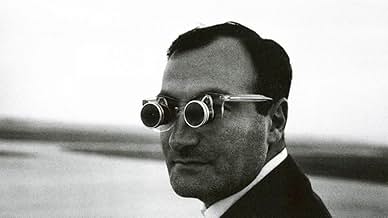
And we must say, these stills are amazing. It's not only the elaborate mise-en-scene, or the design of the sets and the props (the french sci-fi glasses are extraordinary). It's also the placement of the camera, that has a ghostly versatility that often adds to the lack of comfort of the restless characters.
I must also give a shout for the score that is amazing, which is strange if we count that your average experimental film hardly ever employs such "cinematic" scores, always going for the more minimalist (and generally less expansive) ones.
Is this fiction? Yes, to some extent. The post-apocalyptic story that it recounts would make Waterworld blush with embarrassment, true. But once again, the arty film looks at us to find a meaning for the story. At the end of the day, are we more taken aback by the technical aspect in which Marker engages, or by the shocking finale. Would the finale have been so shocking had Marker used a Bolex camera? I fear not. The bit where he's running towards the girl in the end feels like an average nightmare, where you're running, but you can't get to wherever you want to get to. It's a feeling we have all felt, and the lack of movement within the frame conveys a certain feeling of helplessness and entrapment that could only have been achieved this well with stills.
And we must say, these stills are amazing. It's not only the elaborate mise-en-scene, or the design of the sets and the props (the french sci-fi glasses are extraordinary). It's also the placement of the camera, that has a ghostly versatility that often adds to the lack of comfort of the restless characters.
I must also give a shout for the score that is amazing, which is strange if we count that your average experimental film hardly ever employs such "cinematic" scores, always going for the more minimalist (and generally less expansive) ones.
experimental, elegaic, profound, beautiful, and mysterious
This is one of the most stunning short films ever made. Marker has pieced together an oblique, sci-fi setting for marvelous still photography; when there is movement, it is a cause for joy! Everyone who is a cineast should see this film: it's that good and it's that important!
stunning
In 1995, Terry Gilliam made one of the finest movies in the nineties: "Twelve Monkeys". To explain how he made this awesome movie, he openly declared that he drew his inspiration from a French short film: "La Jetée". It is true that the 2 opus have similarities: both present a devastated earth caused by man's madness, survivors who take refuge in underground rooms and try to improve their grueling living conditions and especially both feature a jaded and manipulated main character.
A short film that is a reflection about time, happiness and love, entirely composed of static shots, "la jetée" is a powerful and mesmerizing work and it may appear as a cornerstone in French cinema. 42 years after its release, it kept all its strength and has not aged a bit. The quality of the editing, the photography and the commentary add to the success of Chris Marker's work.
Highly recommended and the influence of Chris Marker's short film on "Twelve Monkeys" shows well a thing: French cinema inspired a great number of American movies.
A short film that is a reflection about time, happiness and love, entirely composed of static shots, "la jetée" is a powerful and mesmerizing work and it may appear as a cornerstone in French cinema. 42 years after its release, it kept all its strength and has not aged a bit. The quality of the editing, the photography and the commentary add to the success of Chris Marker's work.
Highly recommended and the influence of Chris Marker's short film on "Twelve Monkeys" shows well a thing: French cinema inspired a great number of American movies.


Did you know
- TriviaThis short film was the inspiration for the Terry Gilliam film 12 Monkeys (1995).
- Crazy creditsThe opening credits do not describe it as a film, but as "un photo-roman".
- ConnectionsEdited into The Hamster Factor and Other Tales of Twelve Monkeys (1996)
Details
- Release date
- Country of origin
- Languages
- Also known as
- The Pier
- Filming locations
- Production companies
- See more company credits at IMDbPro
- Runtime
- 28m
- Color
- Sound mix
- Aspect ratio
- 1.66 : 1
Contribute to this page
Suggest an edit or add missing content