IMDb RATING
6.7/10
707
YOUR RATING
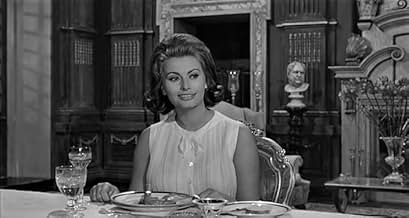
An insane German war criminal lives in a secluded house owned by his rich father who lets him think the war is still on, some 15 years after the fact.An insane German war criminal lives in a secluded house owned by his rich father who lets him think the war is still on, some 15 years after the fact.An insane German war criminal lives in a secluded house owned by his rich father who lets him think the war is still on, some 15 years after the fact.
- Director
- Writers
- Stars
- Awards
- 2 wins & 1 nomination total
Carlo Antonini
- Police Official
- (uncredited)
Antonia Cianci
- Maid
- (uncredited)
Alfredo Franchi
- Groundskeeper
- (uncredited)
Roberto Massa
- Chauffeur
- (uncredited)
Osvaldo Peccioli
- Cook
- (uncredited)
Lucia Pelella
- Groundskeeper's wife
- (uncredited)
- Director
- Writers
- All cast & crew
- Production, box office & more at IMDbPro
6.7707
1
2
3
4
5
6
7
8
9
10
Featured reviews
Deserves to be better known
When a movie from 1962 has less than 200 votes on IMDb, what does it mean? Directed by legendary De Sica, and starring great Sophia Loren... it must be a terrible failure? Well, it isn't.
Having read Sartre's play "The Condemned of Altona", it is my impression that the movie is very faithful to its atmosphere. There are some changes, of course: instead of concentrating exclusively on torturing his characters inside the mansion (as Sartre does), De Sica takes advantage of possibilities of film, adding outdoor scenes.
I don't want to reveal the plot, although it is very interesting. I recommend reading the play first, since the relations between characters will be clearer then. Anyway, see this movie if you get the chance!
Having read Sartre's play "The Condemned of Altona", it is my impression that the movie is very faithful to its atmosphere. There are some changes, of course: instead of concentrating exclusively on torturing his characters inside the mansion (as Sartre does), De Sica takes advantage of possibilities of film, adding outdoor scenes.
I don't want to reveal the plot, although it is very interesting. I recommend reading the play first, since the relations between characters will be clearer then. Anyway, see this movie if you get the chance!
Memorable scenes
While this film was not entirely successful, there are scenes that will stay in your mind forever! If you liked Von Trier's "Zentropa", you will like this film on a similar theme.
A distant but compelling memory...
It was very long ago, but this film touched me deeply. A became obsessed with Shostakovich's 11th Symphony, and remember vividly some scenes. When Maximillian Schell is finally "released" and goes out into the city (Hamburg?) to see what Germany has become, he is repulsed. When Frederich March is told he will die, he is solemn. The plot, that they have hidden their son because he is a wanted war criminal. That they collaborated willingly with the Nazis, as an industrial power. Perhaps I have forgotten important details. But the movie resonates with me.
The Scaffolding Collapses - and So Does the Film
Few films manage to provoke as much frustration as I sequestrati di Altona (1962), directed by Vittorio De Sica. Adapted from a play by Jean-Paul Sartre, the film promised philosophical depth and aesthetic rigor, but the result is a painful experience marked by confused direction, sluggish pacing, and uninspired performances.
The first impression is already disastrous: the opening credits, endless and accompanied by repetitive chords, are almost unbearable. Instead of creating atmosphere, they alienate the viewer. The sense of boredom sets in early, and nothing that follows is able to reverse it. The narrative, confined to claustrophobic spaces, could have worked as an exercise in cinematic dramaturgy - after all, Sidney Lumet showed in 12 Angry Men (1957) how spatial limitation can become a virtue. Here, however, the dialogues feel hollow, repetitive, and devoid of dramatic strength, dragging the story into monotony.
The editing, by Manuel del Campo and Adriana Novelli, does not help. On the contrary, it reinforces the sluggishness, failing to create rhythm or tension. De Sica's direction, surprisingly careless, is the most painful aspect. It is hard to believe that the same filmmaker who gave us Bicycle Thieves was behind this work. Even worse: he was awarded the David di Donatello in 1963 for this direction, which often feels amateurish. The most glaring example is the climactic scaffolding scene: a moment that should be tragic and powerful ends up looking technically sloppy, devoid of emotion and visual impact.
And the performances? Nothing redeems the production. Not even Fredric March, a seasoned actor of proven talent, manages to escape the prevailing apathy. The cast, trapped by arid dialogue and poorly developed characters, delivers lackluster work throughout.
I sequestrati di Altona is, ultimately, a waste of strong names and of a play by Sartre. A tedious film, lacking vigor and soul, that will hardly find defenders outside the most indulgent cinephile circles. For those seeking real cinema - proof that four walls can contain intensity and great art - the recommendation is unequivocal: forget this disaster and turn instead to Lumet's 12 Angry Men. The difference between the two films is the same as that between living theater and an empty echo.
The first impression is already disastrous: the opening credits, endless and accompanied by repetitive chords, are almost unbearable. Instead of creating atmosphere, they alienate the viewer. The sense of boredom sets in early, and nothing that follows is able to reverse it. The narrative, confined to claustrophobic spaces, could have worked as an exercise in cinematic dramaturgy - after all, Sidney Lumet showed in 12 Angry Men (1957) how spatial limitation can become a virtue. Here, however, the dialogues feel hollow, repetitive, and devoid of dramatic strength, dragging the story into monotony.
The editing, by Manuel del Campo and Adriana Novelli, does not help. On the contrary, it reinforces the sluggishness, failing to create rhythm or tension. De Sica's direction, surprisingly careless, is the most painful aspect. It is hard to believe that the same filmmaker who gave us Bicycle Thieves was behind this work. Even worse: he was awarded the David di Donatello in 1963 for this direction, which often feels amateurish. The most glaring example is the climactic scaffolding scene: a moment that should be tragic and powerful ends up looking technically sloppy, devoid of emotion and visual impact.
And the performances? Nothing redeems the production. Not even Fredric March, a seasoned actor of proven talent, manages to escape the prevailing apathy. The cast, trapped by arid dialogue and poorly developed characters, delivers lackluster work throughout.
I sequestrati di Altona is, ultimately, a waste of strong names and of a play by Sartre. A tedious film, lacking vigor and soul, that will hardly find defenders outside the most indulgent cinephile circles. For those seeking real cinema - proof that four walls can contain intensity and great art - the recommendation is unequivocal: forget this disaster and turn instead to Lumet's 12 Angry Men. The difference between the two films is the same as that between living theater and an empty echo.
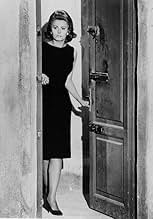
Italian adaptation of the Jean-Paul Sartre play...
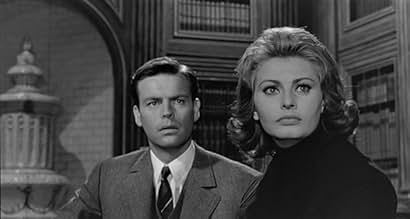
... from director Vittorio De Sica. German shipping magnate Fredric March learns that he has six months left to live. He summons his son Robert Wagner and daughter-in-law Sophia Loren to his palatial estate in order to set plans for his passing. Loren, who resents Germany's Nazi past and March's role in it, learns that March's older son (Maximilian Schell), believed long dead, has lived in seclusion since the end of the war, so she sets out to learn why he is hidden away. Also with Francoise Prevost and Gabriele Tinti.
This must have been a major European release at the time, as De Sica was one of the most respected directors, and Loren and Schell had just won the lead acting Oscars. It's heavy stuff, with the examination of German culpability for Nazi atrocities a thorny subject. The version I watched was in Italian with subtitles, so it was odd seeing March, Schell and Wagner dubbed with others' voices.
Did you know
- TriviaSpencer Tracy was offered but declined the role of Albrecht von Gerlach.
- GoofsNazi uniforms were banned after the war, yet Franz walks through the city without being arrested or beaten up. He gets a few strange looks but is otherwise ignored.
- Alternate versionsEvery reference to National Socialism was cut from the West German version in 1962.
- How long is The Condemned of Altona?Powered by Alexa
Details
- Release date
- Countries of origin
- Languages
- Also known as
- Die Eingeschlossenen
- Filming locations
- Production companies
- See more company credits at IMDbPro
Box office
- Gross US & Canada
- $2,398,000
- Runtime
- 1h 54m(114 min)
- Color
- Sound mix
- Aspect ratio
- 2.35 : 1
Contribute to this page
Suggest an edit or add missing content