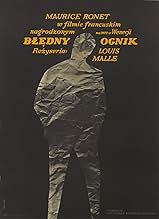
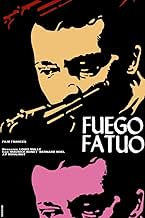
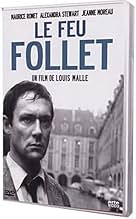
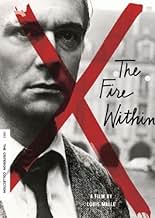
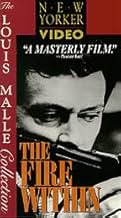
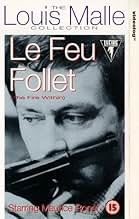
Depressed Alain Leroy leaves the clinic where he was detoxified. He meets friends, acquaintances and women, trying to find a reason to continue living. Will this help him?Depressed Alain Leroy leaves the clinic where he was detoxified. He meets friends, acquaintances and women, trying to find a reason to continue living. Will this help him?Depressed Alain Leroy leaves the clinic where he was detoxified. He meets friends, acquaintances and women, trying to find a reason to continue living. Will this help him?
- Director
- Writers
- Stars
- Awards
- 2 wins & 2 nominations total
René Dupuy
- Charlie
- (as René Dupuis)
- Director
- Writers
- All cast & crew
- Production, box office & more at IMDbPro
7.811.3K
1
2
3
4
5
6
7
8
9
10
Featured reviews
The new wave rides high.
One of the triumphs of the otherwise often overrated nouvelle vague,Louis Malle's adaptation of a Drieu de la Rochelle has not aged bit.Thanks to Maurice Ronet ,who portrays a suicidal man,probably the most beautiful performance of this kind.The movie is nothing but a long wandering in a mental hospital,in the Parisian bistros,in the posh world where an Antonioniesque bourgeoisie is killing time (see Alexandra Stewart's character).If I mention Antonioni,it''s not by chance ;actually Malle succeeds here where Antonioni only partially does.The difference ,I think,lies in the fact that we have here a human being,made of flesh and blood,who exists,and I would like to point out once again what a great actor the late Maurice Ronet was.Eric Satie's music perfectly captures the doomed atmosphere.This is arguably Louis Malle 's finest,one of the rare movies which achieve the delicate balance between the strong screenplay and the "liberties" dear to the new wave creators. Yes the new wave did produce great movies:"la tête contre les murs " (Franju)"Cléo de 5 à 7" (Varda)"Lola" (Demy)and this one are jewels on its crown.
Brilliant study of human misery, hopelessness and alienation.
Le Feu Follet or "Will o'the wisp" as it can be translated into English is one of the most important philosophical films made by the great master of French cinema Louis Malle.It is based on a book written by Pierre Drieu la Rochelle who was influenced by Dadaism. Although this film talks of a difficult albeit dark theme of suicide the film's overall mood is not at all gloomy. This is because there are plenty of scenes infused with day to day humor.The film is about a protagonist who has lost all interest in life.Maurice Ronet,a major French film star of the sixties plays the lead role.He is a sort of celebrity among his circle of socialites and he is fed up of their useless company.The film portrays the last days of a person suffering from a drug habit.In some ways this film is an attack on middle class or French bourgeoisie.Although the protagonist is a part of it,he nevertheless makes vain attempts to untangle himself from it.If a separate genre of suicide films is formed, this film will easily find a proud place in that category.
My favorite film
Wonderful study of the last day in the life of a man. This movie has one specific scene where Alan Leroy (Maurice Ronet), sitting at a cafe in Paris, takes his first alcoholic drink after months of rehabilitation. This scene is complimented by stunning photography of Chislain Cloquet and the haunting music of Eric Satie. Malle captures the true meaning of existentialist philosophy and manages to create a movie that does not wallow in self-pity but instead celebrates our ability to choose whether to live or die.
LOTS of gray.
"The Fire Within" (French, 1963): Directed by Louis Malle, scored by Eric Satie. This is a perfect visual reason to use black and white with tons of gray. It is two days in the life of a young, popular man who has returned to his acquaintances, friends and ex-lovers, after vanishing into a program for alcoholics
a program he found comforting, and did NOT want to leave. He searches through his relationships for a reason to continue his life, whether as-is or anew
but overriding any thoughts of the future is his current state of total depression. His friends continued their lives during his absence, they continue their fast-paced, challenging repartee during his visits, and they will clearly continue after his leaving. "The Fire Within" is a quiet, observational film, interrupted only for conversations that seem to have substance, yet offer no solutions. It has one goal, and meets it very well.
The Terrible Vision
One extraordinary feature of this film is what I would call a "filter". Right from the start, the viewer knows that Alain is hurriedly (yet half-heartedly) searching for something that would give him the will to live, otherwise he will commit suicide. This extremely simple premise leads to extraordinary effects: the everyday happenings, which would seem neutral or even pleasant in any other circumstance, now fill us with disgust. Through the filter of Alain's eyes, we perceive the everyday reality as hopeless and empty of any worthwhile purpose. The author's message: you should apply that filter to your own life. But who has the guts to do it? I know I don't.
Did you know
- TriviaFor the first two days, filming was done in color. However, director Louis Malle realized that this was a distraction from the story, so he decided to film in black-and-white. An assistant also later declared that the shooting atmosphere on the set was rather gloomy.
- GoofsAs Alain walks on the streets of Paris, the crew (pushing the dolly) is visible on the shop windows he passes by.
- Quotes
Alain Leroy: I'm killing myself because you didn't love me, because I didn't love you. Because our ties were loose, I'm killing myself to tighten them. I leave you with an indelible stain.
- SoundtracksTrois Gymnopédies
Written by Erik Satie
- How long is The Fire Within?Powered by Alexa
Details
- Release date
- Country of origin
- Official site
- Language
- Also known as
- A Time to Live and a Time to Die
- Filming locations
- Production company
- See more company credits at IMDbPro
- Runtime
- 1h 48m(108 min)
- Color
- Sound mix
- Aspect ratio
- 1.66 : 1
Contribute to this page
Suggest an edit or add missing content