IMDb RATING
7.3/10
3.1K
YOUR RATING
Yukinojo, a Kabuki actor, seeks revenge by destroying the three men who caused the deaths of his parents. Also involved are the daughter of one of Yukinojo's targets, two master thieves, and... Read allYukinojo, a Kabuki actor, seeks revenge by destroying the three men who caused the deaths of his parents. Also involved are the daughter of one of Yukinojo's targets, two master thieves, and a swordsman who himself is out to kill Yukinojo.Yukinojo, a Kabuki actor, seeks revenge by destroying the three men who caused the deaths of his parents. Also involved are the daughter of one of Yukinojo's targets, two master thieves, and a swordsman who himself is out to kill Yukinojo.
- Awards
- 1 win total
7.33.1K
1
2
3
4
5
6
7
8
9
10
Featured reviews
now for something completely different
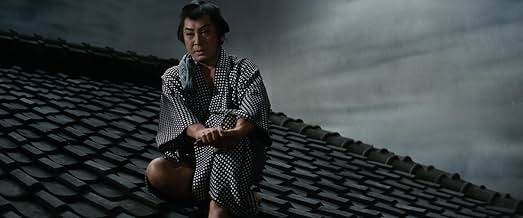
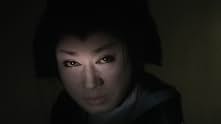
This movie is quite unlike any other I have ever seen. Oddly, one of the strangest things about it is the lighting. Much of the action occurs in the dark with just spotlights on the actors. This gives it a very stagy surreal feel. It takes place in historic Japan where people demonstrate their wealth not by cramming rooms with furniture, but by having gigantic carpeted empty rooms, with nothing in them but perhaps a stool. I found these starkly elegant and immensely pleasing. The exotic are things that come from Holland. It is fun looking through the Japanese side of the lens of history.
Characters often pose perfectly still for minutes an a time while some other character does something or narrates.
Yuki is a male who plays female roles in traditional Kabuki theatre. He always appears in elaborate female clothes. He is has a double chin. He is quite homely, both as male and female, but for reasons never satisfactorily explained seems irresistible to both males and females even though there are many other characters of either sex much better looking. He is also skilled at sword fighting. He is preposterously polite, effusive and self-effacing. The basic plot is seeking revenge for horrible things three men did to his parents. He subtly manipulates his enemies to do each other in.
A kabuki actor who wanders around is drag offstage does not seem to raise any eyebrows, except for people who don't realise he as an actor. Nobody seems to be the tiniest bit embarrassed by their attraction to him, perhaps annoyed or frustrated, but not ashamed.
The plot is operatic, very high emotions and drastic crazy behaviour. Kabuki theatre is definitely an acquired taste, but this movie is quite accessible and anything but boring.
There is one actor who plays two major roles. They give you a hint who it is near the end of the movie. See if you can pick it out earlier.
Characters often pose perfectly still for minutes an a time while some other character does something or narrates.
Yuki is a male who plays female roles in traditional Kabuki theatre. He always appears in elaborate female clothes. He is has a double chin. He is quite homely, both as male and female, but for reasons never satisfactorily explained seems irresistible to both males and females even though there are many other characters of either sex much better looking. He is also skilled at sword fighting. He is preposterously polite, effusive and self-effacing. The basic plot is seeking revenge for horrible things three men did to his parents. He subtly manipulates his enemies to do each other in.
A kabuki actor who wanders around is drag offstage does not seem to raise any eyebrows, except for people who don't realise he as an actor. Nobody seems to be the tiniest bit embarrassed by their attraction to him, perhaps annoyed or frustrated, but not ashamed.
The plot is operatic, very high emotions and drastic crazy behaviour. Kabuki theatre is definitely an acquired taste, but this movie is quite accessible and anything but boring.
There is one actor who plays two major roles. They give you a hint who it is near the end of the movie. See if you can pick it out earlier.
There are some truly beautiful scenes here
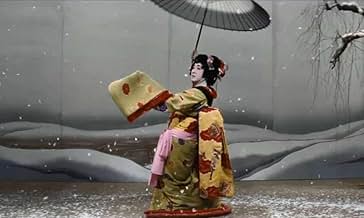
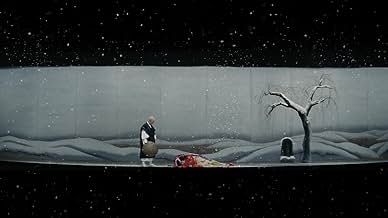
There are some truly beautiful scenes here, particularly the marvellous use of widescreen in the colourful kabuki sequences and Kazuoha Segawa is faultless in the duel central role. He plays dressed as a woman on the stage but seems also to live out his life this way and he also plays his thieving side-kick. Apparently played for laughs throughout it is difficult for a non Japanese to fully appreciate much of the subtlety and Shakespearean style play on words. Indeed, for me, the whole is rather too mannered and stagey. There is much blurring between stage and 'real life' which some find charming but I tend to find rather confusing and lifeless.
Poetic and Bizarre
This film begins with a Kabuki actor from Osaka by the name of "Yukinojo" (Kazuo Hasegawa) performing in the Japanese city of Edo to much applause. So much so that the Shogun's favorite concubine "Lady Namiji" (Ayako Wakao) has become quite smitten with him. Realizing this, Yukinojo decides to use this to his advantage in order to gain his revenge on three men living in Edo whose actions impoverished his family and cause both his father and mother to commit suicide. Things become more difficult, however, when a local thief named "Ohatsu" (Fujiko Yamamoto) discovers his plans and tries to use it to her advantage. Likewise, there are other characters with their own agendas who also interfere with Yukinojo's plans as well. Now, rather than reveal any more, I will just say that this film was both poetic and bizarre at the same time with good performances by all three of the aforementioned actors. Admittedly, this film may not be to everyone's liking but, even so, I recommend it to those who might be curious and I have rated it accordingly. Above average.
Kabuki in a kabuki
This movie is that rare species - a film that doesn't take itself seriously for a moment, and yet is stunningly well made and original.
According to Donald Richies '100 Years of Japanese Cinema' the director was forced to make this movie (the remake of a popular but very hammy 1930's original) as a punishment for his self indulgence in earlier movies. He responded by turning up the campiness to '11' in Spinal Tap terms.
Kon Ichikawa manages to take the story of a famous Kabuki female impersonator who wrecks revenge on three powerful men who killed his parents both beautiful (the scenery and photography is stunning) and queasy - everyone seems to fall in love with the rather ugly and very feminine leading 'man'. The story is irrelevant (presumably deliberately so), its all an exercise in style. You can see where Suzuki and many other later directors got a lot of their ideas. Kon is a very talented and skillful film maker so despite the fact that the cast are clearly playing it up for laughs, it is extremely well made, with wonderful sets and tight editing. Despite its origins, it is genuinely entertaining and required viewing for anyone with an interest in Kabuki or Japanese design.
According to Donald Richies '100 Years of Japanese Cinema' the director was forced to make this movie (the remake of a popular but very hammy 1930's original) as a punishment for his self indulgence in earlier movies. He responded by turning up the campiness to '11' in Spinal Tap terms.
Kon Ichikawa manages to take the story of a famous Kabuki female impersonator who wrecks revenge on three powerful men who killed his parents both beautiful (the scenery and photography is stunning) and queasy - everyone seems to fall in love with the rather ugly and very feminine leading 'man'. The story is irrelevant (presumably deliberately so), its all an exercise in style. You can see where Suzuki and many other later directors got a lot of their ideas. Kon is a very talented and skillful film maker so despite the fact that the cast are clearly playing it up for laughs, it is extremely well made, with wonderful sets and tight editing. Despite its origins, it is genuinely entertaining and required viewing for anyone with an interest in Kabuki or Japanese design.
10mkiem
One of the most visually exciting movies ever
Ichikawa supposedly made this movie "to see what cinema could do." He pulls out all the stops and the result is a masterpiece of visual splendor, wit and style that is stunning as well as very entertaining. The story of a man taking revenge against the people who killed his parents is an old cliched melodrama that was assigned to him. But he turns necessity into a virtue by glorifying the kitsch while at the same time keeping an ironic stance. (don't miss a great visual pun involving a gunshot and a crescent moon.)
He uses the widescreen to full effect in adopting the aesthetics of the Kabuki theater. The sheer visual inventiveness of the movie makes for the best kind of eye candy. There are bold splashes of primary colors and dramatic, very theatrical lighting. Some sets are intentionally artificial-looking while others are not. Somehow the two styles don't clash but instead portray the perfect intermingling of theater and cinema. Similarly, the use of jazz and lounge music(!) seems perfectly appropriate.
Hasegawa, the lead actor, played the same role in a previous version of the movie nearly 30 years earlier. A man who acts like a woman, seducing a woman young enough to be his daughter lends a touch of the bizarre which just makes things more interesting. The movie is graced by Ayako Wakao, at the height of her incredible beauty.
He uses the widescreen to full effect in adopting the aesthetics of the Kabuki theater. The sheer visual inventiveness of the movie makes for the best kind of eye candy. There are bold splashes of primary colors and dramatic, very theatrical lighting. Some sets are intentionally artificial-looking while others are not. Somehow the two styles don't clash but instead portray the perfect intermingling of theater and cinema. Similarly, the use of jazz and lounge music(!) seems perfectly appropriate.
Hasegawa, the lead actor, played the same role in a previous version of the movie nearly 30 years earlier. A man who acts like a woman, seducing a woman young enough to be his daughter lends a touch of the bizarre which just makes things more interesting. The movie is graced by Ayako Wakao, at the height of her incredible beauty.
Did you know
- TriviaOriginally designed as a tribute to actor Kazuo Hasegawa, whose 300th film this was. The film was based Teinosuke Kinugasa's Yukinojô henge: Daiippen (1935) which also starred Hasegawa in the same dual role.
- ConnectionsVersion of Yukinojô henge: Daiippen (1935)
- How long is An Actor's Revenge?Powered by Alexa
Details
- Release date
- Country of origin
- Language
- Also known as
- Snow of Strange Change
- Production company
- See more company credits at IMDbPro
- Runtime
- 1h 55m(115 min)
- Sound mix
- Aspect ratio
- 2.35 : 1
Contribute to this page
Suggest an edit or add missing content