IMDb RATING
7.3/10
7.3K
YOUR RATING

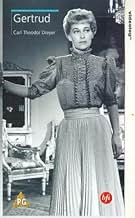
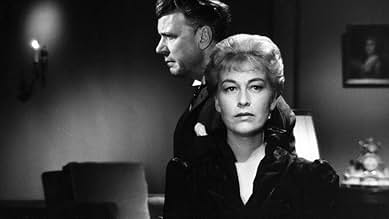
In the elegant world of artists and musicians, Gertrud ends her marriage to Gustav and takes a lover, the composer Erland Jansson.In the elegant world of artists and musicians, Gertrud ends her marriage to Gustav and takes a lover, the composer Erland Jansson.In the elegant world of artists and musicians, Gertrud ends her marriage to Gustav and takes a lover, the composer Erland Jansson.
- Director
- Writers
- Stars
- Awards
- 3 wins & 1 nomination total


Edouard Mielche
- The Rector Magnificus
- (as Edouard Mielché)
- Director
- Writers
- All cast & crew
- Production, box office & more at IMDbPro
7.37.2K
1
2
3
4
5
6
7
8
9
10
Featured reviews
Woman vows to live in uncompromising bliss or gloom
Cinema Great Carl Dreyer's final film is said to be his masterpiece as well. The innovative b&w cinematography, featuring only a handful, drawn out scenes in confined spaces, makes use of mirrors, shadows and suggested action. The story begins ca. 1900, studying several characters in depth. Gertrud, the wife of a wealthy lawyer with political aspirations, feels unappreciated by her work-consumed husband. The viewer quickly learns that Gertrud is about to end what appeared to be years of boredom as the "attache" of a man who lives mainly for his secular accomplishments. Despite his protests and assurances that he couldn't live without her, she leaves to see a lover.
Drawn to men of the arts, Gertrud herself was once a celebrated opera singer. A lengthy love affair with a man who later becomes a nationally honored poet, left the jilted author heart broken. Another man, a pioneer in the field of psychiatry, becomes Gertrud's friend and confidante, but never a lover.
The story, via flashbacks, present action and time scan forward shows Gertrud's entire adult life. The final scene offers somewhat of an explanation for why this woman has seemingly denied herself any true happiness. The men who offered her everything, even with the greatest possible concessions on their part, were told not to bother. Gertrud's extreme sense of pride, as noticed by a young musical genius who sees her as a convenient fling, leaves no wavering of the determined mind.
If this film appeared to be scandalous in 1964, how would society view this kind of real activity in the early 1900s? A strong sense of "truth", as a philosopher may call it, will always override any kind of compromise. "Love is all", the only words on Gertrud's head stone. There must be more to life than strict adherence to an ideology, especially at the high cost. A critically acclaimed film, "Gertrud" nonetheless lacks entertainment value due to its fatalistic story telling
Drawn to men of the arts, Gertrud herself was once a celebrated opera singer. A lengthy love affair with a man who later becomes a nationally honored poet, left the jilted author heart broken. Another man, a pioneer in the field of psychiatry, becomes Gertrud's friend and confidante, but never a lover.
The story, via flashbacks, present action and time scan forward shows Gertrud's entire adult life. The final scene offers somewhat of an explanation for why this woman has seemingly denied herself any true happiness. The men who offered her everything, even with the greatest possible concessions on their part, were told not to bother. Gertrud's extreme sense of pride, as noticed by a young musical genius who sees her as a convenient fling, leaves no wavering of the determined mind.
If this film appeared to be scandalous in 1964, how would society view this kind of real activity in the early 1900s? A strong sense of "truth", as a philosopher may call it, will always override any kind of compromise. "Love is all", the only words on Gertrud's head stone. There must be more to life than strict adherence to an ideology, especially at the high cost. A critically acclaimed film, "Gertrud" nonetheless lacks entertainment value due to its fatalistic story telling
Dreyer's final chilly masterwork
Even by Dreyer's standards "Gertrud" displays a rigidity rare in cinema. When it first appeared critics hated it, (just as they hated "The Searchers" and "Vertigo"). Now, of course, all three films are considered masterpieces but while "Vertigo" and "The Searchers" were commercial films aimed at a mass audience, "Gertrud" was strictly art-house, the kind of film critics were expected to like. It was also Dreyer's last film and it was archetypal Dreyer but this was also the mid-sixties and movies had moved on. We had had a renaissance in France and Italy and Czechoslovakia and even in the UK while America's 'New Wave' was just about to strike. It was a time for young film-makers and Dreyer was an old man. "Gertrud" looked and felt like it could have been made 30 years earlier. Of course, hindsight is a great thing and today "Gertrud" seems more 'modern' than many of the fashionable 'flash-in-the-pan' movies that hit us in the sixties and which now seem like time-capsules from a by-gone age. "Gertrud's" almost somnambulist pace and Dreyer's insistence on long takes, keeping his actors mostly static while allowing his camera to move, however slowly and deliberately, instead now seems almost revolutionary at a time when movies were chiefly about movement and movement in a pell-mell style. While taken from a 1906 play the theme of the film also seems peculiarly modern for the mid-sixties. It's about a woman's liberation from the constraints that men would seek to put upon her, even if that freedom means the sacrifice of romantic love in favour of higher, more intellectual pursuits. At the beginning of the film Gertrud leaves her stuffed-shirt of a husband because he's not prepared to love her unconditionally and attaches herself to a younger man who showers with romantic affection. But his love, too, is a sham and Gertrud is just another of his many conquests, so Gertrud leaves both men, and the poet she truly loved but who put his work above her and has now returned to reclaim her, and settles instead for a solitary but more 'intellectually' satisfying existence. It is a cold movie, it moves at a snail's pace and it is a film of ideas almost devoid of emotion if not feeling, (there is so little happening on screen it often seems like it could just as easily have been done on the radio). The acting is either intensely wooden or deeply cerebral depending on your point of view and since the characters are really only paradigms it is very difficult to engage with any of them. But it is also an incredibly beautiful film, displaying all of Dreyer's visual mastery, (as a 'stylist' Dreyer has always seemed very under-valued), and it's a film that challenges our preconceptions of what a romantic melodrama should be. Even by European art-house standards this is a much more rigorous dissection of the relations between men and women than we are used to. It won't be to everyone's taste but stick with it and you will be richly rewarded with a difficult and a bold film that strives to be a serious work of art and more than succeeds in its aims.
Scandinavian sombreness has rarely been so devastatingly effective.
Dreyer's final film views as a testament to idealism, the desire to put love above everything else in life and the cruel reality which thwarts this. Gertrud is married to a wealthy lawyer, about to become a minister. However material wealth is all he can offer and spiritually she is starved. >
With a theatrical set-piece style characterized by long takes, Dreyer creates an intense and involving atmosphere. Passions are seen as the formative experiences in life in a society stifled by convention. Gertrud prefers nothing to having second best, she refuses to compromise her ideals. She resigns herself to a single life but retains in her mind the vibrancy of her chain of lost loves. A moving portrait of a strong woman. Scandinavian sombreness has rarely been so devastatingly effective.
With a theatrical set-piece style characterized by long takes, Dreyer creates an intense and involving atmosphere. Passions are seen as the formative experiences in life in a society stifled by convention. Gertrud prefers nothing to having second best, she refuses to compromise her ideals. She resigns herself to a single life but retains in her mind the vibrancy of her chain of lost loves. A moving portrait of a strong woman. Scandinavian sombreness has rarely been so devastatingly effective.
One of the most cinematic films ever made.
You might be dismayed the first time you view Gertrud. Is this a masterpiece you might ask yourself? Nothing seems to happen. People sit and talk. Sometimes they get up and move about and then go and sit down again. When they do talk, it is not always facing one another. Gertrud herself often appears to be in a trance, staring towards another world, a beyond of perfection where no mortal man can exist or match up to her dreams. By the end of the film she seems to have become as bloodless and lifeless as a statue. Whiteness has overcome her and it is as lethal as the powder in the mill of Dreyer's Vampyr.
This is a film that must be watched several times in order for all its qualities to be revealed. The characters movements are exactly choreographed. The decor is stripped down to its essentials. There is nothing in the frame that does not comment. It might appear on the surface to be a naturalistic film, but it is, in fact, as staged and controlled as any Fellini. Gertrud is about the martyrdom of a woman who seeks perfection in a flawed world. Its surface, is as still, and tranquil, as a lake in a park, but underneath, everything is turmoil and volcanic emotion
This is a film that must be watched several times in order for all its qualities to be revealed. The characters movements are exactly choreographed. The decor is stripped down to its essentials. There is nothing in the frame that does not comment. It might appear on the surface to be a naturalistic film, but it is, in fact, as staged and controlled as any Fellini. Gertrud is about the martyrdom of a woman who seeks perfection in a flawed world. Its surface, is as still, and tranquil, as a lake in a park, but underneath, everything is turmoil and volcanic emotion
The Love and LIfe You Make
If one can get past the utter simplicity of the story and look at the images, it becomes, for me, a striking film. I just returned to watching the films of Dreyer, those that I had not seen. Apparently, this was the last one. Gertrud is as cold as you can make one. She has a determined role for herself and never varies and slips into perpetual unhappiness. She is a standard bearer for feminine longing, but she can't crack through the realities of the world. She has made bad choices and then seems to punish herself and those who can't live to her standards. Worth a look, certainly.


Did you know
- TriviaOne of Lars von Trier's favorite films.
- GoofsWhen Gertrud walks across the room in order to give Axel his letters back, the shadow from the camera and equipment can clearly be seen on the back wall.
- Quotes
Gertrud Kanning: There's no happiness in love. Love is suffering. Love is unhappiness.
- ConnectionsEdited into Eventyret om dansk film 15: Fjernsyn og biografkrise - 1961-1965 (1996)
- How long is Gertrud?Powered by Alexa
Details
- Release date
- Country of origin
- Official site
- Language
- Also known as
- Гертруда
- Filming locations
- Production company
- See more company credits at IMDbPro
- Runtime
- 1h 56m(116 min)
- Color
- Sound mix
- Aspect ratio
- 1.66 : 1
Contribute to this page
Suggest an edit or add missing content