IMDb RATING
7.3/10
7.3K
YOUR RATING

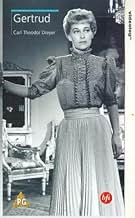
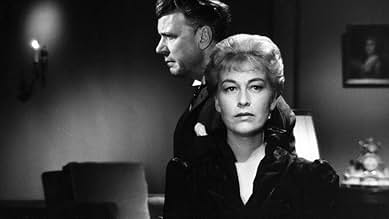
In the elegant world of artists and musicians, Gertrud ends her marriage to Gustav and takes a lover, the composer Erland Jansson.In the elegant world of artists and musicians, Gertrud ends her marriage to Gustav and takes a lover, the composer Erland Jansson.In the elegant world of artists and musicians, Gertrud ends her marriage to Gustav and takes a lover, the composer Erland Jansson.
- Director
- Writers
- Stars
- Awards
- 3 wins & 1 nomination total


Edouard Mielche
- The Rector Magnificus
- (as Edouard Mielché)
- Director
- Writers
- All cast & crew
- Production, box office & more at IMDbPro
7.37.2K
1
2
3
4
5
6
7
8
9
10
Featured reviews
The Love and LIfe You Make
If one can get past the utter simplicity of the story and look at the images, it becomes, for me, a striking film. I just returned to watching the films of Dreyer, those that I had not seen. Apparently, this was the last one. Gertrud is as cold as you can make one. She has a determined role for herself and never varies and slips into perpetual unhappiness. She is a standard bearer for feminine longing, but she can't crack through the realities of the world. She has made bad choices and then seems to punish herself and those who can't live to her standards. Worth a look, certainly.
Scandinavian sombreness has rarely been so devastatingly effective.
Dreyer's final film views as a testament to idealism, the desire to put love above everything else in life and the cruel reality which thwarts this. Gertrud is married to a wealthy lawyer, about to become a minister. However material wealth is all he can offer and spiritually she is starved. >
With a theatrical set-piece style characterized by long takes, Dreyer creates an intense and involving atmosphere. Passions are seen as the formative experiences in life in a society stifled by convention. Gertrud prefers nothing to having second best, she refuses to compromise her ideals. She resigns herself to a single life but retains in her mind the vibrancy of her chain of lost loves. A moving portrait of a strong woman. Scandinavian sombreness has rarely been so devastatingly effective.
With a theatrical set-piece style characterized by long takes, Dreyer creates an intense and involving atmosphere. Passions are seen as the formative experiences in life in a society stifled by convention. Gertrud prefers nothing to having second best, she refuses to compromise her ideals. She resigns herself to a single life but retains in her mind the vibrancy of her chain of lost loves. A moving portrait of a strong woman. Scandinavian sombreness has rarely been so devastatingly effective.
Dreyer's 3 Women
This is stunning work in my estimation but difficult. You will have to work and earn this movie for yourself, deserve it. Enter before you're ready and all you'll see is an empty room. Enter when you have come some way in your travels and you'll see there was not a single thing missing.
Modern and staid at the same time, Dreyer straddles both eras, someone who began in the silent era but paved the way for modernity. His Joan of Arc was a woman's passion rending the air around her, soul heaving from a body. Vampyr was dreamlike and floated. His next works quieted the passion, dimmed the seeing. Until we come to this, his very last one.
Even more deeply moored in characters, even more placid, even more renouncing of drama. If you simply try to see this as a drama (the way Wrath and Ordet can be seen), you may find the pace stolid, the same lugubrious articulation of feelings tiresome; you might note Gertrud's complete certainty in how she feels and being mildly tired to not find it as complacent.
But like Ordet is not a pastor's work, this is not merely a dramatist's, I don't think. It's true, his subjects give off a musty scent, are set in bygone days, but that's with the exception of this one, which is his most modern. So give it space, and it will begin to shine beyond simply these lives that we see.
Anchored in a woman and the men in her life as they come together for the occasion and part again, the occasion is that she decides to leave her husband for someone else, this is a prolonged contemplation of life gone. It's not just what these people explain about how they feel but these ruminations being deepened and sculpted in time, how they intersect; these translucent openings to rooms that I find myself in, the gentle dissonance between sense and discovery, the camera coming to and going again.
It's all that marvelous sense of inhabiting that room where feelings linger and take shape; for example the flashback to where she visits him in his house and he plays the piano, we don't seem him at first, only the room resplendent in radiant light as if her own soul lights it up and then fills it with song. Later, after she has lied about going to the opera and visits him again, the same room is now submerged in shadows, their hushed love affair far from the eyes of the world.
Two sides of Dreyer show through. Characters pouring out their inmosts gave rise to Bergman where it's the spoken word being sculpted; but even greater, the camera that waits and comes to, the way it stays time, shuffles and reveals, this is what Tarkovsky would extend in his own work. If the next step has been taken, and I think that's in a film with the magnitude of Zerkalo, the blueprint is here.
We glide through all of this stoically, as if it was always apparent that life wouldn't work out as dreamed so it's no real surprise. The husband frets and fights to keep her, later the poet ex-boyfriend pours his heart to her about the mistake of letting of her go; but the husband knows no words can change how someone feels, the other knows that her love grew to be a burden and he preferred his freedom. It's moot to fret now, those are words said to mark the occasion. The pianist turns out to be a boy, she accepts it.
It's all crystallized in the end, with her an old woman and being visited by the man she moved out to join in Paris. Maybe they would have liked to pursue what they didn't, maybe not. Nothing weighs between them. We have moved ahead as freely as we look back.
Everything here is a placeholder for life that you have gone through, maybe let slip through the fingers but neither glad nor saddened. It was what it was all about, life as a series of nights you shared, talks you had, visits to someone's room. Dreyer has prepared, purified, light that suffuses the memory, mends it back into body. The mind doesn't stray anymore, even as it does. It strays without losing its bearings, without giving into anxiety or despair. Dreyer's gaze is Gertrud's soul.
Modern and staid at the same time, Dreyer straddles both eras, someone who began in the silent era but paved the way for modernity. His Joan of Arc was a woman's passion rending the air around her, soul heaving from a body. Vampyr was dreamlike and floated. His next works quieted the passion, dimmed the seeing. Until we come to this, his very last one.
Even more deeply moored in characters, even more placid, even more renouncing of drama. If you simply try to see this as a drama (the way Wrath and Ordet can be seen), you may find the pace stolid, the same lugubrious articulation of feelings tiresome; you might note Gertrud's complete certainty in how she feels and being mildly tired to not find it as complacent.
But like Ordet is not a pastor's work, this is not merely a dramatist's, I don't think. It's true, his subjects give off a musty scent, are set in bygone days, but that's with the exception of this one, which is his most modern. So give it space, and it will begin to shine beyond simply these lives that we see.
Anchored in a woman and the men in her life as they come together for the occasion and part again, the occasion is that she decides to leave her husband for someone else, this is a prolonged contemplation of life gone. It's not just what these people explain about how they feel but these ruminations being deepened and sculpted in time, how they intersect; these translucent openings to rooms that I find myself in, the gentle dissonance between sense and discovery, the camera coming to and going again.
It's all that marvelous sense of inhabiting that room where feelings linger and take shape; for example the flashback to where she visits him in his house and he plays the piano, we don't seem him at first, only the room resplendent in radiant light as if her own soul lights it up and then fills it with song. Later, after she has lied about going to the opera and visits him again, the same room is now submerged in shadows, their hushed love affair far from the eyes of the world.
Two sides of Dreyer show through. Characters pouring out their inmosts gave rise to Bergman where it's the spoken word being sculpted; but even greater, the camera that waits and comes to, the way it stays time, shuffles and reveals, this is what Tarkovsky would extend in his own work. If the next step has been taken, and I think that's in a film with the magnitude of Zerkalo, the blueprint is here.
We glide through all of this stoically, as if it was always apparent that life wouldn't work out as dreamed so it's no real surprise. The husband frets and fights to keep her, later the poet ex-boyfriend pours his heart to her about the mistake of letting of her go; but the husband knows no words can change how someone feels, the other knows that her love grew to be a burden and he preferred his freedom. It's moot to fret now, those are words said to mark the occasion. The pianist turns out to be a boy, she accepts it.
It's all crystallized in the end, with her an old woman and being visited by the man she moved out to join in Paris. Maybe they would have liked to pursue what they didn't, maybe not. Nothing weighs between them. We have moved ahead as freely as we look back.
Everything here is a placeholder for life that you have gone through, maybe let slip through the fingers but neither glad nor saddened. It was what it was all about, life as a series of nights you shared, talks you had, visits to someone's room. Dreyer has prepared, purified, light that suffuses the memory, mends it back into body. The mind doesn't stray anymore, even as it does. It strays without losing its bearings, without giving into anxiety or despair. Dreyer's gaze is Gertrud's soul.
Perhaps too stage-like, but the great camera-work captures pure cinema.
Carl Theodor Dreyer marked his place forever in the film canon for his terrific masterpiece The Passion of Joan of Arc. Back in film's most primitive stages, he managed to lift it out from its limitations and give us one of the greatest performances of all-time from Maria Falconetti. 36 years later with his final film, he again studies a single woman in an intimate minimal style. It tackles a complex issue, one of universal sensitivity, with the expectations of love. There's great subdued performances of characters who can hardly bear to look at each other. Based on a play built on a handful of sequences, it ends up inherently stage-like with its 3 walls and dialogue-driven narrative. While it may struggle with pacing with a few too many scenes that don't drive the story forward, its rich backstory is compelling and plays with the imagination. In that limitation, Dreyer makes elegant use of camera movements with long takes that are constantly changing frame size, it's really magnificent to watch. What makes the film hit hard is its sudden epilogue. The majority of the film takes place over a few days and we suddenly jump 30 years into the future to study the consequences. It's a profound, if incredibly dreary film. Many lessons to take from Gertrud, both in filmmaking and in life.
8/10
8/10
Woman vows to live in uncompromising bliss or gloom
Cinema Great Carl Dreyer's final film is said to be his masterpiece as well. The innovative b&w cinematography, featuring only a handful, drawn out scenes in confined spaces, makes use of mirrors, shadows and suggested action. The story begins ca. 1900, studying several characters in depth. Gertrud, the wife of a wealthy lawyer with political aspirations, feels unappreciated by her work-consumed husband. The viewer quickly learns that Gertrud is about to end what appeared to be years of boredom as the "attache" of a man who lives mainly for his secular accomplishments. Despite his protests and assurances that he couldn't live without her, she leaves to see a lover.
Drawn to men of the arts, Gertrud herself was once a celebrated opera singer. A lengthy love affair with a man who later becomes a nationally honored poet, left the jilted author heart broken. Another man, a pioneer in the field of psychiatry, becomes Gertrud's friend and confidante, but never a lover.
The story, via flashbacks, present action and time scan forward shows Gertrud's entire adult life. The final scene offers somewhat of an explanation for why this woman has seemingly denied herself any true happiness. The men who offered her everything, even with the greatest possible concessions on their part, were told not to bother. Gertrud's extreme sense of pride, as noticed by a young musical genius who sees her as a convenient fling, leaves no wavering of the determined mind.
If this film appeared to be scandalous in 1964, how would society view this kind of real activity in the early 1900s? A strong sense of "truth", as a philosopher may call it, will always override any kind of compromise. "Love is all", the only words on Gertrud's head stone. There must be more to life than strict adherence to an ideology, especially at the high cost. A critically acclaimed film, "Gertrud" nonetheless lacks entertainment value due to its fatalistic story telling
Drawn to men of the arts, Gertrud herself was once a celebrated opera singer. A lengthy love affair with a man who later becomes a nationally honored poet, left the jilted author heart broken. Another man, a pioneer in the field of psychiatry, becomes Gertrud's friend and confidante, but never a lover.
The story, via flashbacks, present action and time scan forward shows Gertrud's entire adult life. The final scene offers somewhat of an explanation for why this woman has seemingly denied herself any true happiness. The men who offered her everything, even with the greatest possible concessions on their part, were told not to bother. Gertrud's extreme sense of pride, as noticed by a young musical genius who sees her as a convenient fling, leaves no wavering of the determined mind.
If this film appeared to be scandalous in 1964, how would society view this kind of real activity in the early 1900s? A strong sense of "truth", as a philosopher may call it, will always override any kind of compromise. "Love is all", the only words on Gertrud's head stone. There must be more to life than strict adherence to an ideology, especially at the high cost. A critically acclaimed film, "Gertrud" nonetheless lacks entertainment value due to its fatalistic story telling


Did you know
- TriviaOne of Lars von Trier's favorite films.
- GoofsWhen Gertrud walks across the room in order to give Axel his letters back, the shadow from the camera and equipment can clearly be seen on the back wall.
- Quotes
Gertrud Kanning: There's no happiness in love. Love is suffering. Love is unhappiness.
- ConnectionsEdited into Eventyret om dansk film 15: Fjernsyn og biografkrise - 1961-1965 (1996)
- How long is Gertrud?Powered by Alexa
Details
- Release date
- Country of origin
- Official site
- Language
- Also known as
- Гертруда
- Filming locations
- Production company
- See more company credits at IMDbPro
- Runtime
- 1h 56m(116 min)
- Color
- Sound mix
- Aspect ratio
- 1.66 : 1
Contribute to this page
Suggest an edit or add missing content