

Surprised that their contract victim didn't try to run away from them, two professional hit men try to find out who hired them and why.Surprised that their contract victim didn't try to run away from them, two professional hit men try to find out who hired them and why.Surprised that their contract victim didn't try to run away from them, two professional hit men try to find out who hired them and why.
- Won 1 BAFTA Award
- 1 win & 1 nomination total
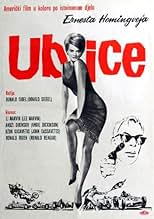
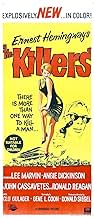
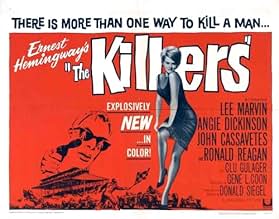
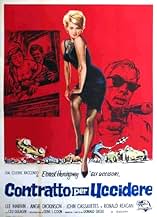
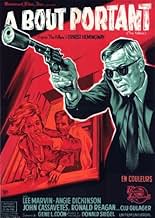
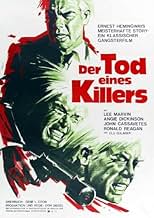
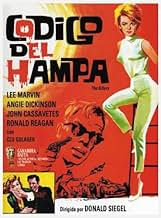
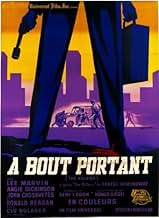


Irvin Mosley Jr.
- Mail Truck Guard
- (as Irvin Mosley)


- Director
- Writers
- All cast & crew
- Production, box office & more at IMDbPro
7.010.2K
1
2
3
4
5
6
7
8
9
10
Featured reviews
Effective little tough film that is made better by strong performances from Marvin and Cassavetes
When two hitmen kill Johnny North, it sticks with them why he simply stood ready to die and didn't bother trying to run or fight them. They look into his past and find he was once a successful driver of racing cars until an accident left him unable to compete in the big leagues again. They trace his story looking for money he is alleged to have stolen but find a complex tale of lies and deception.
I have not seen the original film so I was free from the burden of comparison when I watched this and I was maybe the better for it as I hear good things about the original. This version was made for television but given a cinema release due to it's violent content (which is really nothing by today's standards). The plot is interestingly told as we already know the fate of North, the only question is how he came to it and what happened to the $1,000,000 he supposedly made off with. It unfolds well and ends with a typically gritty denouncement.
The tone of the film loses the dark black & white of the noir genre in favour of bright daylight and colourful sets with a gritty violent edge to everything. This works well and it stands up today due to recent returns to this type of film thanks to Pulp Fiction's success (and many others of course). Like I said it isn't shocking as it may once have been but it works well as a tough little thriller.
Lee Marvin is perfectly cast and he carries the main part of the modern telling of the film. Likewise Cassavetes is really good as North and you can actually see him change his character from the brash driver to a broken man by the end. Dickinson is a good femme fatale and does it in such a way that she doesn't wear it on her sleeve or have a badge that says `I'm a femme fatale' in a way that some have done it here you only get a sense of who she is towards the end of the film. Ronald Reagan is good in his last acting role before entering politics.
Overall this is an effective film. It lacks it's own sense of style but is tough and enjoyable and it's hard edge is still evident today even if the shock value of the violence has faded as the audience has become more and more used to seeing violence as a mainstay of cinema.
I have not seen the original film so I was free from the burden of comparison when I watched this and I was maybe the better for it as I hear good things about the original. This version was made for television but given a cinema release due to it's violent content (which is really nothing by today's standards). The plot is interestingly told as we already know the fate of North, the only question is how he came to it and what happened to the $1,000,000 he supposedly made off with. It unfolds well and ends with a typically gritty denouncement.
The tone of the film loses the dark black & white of the noir genre in favour of bright daylight and colourful sets with a gritty violent edge to everything. This works well and it stands up today due to recent returns to this type of film thanks to Pulp Fiction's success (and many others of course). Like I said it isn't shocking as it may once have been but it works well as a tough little thriller.
Lee Marvin is perfectly cast and he carries the main part of the modern telling of the film. Likewise Cassavetes is really good as North and you can actually see him change his character from the brash driver to a broken man by the end. Dickinson is a good femme fatale and does it in such a way that she doesn't wear it on her sleeve or have a badge that says `I'm a femme fatale' in a way that some have done it here you only get a sense of who she is towards the end of the film. Ronald Reagan is good in his last acting role before entering politics.
Overall this is an effective film. It lacks it's own sense of style but is tough and enjoyable and it's hard edge is still evident today even if the shock value of the violence has faded as the audience has become more and more used to seeing violence as a mainstay of cinema.
Violent 60's film with standout cast
Director Don Siegel's "The Killers" is very loosely based on the Hemingway short story with few similarities. Two killers (Lee Marvin and Clu Gulager)complete an easy hit-for-hire but wonder why their victim, although warned in advance, didn't run away from them. After piecing together some information, they realize that the $25,000 they got for the hit is a drop in the bucket compared to a missing million dollar stash of stolen loot. After questioning a few "witnesses" they discover that the man they killed had been double-crossed and had lost his will to live. Throw in Angie Dickinson as a two-timing temptress and Ronald Reagan (of all people) as a nasty double-dealing henchman and you've got one violent movie without any good guys in sight. Marvin and Gulager are excellent as the hit men and John Cassavettes is also great as their hapless and resigned victim. Reagan, who supposedly regretted his turn here as a villian, is surprising effective. It was the only time in his career he played a "bad guy". Angie Dickinson, of course, is no mere window-dressing. She gives everyone a run for their money as the best-looking devious dame on the planet. "The Killers", which was originally made for TV, but released in theatres instead due to its violent subject matter, is a one-of-a-kind early 60's film noir. It may have little to do with Hemingway's story, but I'm sure "Papa" would have enjoyed it anyway.
The only man who isn't afraid of dying is dead already.
The Killers is directed by Don Siegel and adapted to screenplay by Gene L. Coon from the short story written by Ernest Hemmingway. It stars Lee Marvin, Angie Dickinson, Clu Gulager, John Cassavetes, Ronald Reagan and Claude Akins. Music is by John Williams and cinematography by Richard L. Rawlings.
Hit men Charlie (Marvin) and Lee (Gulager) enter a school for the blind and gun down motor mechanic teacher Johnny North (Cassavetes). He doesn't resist. Why? This question bothers Charlie and he sets about finding out...
It's difficult when reading the name The Killers to not think of the 1946 film made by Robert Siodmak, a film that is revered as one of the quintessential movies of film noir. But Don Siegel's film, a re-jigging of the plot, is well worthy of consideration as quintessential neo-noir.
Originally slated to be the first made for TV movie as part of a new era for movies on television, the film was pulled by NBC for being too violent. With the film also featuring a murder by sniper scene, the recent assassination of John F. Kennedy by sniper ensured The Killers was temporarily on unsafe ground. With Ronald Reagan making his last appearance on film before moving into politics, unusually playing a villain no less, the 64 version of The Killers has a bit of history.
It's a film about double-crossing, murder and fateful yearnings, featuring amoral characters in a wonderfully constructed story that is told in flashbacks! Photographed in bright, almost garish, colours, it's very much the polar opposite to Siodmak's version, well visually at least, but it is very effective and striking, almost enhancing the lurid nature of Coon's screenplay. It's an aggressive film where the violence packs a punch, and the ending has a considerable black heart.
The cast are mostly effective. Marvin and Gulager's hit-man pairing are deliberately off kilter in terms of personality, and it's these two that propel the movie forward (well backwards really). Cassavetes makes interesting work as live wire dupe Johnny, Akins does good as a pal watching on helplessly as Johnny loses his life footings and Dickinson sizzles as she fatalises the femme. Weak link is Reagan, who looks ill at ease playing a tough villain type. It's no surprise to learn later on down the line that he wasn't very fond of the role.
Good quality neo-noir crafted by a man who knew how to do the real deal back in the day. 7.5/10
Hit men Charlie (Marvin) and Lee (Gulager) enter a school for the blind and gun down motor mechanic teacher Johnny North (Cassavetes). He doesn't resist. Why? This question bothers Charlie and he sets about finding out...
It's difficult when reading the name The Killers to not think of the 1946 film made by Robert Siodmak, a film that is revered as one of the quintessential movies of film noir. But Don Siegel's film, a re-jigging of the plot, is well worthy of consideration as quintessential neo-noir.
Originally slated to be the first made for TV movie as part of a new era for movies on television, the film was pulled by NBC for being too violent. With the film also featuring a murder by sniper scene, the recent assassination of John F. Kennedy by sniper ensured The Killers was temporarily on unsafe ground. With Ronald Reagan making his last appearance on film before moving into politics, unusually playing a villain no less, the 64 version of The Killers has a bit of history.
It's a film about double-crossing, murder and fateful yearnings, featuring amoral characters in a wonderfully constructed story that is told in flashbacks! Photographed in bright, almost garish, colours, it's very much the polar opposite to Siodmak's version, well visually at least, but it is very effective and striking, almost enhancing the lurid nature of Coon's screenplay. It's an aggressive film where the violence packs a punch, and the ending has a considerable black heart.
The cast are mostly effective. Marvin and Gulager's hit-man pairing are deliberately off kilter in terms of personality, and it's these two that propel the movie forward (well backwards really). Cassavetes makes interesting work as live wire dupe Johnny, Akins does good as a pal watching on helplessly as Johnny loses his life footings and Dickinson sizzles as she fatalises the femme. Weak link is Reagan, who looks ill at ease playing a tough villain type. It's no surprise to learn later on down the line that he wasn't very fond of the role.
Good quality neo-noir crafted by a man who knew how to do the real deal back in the day. 7.5/10
My favourite cult B-movie...
Lee Marvin and Clu Gulager, two contract killers, walk into a Midwest school for the blind and cold-bloodedly murder John Cassavettes. "We walk in, we put him down, we walk out," muses Marvin distractedly on the train back to Chicago. Cassavettes had the chance to run but didn't, and Marvin wants to know why.
Initially, Don Siegel's colour remake of the Ernest Hemingway story was intended as the first made-for-TV movie. Vetoed by the network for its amoral viewpoint and violence, it was released in cinemas and quickly became a cult 1960s B-movie.
Anonymous and menacing in executive suits, sunglasses and briefcase, Marvin and scene-stealing Gulager memorably personify organised crime under Siegel's expert direction. They're pure all-American evil.
True, the main plot - pieced together in flashback as the two hitmen track down the mail robbery gang led by Ronald Reagan (his last film) - is pretty routine stuff. But even that serves to heighten the threat represented by Marvin and Gulager, as they unravel the real reason for Cassavettes' deathwish.
"No one ever knows what we're talking about," mocks Gulager when femme fatale Angie Dickinson tries to act dumb. The scene in the hotelroom where the killers force her to tell is handled with a ferocious cool that is Siegel's trademark.
The Killers was still in production when Kennedy was assassinated - perhaps one reason, given its theme, why TV network ABC pulled it from their 1964 schedule. The scene where Gulager is shot down on a sunlit sidewalk even echoed the killing of Kennedy assassin Lee Harvey Oswald (Gulager's character is called Lee).
OK, it's not a masterpiece. Even the great Don Siegel can't quite disguise a B-movie budget, a repetitious screenplay, brightly artificial colour, and exteriors that are only too obviously the Universal backlot. But it is tense and exciting, thanks to Siegel's authoritative grasp of the genre.
"I shot it in the style which I think is my style at its best," Siegel concluded later. "Very taut and lean with great economy. If I had to do it over again, I don't think I would change much."
Initially, Don Siegel's colour remake of the Ernest Hemingway story was intended as the first made-for-TV movie. Vetoed by the network for its amoral viewpoint and violence, it was released in cinemas and quickly became a cult 1960s B-movie.
Anonymous and menacing in executive suits, sunglasses and briefcase, Marvin and scene-stealing Gulager memorably personify organised crime under Siegel's expert direction. They're pure all-American evil.
True, the main plot - pieced together in flashback as the two hitmen track down the mail robbery gang led by Ronald Reagan (his last film) - is pretty routine stuff. But even that serves to heighten the threat represented by Marvin and Gulager, as they unravel the real reason for Cassavettes' deathwish.
"No one ever knows what we're talking about," mocks Gulager when femme fatale Angie Dickinson tries to act dumb. The scene in the hotelroom where the killers force her to tell is handled with a ferocious cool that is Siegel's trademark.
The Killers was still in production when Kennedy was assassinated - perhaps one reason, given its theme, why TV network ABC pulled it from their 1964 schedule. The scene where Gulager is shot down on a sunlit sidewalk even echoed the killing of Kennedy assassin Lee Harvey Oswald (Gulager's character is called Lee).
OK, it's not a masterpiece. Even the great Don Siegel can't quite disguise a B-movie budget, a repetitious screenplay, brightly artificial colour, and exteriors that are only too obviously the Universal backlot. But it is tense and exciting, thanks to Siegel's authoritative grasp of the genre.
"I shot it in the style which I think is my style at its best," Siegel concluded later. "Very taut and lean with great economy. If I had to do it over again, I don't think I would change much."
Ahead of it's time, uncompromising b-grade thriller.
Don Siegel's 'The Killers' is a diamond in the rough! Initially filmed for television, its technical limitations are easily overlooked as they are more than compensated for by the drive of the no-nonsense narrative, and the high standards of the acting. Caught somewhere between Kubrick's 'The Killing' and Boorman's 'Point Blank', it may not be as flamboyantly impressive as either, but it is just as memorable in its own low key way.
Quentin Tarantino has admitted that the structure of 'The Killing' has influenced him, but after watching 'The Killers', one must question whether this movie is also high on his list. Especially as the cooler-than-thou hit-men played by Lee Marvin and Clu Gulager almost anticipate Travolta and Jackson's similarly quirky ones in 'Pulp Fiction' thirty years later. Just like Vincent and Jules, Charlie and Lee are eccentric and likable when "off duty" and brutal sociopaths when on. Lee Marvin is one of Hollywood's legendary screen tough guys, and his performance here is as good as any he ever did, but the real stand out for me is Clu Gulager's health nut contract killer. He just about steals every scene he is in. Up to this point he was mainly known as a Western TV star. Why this role didn't launch him into a Bruce Dern/Harry Dean Stanton/Dick Miller style career baffles me. Instead he was mainly consigned to the "made for TV" wasteland, and never got the breaks his talent deserved.
Marvin and Gulager's star turns are backed up by strong supporting performances from John Cassavetes, as their enigmatic "job", Angie Dickinson, a double-crossing femme fatale, and Ronald Reagan in a surprising turn as a nasty gangster. Also keep an eye out for a dialogue-free cameo by a very young looking Seymour Cassel!
'The Killers' looks better and better as the years go by. Not without flaws, sure, and calling it a masterpiece would be overkill, but it's a movie that was ahead of it's time in many ways, and it can't help but impress discerning fans of 50s/60s b-grade crime movies, film noir, or Sam Fuller.
Quentin Tarantino has admitted that the structure of 'The Killing' has influenced him, but after watching 'The Killers', one must question whether this movie is also high on his list. Especially as the cooler-than-thou hit-men played by Lee Marvin and Clu Gulager almost anticipate Travolta and Jackson's similarly quirky ones in 'Pulp Fiction' thirty years later. Just like Vincent and Jules, Charlie and Lee are eccentric and likable when "off duty" and brutal sociopaths when on. Lee Marvin is one of Hollywood's legendary screen tough guys, and his performance here is as good as any he ever did, but the real stand out for me is Clu Gulager's health nut contract killer. He just about steals every scene he is in. Up to this point he was mainly known as a Western TV star. Why this role didn't launch him into a Bruce Dern/Harry Dean Stanton/Dick Miller style career baffles me. Instead he was mainly consigned to the "made for TV" wasteland, and never got the breaks his talent deserved.
Marvin and Gulager's star turns are backed up by strong supporting performances from John Cassavetes, as their enigmatic "job", Angie Dickinson, a double-crossing femme fatale, and Ronald Reagan in a surprising turn as a nasty gangster. Also keep an eye out for a dialogue-free cameo by a very young looking Seymour Cassel!
'The Killers' looks better and better as the years go by. Not without flaws, sure, and calling it a masterpiece would be overkill, but it's a movie that was ahead of it's time in many ways, and it can't help but impress discerning fans of 50s/60s b-grade crime movies, film noir, or Sam Fuller.


Did you know
- TriviaAccording to Don Siegel, it was the policy at Universal at the time to shoot the last scene of the film first. On that first day of filming, according to Siegel and Clu Gulager, Lee Marvin arrived late and had been drinking, but because he had no dialogue, the scenes were used as shot.
- GoofsAt the start of the race, Johnny presses the accelerator to the floorboard with his right foot. However, his left foot is nowhere near the clutch. In a manual transmission, the clutch would need to be released while simultaneously accelerating.
- Quotes
Charlie Strom: Lady, I don't have the time.
- Crazy creditsThe style of the film's credits reflects its original made-for-TV origins: in 1960s TV movies, Stars, Co-stars, and Featured Players were listed only in the opening credits, while supporting players were listed only in the closing credits.
- ConnectionsFeatured in Biography: Angie Dickinson: Tinseltown's Classiest Broad (1999)
- SoundtracksToo Little Time
Music by Henry Mancini
Lyrics by Don Raye
Sung by Nancy Wilson
[Johnny and Sheila dance to the song performed at the nightclub]
Details
Box office
- Budget
- $750,000 (estimated)
- Gross worldwide
- $9,261
- Runtime
- 1h 33m(93 min)
- Color
- Aspect ratio
- 1.85 : 1
Contribute to this page
Suggest an edit or add missing content