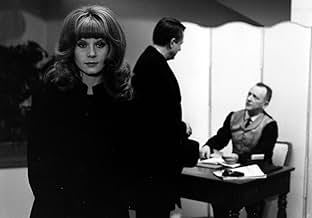
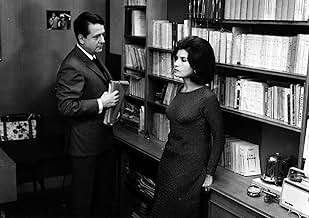
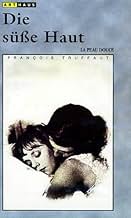
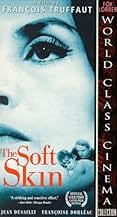
A well-known publisher and lecturer starts an affair with an air hostess.A well-known publisher and lecturer starts an affair with an air hostess.A well-known publisher and lecturer starts an affair with an air hostess.
- Director
- Writers
- Stars
- Awards
- 1 win & 2 nominations total
Françoise Dorléac
- Nicole
- (as Françoise Dorleac)
Carnero
- Lisbon organizer
- (uncredited)
Georges de Givray
- Le père de Nicole
- (uncredited)
Catherine-Isabelle Duport
- Jeune fille Reims
- (uncredited)
Maximiliènne Harlaut
- Mme. Leloix
- (uncredited)
Charles Lavialle
- Veilleur hôtel Michelet
- (uncredited)
Gérard Poirot
- Franck (co-pilot)
- (uncredited)
- Director
- Writers
- All cast & crew
- Production, box office & more at IMDbPro
7.58.9K
1
2
3
4
5
6
7
8
9
10
Featured reviews
This is an adultery story, not a love story.
French drama from writer-director Francois Truffaut. A respected author and lecturer (Jean Desailly) has an affair with a young stewardess (Francoise Dorleac).
I believe this film is deeply personal for Truffaut. He has several films about male protagonists who cheat on their wives or girlfriends (Bed and Board and The Man Who Loved Women, for example). What I like best about The Soft Skin is precisely that the affair happens because the stewardess is impressed to get involved with a minor celebrity, and he sleeps with her mainly because he can. They don't "fall in love" with each other; it's an adultery story, not a love story. Because the emotional involvement of the characters isn't very great, neither is the involvement of most of the audience. I will infer that Truffaut had more than one fling like this, but had no insight into why he did this. The subject is personal, but nothing about the presentation helped to alleviate that paucity of engagement.
Two other points: 1) Truffaut's films tend to be very one-paced. They don't usually quicken, slow down, speed up, etc. They proceed pretty much at the same pace from beginning to end. This is a real limitation. 2) I have come to believe that as much as Truffaut loved Hitchcock's films, as a director he learned absolutely nothing from him. Hitchcock is a master of pacing. The best moments in Truffaut's films usually come from a realist aesthetic that is the opposite of Hitchcock's master manipulation of genre and audience.
I believe this film is deeply personal for Truffaut. He has several films about male protagonists who cheat on their wives or girlfriends (Bed and Board and The Man Who Loved Women, for example). What I like best about The Soft Skin is precisely that the affair happens because the stewardess is impressed to get involved with a minor celebrity, and he sleeps with her mainly because he can. They don't "fall in love" with each other; it's an adultery story, not a love story. Because the emotional involvement of the characters isn't very great, neither is the involvement of most of the audience. I will infer that Truffaut had more than one fling like this, but had no insight into why he did this. The subject is personal, but nothing about the presentation helped to alleviate that paucity of engagement.
Two other points: 1) Truffaut's films tend to be very one-paced. They don't usually quicken, slow down, speed up, etc. They proceed pretty much at the same pace from beginning to end. This is a real limitation. 2) I have come to believe that as much as Truffaut loved Hitchcock's films, as a director he learned absolutely nothing from him. Hitchcock is a master of pacing. The best moments in Truffaut's films usually come from a realist aesthetic that is the opposite of Hitchcock's master manipulation of genre and audience.
A beautiful gem
Very poetic, early Truffaut, but already at his best. This story of a middle-aged intellectual man who certainly should not have too much to complain about in his life, but wants to give it a try for whatever reasons (mid-life crisis? vanity? play instinct? the beginnings of some sort of amour fou on his part?), thus bringing about a catastrophe, is brought to the screen in a powerful and masterly way.
It's all been described in large part by other users so far: Raoul Coutard's impressive black-and-white cinematography, the acting by Dorléac, Desailly and Benedetti, it all fitted very well.
What's more to mention, however, is a beautiful soundtrack by Georges Delerue, in my opinion a true masterpiece of film scoring, with a haunting main theme.
This is really a film I shall keep in my heart for a long time. I certainly prefer it to "Jules et Jim".
It's all been described in large part by other users so far: Raoul Coutard's impressive black-and-white cinematography, the acting by Dorléac, Desailly and Benedetti, it all fitted very well.
What's more to mention, however, is a beautiful soundtrack by Georges Delerue, in my opinion a true masterpiece of film scoring, with a haunting main theme.
This is really a film I shall keep in my heart for a long time. I certainly prefer it to "Jules et Jim".
A stunningly modern film on the most classic of all melodramas
François Truffaut's fourth feature and his first true masterpiece is essentially a classic love triangle, filmed like a quiet juggernaut that eventually overwhelms all those involved. On a quick trip to Lisbon for a lecture, literary essayist Jean Desailly's eye catches the lovely Françoise Dorléac, the air hostess on his flight. Soon he's asking her out for a drink and a love affair develops in between her flights, as his married life with seductive but demanding wife Nelly Benedetti slowly unravels. Much to Truffaut's credit, there is no judgment passed on any of the characters: whether Desailly is undergoing a dreaded mid-life crisis and wishes to be young again or is merely indulging an intellectual whim, whether he really wants to prove himself he is still a man capable of passion or just looking for a way out of his stifling marriage, is entirely up to the viewer to decide. But the director doesn't avert his eye from the seedy unpleasantness of the central situation, as the masterfully extended Reims interlude and the shock ending prove. Basically, it's a film about the mess people make when they think they're in love, all the more disturbing because Truffaut bases it all on chance meetings and missed opportunities - had Desailly not arrived late for his plane to Lisbon, had Dorléac not called him back at the hotel, maybe none of this would have happened. Marvelously shot in black and white by Nouvelle Vague lenser Raoul Coutard, this was the very first film where Truffaut showed the world all he was capable of; it's a stunningly modern film on the most classic of all melodramatic stories.
Sure and unflinching
Truffaut's study of a middle-aged man losing his way in life in the age-old fashion is caught in a mesmerizing series of quick-succession shots and sympathetically-captured quotidian details. An unthinking, self-assured man; his wounded, passionate wife; his sweet, vulnerable lover; an inevitable tragedy. This underrated film has no real surprises, but its sure-footedness is impressive and the simple story ultimately very moving.
One of Truffaut's most accomplished films
Truffaut filmed La Peau Douce immediately after the international success of "Jules et Jim". Released at the heyday of the nouvelle vague, critics and audiences panned the film as a futile resort to bourgeois classicism after the unconventional antics of his previous masterwork.
They could not have been more mistaken. Time has treated La Peau Douce better than most of his later efforts. It is definitely a triumph of direction with each scene being carefully planned and meticulously structured, not unlike a Hitchcock movie. In practice, Truffaut transposes Hitchcock's mechanisms of suspense into a seemingly trivial story concerning the illicit love affair of a distinguished editor/author with a younger stewardess and its withering consequences. The characters and the milieu of the story are effortless evoked, but the main joy is derived from the visual inventiveness that Truffaut shows in scene after scene. It's a triumph of a purely cinematic mode of expression, which Truffaut was one of the few who had really mastered it.
Did you know
- TriviaThe scenes set in Pierre Lachenay's apartment were filmed in Truffaut's own home.
- GoofsPierre and Nicole are in a hotel elevator approaching the 8th floor, Pierre is on the right side. The following shot from outside the elevator shows Pierre on the opposite side.
- Quotes
Pierre Lachenay: [quoting Blaise Pascal] I've learned that men's unhappiness arises from the inability to stay quietly in their own room.
- ConnectionsFeatured in François Truffaut: Portraits volés (1993)
- SoundtracksSymphonie des Jouets
(aka "the Toy Symphony")
Written by Joseph Haydn
Pierre buys a record of this symphony for Sabine and plays it for her.
- How long is The Soft Skin?Powered by Alexa
Details
Box office
- Gross US & Canada
- $509
- Opening weekend US & Canada
- $11,206
- Apr 25, 1999
- Gross worldwide
- $62,261
- Runtime
- 1h 53m(113 min)
- Color
- Sound mix
- Aspect ratio
- 1.66 : 1
Contribute to this page
Suggest an edit or add missing content