IMDb RATING
7.6/10
11K
YOUR RATING


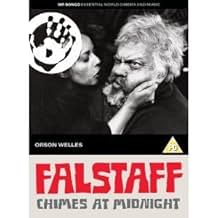
When King Henry IV ascends to the throne, his heir, the Prince of Wales, is befriended by Sir John Falstaff, an old, overweight, fun-loving habitual liar. Through Falstaff's eyes we see the ... Read allWhen King Henry IV ascends to the throne, his heir, the Prince of Wales, is befriended by Sir John Falstaff, an old, overweight, fun-loving habitual liar. Through Falstaff's eyes we see the reign of King Henry IV and the rise of Henry V.When King Henry IV ascends to the throne, his heir, the Prince of Wales, is befriended by Sir John Falstaff, an old, overweight, fun-loving habitual liar. Through Falstaff's eyes we see the reign of King Henry IV and the rise of Henry V.
- Director
- Writers
- Stars
- Nominated for 1 BAFTA Award
- 3 wins & 2 nominations total


Michael Aldridge
- Pistol
- (as Michael Aldrich)


Andrés Mejuto
- Woman's Tailor
- (as Andres Mejuto)


José Nieto
- Northumberland
- (as Jose Nieto)

- Director
- Writers
- All cast & crew
- Production, box office & more at IMDbPro
7.610.9K
1
2
3
4
5
6
7
8
9
10
Featured reviews
A magnificent, sprawling canvass.
This is all more of a fascinating and compelling film because of its difficult-to-find nature, and the feeling of its being neglected, despite much praise from film and Welles scholars. This forms part of the compelling sequence of Welles films that began with 1958's "Touch of Evil", and ran through to his final film, 1973's "F For Fake", a film I really want to see. The version I managed to locate of "Chimes..." revealed a film with, yes, some technical problems (the sound is a little poor, but I'd almost expected worse), and the feeling of being made on-the-hoof. But what a film it is! Certainly hitherto the finest and most moving Shakespeare film adaptation that I have seen; I was happy to be able to write on it for my recent University Tripos exam.
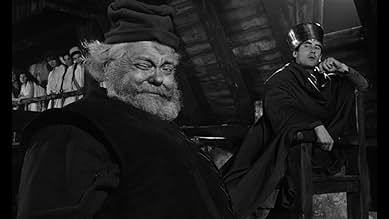
Welles is possibly not a perfect Falstaff - failing to some degree to capture the character's jovial humour - but he gives a good performance in a limited, but powerfully melancholy vein. Keith Baxter makes Hal very much his own, providing curious contrasts to both of his father figures. Gielgud is as sublime as ever, and his scenes are beautifully directed - one wouldn't know the problems Welles had in terms of actor availability, considering how effective the medium close camera-work is.
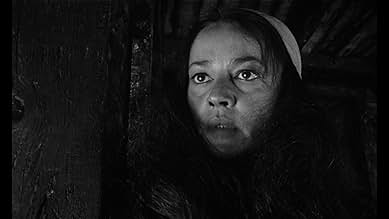
The poetry of the "Sleep" speech is absolutely overpowering in Gielgud's rendition, and his facial expressions, eyes cast in shadow, are perfectly haunting. The strength of his performance is crucial; Henry IV is thus very much a figure with dignity but guilt and a coldness matching the stone of his solitary court - brilliant use of some sort of cathedral. Margaret Rutherford and Tony Beckley certainly add a lot to the mix, as does the bizarrely ill-fitting Jeanne Moreau, that most French of actresses playing an English whore. The tenderness she feels for Falstaff is crucial in softening his character a bit; Moreau's bedraggled siren works as a necessary example of the femininity of the Tavern, as compared to the masculine world of battle and court that Falstaff is so lost in. What a striking actress she is here; piercing, soulful eyes, such lips and flowing dark hair. It is a skittish and perfect performance fitting in with Welles' fantasia of "Merrie England". That most of this was filmed in Spain conveys the sense of this as an artificial, beyond-reality dream of the Paradise Lost. The film can effectively be seen as Welles expressing his interest in Western society's mourning a lost golden age - in this case, "Merrie England", which Falstaff embodies. The rational and dulling technocracy of the future is suggested by the coldness of Gielgud and Baxter towards the end, and the atmosphere of court.
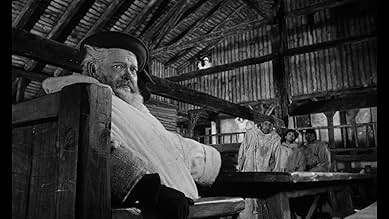
The actor playing Justice Shallow is supremely odd and bewitching in his shrill little voice; his blustering humour and reminiscence taking on much melancholy as the film moves inexorably towards its tragic, deathly close. The scene where Falstaff finds out Hal is now King, is wonderfully shown in long shot by a still camera; a depression and drift towards disillusion shown. When Falstaff finds out, the lift in spirits is conveyed with his movement towards the camera. It's a return to the general sense of camera mobility around Falstaff - contrasting with the stillness around Bolingbroke. The final rejection of Falstaff that follows is beautifully filmed by Welles, played ambiguously by Baxter and movingly by Welles.
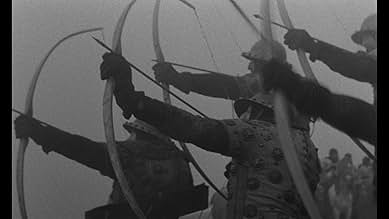
What must be the most remarkable sequence is the Battle of Shrewsbury; it is this that will haunt the mind long into the ether... Savage, indiscriminate quickness of brutal death emphasised in quick cuts. The fighting is impersonal and grimly realistic; ranks of silhouetted men and horses charging in, arrows - unlike in Olivier's "Henry V" - being shown cascading into and piercing ranks of horses and soldiers. The dry ground dissolves gradually to mud, and a haunting, holy-sounding piece of choral music strikes a chilling note of ironic contrast. Mankind has been reduced by war back to the very mud from which it originally arose. All sense of 'glory' is dissipated and cut away, by this frightening, near-ten minute sequence. It is one of the most gripping, utterly transcendent and powerful sequences I have seen in the whole of my film viewing.
"Chimes at Midnight" is a marvel of a film; this is a Welles film in its true form and not tampered with - "The Magnificent Ambersons" is the most shameful previous example of this. "Chimes..." stands as a complex masterpiece; partly an elegy for an innocence than may never have truly existed, but which Welles *feels* deeply. Track this down if you can as it is something special; let's hope it is soon restored to the best possible condition. It is wonderfully slanted Shakespeare; history plays fashioned into a tragedy, and painted from the most compelling cinematic palette. And above all, it is wonderful Welles.
Welles is possibly not a perfect Falstaff - failing to some degree to capture the character's jovial humour - but he gives a good performance in a limited, but powerfully melancholy vein. Keith Baxter makes Hal very much his own, providing curious contrasts to both of his father figures. Gielgud is as sublime as ever, and his scenes are beautifully directed - one wouldn't know the problems Welles had in terms of actor availability, considering how effective the medium close camera-work is.
The poetry of the "Sleep" speech is absolutely overpowering in Gielgud's rendition, and his facial expressions, eyes cast in shadow, are perfectly haunting. The strength of his performance is crucial; Henry IV is thus very much a figure with dignity but guilt and a coldness matching the stone of his solitary court - brilliant use of some sort of cathedral. Margaret Rutherford and Tony Beckley certainly add a lot to the mix, as does the bizarrely ill-fitting Jeanne Moreau, that most French of actresses playing an English whore. The tenderness she feels for Falstaff is crucial in softening his character a bit; Moreau's bedraggled siren works as a necessary example of the femininity of the Tavern, as compared to the masculine world of battle and court that Falstaff is so lost in. What a striking actress she is here; piercing, soulful eyes, such lips and flowing dark hair. It is a skittish and perfect performance fitting in with Welles' fantasia of "Merrie England". That most of this was filmed in Spain conveys the sense of this as an artificial, beyond-reality dream of the Paradise Lost. The film can effectively be seen as Welles expressing his interest in Western society's mourning a lost golden age - in this case, "Merrie England", which Falstaff embodies. The rational and dulling technocracy of the future is suggested by the coldness of Gielgud and Baxter towards the end, and the atmosphere of court.
The actor playing Justice Shallow is supremely odd and bewitching in his shrill little voice; his blustering humour and reminiscence taking on much melancholy as the film moves inexorably towards its tragic, deathly close. The scene where Falstaff finds out Hal is now King, is wonderfully shown in long shot by a still camera; a depression and drift towards disillusion shown. When Falstaff finds out, the lift in spirits is conveyed with his movement towards the camera. It's a return to the general sense of camera mobility around Falstaff - contrasting with the stillness around Bolingbroke. The final rejection of Falstaff that follows is beautifully filmed by Welles, played ambiguously by Baxter and movingly by Welles.
What must be the most remarkable sequence is the Battle of Shrewsbury; it is this that will haunt the mind long into the ether... Savage, indiscriminate quickness of brutal death emphasised in quick cuts. The fighting is impersonal and grimly realistic; ranks of silhouetted men and horses charging in, arrows - unlike in Olivier's "Henry V" - being shown cascading into and piercing ranks of horses and soldiers. The dry ground dissolves gradually to mud, and a haunting, holy-sounding piece of choral music strikes a chilling note of ironic contrast. Mankind has been reduced by war back to the very mud from which it originally arose. All sense of 'glory' is dissipated and cut away, by this frightening, near-ten minute sequence. It is one of the most gripping, utterly transcendent and powerful sequences I have seen in the whole of my film viewing.
"Chimes at Midnight" is a marvel of a film; this is a Welles film in its true form and not tampered with - "The Magnificent Ambersons" is the most shameful previous example of this. "Chimes..." stands as a complex masterpiece; partly an elegy for an innocence than may never have truly existed, but which Welles *feels* deeply. Track this down if you can as it is something special; let's hope it is soon restored to the best possible condition. It is wonderfully slanted Shakespeare; history plays fashioned into a tragedy, and painted from the most compelling cinematic palette. And above all, it is wonderful Welles.
Awesome Welles
By far the best of Welle's three Shakespearean adaptations this is also arguably THE best Shakespeare on screen. Most filmmakers go for the tragedies - vide Welles himself - or settle for Romeo and Juliet but the History plays are seldom tackled. Here the maestro dips into several texts - most heavily into the two parts of Henry 1V but also Merry Wives, Henry V, Richard 11 - and then welds them together seamlessly to give an in-depth portrait of Falstaff. With a nice touch of irony the narration is spoken by Ralph Richardson who, prior to Welles here, was the definitive Falstaff - and remains so as far as theatre is concerned. It's hard to fault so I won't try, merely revel in a touch of greatness. 10/10
Welles' Favorite Film
The career of Shakespeare's Sir John Falstaff (Orson Welles) as roistering companion to young Prince Hal (Keith Baxter), circa 1400-1413.
Who can say bad things about Orson Welles? His work was often neglected in his lifetime, both by audiences and critics. Looking back now, I wonder how they could have missed the genius of "Citizen Kane". But yet, they did for many years.
This film is considered to be Welles' favorite of his own (I am unsure of the source for this claim) and has been influential. Yet, it is hard to get a decent copy (the one I have was a Portuguese import). There was no actor with such a presence as Welles, so Shakespeare is natural for him. He has successfully brought the stage to screen.
Who can say bad things about Orson Welles? His work was often neglected in his lifetime, both by audiences and critics. Looking back now, I wonder how they could have missed the genius of "Citizen Kane". But yet, they did for many years.
This film is considered to be Welles' favorite of his own (I am unsure of the source for this claim) and has been influential. Yet, it is hard to get a decent copy (the one I have was a Portuguese import). There was no actor with such a presence as Welles, so Shakespeare is natural for him. He has successfully brought the stage to screen.
"What is honour? A word. What is in that word honour? What is that honour? Air."
Up front I think it's fair to admit that I have not read the plays Shakespeare wrote that provide the basis of this film and it's screenplay.
I've read Romeo and Juliet, Macbeth and Julius Ceaser and I'm blessed that my public education provided me that much. But when it comes to Henry the IV, V, or VI I'm pretty much in the dark.
Chimes of Midnight did not leave me in the dark however. Orson Welles, I think, did a wonderful job of translating Shakespeaian dialogue into action that could be understood, jokes that could be understood, dramatic tension that could be understood.
Not only do i realize I am 400 years removed from Shakespeare but I am also 53 years removed from whatever audience Orson Welles intended this for in in 1965.
But I don't feel removed from the artistry that it took to make this film.
I could follow the plot, I knew where characters were emotionally, and even better, I understood the jokes. Which, for me, was a huge windfall and a source of amazement.
Orson Welles was dead before I was even born and I find him totally captivating and engaging in this film. He's lovable, he's a rapscallion, he's larger than life and he breaks your heart when he's denied by the newly crowned king.
I'm coming to this as an outsider. I loved Citizen Kane and Touch of Evil, I immensely enjoyed F is for Fake, and I've been looking to engage in more films starring or directed by Orson Welles, and I walked away from this film feeling like it filled a gap.
Here was his passion for gorgeous cinematography, here was his love of the stage, here was his brilliance at translating plays, here was his love for acting here was his passion for entertainment.
At no point did this film drag for me, and even now, in 2017 did the battle scene not only engage, but surprise me. This IS masterclass film making and this film deserved a wider audience back in 1965 and it deserves it still today.
Absolutely riveting and amazing work.
I've read Romeo and Juliet, Macbeth and Julius Ceaser and I'm blessed that my public education provided me that much. But when it comes to Henry the IV, V, or VI I'm pretty much in the dark.
Chimes of Midnight did not leave me in the dark however. Orson Welles, I think, did a wonderful job of translating Shakespeaian dialogue into action that could be understood, jokes that could be understood, dramatic tension that could be understood.
Not only do i realize I am 400 years removed from Shakespeare but I am also 53 years removed from whatever audience Orson Welles intended this for in in 1965.
But I don't feel removed from the artistry that it took to make this film.
I could follow the plot, I knew where characters were emotionally, and even better, I understood the jokes. Which, for me, was a huge windfall and a source of amazement.
Orson Welles was dead before I was even born and I find him totally captivating and engaging in this film. He's lovable, he's a rapscallion, he's larger than life and he breaks your heart when he's denied by the newly crowned king.
I'm coming to this as an outsider. I loved Citizen Kane and Touch of Evil, I immensely enjoyed F is for Fake, and I've been looking to engage in more films starring or directed by Orson Welles, and I walked away from this film feeling like it filled a gap.
Here was his passion for gorgeous cinematography, here was his love of the stage, here was his brilliance at translating plays, here was his love for acting here was his passion for entertainment.
At no point did this film drag for me, and even now, in 2017 did the battle scene not only engage, but surprise me. This IS masterclass film making and this film deserved a wider audience back in 1965 and it deserves it still today.
Absolutely riveting and amazing work.
Welles' Masterpiece!
i just watched it, and it took my breath away. If possible, this might be better than Citizen Kane. Incredible. And the battle scenes are truly amazing. I only hope they'll bring out a new DVD release of it for Australia and America, because this movie deserves as much exposure as Kane. I was surprised and delighted by Welles's performance. He really shines in an atmosphere which permits theatricality (Shakespeare), and i felt this movie combines the best of his two loves: the theatre (the source material), and the cinema (told with Welles' stunning eye for a cinematic visual). Superbly produced for such a low budget (Macbeth was just too rushed in those three weeks). Its visually delicious, and has a brilliant sense of fun (like both Kane and The Trial), and yet it has more heart than the other two.
This movie has rejuvenated my love of and faith in Welles (i was really wavering after The Stranger, Macbeth and even Lady from Shanghai - all too damaged by money/studio interference for me).
Let's all take a bow to Mr Orson Welles, who after all those years of struggle, finally produced a thing of beauty and fun worthy of his talents, and reinstated his reputation as one of the greats.
This movie has rejuvenated my love of and faith in Welles (i was really wavering after The Stranger, Macbeth and even Lady from Shanghai - all too damaged by money/studio interference for me).
Let's all take a bow to Mr Orson Welles, who after all those years of struggle, finally produced a thing of beauty and fun worthy of his talents, and reinstated his reputation as one of the greats.


Did you know
- TriviaDespite portraying Falstaff as a grossly obese man, Orson Welles actually had to diet to slim down for the role.
- GoofsThe corpse of Hotspur opens and closes his mouth several minutes after his death.
- ConnectionsFeatured in The 43rd Annual Academy Awards (1971)
- How long is Chimes at Midnight?Powered by Alexa
Details
- Release date
- Countries of origin
- Language
- Also known as
- Falstaff (Chimes at Midnight)
- Filming locations
- Calatañazor, Soria, Castilla y León, Spain(London streets scenes)
- Production companies
- See more company credits at IMDbPro
Box office
- Budget
- $800,000 (estimated)
- Gross US & Canada
- $126,724
- Opening weekend US & Canada
- $13,630
- Jan 3, 2016
- Gross worldwide
- $126,724
- Runtime
- 1h 55m(115 min)
- Color
- Sound mix
- Aspect ratio
- 1.66 : 1
Contribute to this page
Suggest an edit or add missing content