IMDb RATING
6.9/10
1.8K
YOUR RATING

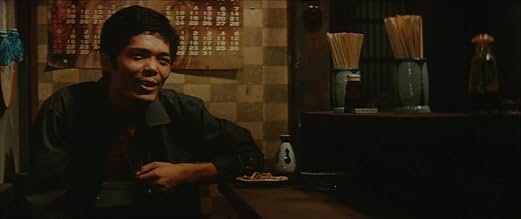
After Atsushi commits murder, he is blackmailed into keeping a suitcase full of embezzled money. What follows is a descent into lustful, reckless actions and regret.After Atsushi commits murder, he is blackmailed into keeping a suitcase full of embezzled money. What follows is a descent into lustful, reckless actions and regret.After Atsushi commits murder, he is blackmailed into keeping a suitcase full of embezzled money. What follows is a descent into lustful, reckless actions and regret.


- Director
- Writers
- All cast & crew
- Production, box office & more at IMDbPro
6.91.8K
1
2
3
4
5
6
7
8
9
10
Featured reviews
The downfall of a man
What looks first like a thriller (after the murder of a man who raped one of his students, a young teacher finds himself blackmailed into hiding a huge some of money) turns into an exploration of greed and sexual exploitation by one of the less politically correct Japanese directors, Nagisa Oshima, as the hero succumbs to his baser impulses and decides to spend the money on indulging his every (often sensual) impulse - planning to commit suicide when the cash runs out. "Pleasures of the Flesh" sees Oshima first embrace of the themes of sexuality, sadism and obsession that characterize his later works. I see "Pleasures of the Flesh" as the turning point in Oshima's career, a cross between his early films, like "The Sun's Burial" or "A Cruel Story of Youth" with young criminals who exploit each other for money and enact transgressive fantasies, or "Night and Fog in Japan" with its political plot, and later films, like the famous "Realm of the Senses", and their sadomasochist tales of sex and death. Oshima is obviously already at work pushing the limits of what can be shown on screen and what can be said on the power of sex and money, on the perversion of love and capitalism. It is one of the most pessimistic works from the director. Everything is corrupt : the young girl the hero falls for (and kills for) proves to be not so innocent in the end, sex (which is a way to humiliate people), love (which only leads to frustration and guilt), money (a delusion), society (dominating and repressive). As "Pleasures of the Flesh" seems to embody most of Oshima's favorite themes, I would recommend it, but don't expect a "likeable" film with "likeable" characters. But after all, this is all too typical of Oshima's manner ! Has he ever filmed romantic stories and sweet people ?
Great ideas, but not realized in a way that really makes them count
The first ten minutes (past the opening credits) are stuffed so full of exposition that it becomes a little unwieldy, and are not aided by sequencing that feels uncomfortably disjointed. It's not the best of starts. The plot that it sets up is very promising, and even the very next scene to greet us seemingly begins to live up to that promise. Protagonist Atsushi, feeling he has nothing to lose, intends to live recklessly and get the most out of what he has at his disposal; given the crash course background we get to kick off the story and what we know to expect from filmmaker Nagisa Oshima (that is, anything at all), the possibilities are as assuredly endless as they are probably seedy. Unfortunately, I'm at best unsure if this actually lives up to the potential of its own premise. 'Etsuraku,' or 'Pleasures of the flesh,' starts with a good idea, but never gets as interesting as it could be and sometimes can't even seem to make up its mind.
That sequencing, coming across as scattered and unconvincing not just in terms of fundamental editing but also of narrative development, never particularly improves from those first ten minutes. The picture can't decide if our protagonist is a naive child of a man who is flailing with unfocused, impotent emotions and intellect, or a determined, coldly furious, somewhat self-destructive wrecking ball. True, I suppose he could be both in turn, but to me it feels like the screenplay isn't discernibly credible about either notion, and it's hard to tell which facet of the character it approaches more weakly. Despite the title, the premise, the portent of the earliest minutes, and our assumptions of Oshima, the feature actually rather declines major tawdriness. In fact, 'Etsuraku' quite seems to split the difference between romantic drama, character study, and possibly tinges of film noir, yet mostly with the generalized film-making and storytelling sensibilities of 1940s Hollywood - declining explicit depiction, and doling out emphatic story beats without specifically fleshing out the tale otherwise.
Frankly, I'm not entirely sold. The writing seems uncertain of itself - perhaps the dialogue above all. It's only within the last minutes that this seems to meaningfully find its feet, but by then it's too little, too late, and the vibrancy of the final notes are diminished for prior lack and unevenness. Oshima's direction elsewhere has impressed me; here, he doesn't make much of a mark at all. Other folks behind the scenes turned in good work, sure, as did the cast, but nothing here is especially remarkable. The movie just kind of coasts along. And with all this having been said, as it periodically tries to weave in a psychological element, it lacks the measured, delicate hand to do so effectively. There are terrific ideas underlying the screenplay, and I simply don't believe they've been realized in a way that really makes any of them count. None of this is to say that 'Etsuraku' is altogether bad, because I don't think that's true, but it's only part of the picture it could have been. None of what is most important about this film comes out quite right. It's still decent enough to watch if you happen to come across it, but one way or another, I think it only earns a soft recommendation.
That sequencing, coming across as scattered and unconvincing not just in terms of fundamental editing but also of narrative development, never particularly improves from those first ten minutes. The picture can't decide if our protagonist is a naive child of a man who is flailing with unfocused, impotent emotions and intellect, or a determined, coldly furious, somewhat self-destructive wrecking ball. True, I suppose he could be both in turn, but to me it feels like the screenplay isn't discernibly credible about either notion, and it's hard to tell which facet of the character it approaches more weakly. Despite the title, the premise, the portent of the earliest minutes, and our assumptions of Oshima, the feature actually rather declines major tawdriness. In fact, 'Etsuraku' quite seems to split the difference between romantic drama, character study, and possibly tinges of film noir, yet mostly with the generalized film-making and storytelling sensibilities of 1940s Hollywood - declining explicit depiction, and doling out emphatic story beats without specifically fleshing out the tale otherwise.
Frankly, I'm not entirely sold. The writing seems uncertain of itself - perhaps the dialogue above all. It's only within the last minutes that this seems to meaningfully find its feet, but by then it's too little, too late, and the vibrancy of the final notes are diminished for prior lack and unevenness. Oshima's direction elsewhere has impressed me; here, he doesn't make much of a mark at all. Other folks behind the scenes turned in good work, sure, as did the cast, but nothing here is especially remarkable. The movie just kind of coasts along. And with all this having been said, as it periodically tries to weave in a psychological element, it lacks the measured, delicate hand to do so effectively. There are terrific ideas underlying the screenplay, and I simply don't believe they've been realized in a way that really makes any of them count. None of this is to say that 'Etsuraku' is altogether bad, because I don't think that's true, but it's only part of the picture it could have been. None of what is most important about this film comes out quite right. It's still decent enough to watch if you happen to come across it, but one way or another, I think it only earns a soft recommendation.
most eventful movie
Despite the misleading title, unless it is meant to be ironic, this is still an excellent and most eventful movie. Our hero rescues his love object from the almost unbelievable audacity of a rapist returning to blackmail her parents as she prepares to marry another, and longs for her ever more. We get a mysterious bag of money, an appearance by the yakuza, a deaf girl who prefers life on the street to life with him and much nocturnal activities. Unfortunately the 60s colour seems to have faded over the years and, particularly in the night scenes, makes for strained viewing. Even so well worth a view because this is a very well told tale that could only be set in Japan.
6.5/10. Borderline recommendable.
This is the third Oshima movie that i have watched, the other two were DEATH BY HANGING and DOUBLE SUICIDE : JAPANESE SUMMER. TPOTF is inferior to them. It starts as a neo-noir thriller but it turns into a psychological drama/thriller, a character study. During the first 10-20 minutes, i liked it a lot, it was easy to watch and the leading character was interesting. Unfortunately, movie lost its steam as it progressed. As another reviewer mentioned : "Great ideas, but not realized in a way that really makes them count".
Still it had its moments and i was sort of curious to see where it goes. Overall, it's uneven : Some scenes were powerful and Oshima's directing is expectedly great, but at some point, it stopped making sense and the leading character was more of annoying and frustrating to watch than intriguing. For a character study movie, this is not good.
Still it had its moments and i was sort of curious to see where it goes. Overall, it's uneven : Some scenes were powerful and Oshima's directing is expectedly great, but at some point, it stopped making sense and the leading character was more of annoying and frustrating to watch than intriguing. For a character study movie, this is not good.
interesting idea but not could have been better
I would say acting is fine and camera work is fine and everything but....
I just do not really feel that the situation that is set up in the start is fully used. There could have been so many situations that could have been set up to make it more interesting.
After the set up of the plot in the movie I found it very easy to see how the movie would end and I did not not really find the travel to the end emotional interesting or exploring in any way.
I would say there are lots of great Japanese movies out there. You can find better than this one.
I just do not really feel that the situation that is set up in the start is fully used. There could have been so many situations that could have been set up to make it more interesting.
After the set up of the plot in the movie I found it very easy to see how the movie would end and I did not not really find the travel to the end emotional interesting or exploring in any way.
I would say there are lots of great Japanese movies out there. You can find better than this one.


Did you know
- TriviaFinal film of Toshiko Higuchi.
- GoofsAll entries contain spoilers
- ConnectionsReferenced in Criterion: Closet Picks: Wim Wenders (2012)
- How long is The Pleasures of the Flesh?Powered by Alexa
Details
- Release date
- Country of origin
- Language
- Also known as
- Pleasures of the Flesh
- Production company
- See more company credits at IMDbPro
Contribute to this page
Suggest an edit or add missing content