IMDb RATING
5.8/10
2.7K
YOUR RATING


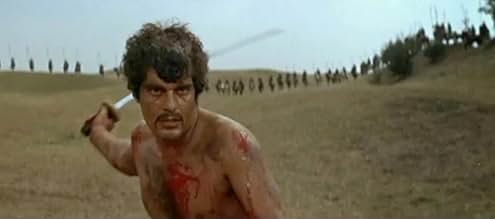
During the thirteenth century, the shy Mongol boy Temujin becomes the fearless leader Genghis Khan, who unites all Mongol tribes and conquers most of Asia, Europe, and the Middle East.During the thirteenth century, the shy Mongol boy Temujin becomes the fearless leader Genghis Khan, who unites all Mongol tribes and conquers most of Asia, Europe, and the Middle East.During the thirteenth century, the shy Mongol boy Temujin becomes the fearless leader Genghis Khan, who unites all Mongol tribes and conquers most of Asia, Europe, and the Middle East.
- Director
- Writers
- Stars

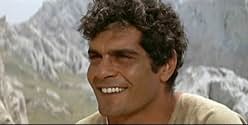


Françoise Dorléac
- Bortei
- (as Francoise Dorleac)


Susanne Hsiao
- Chin Yu
- (as Suzanne Hsaio)


- Director
- Writers
- All cast & crew
- Production, box office & more at IMDbPro
5.82.7K
1
2
3
4
5
6
7
8
9
10
Featured reviews
The Mark of Blood
Irving Allen went all the way to Yugoslavia to make this foolish attempt in Technicolor and Panavision to capitalise on Omar Sharif's new-found celebrity which actually carried a disclaimer from Talking Pictures for the myriad racial caricatures on display.
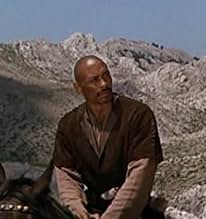
The international cast represents every conceivable ethnicity except for a bona fide Mongolian. Familiar Asian types include Stephen Boyd, James Mason, Robert Morley, Michael Hordern, Telly Savalas, Eli Wallach, Woody Strode, Yvonne Mitchell, Kenneth Cope and Jacqueline Pearce (the latter pair playing Francois Dorleac's brother and Wallach's daughter; the craziest line being Miss Dorleac's description of herself as "ugly-looking").
The international cast represents every conceivable ethnicity except for a bona fide Mongolian. Familiar Asian types include Stephen Boyd, James Mason, Robert Morley, Michael Hordern, Telly Savalas, Eli Wallach, Woody Strode, Yvonne Mitchell, Kenneth Cope and Jacqueline Pearce (the latter pair playing Francois Dorleac's brother and Wallach's daughter; the craziest line being Miss Dorleac's description of herself as "ugly-looking").
Confused, Revisionist Epic
I remembered enjoying this film when I saw it as a pre-teen on television in the '60's. I have remained an avid fan of adventure films and epics. So, when it was aired yesterday on TCM, I tuned in with anticipation. It had not aged well. Perhaps all of the anomalies are more difficult for a mature movie fan to accept.
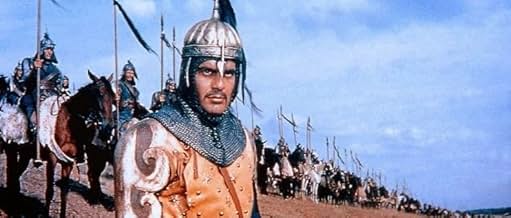
The best parts of this film are the locations, the sets, the costumes and the props. Even so, the sets are never quite convincingly grand enough. They retain the flavor of sets. The photography never captures the locations in a way that conveys the vastness of Central Asia. And the impact of the costumes and props is diminished by the fact that they are at the service of a predominantly Caucasian cast attempting to portray the tribes of Mongolia.
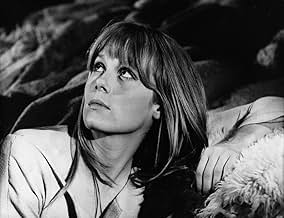
Blonde Francoise Dorleac, who portrays Genghis Khan's wife is the most glaring racial anomaly. But the entire cast is similarly anomalous. At least Stephen Boyd and Omar Shariff aren't blond. But Englishmen, James Mason and Robert Morley look hopelessly out of place. (I personally wondered how people of Oriental heritage reacted to Mason's stereotypical pronunciation of the letter "L" as an "R!") I don't really find a lot of fault with the portrayals offered by Mason and Morley, although I do agree with the suggestion of several reviewers that they seem like they wandered in from a production of the Mikado.
Lastly, I cringed at the soundtrack - typically Occidental-sounding pseudo-epic orchestrations with grandiose flourishes. The heroic-sounding 4/4 marches were typical of the Sword and Sandal epics of the day. Only a stray chord here and there suggested an Oriental setting.
In that era, it was inconceivable to cast Orientals in the principal roles of a film of this one's pretensions. Under the circumstances Hollywood would have done better to simply avoid attempts to depict tales of Asian peoples.
In the end, bizarre casting and completely Occidental-sounding music render this film difficult to swallow for a film-goer looking for anything beyond a shallow adventure story. With the number of Oriental actors in Hollywood films today, a GOOD portrayal of the life of Genghis Khan is ripe for filming!
The best parts of this film are the locations, the sets, the costumes and the props. Even so, the sets are never quite convincingly grand enough. They retain the flavor of sets. The photography never captures the locations in a way that conveys the vastness of Central Asia. And the impact of the costumes and props is diminished by the fact that they are at the service of a predominantly Caucasian cast attempting to portray the tribes of Mongolia.
Blonde Francoise Dorleac, who portrays Genghis Khan's wife is the most glaring racial anomaly. But the entire cast is similarly anomalous. At least Stephen Boyd and Omar Shariff aren't blond. But Englishmen, James Mason and Robert Morley look hopelessly out of place. (I personally wondered how people of Oriental heritage reacted to Mason's stereotypical pronunciation of the letter "L" as an "R!") I don't really find a lot of fault with the portrayals offered by Mason and Morley, although I do agree with the suggestion of several reviewers that they seem like they wandered in from a production of the Mikado.
Lastly, I cringed at the soundtrack - typically Occidental-sounding pseudo-epic orchestrations with grandiose flourishes. The heroic-sounding 4/4 marches were typical of the Sword and Sandal epics of the day. Only a stray chord here and there suggested an Oriental setting.
In that era, it was inconceivable to cast Orientals in the principal roles of a film of this one's pretensions. Under the circumstances Hollywood would have done better to simply avoid attempts to depict tales of Asian peoples.
In the end, bizarre casting and completely Occidental-sounding music render this film difficult to swallow for a film-goer looking for anything beyond a shallow adventure story. With the number of Oriental actors in Hollywood films today, a GOOD portrayal of the life of Genghis Khan is ripe for filming!
A last flirtation with the epic genre!
Not quite as bad as John Wayne's famed turkey THE CONQUEROR, but getting there. Problem was with this flick, the makers dumped historical accuracy in favor of developing a Ben-Hur-Messala type confrontation between Genghis Khan (Sharif, at the height of his popularity) and his nemesis, a scowling bewhiskered Jamuga (none other than "Messala" himself - Stephen Boyd)
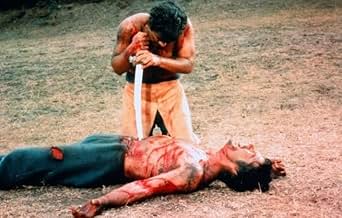
Plenty of Mongol action and cruelty and the concluding battle between Sharif and Boyd is pretty in-your-face stuff. Production values were OK and suitably epic-ish in feel. The wheels start to fall off though with Robert Morley as the Chinese Emperor, some throwback to his role in 55 DAYS IN PEKING and worse, mega-british James Mason as Kam Ling, as likely a chinese adviser to Morley as Adam Sandler playing Abraham Lincoln. In a minor role as Subatai, Kenneth Cope is struggling to hold down any credibility whatsoever, having been first-string comic relief to David Frost on the THAT WAS THE WEEK THAT WAS TV show.
Not for the epic Hall of Fame I'm afraid!
Plenty of Mongol action and cruelty and the concluding battle between Sharif and Boyd is pretty in-your-face stuff. Production values were OK and suitably epic-ish in feel. The wheels start to fall off though with Robert Morley as the Chinese Emperor, some throwback to his role in 55 DAYS IN PEKING and worse, mega-british James Mason as Kam Ling, as likely a chinese adviser to Morley as Adam Sandler playing Abraham Lincoln. In a minor role as Subatai, Kenneth Cope is struggling to hold down any credibility whatsoever, having been first-string comic relief to David Frost on the THAT WAS THE WEEK THAT WAS TV show.
Not for the epic Hall of Fame I'm afraid!
Mildly Entertaining But Wildly Inaccurate. And a Word about the Cast...
This film would really be better off using a fictional character in the lead role, instead of a historical one, as almost nothing in the story told here about Genghis Khan matches up to accepted history.
Plot In a Nutshell: Mongol tribal leader Temujin (Omar Sharif) tangles with sworn enemy Jamuga (Stephen Boyd) and gathers his strength in neighboring China while dreaming of uniting the various Mongol tribes into an insurmountable Horde.
Why I rated it a '6': as mentioned in my title, I found the film to be OK. Not great, not absolutely terrible. It tells a story about Genghis Khan's beginnings, but it's just a story. It diverges early and often from accepted history, and that unfortunately is a drawback. Watching this film you learn almost nothing about the real Genghis Khan, because virtually all of it is fantasy. If you can live with that, great. Just don't write a term paper about Genghis Khan based on this film is all I can say.
There are many comments in reviews here complaining about the cast, where almost all of the Mongol and Chinese roles are played by non-Asians. While that might be distracting for some, one must understand that movie making is a business. Sure you can stock this film with a bunch of Asian actors, and who in 1965 would go pay to see that? That's not how the business worked. John Wayne famously (or infamously) portrayed Temujin in a different film, and why? Because he was a box-office draw!
Elizabeth Taylor played the Egyptian Cleopatra. Kirk Douglas played the Thracian Spartacus. People would pay to see them, they didn't care what roles they were playing. Same with this film. So you have James Mason and Stephen Boyd and Eli Wallach and Telly Savalas in it. Actors people knew and might pay to see, as opposed to a bunch of unknown but more ethnically accurate ones they won't pay to see. This isn't a hard concept to understand here. Or shouldn't be.
I find it amusing that the same people who complain about the cast in this film have no problem with the cast speaking English in the film. None of these historical characters spoke a word of English. The reviewers here somehow don't complain about that, but do complain because they aren't ethnically Asian? Why doesn't it bother you that every character speaks fluent English, because that's even more off-base than their skin pigment. All of the reviewers complaining here want to see ethnically accurate actors, and then want them to very inaccurately speak English? Lol ok.
A huge negative in this film is the widespread abuse of horses in the battle scenes. It is obvious to the viewer that multiple 'trip wires' were used, causing waves of horses to fall violently while in full gallop and it's just painful to watch. It is highly likely more than one had to be put down as a result of those trip wires, and that's a sad thing to contemplate. If you are a horse lover, I would suggest forwarding over these scenes.
6/10. Would I watch again (Y/N)?: Maybe on a rainy day. Not anytime soon.
Plot In a Nutshell: Mongol tribal leader Temujin (Omar Sharif) tangles with sworn enemy Jamuga (Stephen Boyd) and gathers his strength in neighboring China while dreaming of uniting the various Mongol tribes into an insurmountable Horde.
Why I rated it a '6': as mentioned in my title, I found the film to be OK. Not great, not absolutely terrible. It tells a story about Genghis Khan's beginnings, but it's just a story. It diverges early and often from accepted history, and that unfortunately is a drawback. Watching this film you learn almost nothing about the real Genghis Khan, because virtually all of it is fantasy. If you can live with that, great. Just don't write a term paper about Genghis Khan based on this film is all I can say.
There are many comments in reviews here complaining about the cast, where almost all of the Mongol and Chinese roles are played by non-Asians. While that might be distracting for some, one must understand that movie making is a business. Sure you can stock this film with a bunch of Asian actors, and who in 1965 would go pay to see that? That's not how the business worked. John Wayne famously (or infamously) portrayed Temujin in a different film, and why? Because he was a box-office draw!
Elizabeth Taylor played the Egyptian Cleopatra. Kirk Douglas played the Thracian Spartacus. People would pay to see them, they didn't care what roles they were playing. Same with this film. So you have James Mason and Stephen Boyd and Eli Wallach and Telly Savalas in it. Actors people knew and might pay to see, as opposed to a bunch of unknown but more ethnically accurate ones they won't pay to see. This isn't a hard concept to understand here. Or shouldn't be.
I find it amusing that the same people who complain about the cast in this film have no problem with the cast speaking English in the film. None of these historical characters spoke a word of English. The reviewers here somehow don't complain about that, but do complain because they aren't ethnically Asian? Why doesn't it bother you that every character speaks fluent English, because that's even more off-base than their skin pigment. All of the reviewers complaining here want to see ethnically accurate actors, and then want them to very inaccurately speak English? Lol ok.
A huge negative in this film is the widespread abuse of horses in the battle scenes. It is obvious to the viewer that multiple 'trip wires' were used, causing waves of horses to fall violently while in full gallop and it's just painful to watch. It is highly likely more than one had to be put down as a result of those trip wires, and that's a sad thing to contemplate. If you are a horse lover, I would suggest forwarding over these scenes.
6/10. Would I watch again (Y/N)?: Maybe on a rainy day. Not anytime soon.
last and least
As an user has pointed out ,this is the last of the spectaculars of the late fifties/early sixties which began with De Mille's "Ten Commandments" and included such works as "Ben Hur" ,"Spartacus " (which was more Kirk Douglas' work than Kubrik's ),the highly underrated "Cleopatra"(when will we see the uncut version?),Mann 's "El Cid" and "Fall of the Roman Empire" .
This is the last hurrah,but it's a bad film.James Mason and Robert Morley do not seem to take their roles seriously (as Chinese characters!!)and their playing is deliciously tongue-in-cheek.But all the others seem to believe in this far-fetched tale ,very dubious historically ,with Egyptian Omar Sharif as the lead who abducts pretty princess (French Françoise Dorléac) who is raped by Irish Villain (even
nastier than Ben Hur's Messala) Boyd.There's also American Wallach who offers him his two daughters.Both Sharif and Boyd seem to enjoy bondage (collar ,cage,etc).When he speaks to common women ,Genghis is feminist (it's up to them to choose) ,but when he is with his wife ,he's a more credible macho.
Incidentally,Sharif,Mason and Dorléac's sister (Catherine Deneuve) would team up three years later in Terence Young's "Mayerling".This time,Mason was Sharif's father .
If you want to see a good Sharif movie,do choose "Dr Zhivago" instead.
This is the last hurrah,but it's a bad film.James Mason and Robert Morley do not seem to take their roles seriously (as Chinese characters!!)and their playing is deliciously tongue-in-cheek.But all the others seem to believe in this far-fetched tale ,very dubious historically ,with Egyptian Omar Sharif as the lead who abducts pretty princess (French Françoise Dorléac) who is raped by Irish Villain (even
nastier than Ben Hur's Messala) Boyd.There's also American Wallach who offers him his two daughters.Both Sharif and Boyd seem to enjoy bondage (collar ,cage,etc).When he speaks to common women ,Genghis is feminist (it's up to them to choose) ,but when he is with his wife ,he's a more credible macho.
Incidentally,Sharif,Mason and Dorléac's sister (Catherine Deneuve) would team up three years later in Terence Young's "Mayerling".This time,Mason was Sharif's father .
If you want to see a good Sharif movie,do choose "Dr Zhivago" instead.


Did you know
- TriviaSet in Asia, the movie was shot in Yugoslavia.
- GoofsChinese men wear their hair in a pigtails. At the time, men wore long hair in a topknot. They didn't wear pigtails until the Qing/Manchu dynasty (1644-1912).
- Quotes
Emperor of China: It is better to light one candle than to curse the darkness.
- Alternate versionsAll UK releases are cut by one min three secs. The cinema version was cut for nudity and later video releases also included additional edits for horse-falls and to a rape scene. In the latest UK DVD release, the only cuts are for dangerous horse falls (35 seconds).
- ConnectionsFeatured in Cinema Komunisto (2010)
- How long is Genghis Khan?Powered by Alexa
Details
- Release date
- Countries of origin
- Language
- Also known as
- Dschingis Khan
- Filming locations
- Yugoslavia(Press book)
- Production companies
- See more company credits at IMDbPro
Box office
- Budget
- $3,500,000 (estimated)
- Runtime
- 2h(120 min)
- Aspect ratio
- 2.35 : 1
Contribute to this page
Suggest an edit or add missing content