
A day in the life of a Parisian housewife/prostitute, interspersed with musings on the Vietnam War and other contemporary issues.A day in the life of a Parisian housewife/prostitute, interspersed with musings on the Vietnam War and other contemporary issues.A day in the life of a Parisian housewife/prostitute, interspersed with musings on the Vietnam War and other contemporary issues.
- Director
- Writers
- Stars
- Awards
- 1 nomination total




- Narrator
- (voice)
- Young Man
- (uncredited)

- Girl Talking to Robert
- (uncredited)
- Girl in Bath
- (uncredited)

- Christophe Jeanson
- (uncredited)

- Meter Reader
- (uncredited)

- Marianne
- (uncredited)
- Monsieur Gehrard
- (uncredited)

- Girl
- (uncredited)
- Man in Basement
- (uncredited)
- Author
- (uncredited)
- Pécuchet
- (uncredited)
- John Bogus
- (uncredited)
- Woman in Basement
- (uncredited)

- Bouvard
- (uncredited)
- Robert Jeanson
- (uncredited)
- Roger
- (uncredited)
- Director
- Writers
- All cast & crew
- Production, box office & more at IMDbPro
Featured reviews
Two or Three Things I Know About Her.
The least successful Godard film I've seen, and I've seen more than a dozen others
The decline and fall of western civilisation, parts 1 to 4
That said; I feel people shouldn't be so quick to dismiss the film, as it features several scenes of bold technical invention, a sharp and biting wit and a real sense of both visual and thematic imagination. It is also a fairly worthy time capsule to the spirit and scope of Paris at this particular time, expressing many of the political fears and social concerns central to most free-thinking Parisians circa 1967. Whereas the two other Politically minded films that Godard produced in 1967 would broaden the thematic scope to create a much more pointed attack on armchair terrorists and bourgeois revolutionaries, "2 or 3 Things" works on a much smaller scale; choosing suburban Paris with its high-rise apartment buildings, shops and service stations as a backdrop that is continually dwarfed by the wheels of industry and industrial repair. At one point Godard says in voice over that "the landscape is like a face", all the while showing how it is continually destroyed, changed and re-developed in a series of repetitive visual metaphors open to a variety of thematic interpretations. Many viewers take these sequences at face value and choose to view the film as a simple, heavy-handed essay on the decline of industry and the rise of Capitalism and subsequently write the film off. However, even though the film takes a great deal of work and may indeed seem boring and heavy-handed, there are deeper themes and ideas that make this a slightly more rewarding work in the long run.
Once again, Godard anchors his ideas to the theme of prostitution; recalling elements of Vivre sa Vie (1962) whilst simultaneously foreshadowing certain issues later expressed in Sauve qui peut (la vie) (1980). Like the latter film, Godard implies that with an increasing focus on consumerism and the pursuit of material gain, society is prostituting itself. This is further elaborated upon by Godard's continual focus on product logos and brand names that are inter cut and often re-framed in order to create humorous puns that are probably lost on anyone not entirely familiar with the French language, as well as a final shot that renders the cityscape of suburban Paris as the ultimate consumer paradise. The idea of prostitution also extends to the main character, who here, prostitutes herself in order to break up the monotony of her everyday life, whilst also featuring as a somewhat controversial comment on acting itself (something that is further implied in the opening scene).
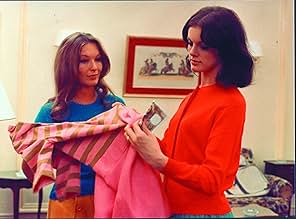
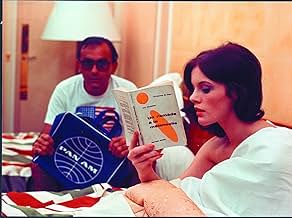
Like many of Godard's films, "2 or 3 Things" uses a great deal of humour to give the satire a more pointed attack. Much of this humour tends to go over the heads of most viewers, largely as a result of having to read the subtitles or simply missing out on much of Godard's clever use of wordplay and usually ironic puns. Scenes, such as the young boy relating his dream about the unification of North and South Vietnam, or the scene in which Juliet and her friend enact a bizarre, tongue-in-cheek sex game with a foreign war correspondent (who films them with a super 8 camera and looks a little like Godard himself), all the while cutting back and forth to shots of construction and cars entering a service station, being an incredibly bold and rebellious critique in itself. Other sections of the film seem more poetic; almost as if Godard is putting his thoughts on film as he goes along and creating something that is, on the one hand, entirely personal, whilst simultaneously being an obvious piece of satirical agitprop. The two strands don't always sit well together, and too often Godard's ideas seem strained and unformed; especially in comparison with those two other films from 1967, previously mentioned.
Obviously many viewers have had problems with the film, and really, your enjoyment of it will depend greatly on how much you trust Godard's instincts as both a satirist and filmmaker, and how willing you are to enter into a dialog with him on a subject that is now resigned to an incredibly brief footnote in 20th century history. For me, the film is undoubtedly one of his more difficult projects and not one that I would place higher than the likes of Le Mepris (1963), Pierrot le fou (1965) or Helas pour moi (1993), etc. However, the scope of Godard's ideas and his way of presenting them visually are close to genius, whilst the occasional moment of imaginative wit, visual poetry or the sheer verve of Godard's film-making abilities make the slow pace and poor performance from Marina Vlady all the more bearable. 2 or 3 Things I Know About Her is worth seeing in the context of both Week End and La Chinoise and is certainly worth experiencing as a double bill with the similarly themed Sauve qui peut (la vie).
Histoire d'eau - Godard and the ultimate cinema of flux.
Non-sequiturial loose-ends of non-communication between the characters, and conversations between the actors and the director which we are not allowed to follow.
Uncommunicative and unengaged philosophico-political maunderings of citizens who are floundering conceptually in a system that cannot sustain them, either morally or intellectually.
A view of Parisian building-sites as a social upheaval which yet represents the antithesis of any structural or constructivist manifestation of social progress.
A film that is, like the capitalist society that has the eye of the camera hypnotised, a profoundly blank and alienating surface, whose technique is only occasionally relieved by gratuitous scenes of meaning:
E.g. -
A woman trapped in a sink estate and yearning to be free, who is compelled by the desparation of her dream to entrap and enslave herself even further through prostitution;
The intrusion of a pimp-like meter-reader into the pure nakedness of private space;
A creche in a brothel;
A secular catechesis - The simple, non-sexual, non-manipulative dialectic of honest exploration that makes us human;
The still-birth of revolutionary thought as the spiral galaxy in a coffee-cup ...
All-in-all, the representation of a society which is profoundly inhospitable to the human beings who should constitute it, and which consequently does not permit the realisation of any aspect of humanity.
All we get are fugitive glimpses of life in the process of moral and intellectual decay. Thought and character remains unrealised, and the film is therefore also inchoate as the necessary reflection of this social unreality.
Here is a wan world, haemmoraging meaning as we watch. Here before us are the helpless ghosts of an industrial medium. They dance fitfully in the unchanging wind, the fantastic commercial simulacra in which we bind our free nature.
Strips of film, strung out like human fly-paper, where fluttering images stick only as they die. In place of creative pressure, an air of ennui, of carelessness: A drop-out film - a film of drop-outs, plot-holes in the threadbare social fabric, - neglectful of all appearances. The face of the film gazes basilisk-like out upon the viewer, resentful of our settled habits of non-involvement. Two frozen gazes cancel, the mutual incomprehension only verging on hostile irritation. No reaction. No drama. The light dies.
The hypnotic mirror of reproach whose conscience we yearn to assuage, that traps our humanity in the voyeur's dream, as it is projected back upon us in the Gorgon's gaze.
Desire is petrified - one's petty film-going expectations of this penetration of dark places disappointed. One escapes from the deathly spell of cinema into the real world.
Godard's lesson is that there is nothing meaningful in this cave of artificial shadows, and that he will bitterly wean us from our facile consumerist dreams, that we may the better engage with the harsh political realities of life.
The radically disillusioned auteur deconstructs himself. Le derniere vague flops exhausted on that endless strip where empty sprocket-holes run on aimlessly towards a dying sun.
The mechanism of dreams runs down.
We are not automata - we are made up by life. To live is the story we enact, without intermediary, and unmediated. The immediate and the authentic are alien to art. Art is a whispering empty shell left high and dry. Life is not the element of dead things: Do not listen to the shallow siren voice of le faux vague! Plunge back into humanity's proper medium.
Thus does a revolution in seeing strip out the gelatinous scales of our burned-out eyes, and there is no more interference with the wavelengths of light being broadcast from the nearest star.
Thus do the sighing bones of life articulate the bounds of existence.
We are the tides that wax and wane - the ocean that overwhelms itself, drowning its own waves in one flood of being.
Godard's film and films are under the influence of this larger movement. With his work, we are cast adrift from all anchors and familiar landmarks. We are 'all at sea'. There is a transition - a movement that is perhaps nearer to momentum than inertia - from whence we cannot recall to whither we cannot see. His is the ultimate cinema of flux.
A Timeless Work Concerning Commercialism and Urban Inequality (Just Not For the Casual Viewer)
However, "narrative" or gender politics are really not the point of "2 or 3 Things...". First off, "her" is less a person, but a city- Paris. And it is just not Paris, as in the city of romance and art, but De gaulle's radical transformation of Paris from a pre-war city of antiquity to a modern commercial center. The film is framed around extended shots of constructions sites, developing freeways, and cranes for a reason- to show how this ancient city is being radically transformed with or without the benefit of its citizens. In a way, this film is a meditation on a phenomena spreading around the world from the 1990's to the present (and especially the United States)- urban gentrification. In the push to modernize and beautify a city, the powers that be often step on the majority which make up a city- the lower and middle class. Godard's precise comments on urban planning are 40 years ahead of their time. If anything, "2 or 3 Things..." is far more relevant today than in 1967.
Secondly, the film is an agit-prop protest against crass commercialism and how it defaces and devoids the human experience. The 2 or 3 women in the film (Paris included) are so wrapped up in the base drive for material goods that they forget the very principles of humanity- love, caring for one's family, intellectual desire, and compassion. Godard's definition of consumerism robs a society of its metaphysical compassion and leads intellectual and personal freedom into a locked room. In the age of I-Pods and Paris Hilton, Godard's sharp criticism of crass consumerism is amazingly relevant. It is a wonder that the Adbusters/Culture jam movement have not latched onto this film with a passion.
"2 or 3 Things..." also serves as one of the many watermarks of Godard's highly productive and influential 1960's period- blending the emotions of Contempt or Vivre Sa Vie with the chic radicalism of La Chinoise or Week End. Godard was an artist in constant evolution in the 1960's and "2 or 3 Things..." is one of these many evolutionary steps.
Be forewarned, "2 or 3 Things..." is NOT a good starting point for those new to Godard. It is far too meditative, "slow", and didactic for one to get a true sense of Godard's radical style. I strongly recommend Masculine-Feminine, Contempt, Breathless, Band of Outsiders, or Week End as a better starting point for Godard. A newcomer to Godard's style might be forever turned off by the slow pacing of "2 or 3 Things...". However, after digesting a few of this great film maker's works, line up "2 or 3 Things...". A timeless and extremely relevant film.


Did you know
- TriviaJean-Luc Godard shot this movie simultaneously with Made in U.S.A (1966). He worked on one movie in the morning and continued the other one in the afternoon.
- Quotes
Narrator: Since social relations are always ambiguous, since my thoughts divide as much as unite, and my words unite by what they express and isolate by what they omit, since a wide gulf separates my subjective certainty of myself from the objective truth others have of me, since I constantly end up guilty, even though I feel innocent, since every event changes my daily life, since I always fail to communicate, to understand, to love and be loved, and every failure deepens my solitude, since - since - since I cannot escape the objectivity crushing me nor the subjectivity expelling me, since I cannot rise to a state of being nor collapse into nothingness - I have to listen, more than ever I have to look around me at the world, my fellow creature, my brother.
- ConnectionsEdited into Notes pour Debussy - Lettre ouverte à Jean-Luc Godard (1988)
Details
- Release date
- Country of origin
- Languages
- Also known as
- 2 oder 3 Dinge, die ich von ihr weiß
- Filming locations
- Production companies
- See more company credits at IMDbPro
Box office
- Gross US & Canada
- $104,038
- Opening weekend US & Canada
- $11,214
- Nov 19, 2006
- Gross worldwide
- $104,038
- Runtime
- 1h 27m(87 min)
- Sound mix
- Aspect ratio
- 2.35 : 1