IMDb RATING
6.6/10
2.3K
YOUR RATING


Eight inseparable college friends become involved in widely differing lifestyles after graduation.Eight inseparable college friends become involved in widely differing lifestyles after graduation.Eight inseparable college friends become involved in widely differing lifestyles after graduation.
- Director
- Writers
- Stars
- Nominated for 1 BAFTA Award
- 3 nominations total
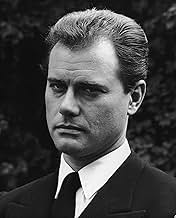


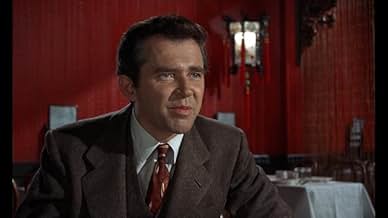
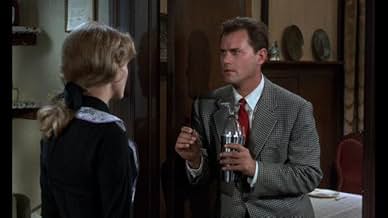


Marion Brasch
- Radio Man's Wife
- (as Marion Brash)
- Director
- Writers
- All cast & crew
- Production, box office & more at IMDbPro
6.62.2K
1
2
3
4
5
6
7
8
9
10
Featured reviews
Terrific Performances In One Truly Unique Motion Picture...
One of Sidney Lumet's first directing attempts is a brilliant, powerful and undeniably courageous motion picture - not at all a sprawling frenzy of feelings strung by hammy performances and corny dialogues, this film is a rather organized , neat telling of eight graduates from Vassar-like college and their respective lives and times, that in it's own quiet way, became a masterpiece of great beauty, displaying strong, formidable performances by Pettet - as Kay Strong, a lovely young lady whose promissing future is teared to shreds as her cruel Play Writing husband ruins her life and slowly corrompts her mental sanity -, Hackett - as Dottie Renfrew, whose heart is broken by young, hip bohemian, that steels her virginity and commits herself to a futile, selfish fate - and Hartman(One Of The Most Wonderful Actresses That Ever Lived, And Whose Life Was Brought To A Horrid Ending, As She Comitted Suicide, Jumping Off Her Apartment Window) - as a pure , fragile young girl that has agonizing experiments with pregnancy and breast-feeding, as well as other cast members, like Bergen, Widdoes, fascinating Knight and Walter. This is adapted from Mary MacCarthy's brilliant novel, launched at the same time as 'Valley Of The Dolls', Jacqueline Sussan's hideous all-american best-seller - although' they both treat of feminine sagas, they are surely not to be confused.
5mp99
Considering what they had to work with . . .
Anyone who thinks that this film is anti-man is wrong; the problem is that it was adapted from a novel that is, frankly, anti-human. Mary McCarthy's novel was one long sneer at all of the women she graduated from Vasaar with and who didn't have as wonderful and fulfilling a career as she did. They're too passive or too ambitious or too flirty or, most fatally, not Mary McCarthy. At least they went to Vasaar, though, so they are better than all other human beings on earth . . .
Surprisingly, Sidney Buchman's script manages to make flawed, but sympathetic characters out of the story he had to work with. Joanna Petet is wrenching as the ambitious, well-meaning Kay, whose husband Harald would probably never live up the her standards even if he weren't already a self-pitying, alcoholic bastard. Jessica Walters is ultimately endearing as Libby, who is not quite as sophisticated as she likes to pretend she is, although smarter than she lets on, and Shirley Knight is a rock of common sense as the quiet, hard-working Polly. It was refreshing to see Candice Bergen maintain grace, poise, and femininity even while she plays a "lesbo," but that accent of her always drove me crazy. Was it supposed to be English or Scandanavian, or a relic of the Duchy of Lower Fenwick? Carrie Nye has little more than a cameo as the artist that Harald is cheating on Kay with, but she rolls her r's magnificently and plays the character with deadly comic timing. She's also one of the few characters who actually has a little fun . . .
As others have said, it takes about an hour to sort everyone out and become involved in their stories, but the time invested pays off. Considering that there are eight main characters, kudos to Buchman and director Sidney Lumet for getting things sorted out so quickly. And to Lumet for toning down his tendency towards flash in his early films to serve the characters; the resulting film is a real drama, with comic touches, not a bitchy soap-opera.
Surprisingly, Sidney Buchman's script manages to make flawed, but sympathetic characters out of the story he had to work with. Joanna Petet is wrenching as the ambitious, well-meaning Kay, whose husband Harald would probably never live up the her standards even if he weren't already a self-pitying, alcoholic bastard. Jessica Walters is ultimately endearing as Libby, who is not quite as sophisticated as she likes to pretend she is, although smarter than she lets on, and Shirley Knight is a rock of common sense as the quiet, hard-working Polly. It was refreshing to see Candice Bergen maintain grace, poise, and femininity even while she plays a "lesbo," but that accent of her always drove me crazy. Was it supposed to be English or Scandanavian, or a relic of the Duchy of Lower Fenwick? Carrie Nye has little more than a cameo as the artist that Harald is cheating on Kay with, but she rolls her r's magnificently and plays the character with deadly comic timing. She's also one of the few characters who actually has a little fun . . .
As others have said, it takes about an hour to sort everyone out and become involved in their stories, but the time invested pays off. Considering that there are eight main characters, kudos to Buchman and director Sidney Lumet for getting things sorted out so quickly. And to Lumet for toning down his tendency towards flash in his early films to serve the characters; the resulting film is a real drama, with comic touches, not a bitchy soap-opera.
Sex and the City With Its Thinking Cap On
Sidney Lumet is a masterful craftsman of socially aware drama that tackles important cultural questions, and even for its time, which was a time of radical social change that beginning to reflect on theater screens, The Group treated some divisive themes, for example the association of free love with progressive social revolution, and depicting it as a forerunner of a new anti-fascistic, anti-oppressive awareness and critique of marriage as a form of social bondage, not to mention contraception, abortion, lesbianism and mental illness. And owing to Lumet's subtle use of technical skills, The Group---possibly his biggest, least characteristic and least considered film---is a skillfully paced and giftedly acted adaptation of Mary McCarthy's novel charting the kismet of eight Vassar graduates, class of '33, up to the start of WWII. Sidney Buchman's script does some outstanding couture work on the material, clipping away all the adipose tissue and slashing the remaining into hundreds of pointed little scenes which are assembled as a charmingly droll montage of the decade, though Lumet's concerns are towards the thematic nature of McCarthy's story rather than the setting.
Joanna Pettet is quite convincing as the one who marries Larry Hagman's prototype self-destructive aspiring writer, there's an impressive debut by Kathleen Widdoes, and as does the great Hal Holbrook, and Candice Bergen as a Paris refugee who returns courted by a German countess. But the most memorable performance for me is by Jessica Walter, who is now exercising great comic ability on a wholly new generation of television such as Arrested Development and Archer. There is a real conflict between who she is on the inside and out that she portrays so authentically and epitomizes a familiar but difficult-to-depict personality. Also Joan Hackett, in a BAFTA-nominated debut performance of her own, provides an especially varied array of emotional conversion. And willowy, eye-catching ginger leading lady Elizabeth Hartman displays her versatility between her upper-class collegiate role here and the capricious, heartbreaking flirt she played in Francis Ford Coppola's debut film You're a Big Boy Now the same year.
Director of Long Day's Journey into Night, The Pawnbroker, Murder on the Orient Express, Dog Day Afternoon and Network, Lumet is noted for drawing award-winning performances from his casts. Chiefly cunning in this, his tenth film, is the way in which the girls, each one elegantly and idiosyncratically characterized, are seen to develop individually. For example viewing the Hackett of the closing scenes, bigheaded wife of an Arizona oil-man, subtly changing physically as well, and almost certainly a mainstay of the local ladies' league, and recalling her first, desperately bold affair with a Greenwich Village painter, one thinks with amazement that's just how she might become.
With Boris Kaufman's superbly striking cinematography to appreciate, the Kurosawa-style multi-plane tableaux of various characters in single painterly shots, demonstrating a poetic and caring property in his capturing of these layered images, a quality that marked his extraordinarily noble career, The Group is a vividly experiential chronicle of the girl-to-woman sexual and social transitions as the characters try on sex, religion and politics. It's the thinking viewer's Sex and the City.
Joanna Pettet is quite convincing as the one who marries Larry Hagman's prototype self-destructive aspiring writer, there's an impressive debut by Kathleen Widdoes, and as does the great Hal Holbrook, and Candice Bergen as a Paris refugee who returns courted by a German countess. But the most memorable performance for me is by Jessica Walter, who is now exercising great comic ability on a wholly new generation of television such as Arrested Development and Archer. There is a real conflict between who she is on the inside and out that she portrays so authentically and epitomizes a familiar but difficult-to-depict personality. Also Joan Hackett, in a BAFTA-nominated debut performance of her own, provides an especially varied array of emotional conversion. And willowy, eye-catching ginger leading lady Elizabeth Hartman displays her versatility between her upper-class collegiate role here and the capricious, heartbreaking flirt she played in Francis Ford Coppola's debut film You're a Big Boy Now the same year.
Director of Long Day's Journey into Night, The Pawnbroker, Murder on the Orient Express, Dog Day Afternoon and Network, Lumet is noted for drawing award-winning performances from his casts. Chiefly cunning in this, his tenth film, is the way in which the girls, each one elegantly and idiosyncratically characterized, are seen to develop individually. For example viewing the Hackett of the closing scenes, bigheaded wife of an Arizona oil-man, subtly changing physically as well, and almost certainly a mainstay of the local ladies' league, and recalling her first, desperately bold affair with a Greenwich Village painter, one thinks with amazement that's just how she might become.
With Boris Kaufman's superbly striking cinematography to appreciate, the Kurosawa-style multi-plane tableaux of various characters in single painterly shots, demonstrating a poetic and caring property in his capturing of these layered images, a quality that marked his extraordinarily noble career, The Group is a vividly experiential chronicle of the girl-to-woman sexual and social transitions as the characters try on sex, religion and politics. It's the thinking viewer's Sex and the City.
Busy, bustling, chatty character study-cum-soaper...several stand-out performances
Sidney Lumet directed this busy, bustling, chatty character study-cum-soaper concerning eight Vassar graduates in 1933 who take different paths in life but always manage to stay in touch. Writer-producer Sidney Buchman nearly pulls off the heady task of adapting Mary McCarthy's well-loved novel to the screen, despite insurmountable story obstacles, a self-defeating length, and a persistent claim from professional critics at the time that maybe a female screenwriter should have been hired instead to adapt McCarthy's prose (Pauline Kael was the most vocal in this area). With much crisscross editing between apartments, hospitals, and places of employment, it's nearly impossible to determine how many years pass in the course of the story--and this episodic structure leaves Candice Bergen's Lakey and Mary-Robin Redd's Pokey with hardly any screen-time. Joan Hackett as Dottie makes a very appealing impression in her early scenes (falling for heartless womanizer Richard Mulligan), but then she too disappears. There's far too much of Joanna Pettet in the overtly-showy role of Kay (and with her comes Larry Hagman, doing nothing new in the impossible role of Kay's hard-drinking, womanizing husband). Elizabeth Hartman as Priss and Shirley Knight as Polly end up doing the finest acting work, with Knight practically carrying the film's final third--but then, the screenplay is tipped towards our liking those characters the most (if Jessica Walters' gossiping Libby was revealed to have half a heart, we might feel the same towards her). The scattershot humor is there, but it's always undercut by sourness--which is then replaced with grimness. If Buchman was inappropriate as the writer, Lumet was equally a questionable choice as director. He keeps the pacing lively, but the film is far more vitriolic than nostalgic. **1/2 from ****
Wonderful social satire
Based on the Mary McCarthy novel about depression-era Vassar grads. First big roles for: Candice Bergen, as a snooty lesbian; Larry Hagman, young, skinny and already obnoxious; Carrie Nye (Mrs. Dick Cavett); Elizabeth Hartman, who killed herself a few years ago; exquisite Joan Hackett, who never lived up to her potential and died ridiculously young; a pre-"Soap" Richard Mulligan surprisingly convincing as the sexy bohemian cad who breaks Hackett's heart (in real life, they were married); Hal Holbrook, straight from his "Mark Twain Tonight" show; young James Broderick as a young doctor; an incredibly sexy Jessica Walter; a lusty young Shirley Knight. A must-see.


Did you know
- TriviaLongstanding rumor has suggested that producer Charles K. Feldman, having already bought the film rights to Mary McCarthy's novel in advance of publication, made sure it would be a best-seller by sending employees to bookstores all over America to buy up numerous copies of it. The prestige accruing to the book allowed him and Sidney Lumet to make the film with unknown actors and without too much interference.
- GoofsThe setting is supposed to be between 1933-40, however some of the ladies' hairstyles reflect the styles of the mid-60s. Libby (Jessica Walter) is the most notorious of the group, her up-do with pigtails at Kay & Harald's party being the most obvious of the styles.
- ConnectionsFeatured in The 77th Annual Academy Awards (2005)
- How long is The Group?Powered by Alexa
Details
Box office
- Budget
- $2,400,000 (estimated)
- Gross worldwide
- $90
- Runtime
- 2h 30m(150 min)
- Color
- Aspect ratio
- 1.66 : 1
Contribute to this page
Suggest an edit or add missing content