IMDb RATING
7.2/10
2.9K
YOUR RATING

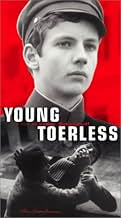
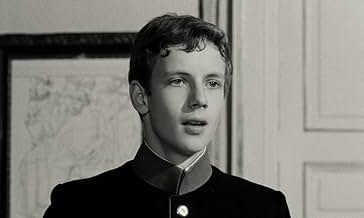
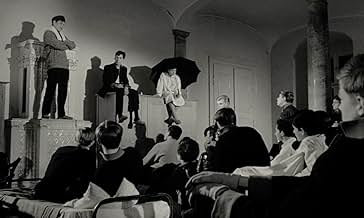
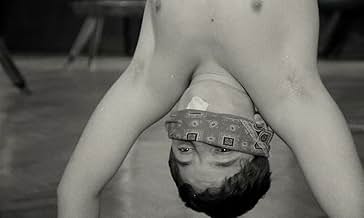
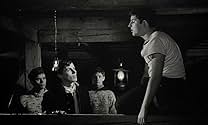
In a boarding school, a student observes in passive disgust as his two friends manipulate, humiliate and torture a fellow student, justifying their every act.In a boarding school, a student observes in passive disgust as his two friends manipulate, humiliate and torture a fellow student, justifying their every act.In a boarding school, a student observes in passive disgust as his two friends manipulate, humiliate and torture a fellow student, justifying their every act.
- Director
- Writers
- Stars
- Awards
- 4 wins & 1 nomination total



- Director
- Writers
- All cast & crew
- Production, box office & more at IMDbPro
Featured reviews
Young Törless is a pertinent reflection on good and evil and the way an individual behaves, given the lack of values in others.
In comparison with the moral and ethical values required by institutions, human behavior seems to follow an errant, amoral path, simply determined by chance, or the current of events. Especially when manifested in a group, human beings lose any values and act according to the tide. They practice excesses and suffer humiliations instinctively, as if they were a fatality of life.
The few who show the courage to remain faithful to fundamental values are marginalized, seen as outsiders, labeled as dreamers.
Being a German film from 1966, it is impossible not to relate this criticism to the rise and fall of Nazism, just 21 years earlier.
A film in which Volker Schlöndorff puts a finger on the wound of Nazism, still open in German society, and forces his compatriots to reflect on the mistakes of the past.
In comparison with the moral and ethical values required by institutions, human behavior seems to follow an errant, amoral path, simply determined by chance, or the current of events. Especially when manifested in a group, human beings lose any values and act according to the tide. They practice excesses and suffer humiliations instinctively, as if they were a fatality of life.
The few who show the courage to remain faithful to fundamental values are marginalized, seen as outsiders, labeled as dreamers.
Being a German film from 1966, it is impossible not to relate this criticism to the rise and fall of Nazism, just 21 years earlier.
A film in which Volker Schlöndorff puts a finger on the wound of Nazism, still open in German society, and forces his compatriots to reflect on the mistakes of the past.
1. It's been said here that the gay content of the story has been removed. Well, the novel was released in 1905. We can nowadays interpret elements of the story in a gay context, but back then these notions did not exist. If Schlöndorff hints at homosexuality as an element of perversion, that is in fact faithful to the novel, which takes a strictly observatory, non-participating stance.
2. 'Törless' is often interpreted as an indicator of upcoming intolerance and Nazidom. Again, the novel was released at a much too early time to allow for such an interpretation; the novel's author Robert Musil certainly envisioned the inevitable fall of an empire stuck to tradition and incapable of accommodating personal liberties. Schlöndorff pushes some of the juvenile delinquents into similarities with the Nazis - albeit being carefully ambiguous about it -, but it would be wrong to consider this interpretation as a part of the original narrative.
3. 'Törless' is a highly psychological tale and film - again, Schlöndorff proves faithful to the novel in this respect. But this comes with the weakness of constructing characters around a certain social concept. It would be misleading to consider Törless and his rebellious friends as typical representatives of their era, or real figures upon which the author based his characters. As may be more obvious in Musil's masterpiece, 'The Man without Qualities', his characters are crafted to evoke rather a situation than a person; that makes his books almost impossible to adapt correctly.
Schlöndorff's film is somewhat middlebrow; it does not intend to be a substitute for reading the novel, but at the same time it carefully avoids to give the impression that it is anything but a rendition of it. That's not quite true; the interpretation is in the framing, the omissions of the subtext, and that the ideas upon watching the film differ considerably from those you get when you read the novel. One may call it therefore a failure - but an interesting failure to watch.
2. 'Törless' is often interpreted as an indicator of upcoming intolerance and Nazidom. Again, the novel was released at a much too early time to allow for such an interpretation; the novel's author Robert Musil certainly envisioned the inevitable fall of an empire stuck to tradition and incapable of accommodating personal liberties. Schlöndorff pushes some of the juvenile delinquents into similarities with the Nazis - albeit being carefully ambiguous about it -, but it would be wrong to consider this interpretation as a part of the original narrative.
3. 'Törless' is a highly psychological tale and film - again, Schlöndorff proves faithful to the novel in this respect. But this comes with the weakness of constructing characters around a certain social concept. It would be misleading to consider Törless and his rebellious friends as typical representatives of their era, or real figures upon which the author based his characters. As may be more obvious in Musil's masterpiece, 'The Man without Qualities', his characters are crafted to evoke rather a situation than a person; that makes his books almost impossible to adapt correctly.
Schlöndorff's film is somewhat middlebrow; it does not intend to be a substitute for reading the novel, but at the same time it carefully avoids to give the impression that it is anything but a rendition of it. That's not quite true; the interpretation is in the framing, the omissions of the subtext, and that the ideas upon watching the film differ considerably from those you get when you read the novel. One may call it therefore a failure - but an interesting failure to watch.
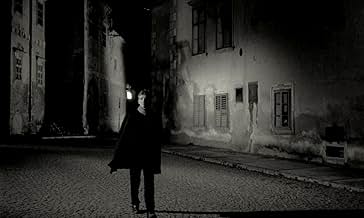
Considered a classic film as it was the first film to put the then New German Film firmly on the (international) map. Also a classic because it was Schlöndorf's first feature and it is still thought highly of. To be sure, this is a beautiful film to watch with its superb black-and-white cinematography; Schlondörf's direction makes it into a well paced and staged, stylish film. But I never liked the film; recent re-viewing confirmed my feelings.
Schlöndorf wants to do more than simply bring the viewer the subject and with that the whole thing goes wrong. In trying to convey the deeper meaning of the story as clear as possible the script is written in such way that even the most simple minded can not miss it. The film is lecturing without any subtleties; Schlöndorf never provokes the viewer to think for himself: he has already done it for him. Nor is there any nuance in the psychology of the different characters.
And what about the cast? In 1966 (and still) praised for their effort as inexperienced actors. Well, I think that most of the acting is downright poor, or never goes further than reciting lines. In the meantime we have come to know Mathieu Carriere better during his career; Carriere is in this his first film as boring as he still is. Of course the actors were not helped much by the literary dialogue, another feature that was (and is) praised so much; most of it I find simply laughable. Classic miscast is Barbara Steele, who seems to have walked in from the set of a typical sexploitation film, including acting style.
Schlöndorf wants to do more than simply bring the viewer the subject and with that the whole thing goes wrong. In trying to convey the deeper meaning of the story as clear as possible the script is written in such way that even the most simple minded can not miss it. The film is lecturing without any subtleties; Schlöndorf never provokes the viewer to think for himself: he has already done it for him. Nor is there any nuance in the psychology of the different characters.
And what about the cast? In 1966 (and still) praised for their effort as inexperienced actors. Well, I think that most of the acting is downright poor, or never goes further than reciting lines. In the meantime we have come to know Mathieu Carriere better during his career; Carriere is in this his first film as boring as he still is. Of course the actors were not helped much by the literary dialogue, another feature that was (and is) praised so much; most of it I find simply laughable. Classic miscast is Barbara Steele, who seems to have walked in from the set of a typical sexploitation film, including acting style.
What's interesting about this film is the way it unapologetically removes the true and original gay content from the story. Torless has a passionate gay affair in the original. In the film gayness is alluded too as perhaps a contributing factor to the corruption of innocents via the pursuit & discovery of knowledge & experience. As a gay person with a broad understanding of the systematic exclusion and removal of gay people from history, the main theme of the film, re: the brutality , sadism and masochism & manifestation of fascism is somehow deeply compromised by the idea that it is excusable, if not absolutely impossible to reveal Torless's gay self as a positive and actual fact of his boyhood because it would offend European bourgeoisie taste of the 60s. So the sensationalism of fascism is portrayed and the recent anti-Semitic WW11 history of Austria 'allowed' as an allusion to it's part in Nazi history, but homosexuality is still being demonised and censored in a film which purports to be about anti-fascism. I don't buy that - and we've all been robbed of the true story - where Torless , far from being a dried up , cold 'acceptably' moral and suggestively straight prude, in the real story embraces the presence of gay feelings rampant in the original story and which contribute to the whole process of his crisis about morality which the film hijacks to portray a censored and acceptable message of it's own.
The movie won an award at the Cannes Film Festival when it was first released and signaled the beginning of a German cinematic revival. The book was written in 1906 and is a tedious read, although thankfully a short book. Homosexuality plays a large role in the book but virtually does not exist in the movie. Torless, a horny teenager in an all boys school, eventually has a torrid sexual affair with one of the students. The movie chooses to ignore this, and maybe for good reason as it was released in I believe in 1966. Filmed in black and white, the lack of color contributes to the atmosphere of German austerity that director uses to his advantage. The final speech by Torless is a brilliant defense for the lack of opposition by the middle class to the rise of Hitler. Most of the teenagers in the movie were not aspiring actors but were chosen almost at random for their roles. But considering the time in which it was produced this is a land mark film, especially for German cinema. The movie is much more entertaining than the book and the director,Volker Schlondorff, did a fabulous job and deserves the awards it was given.


Did you know
- TriviaLuchino Visconti had previously tried to set up a version of " Young Torless " with Romy Schneider starring.
- Quotes
Thomas Törless: Yet another day to tell our grandchildren about.
- ConnectionsFeatured in Film Review: International Films (1968)
- How long is Young Törless?Powered by Alexa
Details
- Release date
- Countries of origin
- Language
- Also known as
- Young Torless
- Filming locations
- Eggenberg Palace, Graz, Styria, Austria(military school)
- Production companies
- See more company credits at IMDbPro
- Runtime
- 1h 27m(87 min)
- Color
- Sound mix
- Aspect ratio
- 1.66 : 1
Contribute to this page
Suggest an edit or add missing content