IMDb RATING
7.4/10
4.1K
YOUR RATING


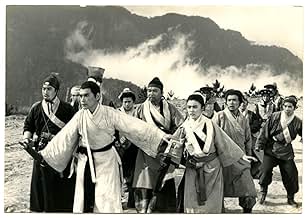
When the children of an executed General are pursued in 1457 China, some heroic martial arts swordsmen intervene.When the children of an executed General are pursued in 1457 China, some heroic martial arts swordsmen intervene.When the children of an executed General are pursued in 1457 China, some heroic martial arts swordsmen intervene.
- Awards
- 1 win & 1 nomination total



- Director
- Writer
- All cast & crew
- Production, box office & more at IMDbPro
7.44K
1
2
3
4
5
6
7
8
9
10
Featured reviews
The 1st Chinese Sword-fighting Classic and Box Office Champion
This is the original of the 1992 remake of the same title(with a NEW) and 2nd of the "INN" trilogy by King Hu after Come Drink With Me. It was a major hit all over Chinese areas in South East Asia and discovered Shang Kuan Ling Feng(note the mistake by a previous comment)as the 2nd most popular Sword woman(the 1st was Cheng Pei Pei, and later 3rd Hsu Feng(Hsia Nu aka A Touch of Zen). All these 3 females stars are made popular by him and they are also the 3 most popular swords women in Chinese Cinema.
If there is any complaint by any viewer, it's the pace that many may find it a bit slow but isn't most highly regarded movies slow ?? The finale scene is the most climatic in a Chinese action that critc compared this film to "Rio Bravo" and "The Wild Bunch".
Beware of some mistakes in the original English subtitles mentioned by the director himself.
You can watch some scenes of it if you go to the movie Bu San(2003) aka Goodbye, Dragon Inn(here in IMDb and watch the trailer) which paid tribute to this movie.
The 90's remake is nothing better except for an additional character well acted by Maggie Cheung.
If there is any complaint by any viewer, it's the pace that many may find it a bit slow but isn't most highly regarded movies slow ?? The finale scene is the most climatic in a Chinese action that critc compared this film to "Rio Bravo" and "The Wild Bunch".
Beware of some mistakes in the original English subtitles mentioned by the director himself.
You can watch some scenes of it if you go to the movie Bu San(2003) aka Goodbye, Dragon Inn(here in IMDb and watch the trailer) which paid tribute to this movie.
The 90's remake is nothing better except for an additional character well acted by Maggie Cheung.
A very awkward screenplay with
Terrible acting by all of the cast and terrible dialog albeit mediocre directing. The reason why this first "Dragon Inn" is quite famous and popular is because it's the earliest break-through of the Taiwanese martial arts and swordsmanship that was in a newer method to shoot a action movie by Taiwanese movie maker. But if by the standard of the up to date technique, it's very primitive and borderline shallow. The fighting scenes are so awkward and raw, showing strongly unnatural, poor and rigid prearranged fighting scenes, so awkward and even childish by today's standard. The acting, the make-up, the costumes all looked quite shallow, the dialog was even worse. But the English subtitles were translated pretty correct and appropriate, matching well with the Chinese language. This is a quite mediocre Taiwanese product with very poor directing and acting. It's a classic and even a cult-like Chinese swordsmanship movie, but if compare with the Japanese samurai films by the Japanese screenplay writers, their directors and the performances of the Japanese actors, this "Dragon Inn" simply looked like a child play, but if compare it with those ridiculous swordsmen and martial arts movies produced by the "Shaw Brothers" later, it still looked better.
10Deusvolt
A bloody dynastic struggle in ancient China comes to vivid life on the screen.
I saw this during its initial run under the title "Dragon Inn."
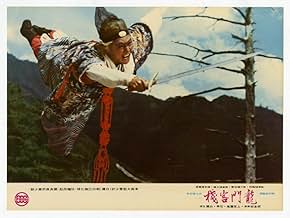
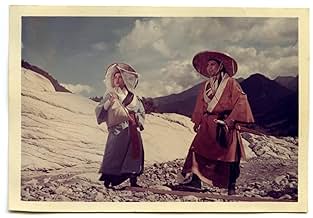
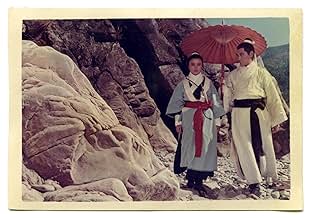
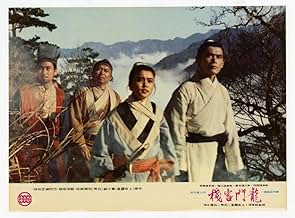
This is no ordinary swordplay movie. It is a visual treat of ancient Chinese costumes and weaponry. The traditional Chinese instruments used for the background music added an otherwordly flavor. I left the theatre wondering if the movie was truly historical.
The head of the Yu clan has been condemned to death by the evil prime minister who has usurped imperial power. A palace eunuch who managed to claw his way to power, he is also reputed to be China's greatest swordsman. He plots to eliminate the entire Yu family but is opposed by a master swordsman and swordswoman.
A memorable scene that has nothing to do with fighting is the dinner at Dragon Inn which introduced me to the Mongolian Fire Pot (shabu-shabu) style of eating. To the uninitiated, there is a fire pot in the middle of the table decked out with all sorts of raw food which you put into the boiling water of the firepot and eat them as they are cooked. The cooking water is sipped as soup.
I took my little sister to see it and from then on she got hooked on Chinese swordplay movies. She began reading up on ancient China and in college she majored in history and archaeology -- all because I took her to see Dragon Inn.
I am gratified to learn recently that the female supporting actress Feng Hsu moved on to become a producer-director herself with a number of critically acclaimed films to her credit. I look forward to seeing them soon.
This is no ordinary swordplay movie. It is a visual treat of ancient Chinese costumes and weaponry. The traditional Chinese instruments used for the background music added an otherwordly flavor. I left the theatre wondering if the movie was truly historical.
The head of the Yu clan has been condemned to death by the evil prime minister who has usurped imperial power. A palace eunuch who managed to claw his way to power, he is also reputed to be China's greatest swordsman. He plots to eliminate the entire Yu family but is opposed by a master swordsman and swordswoman.
A memorable scene that has nothing to do with fighting is the dinner at Dragon Inn which introduced me to the Mongolian Fire Pot (shabu-shabu) style of eating. To the uninitiated, there is a fire pot in the middle of the table decked out with all sorts of raw food which you put into the boiling water of the firepot and eat them as they are cooked. The cooking water is sipped as soup.
I took my little sister to see it and from then on she got hooked on Chinese swordplay movies. She began reading up on ancient China and in college she majored in history and archaeology -- all because I took her to see Dragon Inn.
I am gratified to learn recently that the female supporting actress Feng Hsu moved on to become a producer-director herself with a number of critically acclaimed films to her credit. I look forward to seeing them soon.
An Action Film with Lots of Sword Fighting and Martial Arts
This film takes place during the Ming Dynasty with a powerful government official named "Cao" (Bai Ying) in the act of executing one of his main rivals so that he can secure even more power for himself. Having accomplished that, he then orders his elite agents to track down and kill his rival's two children as well. Fortunately, once word of the order is leaked, a small number of soldiers loyal to their previous master take the two children and flee on foot into the desert to escape those in hot pursuit. Upon then being apprised of this development, Cao subsequently orders some of his men to outflank them on horseback to a tavern known as the Dragon Inn. Once there, however, the agents at the Dragon Inn are surprised when a swordsman named "Xiao Shaozi" (Chun Shih) suddenly arrives and creates problems for all of them. Now, rather than reveal any more, I will just say that this is one of those movies which features quite a bit of sword fighting and martial arts--which should please viewers who enjoy action films of this sort. And while I would have preferred a movie with a bit more drama and suspense, I thought it passed the time well enough, and I have rated it accordingly. Slightly above average.
More Leone than Kurosawa.
Long considered one of the masterpieces of the wuxia genre King Hu's "Dragon Inn" is a visually superb epic that's closer in tone to Leone than Kurosawa and it features some of the most balletic fight sequences in all of cinema. The plot is virtually irrelevant; there are good guys and there are bad guys and that's really all you need to know while even the comedy works beautifully. The action takes place almost entirely around the inn of the title and the film was further immortalised by Ming-liang Tsai when he chose it to be the film screening in the near empty cinema in "Goodbye, Dragon Inn", (they would make a great double-bill). It's been surpassed in people's affections by King Hu's later "A Touch of Zen" but this is arguably more fun and it established Hu as a force to be reckoned with in international cinema, a genre master as well as a great visual stylist. Wonderful.


Did you know
- TriviaDirector King Hu encouraged his martial arts choreographers to draw from the alternately fluid and rhythmic movements of Chinese opera. Rather than resorting to fast or slow motion, footage printed backward, animation, or other early special-effects techniques, the filmmaker relied as much as possible on the actual skills of his performers and on the magic of editing.
- ConnectionsFeatured in Goodbye, Dragon Inn (2003)
- How long is Dragon Inn?Powered by Alexa
Details
- Release date
- Countries of origin
- Language
- Also known as
- Die Herberge zum Drachentor
- Filming locations
- Production company
- See more company credits at IMDbPro
Contribute to this page
Suggest an edit or add missing content