IMDb RATING
6.3/10
4.7K
YOUR RATING
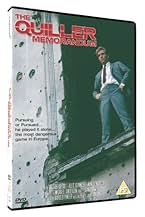
In the West Berlin of the 1960s, two British agents are killed by a Nazi group, prompting British Intelligence to dispatch agent Quiller to investigate.In the West Berlin of the 1960s, two British agents are killed by a Nazi group, prompting British Intelligence to dispatch agent Quiller to investigate.In the West Berlin of the 1960s, two British agents are killed by a Nazi group, prompting British Intelligence to dispatch agent Quiller to investigate.
- Director
- Writers
- Stars
- Nominated for 3 BAFTA Awards
- 4 nominations total
Günter Meisner
- Hassler
- (as Gunter Meisner)
Bernard Barnsley
- Mr. 'F'
- (uncredited)
Victor Beaumont
- Weiss
- (uncredited)
Harry Brooks Jr.
- Oktober's Man (Tall Blonde)
- (uncredited)
Otto Friese
- Waiter
- (uncredited)
Herbert Fux
- Oktober's Man (Pipe)
- (uncredited)
- Director
- Writers
- All cast & crew
- Production, box office & more at IMDbPro
6.34.6K
1
2
3
4
5
6
7
8
9
10
Featured reviews
memorable, haunting spy flick
Very satisfying spy flick which, if it grabs you, may haunt you for a long time. Perfect and slightly ironic ending. Excellent musical score too.
They Don't Make 'Em Like This Anymore
THE QUILLER MEMORANDUM (3 outta 5 stars)
The 1960s saw a plethora of two kinds of spy movies: the outrageous semi-serious James Bond ripoffs (like the Flint and Matt Helm movies) and the very dry, methodical ones that were more talk than action (mostly John Le Carre and Alistair MacLean adaptations). This is one of the better examples of the talky thrillers. Not that the movie is boring... there is lots of good, cat-and-mouse dialogue courtesy of playwright Harold Pinter. George Segal plays the hero, an undercover spy who goes to West Berlin to find out who killed his predecessor... who was on the trail of modern-day Nazis. Segal has surprisingly little difficulty in finding himself right in the thick of things... being captured and drugged by the baddies... and even having time for a romance with a German schoolteacher who may know more than she lets on. Parts of the movie reminded me a lot of the classic "The Third Man"... which I think the director was trying to emulate at times. Well, this is not quite a classic of that caliber but it is a very well-written and smoothly-paced "old school" thriller. Segal makes a very cool lead... witty and sarcastic, yet with a vulnerable side, too.
Worth a viewing
Of its time. Slow moving and cliched. However, it's a cut above a lot of films made in the '60s and I managed to last to the end. Beautiful music sung by Matt Monro.
Interesting spy film
An almost unrecognizable George Segal stars in "The Quiller Memorandum," set in Berlin and made 40 years ago. Segal is a very young man in this, with that flippant, relaxed quality that made him so popular. This time he's a spy trying to get the location of a neo-Nazi organization. The cast is full of familiar faces: Alec Guinness, who doesn't have much of a role, George Sanders, who has even less of one, Max von Sydow in what was to become a very familiar part for him, Robert Helpmann, Robert Flemyng, and the beautiful, enigmatic Senta Berger.
This is a very good spy movie. Spy movies were the "in" thing in the '60s. This one doesn't have gadgets and goes more for subtlety. The last 30 minutes are tense and exciting, and the last scene, loaded with subtext, is just great.
In Berlin during filming
This film has special meaning for me as I was living in Berlin during the filming and, subsequent screening in the city. Mind you, in 1966-67 the Wall was there, East German border guards and a definite (cold war) cloud hanging over the city. I loved seeing and feeling the night shots in this film and, as it was shot on location, the sense of reality was heightened for me. Very eerie film score, I believe John Barry did it but, I'm not sure. George Segal was good at digging for information without gadgets. A bit too sardonic at times, I think his character wanted to be elsewhere, clashing with KGB agents instead of ferreting out neo-nazis. I feel this film much more typified real counter espionage in the 60's as opposed to the early Bond flicks (which I love, by the way). Senta Berger was gorgeous! And, the final scene (with her and Segal) is done extremely well (won't spoil it for those who still wish to see it...it fully sums up the film, the tension filled times and cold war-era Germany). Also contains one of the final appearences of George Sanders in a brief role, a classic in his own right!
Did you know
- TriviaThe source novel "The Berlin Memorandum" is billed in the credits as being by Adam Hall. This is a nom de plume for author Elleston Trevor.
- GoofsDuring the car chase scene, the cars behind Quiller's Porsche appear and disappear, and are sometimes alongside his car, on the driver's (left) side.
- ConnectionsFeatured in Al Murray's Great British Spy Movies (2014)
- SoundtracksWednesday's Child (Theme Song)
Music by John Barry
Lyric by Mack David
Sung by Matt Monro
[Played on the radio when shoeless Quiller arrives at the hotel]
- How long is The Quiller Memorandum?Powered by Alexa
Details
- Release date
- Country of origin
- Languages
- Also known as
- Quiller Memorandum
- Filming locations
- Production companies
- See more company credits at IMDbPro
- Runtime
- 1h 44m(104 min)
- Color
- Aspect ratio
- 2.35 : 1
Contribute to this page
Suggest an edit or add missing content