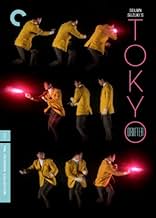
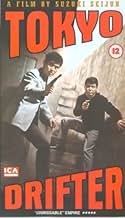
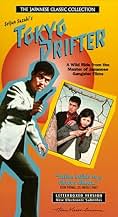
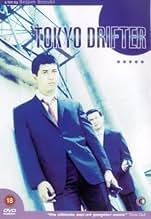
After his gang disbands, a yakuza enforcer looks forward to life outside of organized crime but soon must become a drifter after his old rivals attempt to assassinate him.After his gang disbands, a yakuza enforcer looks forward to life outside of organized crime but soon must become a drifter after his old rivals attempt to assassinate him.After his gang disbands, a yakuza enforcer looks forward to life outside of organized crime but soon must become a drifter after his old rivals attempt to assassinate him.
- Director
- Writer
- All cast & crew
- Production, box office & more at IMDbPro
7.110.3K
1
2
3
4
5
6
7
8
9
10
Featured reviews
Mixes Sergio Leone with surreal imagery
"Tokyo Drifter" is my introduction to the cinematic work of director Seijun Suzuki and it made quite a big impression. This is by far one of the most visually unique movies I have ever seen and the fact that it was made in 1966 makes it even more impressive.
Tetsuya played by Tetsuya Watari is a yakuza who has joined his boss Kurato (Ryuji Kita) in going straight. Unfortunately for both of them a rival gang begins threatening Kurato's legitimate business. After a brief confrontation Tetsuya is forced to leave his boss that way he would hopefully relieve the pressure between Kurato and the gang. Things don't go as smoothly as Tetsuya planned and he finds himself chased by gangs all over Japan.
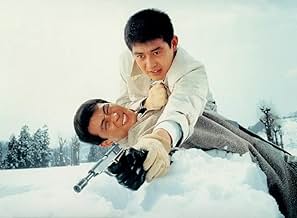
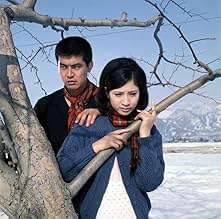
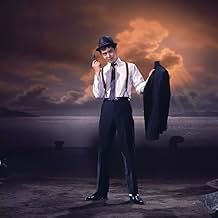
The story is standard fare yakuza tale. With a hefty doze of betrayal, inner power struggles and a bit of melodrama in the form of Tetsuya's girlfriend. We've seen it all before. Now. What really sets this movie apart from any other is it's unique visual nearly surrealistic style. Suziki employs several tricks in order to assure that the film will remain distant from any other. His use of colors creates one part of the that. More accurately his use of color contrast, we see that in several scenes through the movie, for example during the final shootout we see gang members dressed in primarily black suits while the location itself was in mainly white bright colors. Tetsuya himself is often dressed in colors that merge him with the backgrounds further helping in the creation of the film's extravagant look. The second aspect of the movie's uniqueness is the camera work and the overall directing. Suziki employs techniques that are reminiscene of western movies and more specifically Sergio Leone's line of work. The final shootout again serves as a great example of that.
The acting is on par with the script, characters are well played by their respective actors. They don't make an overly big impression but certainly don't deteriorate the quality. The film has a good music score with a particularly memorable theme song by the main actor Tetsuya Watari that is always nice to hear and fit's very well with the mood.
"Tokyo Drifter" is a movie that offers stunning visuals and a plot that while not very deep in characterization is still able to carry the film's unique style. Mister Suzuki is able to impress, sadly his production company at the time wasn't on the same opinion and soon after he was fired and blacklisted for 10 years. A real shame for a director with such talent.
Tetsuya played by Tetsuya Watari is a yakuza who has joined his boss Kurato (Ryuji Kita) in going straight. Unfortunately for both of them a rival gang begins threatening Kurato's legitimate business. After a brief confrontation Tetsuya is forced to leave his boss that way he would hopefully relieve the pressure between Kurato and the gang. Things don't go as smoothly as Tetsuya planned and he finds himself chased by gangs all over Japan.
The story is standard fare yakuza tale. With a hefty doze of betrayal, inner power struggles and a bit of melodrama in the form of Tetsuya's girlfriend. We've seen it all before. Now. What really sets this movie apart from any other is it's unique visual nearly surrealistic style. Suziki employs several tricks in order to assure that the film will remain distant from any other. His use of colors creates one part of the that. More accurately his use of color contrast, we see that in several scenes through the movie, for example during the final shootout we see gang members dressed in primarily black suits while the location itself was in mainly white bright colors. Tetsuya himself is often dressed in colors that merge him with the backgrounds further helping in the creation of the film's extravagant look. The second aspect of the movie's uniqueness is the camera work and the overall directing. Suziki employs techniques that are reminiscene of western movies and more specifically Sergio Leone's line of work. The final shootout again serves as a great example of that.
The acting is on par with the script, characters are well played by their respective actors. They don't make an overly big impression but certainly don't deteriorate the quality. The film has a good music score with a particularly memorable theme song by the main actor Tetsuya Watari that is always nice to hear and fit's very well with the mood.
"Tokyo Drifter" is a movie that offers stunning visuals and a plot that while not very deep in characterization is still able to carry the film's unique style. Mister Suzuki is able to impress, sadly his production company at the time wasn't on the same opinion and soon after he was fired and blacklisted for 10 years. A real shame for a director with such talent.
It's a drifter's life for me.
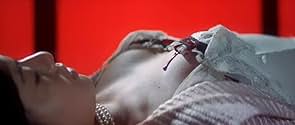
Sensible logic might be little, but director Suzuki Seijun's surrealistic pop-art gangster feature "Tokyo Drifter" is a tour-de-fore in flamboyant, and unusual film-making. Everything about this fashionably unhinged effort reeks of ultra-coolness, with its edgy but trendy stylish guidance painting an influential pathway for many film-makers to experiment, but also providing familiar staples of noir and western inspirations to its own brash, creative juices. I admit the busily dry story is quite an unbalanced muddle, with fractured editing, but still for that time glamorously unconventional and erratically bewildering. The focus of the material is that of devotion (of business and love), but some quirky sight gags and mayhem make there way in. Mainly it's all about the majestic set-pieces though, and the delirious appeal of them are a wondrously enchanting sight. A trippy colour scheme infuses itself on the psychedelically warped set-designs of moody composition lighting, and the sudden bursts of exaggerated violence have a poetically tough awe surrounding it. The taut pace of the film stays pretty much on cruise control, but where the energy feeds off can be linked to Kaburagi So's fierily dramatic jazz musical score, and Mine Shigeyoshi's intimately snappy cinematography positioning. Even breaking up the murky narrative are odd song choices and a rhythmic theme. The colourful performances are dashing, and life-like with a brooding array of interesting characters. Testsuya Watari, HidekaI Nitani, Ryuji Kita, Chieko Matsubara and Eiji Go are enjoyably tailored to their parts. Highly stylised fun.
Sweet
Having previously seen Branded to Kill on its Criterion release, and having found it to be utterly brilliant, I had to buy the Criterion release of Tokyo Drifter. It is not as good as Branded to Kill (heck, nothing can be), but it is still great. The color composition is particularly masterful. So what if the story is difficult to follow? It is still entertaining. I really wish more of Sezuki Seijun's films would be released by Criterion, or anyone else, for that matter. He's an extraordinarily interesting and gifted filmmaker who is very underappreciated in cinema history.
He's a devil if he asks you twice...
In 1966 Nikkatsu, a Japanese studio, requested that one of their more "difficult" directors "calm down" on his next project. The director was Seijun Suzuki. The project was Tokyo Drifter. The result was anything but calm.
A film-noir shot through with moments of brilliant, lurid colour; the film defies all conventions be it genre, style or even something as mundane and unnecessary as narrative. One scene finds Tetsuya Watari's pouting yakuza in a tense showdown with his rival. Standing on train tracks, surrounded by clean, crisp snow the screen is split in two by a clearly visible dark blue line. The use of this visual effect is telling. It adds nothing to the story, to the characterisation, it simply looks good.
The closing sequence has to be seen to be believed. It is best described as the secret lovechild of a Gene Kelly musical and a John Woo action film. Amazing.
If for nothing else, Tokyo Drifter will long be remembered for the theme tune which hauntingly drifts through the entire film.
A film-noir shot through with moments of brilliant, lurid colour; the film defies all conventions be it genre, style or even something as mundane and unnecessary as narrative. One scene finds Tetsuya Watari's pouting yakuza in a tense showdown with his rival. Standing on train tracks, surrounded by clean, crisp snow the screen is split in two by a clearly visible dark blue line. The use of this visual effect is telling. It adds nothing to the story, to the characterisation, it simply looks good.
The closing sequence has to be seen to be believed. It is best described as the secret lovechild of a Gene Kelly musical and a John Woo action film. Amazing.
If for nothing else, Tokyo Drifter will long be remembered for the theme tune which hauntingly drifts through the entire film.
Don't Miss Branded to Kill
In my opinion, Tokyo Drifter is worth seeing, but comparing it to Branded to Kill is a bit like comparing apples and oranges.
Branded to Kill is eerie and nightmarishly weird--unforgettably, perhaps like a Hitchcock film or a dark film noire. Tokyo Drifter, on the other hand, is more "romantic." It is fun and chock full of mod 60s fashions and go-gos.
Both films are masterpieces of style. To me, Tokyo Drifter is worth seeing, but it has some silly moments. Somehow, I was left thinking of Woody Allen's What's Up Tiger Lilly and James Bond!
Branded to Kill is eerie and nightmarishly weird--unforgettably, perhaps like a Hitchcock film or a dark film noire. Tokyo Drifter, on the other hand, is more "romantic." It is fun and chock full of mod 60s fashions and go-gos.
Both films are masterpieces of style. To me, Tokyo Drifter is worth seeing, but it has some silly moments. Somehow, I was left thinking of Woody Allen's What's Up Tiger Lilly and James Bond!
Did you know
- TriviaWas shot and edited in 28 days.
- Quotes
Tetsuya 'Phoenix Tetsu' Hondo: A drifter needs no woman.
- ConnectionsFeatured in Seijun Suzuki | TCM (2013)
- How long is Tokyo Drifter?Powered by Alexa
Details
- Release date
- Country of origin
- Languages
- Also known as
- Abrechnung in Tokio
- Filming locations
- Production company
- See more company credits at IMDbPro
Box office
- Gross worldwide
- $755
- Runtime
- 1h 22m(82 min)
- Color
- Sound mix
- Aspect ratio
- 2.35 : 1
Contribute to this page
Suggest an edit or add missing content