IMDb RATING
7.0/10
2.1K
YOUR RATING
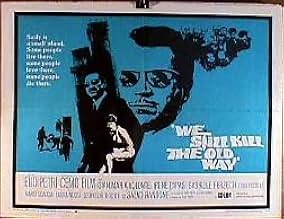
In Sicily, a leftist professor investigates the "honor killings" of two friends, uncovering a tangled web involving politicians, the Mafia, the Church, and the widow of one of the victims.In Sicily, a leftist professor investigates the "honor killings" of two friends, uncovering a tangled web involving politicians, the Mafia, the Church, and the widow of one of the victims.In Sicily, a leftist professor investigates the "honor killings" of two friends, uncovering a tangled web involving politicians, the Mafia, the Church, and the widow of one of the victims.
- Director
- Writers
- Stars
- Awards
- 6 wins & 2 nominations total
- Director
- Writers
- All cast & crew
- Production, box office & more at IMDbPro
7.02.1K
1
2
3
4
5
6
7
8
9
10
Featured reviews
My misfortune was to pick this film to watch the night after watching, Illustrious Corpses
This is a good, solid, beautifully photographed crime thriller. My misfortune was to pick this film to watch the night after watching, Illustrious Corpses. Now that Italian political crime thriller made in 1976 and based upon a book by Leonardo Sciascia is a near faultless classic with deep undertones and a broad scope that is simply a joy to watch. This, it turns out, is another film based upon another book by Leonardo Sciascia from 1967. How much more sensible it would have been to watch this one first. The thing is there is nothing wrong with this film except it is also about too easily explained killings that the lead character sets out to investigate and in the process overturns a hornets' nest, but there is much less action, intrigue and politics. Gian Maria Velonte is excellent as the professor who takes it upon himself to get involved when most people seem not to care. Interestingly this was the film that helped to lift this actor into more 'serious' films, after having made many spaghetti westerns, one of the last being face to Face also from 1967 when he also played a professor.
The more you know, the more you are in danger.
Paolo Laurana is a kind of leftist intellectual who chances to be intrigued by a mysterious double murder in the Sicily of mid Sixties. In his personal detection for murder's instigators, he will run into a plot in which both politicians and mafia racketeers are involved. So curiosity will become a very dangerous affair. Taken from a novel by Leonardo Sciascia (1921-1989), A ciascuno il suo (1967) is a film where high rank acting is at its top. Cast (Gianmaria Volonté, Irene Papas, Gabriele Ferzetti, Salvo Randone, Luigi Pistilli. Mario Scaccia, Leopoldo Trieste) is perfect and well-combined, direction (Elio Petri, 1929-1982) is powerful and impressive. If compared to the novel, Elio Petri's film (written with Ugo Pirro) may seem short of that illuministic pessimism that breathes through Sciascia's books, but Laurana's rationalistic search for truth retains that `bitter taste of intelligence' which is one of the major feature of Sciascia's characters. A key film to understand historical condition of Italy in the Sixties.
Sunny Noir
"A Ciascuno Il Suo" (1967) aka "We Still Kill The Old Way" (both great titles) is a scenic, sunny political noir set in Sicily. It is blessed with some gorgeous scenery and the magnificent (if underused) Irene Papas, but its portrayal of Sicily falls back to stereotypes, and the story is rather repetitive....until the shocking ending. **1/2 out of 4.
Uconventional detective story under the scorching Sicilian sun
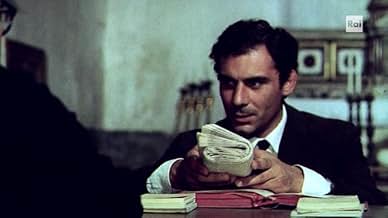
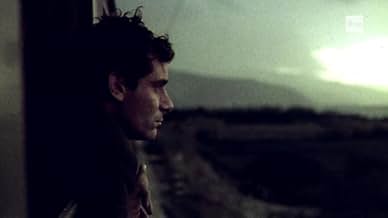
"A Ciascuno il suo" is based on the homonymous book by Leonardo Sciascia, and just like many of the author's books is an unconventional detective story aimed at unveiling the hypocrisy and immorality of Sicilian society. The story begins with a man showing his friends a few threat letters. A few days later he gets shot together with one of his friends, a chemist. The murder is filed under "honour crime" (delitto d'onore) a murder committed out of passion and jealousy, and a peasant is convicted for it. Gian Maria Volonté is an awkward school professor who believes in the peasant's innocence, and decides to investigate the crime. His infatuation with the beautiful wife of the victim also plays a part in his decision to solve the mystery. As the story unveils, he will discover unpleasant truths, but will continue with the investigation despite all dangers. Volonté is as formidable as always, changing his accent and posture to fit the part. But the real protagonist is the Sicilian landscape in all its harsh brightness. The cinematography is such that we can almost feel the wind, the sun and the dryness of the air. When I first watched this film I wondered whether anyone who was not Sicilian or familiar with Sciascia's writing would understand all its complexity, but Elio Petri does a masterful job in transposing the book.
A subtle and clever intrigue of fear, power and clamming-up
At the beginning of the movie a pharmacist receives an anonymous letter that threatens him of death. And the murder actually happens. Seems very simple but nothing is what it seems and the journey to the truth will be long and difficult. The book is excellent and the movie is at par with it and very faithful to the romance. Great direction. Incredible cast with Gabriele Ferzetti in his best interpretation together with the one in "C'era una volta il West" and Gianmaria Volonté simply beyond reach as always. Many other great actors. Yes I am an enthusiast 'cause there's not a word or a shot out of place in this movie and the plot is ingenious. Who is going to see this film for the first time will be taken away by the developments (the pace seems to be calm but looking in between the kinks you may realize that many things are going rapidly on). Trying to figure out what is the kernel of the happenings and the "reasons" for the murder is a very interesting exercise but it's highly unlikely for the spectator not to experience a big surprise at the end. In my opinion Elio Petri at his best (I mean at the same level of his other masterwork: La classe operaia va in Paradiso).
Did you know
- TriviaElio Petri and Gian Maria Volontè later collaborated in Investigation of a Citizen Above Suspicion (1970), The Working Class Goes to Heaven (1971) and Todo modo (1976).
- ConnectionsEdited into Lo schermo a tre punte (1995)
- SoundtracksPour rêve l'hiver
("A Dream for Winter") (uncredited)
Lyrics by Arthur Rimbaud
Music by Luis Bacalov
Sung by Léo Ferré
- How long is We Still Kill the Old Way?Powered by Alexa
Details
- Runtime
- 1h 39m(99 min)
- Sound mix
- Aspect ratio
- 1.85 : 1
Contribute to this page
Suggest an edit or add missing content