
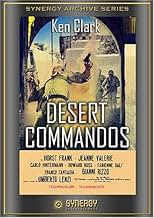
German commandos are dropped behind enemy lines in the Sahara Desert and tasked with getting to Casablanca to assassinate Allied leaders.German commandos are dropped behind enemy lines in the Sahara Desert and tasked with getting to Casablanca to assassinate Allied leaders.German commandos are dropped behind enemy lines in the Sahara Desert and tasked with getting to Casablanca to assassinate Allied leaders.





- Director
- Writer
- All cast & crew
- Production, box office & more at IMDbPro
5.1453
1
2
3
4
5
6
7
8
9
10
Featured reviews
Five Nazi commandos parachute into the Sahara to carry out a dangerous mission beyond enemy lines
Action-filled movie set in WWII , it follows the reckless adventures of a valiant platoon , some courageous Nazi soldiers during WWII in Morocco . German commandos dressed as British soldiers are dropped behind enemy lines in the Sahara Desert tasked with a risked assignment and must make their long way to Casablanca . Their objective : the assassination of Roosevelt, Churchill, and Stalin at a meeting at Casablanca . Along the way, the five face not only possible discovery by the British and American troops, but they also take on the real possibility of being shot by German troops. Suffering several flops , explosion , attacks and deaths across the way burt the leader insists on attempting to complete the commandos' mission.
Ken Clark is the leader in this ordinary wartime movie about a commando getting to Casablanca in an assassination attempt on allied leaders being professionaly directed by Umberto Lenzi . Medium budget European war film that lost continuity with US cuts . This moving film packs frantic thrills , perilous adventures , relentless feats , and buck-loads of explosive action and violence . The noisy action is uniformly well-made , especially deserving of mention the rip-roaring final scenes in which the motley group is really besieged , including some spectacular shootouts and bombing . The first half of the film allows the colorful cast of character actors to have their fun as they get their tails whipped into shape and develop a complex and tense relationship with their leader . The final part is all action , as the brave commando wreak havoc and then run for their lives . Apart from the values of team spirit , cudgeled by Ken Clark into his misfit group , the film is full of feats , suspense , and thrills . Rough , muscular, well-built , hairy-chested American actor Ken Clark was born on June 4, 1927 in Neffs, Ohio, USA as Kenneth Donovan Clark and died on June 1, 2009 in Rome, at 82 . A former model, he appeared in 'tough' western roles under contract to 20th Century Fox and then had a solid run as the second lead of several low-budget, cult science-fiction films in the 1950's . He moved to Italy during the 60's to star in spaghetti westerns and sword and sandal epics. He was an actor, known for Attack of the Giant Leeches (1959), FBI chiama Istanbul (1964) and Operation Lady Chaplin (1966). He starred several sword and sandals and adventures as Maciste nell'inferno di Gengis Khan, Jacob and Esau , Hercules invincible , Maciste contro i Mongoli, Re Manfredi , among others . Here Ken Clark is the two-fisted leader of the motley pack together thwart the enemy schemes , he gives a so-so acting while showing bizeps and muscles . Clark dominates this warfare adventure war with his strong performance as a merciless commando boss with only one purport : to execute at whatever cost the nail-biting as well as puzzling mission . Main cast is acceptable with B-actors ordinary , such as: Horst Frank , Jeanne Valérie, Howard Ross , John Stacy , Gianni Rizzo , Hintermann and Franco Fantasia .
This one belongs to a numerous group of Italian/Spanish WWII films , imitating American ones , usually directed by José Luis Merino , Leon Klimovsky , Umberto Lenzi , Bitto Albertini , Al Bradley and including tarnishing Hollywood stars , such as ¨The legion of no return¨ with Tab Hunter , ¨Hell's brigade¨ with Jack Palance , ¨Command attack¨ with Michael Rennie . All of them supported by local armies that lent tanks , weapons , soldiers and extras to make these films . This is a wartime typical vehicle and into the ¨warlike commando sub-genre¨ , in USA style which also belong the American classics as : ¨Dirty Dozen (Robert Aldrich)¨ ,¨ Where eagles dare (Brian G. Hutton)¨ , ¨Kelly's heroes (Hutton)¨, ¨Tobruk (Arthur Hiller)¨ , ¨Devil's Brigade (Andrew V McLagen)¨ and many others.
Atmospheric and functional musical score by prolific Angelo Francesco Lavagnino. Sunny cinematography in Eastmancolor filmed by Carlo Carlini , a perfect remastering is extremely necessary .This is a well conceived WWII with action filled , brief studio character , drama and exciting battles , being well directed by Umberto Lenzi .he often used the pseudonym Hank Milestone and Humphrey Logan . He's an expert on wartime genre such as he proved in ¨ Desert commandos¨ , ¨Battle of commandos¨, ¨From hell to victory¨, and ¨Bridge to hell¨.
Ken Clark is the leader in this ordinary wartime movie about a commando getting to Casablanca in an assassination attempt on allied leaders being professionaly directed by Umberto Lenzi . Medium budget European war film that lost continuity with US cuts . This moving film packs frantic thrills , perilous adventures , relentless feats , and buck-loads of explosive action and violence . The noisy action is uniformly well-made , especially deserving of mention the rip-roaring final scenes in which the motley group is really besieged , including some spectacular shootouts and bombing . The first half of the film allows the colorful cast of character actors to have their fun as they get their tails whipped into shape and develop a complex and tense relationship with their leader . The final part is all action , as the brave commando wreak havoc and then run for their lives . Apart from the values of team spirit , cudgeled by Ken Clark into his misfit group , the film is full of feats , suspense , and thrills . Rough , muscular, well-built , hairy-chested American actor Ken Clark was born on June 4, 1927 in Neffs, Ohio, USA as Kenneth Donovan Clark and died on June 1, 2009 in Rome, at 82 . A former model, he appeared in 'tough' western roles under contract to 20th Century Fox and then had a solid run as the second lead of several low-budget, cult science-fiction films in the 1950's . He moved to Italy during the 60's to star in spaghetti westerns and sword and sandal epics. He was an actor, known for Attack of the Giant Leeches (1959), FBI chiama Istanbul (1964) and Operation Lady Chaplin (1966). He starred several sword and sandals and adventures as Maciste nell'inferno di Gengis Khan, Jacob and Esau , Hercules invincible , Maciste contro i Mongoli, Re Manfredi , among others . Here Ken Clark is the two-fisted leader of the motley pack together thwart the enemy schemes , he gives a so-so acting while showing bizeps and muscles . Clark dominates this warfare adventure war with his strong performance as a merciless commando boss with only one purport : to execute at whatever cost the nail-biting as well as puzzling mission . Main cast is acceptable with B-actors ordinary , such as: Horst Frank , Jeanne Valérie, Howard Ross , John Stacy , Gianni Rizzo , Hintermann and Franco Fantasia .
This one belongs to a numerous group of Italian/Spanish WWII films , imitating American ones , usually directed by José Luis Merino , Leon Klimovsky , Umberto Lenzi , Bitto Albertini , Al Bradley and including tarnishing Hollywood stars , such as ¨The legion of no return¨ with Tab Hunter , ¨Hell's brigade¨ with Jack Palance , ¨Command attack¨ with Michael Rennie . All of them supported by local armies that lent tanks , weapons , soldiers and extras to make these films . This is a wartime typical vehicle and into the ¨warlike commando sub-genre¨ , in USA style which also belong the American classics as : ¨Dirty Dozen (Robert Aldrich)¨ ,¨ Where eagles dare (Brian G. Hutton)¨ , ¨Kelly's heroes (Hutton)¨, ¨Tobruk (Arthur Hiller)¨ , ¨Devil's Brigade (Andrew V McLagen)¨ and many others.
Atmospheric and functional musical score by prolific Angelo Francesco Lavagnino. Sunny cinematography in Eastmancolor filmed by Carlo Carlini , a perfect remastering is extremely necessary .This is a well conceived WWII with action filled , brief studio character , drama and exciting battles , being well directed by Umberto Lenzi .he often used the pseudonym Hank Milestone and Humphrey Logan . He's an expert on wartime genre such as he proved in ¨ Desert commandos¨ , ¨Battle of commandos¨, ¨From hell to victory¨, and ¨Bridge to hell¨.
This unbelievable WWII action film actual portrays the Germans as the good guys!
Five German commandos are parachuted into the Sahara desert, and must make their way to Casablanca, where Churchill, Roosevelt, and Stalin are holding a top-secret meeting. Then, they must kill them! This film is quite bizarre; but it contains alot of action-packed scenes and some good suspense. Worth a good viewing.
Mission to Morocco
Sometimes tense Euro-war movie in a similar vein to "The Guns of Navarone" has brawny Ken Clark (familiar from the Peplum genre) leading four of the Nazi's finest into North Africa where they attempt an audacious plan to assassinate not one, but three Allied Forces leaders, namely Churchill, Stalin and Roosevelt present in Casablanca for a summit. As it turns out, they'll have to settle for De Gaulle substituting for Stalin, nevertheless their epic hunt behind enemy lines is an expansive mission leading them to the brink, encountering cross and double cross around every corner.
Solid cast includes Horst Frank as an American-born Nazi commando, whose commitment to the Feuhrer wanes in the face of the desperate mission and 'immoral' sacrifices taken to improve its chance of success, future Italian leading man Howard Ross in a small role, and pleasantly, gender balance achieved with beauties Jeanne Valeri playing an Arab guide, and Fabienne Dali as a turncoat who may or may not be in cahoots with the Allies.
Italian horror master Umberto Lenzi is better known for his Cannibal capers, but demonstrates a universal talent in bringing together this B-Italian action film with moderate suspense, light humour and at least some semblance of depth in characterisations despite the clichés. Probably not for the average GI Joe, but if you're comfortable with Euro style then you should enjoy this mission to Morocco.
Solid cast includes Horst Frank as an American-born Nazi commando, whose commitment to the Feuhrer wanes in the face of the desperate mission and 'immoral' sacrifices taken to improve its chance of success, future Italian leading man Howard Ross in a small role, and pleasantly, gender balance achieved with beauties Jeanne Valeri playing an Arab guide, and Fabienne Dali as a turncoat who may or may not be in cahoots with the Allies.
Italian horror master Umberto Lenzi is better known for his Cannibal capers, but demonstrates a universal talent in bringing together this B-Italian action film with moderate suspense, light humour and at least some semblance of depth in characterisations despite the clichés. Probably not for the average GI Joe, but if you're comfortable with Euro style then you should enjoy this mission to Morocco.
A taste of frustration...
Splendid plot idea, but a little more work on it might have made the difference: some scenes are just too simplistic; when they enter the house of the French officer's mistress, it doesn't ring "true". The desert scenes are nice but a little more camera and light work might have made them beautiful. WW II movie directors who use modern hardware are killing me: for obvious financial reasons, he probably rented the equipment on the site from the Moroccan army: the aircraft, a Max Holste Broussard, was designed in the fifties; there wasn't a single WWII vintage tank: they were either Creusot-Loire AMX-13 or Panhard armored vehicles, designed in the fifties. It's a pity.
Fading in the desert
There's something distinctly raw and unvarnished about the film, a quality that in many ways typifies a swath of mid-to-late 1960s European war cinema-where the industrial polish of American studio war epics is eschewed in favor of more tactile, often unglamorous portrayals of conflict. The film finds its footing in that lineage, though not without missteps, and attempts to stake its claim within the crowded terrain of World War II microhistory storytelling. Set against the arid vastness of North Africa, it aims to meld espionage tension with the grit of small-unit sabotage missions, all while holding a candle to the sprawling chaos of global conflict.
Visually, the film works within the constraints of its budget, often relying on barren desert expanses and minimalist set pieces to suggest a broader theater of war. There's a parched desolation in the cinematography that occasionally captures the loneliness and fragility of men operating far behind enemy lines. But the framing is uneven: scenes that should evoke claustrophobic tension-encounters in enclosed spaces, stealth-driven infiltrations-are frequently shot with a flatness that dissipates suspense. The camera lacks the predatory patience found in works like The Train (1964), where each shot is meticulously designed to wring anxiety from space and silence. Instead, the film often feels like it's in a hurry, cutting too quickly or lingering too long, as if uncertain of its own rhythm.
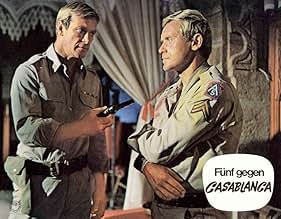
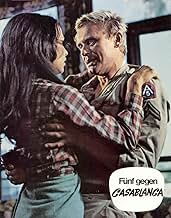
Set dressing and costume choices unfortunately do little to compensate for these shortcomings. The props and vehicles, in particular, often betray the historical setting. Tanks clearly belong to a post-war era, with lines and features that break immersion for viewers attentive to period accuracy. The overall attention to military detail is inconsistent-sidearms, uniforms, even insignia appear at times to be generic or anachronistic. Female wardrobe choices and hairstyles, especially, reek of the 1960s more than the 1940s. It's as if the characters are actors who walked from the street into the desert without passing through a costuming department, and that incongruity disrupts the already fragile illusion of time and place the film struggles to maintain. Even in a genre where budget often constrains ambition, such lapses in historical authenticity can be especially jarring for viewers drawn to the specificities of World War II settings.
Where the visual language falters, the score steps in with a surprisingly dynamic energy. The musical cues are sometimes overwrought, particularly in quieter moments where a more restrained approach might have served the mood better. Still, in action sequences, the score does lend propulsion, even if it occasionally leans too heavily on genre clichés-martial snares, ominous brass swells-without the inventiveness that might have set it apart. One can't help but wish for the atmospheric menace of The Night of the Generals (1967), where the music was as psychologically probing as it was militarily evocative.
Performances across the board carry the burden of an uneven script. The cast is clearly committed, but character development is thin, and dialogue veers between serviceable and wooden. There's a palpable tension among the actors that sometimes reads as on-screen chemistry, particularly in moments of group planning or confrontation, but more often it highlights a lack of cohesive direction. Unlike Cross of Iron (1977), which wrung every ounce of existential anguish from its ensemble, this film treats its characters more as archetypes than individuals. It's less a matter of the acting itself and more of what the actors are given to work with-lines that state more than they suggest, motivations that seem to exist primarily to move the plot rather than enrich the psychological texture.
The action choreography is a mixed bag. There are glimpses of ingenuity-some gunfights are staged with a chaotic realism that recalls the jarring, un-romanticized violence of The Battle of Neretva (1969)-but these are undercut by moments of clumsy blocking and conspicuous reuse of footage. Explosions and practical effects are economical but not immersive; one often senses the artifice just beneath the surface. The sense of danger is rarely sustained. Even in sequences that should drip with peril, the staging fails to fully commit, leaving scenes that feel like rehearsals rather than realizations. Combined with the distractingly inauthentic props and costuming, these elements reinforce a sense of theatricality rather than lived-in wartime realism.
On the technical front, the editing shows signs of struggle. Transitions are sometimes abrupt, and narrative momentum suffers in the middle third of the film. There's a lack of visual grammar that makes certain sequences hard to follow-not due to complexity, but due to a fundamental looseness in how shots are ordered. This might have been mitigated by stronger production design or more aggressive pacing, but the film instead drifts into a sort of procedural detachment, where mission beats are hit dutifully but without verve.
That said, the film's ambitions should not be overlooked. It commits to a narrow focus-an assassination plot of strategic weight-and tries to render the machinery of resistance with a level of seriousness that's admirable. It doesn't pander with melodramatic flashbacks or forced romance, and this restraint, even when clumsily executed, marks a welcome tonal fidelity. The costume and props departments, while limited in scope, do succeed in grounding the setting with a sense of lived-in verisimilitude; uniforms are worn and dusty, weapons are handled with a matter-of-fact familiarity that suggests authenticity over spectacle.
Yet that commitment is undermined by the careless application of historical detail. In a film so rooted in a specific campaign, in an era where authenticity can elevate or sink a production, the presence of visibly anachronistic tanks, unmistakably modern grooming, and civilian clothes that read more as 'Mod' than 'military' becomes not just a flaw, but a structural weakness. It prevents the viewer from fully surrendering to the world onscreen, anchoring the experience in the limitations of its production rather than the urgency of its narrative.
Comparatively, the film operates in the shadows of more robust productions like The Desert Rats (1953) or Tobruk (1967), both of which capitalized more confidently on the tension and topography of the North African campaign. It lacks the narrative cohesion and directorial control of those works, but what it does offer is a window into the ambitions of smaller European studios attempting to claim their own stake in WWII storytelling-films not just about war, but made in dialogue with its memory and mythology.
Ultimately, this is a war film that seems most alive in its aspirations rather than its executions. It tries to touch the nerve of wartime desperation and sacrifice but does so with the blunt instruments of budget cinema. Still, in its best moments-when silence stretches before an ambush, or when a character's face betrays something unsaid-it brushes up against something genuine, something quietly reverent. And for enthusiasts of World War II cinema who seek out the overlooked and the imperfect, that brush may be just enough.
Visually, the film works within the constraints of its budget, often relying on barren desert expanses and minimalist set pieces to suggest a broader theater of war. There's a parched desolation in the cinematography that occasionally captures the loneliness and fragility of men operating far behind enemy lines. But the framing is uneven: scenes that should evoke claustrophobic tension-encounters in enclosed spaces, stealth-driven infiltrations-are frequently shot with a flatness that dissipates suspense. The camera lacks the predatory patience found in works like The Train (1964), where each shot is meticulously designed to wring anxiety from space and silence. Instead, the film often feels like it's in a hurry, cutting too quickly or lingering too long, as if uncertain of its own rhythm.
Set dressing and costume choices unfortunately do little to compensate for these shortcomings. The props and vehicles, in particular, often betray the historical setting. Tanks clearly belong to a post-war era, with lines and features that break immersion for viewers attentive to period accuracy. The overall attention to military detail is inconsistent-sidearms, uniforms, even insignia appear at times to be generic or anachronistic. Female wardrobe choices and hairstyles, especially, reek of the 1960s more than the 1940s. It's as if the characters are actors who walked from the street into the desert without passing through a costuming department, and that incongruity disrupts the already fragile illusion of time and place the film struggles to maintain. Even in a genre where budget often constrains ambition, such lapses in historical authenticity can be especially jarring for viewers drawn to the specificities of World War II settings.
Where the visual language falters, the score steps in with a surprisingly dynamic energy. The musical cues are sometimes overwrought, particularly in quieter moments where a more restrained approach might have served the mood better. Still, in action sequences, the score does lend propulsion, even if it occasionally leans too heavily on genre clichés-martial snares, ominous brass swells-without the inventiveness that might have set it apart. One can't help but wish for the atmospheric menace of The Night of the Generals (1967), where the music was as psychologically probing as it was militarily evocative.
Performances across the board carry the burden of an uneven script. The cast is clearly committed, but character development is thin, and dialogue veers between serviceable and wooden. There's a palpable tension among the actors that sometimes reads as on-screen chemistry, particularly in moments of group planning or confrontation, but more often it highlights a lack of cohesive direction. Unlike Cross of Iron (1977), which wrung every ounce of existential anguish from its ensemble, this film treats its characters more as archetypes than individuals. It's less a matter of the acting itself and more of what the actors are given to work with-lines that state more than they suggest, motivations that seem to exist primarily to move the plot rather than enrich the psychological texture.
The action choreography is a mixed bag. There are glimpses of ingenuity-some gunfights are staged with a chaotic realism that recalls the jarring, un-romanticized violence of The Battle of Neretva (1969)-but these are undercut by moments of clumsy blocking and conspicuous reuse of footage. Explosions and practical effects are economical but not immersive; one often senses the artifice just beneath the surface. The sense of danger is rarely sustained. Even in sequences that should drip with peril, the staging fails to fully commit, leaving scenes that feel like rehearsals rather than realizations. Combined with the distractingly inauthentic props and costuming, these elements reinforce a sense of theatricality rather than lived-in wartime realism.
On the technical front, the editing shows signs of struggle. Transitions are sometimes abrupt, and narrative momentum suffers in the middle third of the film. There's a lack of visual grammar that makes certain sequences hard to follow-not due to complexity, but due to a fundamental looseness in how shots are ordered. This might have been mitigated by stronger production design or more aggressive pacing, but the film instead drifts into a sort of procedural detachment, where mission beats are hit dutifully but without verve.
That said, the film's ambitions should not be overlooked. It commits to a narrow focus-an assassination plot of strategic weight-and tries to render the machinery of resistance with a level of seriousness that's admirable. It doesn't pander with melodramatic flashbacks or forced romance, and this restraint, even when clumsily executed, marks a welcome tonal fidelity. The costume and props departments, while limited in scope, do succeed in grounding the setting with a sense of lived-in verisimilitude; uniforms are worn and dusty, weapons are handled with a matter-of-fact familiarity that suggests authenticity over spectacle.
Yet that commitment is undermined by the careless application of historical detail. In a film so rooted in a specific campaign, in an era where authenticity can elevate or sink a production, the presence of visibly anachronistic tanks, unmistakably modern grooming, and civilian clothes that read more as 'Mod' than 'military' becomes not just a flaw, but a structural weakness. It prevents the viewer from fully surrendering to the world onscreen, anchoring the experience in the limitations of its production rather than the urgency of its narrative.
Comparatively, the film operates in the shadows of more robust productions like The Desert Rats (1953) or Tobruk (1967), both of which capitalized more confidently on the tension and topography of the North African campaign. It lacks the narrative cohesion and directorial control of those works, but what it does offer is a window into the ambitions of smaller European studios attempting to claim their own stake in WWII storytelling-films not just about war, but made in dialogue with its memory and mythology.
Ultimately, this is a war film that seems most alive in its aspirations rather than its executions. It tries to touch the nerve of wartime desperation and sacrifice but does so with the blunt instruments of budget cinema. Still, in its best moments-when silence stretches before an ambush, or when a character's face betrays something unsaid-it brushes up against something genuine, something quietly reverent. And for enthusiasts of World War II cinema who seek out the overlooked and the imperfect, that brush may be just enough.


Did you know
- TriviaWhen they land by parachute, one still has a chute on his back that has not been deployed.
- GoofsThe uniforms worn by the German troops, US troops and the Moroccan police, as well as the British uniforms worn by the Germans, are more modern than the 1942 setting.
- ConnectionsEdited into WW II Theater: Desert Command (2022)
- SoundtracksSilent Night
Written by Franz Xaver Gruber and Joseph Mohr
Sung, in German, at Schöller's Berlin home.
Details
- Runtime
- 1h 36m(96 min)
- Aspect ratio
- 2.35 : 1
Contribute to this page
Suggest an edit or add missing content