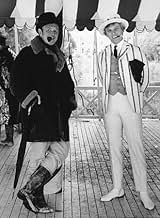
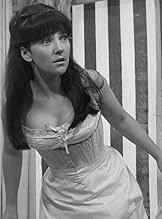
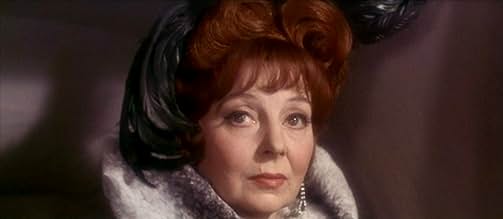
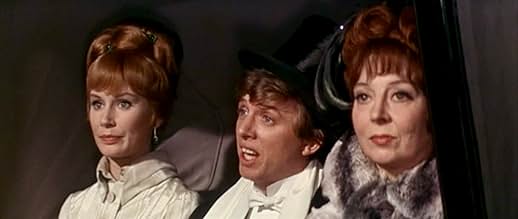
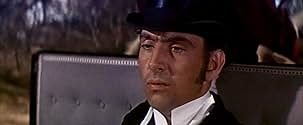
Arthur Kipps, an orphan apprenticed to a tyrannical owner of a mercantile, has a sudden abrupt change of life when his wealthy grandfather dies and leaves him a pile of money.Arthur Kipps, an orphan apprenticed to a tyrannical owner of a mercantile, has a sudden abrupt change of life when his wealthy grandfather dies and leaves him a pile of money.Arthur Kipps, an orphan apprenticed to a tyrannical owner of a mercantile, has a sudden abrupt change of life when his wealthy grandfather dies and leaves him a pile of money.
- Director
- Writers
- Stars
- Nominated for 1 BAFTA Award
- 2 nominations total
- Director
- Writers
- All cast & crew
- Production, box office & more at IMDbPro
6.4960
1
2
3
4
5
6
7
8
9
10
Featured reviews
Lively Tuneful Big Budget Musical
"Half a Sixpence" was a product of the age of big budget musicals that began with the success of "The Sound of Music" and died when such clunkers as "Mame" and "Man of La Mancha" appeared. As such, the film both benefited and suffered. The benefits were a generous budget that is apparent on screen in the period costumes and sets, the lush photography of the English countryside, and the large cast. Just renting all the antique cars as background for one short scene must have cost a fortune. However, the film also suffered as it was lost in the glut of these big budget musicals, which were often mediocre, and its star, Tommy Steele, did not have the name or the charisma to carry it alone as the cast is largely unknown. The film also suffered from the obligatory over-length and intermission, which were required at the time in order to justify reserved seat engagements for these "event" films. The movie has been seldom seen, at least in the U.S., which is unfortunate because "Half a Sixpence" is a lively family film with a tuneful score, energetic choreography, and an engaging cast. Also, director George Sidney is a veteran of MGM musicals, and he knows how to stage a number. True, the story of how boorish, snotty, and unhappy the rich are, while the poor are fun loving, generous, and content with their lot, has been done to death (see "Titanic"). However, the film's assets lie where a musical's assets should be: in the songs, the dancing, and the performers. On those counts, the film is a winner.
Banging On The Big Bass Drum
Half A Sixpence is a musical adapted from the H.G. Wells story Kipps which Michael Redgrave played the title role back in a 1941 film version. I'm sure his interpretation of the role differed quite a bit from the boisterous styling of Tommy Steele in this film. They're so different in personality types.
It wasn't Wells the interpreter of the scientific future who wrote Kipps, but rather the Wells who was the Fabian Socialist. In a way this should be seen back to back with Pygmalion or My Fair Lady if you will. Some of the same themes were also done American style in The Unsinkable Molly Brown.
George Bernard Shaw when he wrote Pygmalion did the exact reverse of what Wells did in Kipps. That other noted Fabian Socialist took the flower girl Eliza and had her schooled in manners by the overbearing Henry Higgins to improve her station. Her economic status doesn't improve any, unless you figure she might marry well like the Freddy Eynsford-Hill character. She speaks well enough to fit in with his crowd.
But the exact opposite happens to Arthur Kipps. He's of illegitimate birth, apprenticed as a draper's assistant and living in the basement of his employer's store with other apprentices. But one fine day, Arthur's ship comes in, a grandfather leaves him an inheritance and a guaranteed annual income.
But unlike Audrey Hepburn, Tommy Steele is still at heart from the lower classes. So the story of Half A Sixpence is his personal struggle to find his place. That could be with a girl of his own class, Julia Foster or the previous unattainable Penelope Horner. Give you one guess where Steele winds up.
Half A Sixpence ran on Broadway for 511 performances in the 1965-66 season with Tommy Steele in the title role there. Steele's infectious style of performing is awfully hard to resist. Though he started out as a rock and roll singer, a British answer to Elvis Presley, Steele is really from the great tradition of Music Hall performers in the United Kingdom.
The socialist polemics are kept to a minimum here, I can't speak for how Wells originally wrote Kipps or how Michael Redgrave played it back in the day. But his points do come across and come across most entertainingly.
It wasn't Wells the interpreter of the scientific future who wrote Kipps, but rather the Wells who was the Fabian Socialist. In a way this should be seen back to back with Pygmalion or My Fair Lady if you will. Some of the same themes were also done American style in The Unsinkable Molly Brown.
George Bernard Shaw when he wrote Pygmalion did the exact reverse of what Wells did in Kipps. That other noted Fabian Socialist took the flower girl Eliza and had her schooled in manners by the overbearing Henry Higgins to improve her station. Her economic status doesn't improve any, unless you figure she might marry well like the Freddy Eynsford-Hill character. She speaks well enough to fit in with his crowd.
But the exact opposite happens to Arthur Kipps. He's of illegitimate birth, apprenticed as a draper's assistant and living in the basement of his employer's store with other apprentices. But one fine day, Arthur's ship comes in, a grandfather leaves him an inheritance and a guaranteed annual income.
But unlike Audrey Hepburn, Tommy Steele is still at heart from the lower classes. So the story of Half A Sixpence is his personal struggle to find his place. That could be with a girl of his own class, Julia Foster or the previous unattainable Penelope Horner. Give you one guess where Steele winds up.
Half A Sixpence ran on Broadway for 511 performances in the 1965-66 season with Tommy Steele in the title role there. Steele's infectious style of performing is awfully hard to resist. Though he started out as a rock and roll singer, a British answer to Elvis Presley, Steele is really from the great tradition of Music Hall performers in the United Kingdom.
The socialist polemics are kept to a minimum here, I can't speak for how Wells originally wrote Kipps or how Michael Redgrave played it back in the day. But his points do come across and come across most entertainingly.
Fantastic Musical. Brilliant Banjo Scene
This is a very well acted and energetic musical. Tommy Steel and Julie Foster in the lead parts were brilliantly cast.
The banjo scene in this was well choreographed, put together and acted out. To top the whole scene the banjo playing was superb.
A brilliant family musical it gets a 10/10 from us. But then we are Tommy Steele fans.
The banjo scene in this was well choreographed, put together and acted out. To top the whole scene the banjo playing was superb.
A brilliant family musical it gets a 10/10 from us. But then we are Tommy Steele fans.
10jg26
Magnificent Entertainment!
A fabulous musical which I first saw at the age of 11 (back in 1967). In fact I saw this film at least 5 times back then. As a young lad I was also very struck by the appearance of Julia Foster, she was, my first heart throb! (along with Hayley Mills).
This film has great songs, great acting (if a little over the top by Mr Steele, great sets and locations, and great colour. It's very well directed to boot! A must see for all musical lovers and admirers of Miss Foster!
A uniquely English film. Terrific!
This film has great songs, great acting (if a little over the top by Mr Steele, great sets and locations, and great colour. It's very well directed to boot! A must see for all musical lovers and admirers of Miss Foster!
A uniquely English film. Terrific!
An energetic and charming musical!
Master showmen were at work in the production of this perhaps over long but nevertheless delightful picture. It would be impossible to visualise the film without the warm performance of Tommy Steele, and it was an inspired move to bring in George Sidney, one of Hollywood's finest directors of musicals, to give the picture a very special flare. The budget was obviously huge and it all shows on the screen in the very lively production numbers, especially those shot on location. A super piece of screen entertainment which stands up well to occasional re-watching.
Did you know
- TriviaAfter the critical and commercial failure of the film, director George Sidney retired from directing at the age of only 51.
- GoofsIn the song, "Money to Burn", where Kipps (Tommy Steele) is playing the banjo, it's obvious that he's simply playing along to an audio track. But the sound begins several times before he does the strumming to make it happen. This should have been watched/caught in the editing process.
- Quotes
Harry Chitterlow: Don't forget old Harry. For £100, I'll let you have a quarter share of my new play.
Arthur Kipps: A quarter share? I'll take half!
Harry Chitterlow: Spoken like a gent!
- ConnectionsFeatured in The 100 Greatest Musicals (2003)
- How long is Half a Sixpence?Powered by Alexa
Details
- Release date
- Country of origin
- Language
- Also known as
- Tatsız Miras
- Filming locations
- Aylesford, Kent, England, UK(village where Kipps grows up)
- Production company
- See more company credits at IMDbPro
- Runtime
- 2h 23m(143 min)
- Aspect ratio
- 2.35 : 1
Contribute to this page
Suggest an edit or add missing content