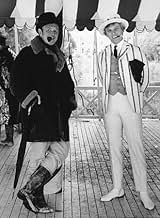
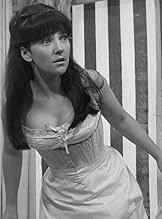
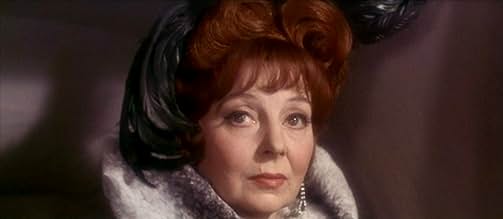
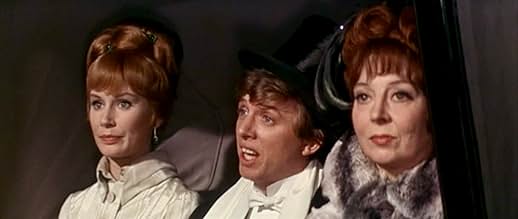
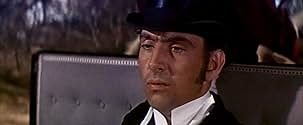
Arthur Kipps, an orphan apprenticed to a tyrannical owner of a mercantile, has a sudden abrupt change of life when his wealthy grandfather dies and leaves him a pile of money.Arthur Kipps, an orphan apprenticed to a tyrannical owner of a mercantile, has a sudden abrupt change of life when his wealthy grandfather dies and leaves him a pile of money.Arthur Kipps, an orphan apprenticed to a tyrannical owner of a mercantile, has a sudden abrupt change of life when his wealthy grandfather dies and leaves him a pile of money.
- Director
- Writers
- Stars
- Nominated for 1 BAFTA Award
- 2 nominations total
- Director
- Writers
- All cast & crew
- Production, box office & more at IMDbPro
6.4960
1
2
3
4
5
6
7
8
9
10
Featured reviews
Banging On The Big Bass Drum
Half A Sixpence is a musical adapted from the H.G. Wells story Kipps which Michael Redgrave played the title role back in a 1941 film version. I'm sure his interpretation of the role differed quite a bit from the boisterous styling of Tommy Steele in this film. They're so different in personality types.
It wasn't Wells the interpreter of the scientific future who wrote Kipps, but rather the Wells who was the Fabian Socialist. In a way this should be seen back to back with Pygmalion or My Fair Lady if you will. Some of the same themes were also done American style in The Unsinkable Molly Brown.
George Bernard Shaw when he wrote Pygmalion did the exact reverse of what Wells did in Kipps. That other noted Fabian Socialist took the flower girl Eliza and had her schooled in manners by the overbearing Henry Higgins to improve her station. Her economic status doesn't improve any, unless you figure she might marry well like the Freddy Eynsford-Hill character. She speaks well enough to fit in with his crowd.
But the exact opposite happens to Arthur Kipps. He's of illegitimate birth, apprenticed as a draper's assistant and living in the basement of his employer's store with other apprentices. But one fine day, Arthur's ship comes in, a grandfather leaves him an inheritance and a guaranteed annual income.
But unlike Audrey Hepburn, Tommy Steele is still at heart from the lower classes. So the story of Half A Sixpence is his personal struggle to find his place. That could be with a girl of his own class, Julia Foster or the previous unattainable Penelope Horner. Give you one guess where Steele winds up.
Half A Sixpence ran on Broadway for 511 performances in the 1965-66 season with Tommy Steele in the title role there. Steele's infectious style of performing is awfully hard to resist. Though he started out as a rock and roll singer, a British answer to Elvis Presley, Steele is really from the great tradition of Music Hall performers in the United Kingdom.
The socialist polemics are kept to a minimum here, I can't speak for how Wells originally wrote Kipps or how Michael Redgrave played it back in the day. But his points do come across and come across most entertainingly.
It wasn't Wells the interpreter of the scientific future who wrote Kipps, but rather the Wells who was the Fabian Socialist. In a way this should be seen back to back with Pygmalion or My Fair Lady if you will. Some of the same themes were also done American style in The Unsinkable Molly Brown.
George Bernard Shaw when he wrote Pygmalion did the exact reverse of what Wells did in Kipps. That other noted Fabian Socialist took the flower girl Eliza and had her schooled in manners by the overbearing Henry Higgins to improve her station. Her economic status doesn't improve any, unless you figure she might marry well like the Freddy Eynsford-Hill character. She speaks well enough to fit in with his crowd.
But the exact opposite happens to Arthur Kipps. He's of illegitimate birth, apprenticed as a draper's assistant and living in the basement of his employer's store with other apprentices. But one fine day, Arthur's ship comes in, a grandfather leaves him an inheritance and a guaranteed annual income.
But unlike Audrey Hepburn, Tommy Steele is still at heart from the lower classes. So the story of Half A Sixpence is his personal struggle to find his place. That could be with a girl of his own class, Julia Foster or the previous unattainable Penelope Horner. Give you one guess where Steele winds up.
Half A Sixpence ran on Broadway for 511 performances in the 1965-66 season with Tommy Steele in the title role there. Steele's infectious style of performing is awfully hard to resist. Though he started out as a rock and roll singer, a British answer to Elvis Presley, Steele is really from the great tradition of Music Hall performers in the United Kingdom.
The socialist polemics are kept to a minimum here, I can't speak for how Wells originally wrote Kipps or how Michael Redgrave played it back in the day. But his points do come across and come across most entertainingly.
10jg26
Magnificent Entertainment!
A fabulous musical which I first saw at the age of 11 (back in 1967). In fact I saw this film at least 5 times back then. As a young lad I was also very struck by the appearance of Julia Foster, she was, my first heart throb! (along with Hayley Mills).
This film has great songs, great acting (if a little over the top by Mr Steele, great sets and locations, and great colour. It's very well directed to boot! A must see for all musical lovers and admirers of Miss Foster!
A uniquely English film. Terrific!
This film has great songs, great acting (if a little over the top by Mr Steele, great sets and locations, and great colour. It's very well directed to boot! A must see for all musical lovers and admirers of Miss Foster!
A uniquely English film. Terrific!
A must for all Tommy Steele fans.
If you're a fan of Tommy Steele this is a must watch movie. It's Tommy at his best. If you're a fan of musicals then this has to be on your list. It's warm, funny and has a great feel-good factor. Watch it when you're feeling down, you're bound to feel better.
Dazzling British Musical
I "accidentally" discovered HALF A SIXPENCE during 1979 on the late movie on NYC's Channel 5. I turned it on just before the "Half a Sixpence" number between Tommy Steele and Julia Foster. I didn't get to see it all, but years later it was shown on the Disney Channel. What a great movie! Great choreography (Gillian Lynne of CATS fame), charming actors playing the leads, and all that beautiful on-location photography in England! Tommy Steele sets the screen on fire when he lets loose in a dance number, and his star turn in the role of a simple lad who gets too rich too quickly and ends up miserable is believable and touching. Julia Foster is by turns sweet, vulnerable, AND feisty as his love interest, Ann.
The film (based on the London/Bdwy stage show and directed by movie-musical veteran George Sidney) has the look and feel of an old-fashioned MGM musical, which is probably why I loved it so. It seems to be more widely known in the UK - I believe it was more popular there than in the States at the time of its release, and perhaps it gets more TV airings in the UK? It's just too bad that it's not seen more often and appreciated as it deserves.
Great movie, they don't make 'em like this anymore
I remember seeing this movie alot when I was little. They used to show on Tv here in NY in the late 60s and early 70s. I think the first time I first saw it was like in 67 or 68 I was like 5 or 6. The music is great most of the numbers are uplifting and Tommy Steel delivers them wondefully and so does the rest of the cast, especially the the ones with all the dancing like when they sing Money to Burn and Flash Bang Whallop. The one thing I didn't like about this movie was it had a great storyline that should of been developed stronger. The whole thing about the love between Artie and Ann and how it was almost destroyed because of new found wealth and the way it changed him and caused a rift between them and also between him and the boys he worked with could of been emphasized a little stronger. Other than that this movie is a gem, a wonderful, romping musical that you can watch with your whole family because theres's no excessive violence, sex or crude humor o
Did you know
- TriviaAfter the critical and commercial failure of the film, director George Sidney retired from directing at the age of only 51.
- GoofsIn the song, "Money to Burn", where Kipps (Tommy Steele) is playing the banjo, it's obvious that he's simply playing along to an audio track. But the sound begins several times before he does the strumming to make it happen. This should have been watched/caught in the editing process.
- Quotes
Harry Chitterlow: Don't forget old Harry. For £100, I'll let you have a quarter share of my new play.
Arthur Kipps: A quarter share? I'll take half!
Harry Chitterlow: Spoken like a gent!
- ConnectionsFeatured in The 100 Greatest Musicals (2003)
- How long is Half a Sixpence?Powered by Alexa
Details
- Release date
- Country of origin
- Language
- Also known as
- Tatsız Miras
- Filming locations
- Aylesford, Kent, England, UK(village where Kipps grows up)
- Production company
- See more company credits at IMDbPro
- Runtime
- 2h 23m(143 min)
- Aspect ratio
- 2.35 : 1
Contribute to this page
Suggest an edit or add missing content