Release calendarTop 250 moviesMost popular moviesBrowse movies by genreTop box officeShowtimes & ticketsMovie newsIndia movie spotlight
    What's on TV & streamingTop 250 TV showsMost popular TV showsBrowse TV shows by genreTV news
    What to watchLatest trailersIMDb OriginalsIMDb PicksIMDb SpotlightFamily entertainment guideIMDb Podcasts
    OscarsBest Of 2025Holiday Watch GuideGotham AwardsCelebrity PhotosSTARmeter AwardsAwards CentralFestival CentralAll events
    Born todayMost popular celebsCelebrity news
    Help centerContributor zonePolls
For industry professionals
  • Language
  • Fully supported
  • English (United States)
    Partially supported
  • Français (Canada)
  • Français (France)
  • Deutsch (Deutschland)
  • हिंदी (भारत)
  • Italiano (Italia)
  • Português (Brasil)
  • Español (España)
  • Español (México)
Watchlist
Sign in
  • Fully supported
  • English (United States)
    Partially supported
  • Français (Canada)
  • Français (France)
  • Deutsch (Deutschland)
  • हिंदी (भारत)
  • Italiano (Italia)
  • Português (Brasil)
  • Español (España)
  • Español (México)
Use app
  • Cast & crew
  • User reviews
  • Trivia
  • FAQ
IMDbPro

Herostratus

  • 1967
  • 2h 22m
IMDb RATING
6.7/10
498
YOUR RATING
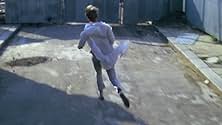
Gabriella Licudi in Herostratus (1967)
TragedyDrama

When young poet Max (Michael Gothard) hires a marketing company to turn his suicide-by-jumping into a mass-media spectacle, he finds that his subversive intentions are quickly diluted into a... Read allWhen young poet Max (Michael Gothard) hires a marketing company to turn his suicide-by-jumping into a mass-media spectacle, he finds that his subversive intentions are quickly diluted into a reactionary gesture, and his motivations are revealed as a desperate attempt to seek atte... Read allWhen young poet Max (Michael Gothard) hires a marketing company to turn his suicide-by-jumping into a mass-media spectacle, he finds that his subversive intentions are quickly diluted into a reactionary gesture, and his motivations are revealed as a desperate attempt to seek attention through celebrity.
  • Director
    • Don Levy
  • Writers
    • Alan Daiches
    • Don Levy
  • Stars
    • Michael Gothard
    • Gabriella Licudi
    • Peter Stephens
  • See production info at IMDbPro
  • IMDb RATING
    6.7/10
    498
    YOUR RATING
    • Director
      • Don Levy
    • Writers
      • Alan Daiches
      • Don Levy
    • Stars
      • Michael Gothard
      • Gabriella Licudi
      • Peter Stephens
    • 14User reviews
    • 12Critic reviews
  • See production info at IMDbPro
  • See production info at IMDbPro
  • Photos199

    View Poster
    View Poster
    View Poster
    View Poster
    + 195
    View Poster

    Top Cast16

    Edit
    Michael Gothard
    Michael Gothard
    • Max
    Gabriella Licudi
    Gabriella Licudi
    • Clio
    Peter Stephens
    • Farson
    Antony Paul
    • Pointer
    Mona Hammond
    Mona Hammond
    • Sandy
    • (as Mona Chin)
    Helen Mirren
    Helen Mirren
    • Advert Woman
    Brigitte St. John
    • Dancer
    Malcolm Muggeridge
    Malcolm Muggeridge
    • Radio Presenter
    • (voice)
    Hilda Marvin
    Vivienne Myles
    Ines Levy
    • Woman in Black Leather
    Charlotte Bremer-Wolff
      Max Latimer
      Richard Huggett
      Allen Ginsberg
      Allen Ginsberg
      • Poet
      • (voice)
      Fred Wood
      Fred Wood
      • Patient on Bed
      • (uncredited)
      • Director
        • Don Levy
      • Writers
        • Alan Daiches
        • Don Levy
      • All cast & crew
      • Production, box office & more at IMDbPro

      User reviews14

      6.7498
      1
      2
      3
      4
      5
      6
      7
      8
      9
      10

      Featured reviews

      kip-34

      an extraordinary,disturbing and haunting movie

      A surreal exploration of the potential endgame of the cynical capitalism behind Swinging London - and a vague play on the Faustian legend. A young man sells his suicide to an advertising agency in return for a month of luxury. The agency will market his suicide to advertisers, filming his jump from a high building past their posters in the windows. The price gets higher the nearer the ground. As a film it illustrated the hard edge to those loose days; I saw it in 1968 at the Everyman Cinema in Hampstead. Several people fled during some highly graphic abbatoir close-ups. Some of the acted images have never left me, particularly the hero walking into the agency director's office carrying an axe and sinking it into his desk. What a way to get attention! 35 years later I would really like to see this film again but for some reason it seems to have disappeared without trace ... Don Levy - you out there?
      esotericbonanza

      A viewing experience like no other.

      A somewhat avant-garde and confusing - in the best possible way - drama that has proved itself to be remarkably prescient and another fantastic gem in the BFI's series of British rediscoveries.

      Combining satire and tragedy, and starring the brilliant Michael Gothard, this is a blazing account of how acts of genuine rebellion are ultimately destined to be commodified and sanitised and deserves to be appreciated by a wider audience looking for drama presented in an offbeat manner.
      9lousardonis

      Synopses from original brochure and from 1972 LA FILMEX

      Don Levy passed away in 1986. I was a close friend of his and film student when he taught at Harvard (1968-1970). In 1972, I secured the North American distribution rights to Herostratus. The film was invited to screen in the 2nd Annual Los Angeles Film Exposition (FILMEX) in 1972. It screened at midnight (the perfect time) on Friday, November 17. Kevin Thomas in the Los Angeles Times wrote an excellent review in the week leading up to the screening. Thomas was very impressed by this groundbreaking film. Another interesting anecdote about Herostratus is that Paddy Chayefsky saw the screening at FILMEX and then wrote Network (released in 1976) – a very-much more tame treatment of a more-than-similar subject matter. Below I've included two synopses of the film. The first comes from the original brochure, which was passed out at the many European film festivals in which Herostratus was shown. The second was taken from the 1972 LA FILMEX brochure.

      A film by Don Levy (1967)

      Herostratus is the first feature film by Don Levy whose short films have been distinguished by their original technique and penetrating approach to their subject.

      Herostratus is in the same tradition. The story, on the surface, seems simple. A young man wants to commit suicide publicly and in the presence of as many people as possible. He persuades a public relations firm to exploit the event…then he changes his mind…but by this time other forces are active and he is no longer in control of the situation.

      Levy exposes his characters and their motives layer by layer. He does so in the context of a society whose aims and aspirations are centered on private gain and personal success, virtually at any price; in this society the idealism and humanism which can unify a country after a war are rapidly displaced by destructive self-interest. It is not enough, in Levy's view, to say that war is hell. One must go deeper, find the causes, and attack them.

      Herostratus, essentially a film d'auteur, is technically dazzling, but never in a gratuitous or bravura sense. Levy alternates "one-take" scenes (designed to gain the greatest response from the actors, who improvised their dialogue) with short scenes and "threshold" sequences making, in Levy's words, an intricate network of emotional references.

      Herostratus takes its title from the legendary figure who burnt down the temple of Artemis in Ephesus, one of the Seven Wonders of the World, in a bid to gain immortality by some great feat of destruction in the manner of the conquerors. On the same night Alexander the Great was born.

      From the brochure of the 2nd Annual Los Angeles FILMEX (1972), written by Richard Whitehall:

      A British masterpiece of underground cinema seems almost a contradiction in terms, yet Don Levy, with his first feature, has broken through those literary traditions on which the British cinema has been so firmly founded. Under the greatest of difficulties (more than six years from conception to completion), and a minimal budget ($25,000) Levy has produced a dazzling film d'auteur quite unlike any other film ever made. Long takes, through which the actors improvise brilliantly, alternate with clusters of staccato, sometimes subliminal imagery as Levy explores the ramifications and resonances of his theme: the revolt of a young failed poet against the horrors and corruptions of society, and the means he takes to make his protest known.

      This theme becomes a visual mosaic of emotional cross-references, combining an apparent linear form, in which sequences seem to follow a chronological order, with an abstract and metaphoric visual structure in which the magnificently composed and edited images are placed in emotional and intellectual juxtaposition and conflict. Levy, filmmaker, painter, scientist, and now on the faculty of California Institute of the Arts, has produced one of that handful of films which has changed the contemporary conceptions of narrative cinema.

      Distribution problems may have kept Herostratus from general audiences, but its impact on filmmakers, especially in western Europe, has been profound. Its influence may be seen not only in the revitalized German cinema of "Junge Deutscher Film" but also in Kubrick's A Clockwork Orange.
      rogerdarlington

      You'll never see a film like it

      The 1960s was a weird time with lots of cultural experimentation. So, as a 20 year old in 1968, I went along to the Manchester Film Theatre to see this British independent avant-garde film with an open mind. I found it one of the strangest movies I'd seen but described it in my diary as "superb" and commented: "I would certainly like to see it again." Yet, for the next 40 years, the film was inaccessible and only in 2007 did the British Film Institute intervene to make it available once more. It took me another five years to rent it via Lovefilm. But, in all that time, the stunning imagery lived with me and in particular I was haunted by a scene towards the end in which a woman (Gabriella Licudi) sobs in despair.

      Written and directed by Don Levy, it was the only full-length film he ever made and it is a long (142 minutes) and slow work distinguished by its innovativeness and opacity. The narrative is pretty minimal and therefore can be briefly stated: a very angry young man called Max (Michael Gothard) decides he has had enough of life and offers an advertising company the opportunity to exploit his public suicide. This explains the erudite title: Herostratus was an Ancient Greek arsonist who destroyed the Temple of Artemis, one of the Seven Wonders of the Ancient World, and his name has become a metonym for someone who commits a criminal act in order to become famous.

      The film looks and sounds amateurish and indeed had a tiny budget (but took six years from conception to completion). However, clearly Levy wanted some of the dialogue to be hard to hear and some of the scenes to be difficult to watch. One of the most startling and memorable sequences inter cuts the dancing of a sexy woman with the butchering of a dead animal and one of the most inexplicable (but again memorable) images is of a parasol-carrying woman clad in black with a white face. This is a work full of odd interjections ranging from the voice of the elderly Malcom Muggeridge to a near-wordless burlesque by a very young Helen Mirren in her first film role. There are extracts from semi-contemporary newsreels scattered about the film which seem to be inviting us to question what kind of world we have created.

      Seeing "Herostratus" after such a long interval and at the more mature age of 66, I found that I was less tolerant of the pretentiousness of the whole thing but still captivated by the bewildering images. Also I was disturbed to read after the viewing that both the director and the lead actor subsequently committed suicide.
      6gohb

      Sadly, dated

      In its time this movie must have been a mind-blowing experience. It's still worth seeing for its overall bravura and the performances of Michael Gothard and (in a lesser role) Mona Hammond. But in 2022 it has little we haven't seen many times over. The experimental style, the critique of capitalist exploitation, the existential dread, the failures of history...you know the drill. It's all as true as it ever was, of course, but there are subtler and less pretentious ways of telling the story now. The film is also frighteningly sexist, in a way that was acceptable in the late 1960s but no longer. And dare I say it, the protagonist's emotional story arc was hackneyed even then. I'll admit, though, that the ending was a genuine surprise, the most thoughtful part of the film for me.

      More like this

      McEnroe
      7.0
      McEnroe
      Colpo rovente
      5.6
      Colpo rovente
      Miss Julie
      6.9
      Miss Julie
      A Midsummer Night's Dream
      6.5
      A Midsummer Night's Dream
      The Philanthropist
      6.8
      The Philanthropist
      The Guest
      7.1
      The Guest
      Age of Consent
      6.3
      Age of Consent
      Bellamira
      6.1
      Bellamira
      Hamlet
      6.9
      Hamlet
      Savage Messiah
      6.9
      Savage Messiah
      Cousin Bette
      7.9
      Cousin Bette
      Private Affairs
      Private Affairs

      Related interests

      Casey Affleck and Michelle Williams in Manchester by the Sea (2016)
      Tragedy
      Naomie Harris, Mahershala Ali, Janelle Monáe, André Holland, Herman Caheej McGloun, Edson Jean, Alex R. Hibbert, and Tanisha Cidel in Moonlight (2016)
      Drama

      Storyline

      Edit

      Did you know

      Edit
      • Trivia
        Helen Mirren's debut.
      • Connections
        Edited from Nazi Concentration and Prison Camps (1945)

      Top picks

      Sign in to rate and Watchlist for personalized recommendations
      Sign in

      FAQ12

      • How long is Herostratus?Powered by Alexa

      Details

      Edit
      • Release date
        • June 1967 (United Kingdom)
      • Country of origin
        • United Kingdom
      • Language
        • English
      • Also known as
        • Det sköna livet
      • Production companies
        • BFI Experimental Film Fund
        • British Broadcasting Corporation (BBC)
        • I Films
      • See more company credits at IMDbPro

      Tech specs

      Edit
      • Runtime
        • 2h 22m(142 min)
      • Color
        • Black and White
      • Sound mix
        • Mono

      Contribute to this page

      Suggest an edit or add missing content
      • Learn more about contributing
      Edit page

      More to explore

      Recently viewed

      Please enable browser cookies to use this feature. Learn more.
      Get the IMDb App
      Sign in for more accessSign in for more access
      Follow IMDb on social
      Get the IMDb App
      For Android and iOS
      Get the IMDb App
      • Help
      • Site Index
      • IMDbPro
      • Box Office Mojo
      • License IMDb Data
      • Press Room
      • Advertising
      • Jobs
      • Conditions of Use
      • Privacy Policy
      • Your Ads Privacy Choices
      IMDb, an Amazon company

      © 1990-2025 by IMDb.com, Inc.