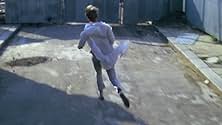
When young poet Max (Michael Gothard) hires a marketing company to turn his suicide-by-jumping into a mass-media spectacle, he finds that his subversive intentions are quickly diluted into a... Read allWhen young poet Max (Michael Gothard) hires a marketing company to turn his suicide-by-jumping into a mass-media spectacle, he finds that his subversive intentions are quickly diluted into a reactionary gesture, and his motivations are revealed as a desperate attempt to seek atte... Read allWhen young poet Max (Michael Gothard) hires a marketing company to turn his suicide-by-jumping into a mass-media spectacle, he finds that his subversive intentions are quickly diluted into a reactionary gesture, and his motivations are revealed as a desperate attempt to seek attention through celebrity.
- Director
- Writers
- All cast & crew
- Production, box office & more at IMDbPro
Featured reviews
Sadly, dated
an extraordinary,disturbing and haunting movie
A viewing experience like no other.
Combining satire and tragedy, and starring the brilliant Michael Gothard, this is a blazing account of how acts of genuine rebellion are ultimately destined to be commodified and sanitised and deserves to be appreciated by a wider audience looking for drama presented in an offbeat manner.
Visually bold British experimental work, back from oblivion
This British underground film was unseen for close to forty years before it was resurrected by the BFI. It is a very odd film indeed, pretty much fully an avant-garde piece. The story-line is essentially quite basic and not a huge amount of plot really happens, which for a 142min film is unusual. For me, by far the most interesting thing about this one was its visual ideas. It's a film which is relentlessly experimental in approach with elements of surrealism. The memorable visuals are often achieved by way of very bold editing techniques used throughout, where contrasting images are juxtaposed with each other. There is recurring imagery used extensively, including a mysterious black clad woman wandering the backstreets of London, an exotic dancer interspersed with images from a slaughterhouse, old newsreels and many billboard advertisements. There is a hell of a lot more than this as well but this is a film which throws a lot at you and it can be hard recalling precisely everything that occurs. There is a mixture between very long single takes and fast edits, the former are used for dramatic intensity. Michael Gothard is the lead here and he is an actor associated with intense performances, so he is a good fit it has to be said. The film overall is certainly a fascinating watch but it is slow in places and there are patches where it does get a bit tedious. The narrative was semi-interesting but the visual invention is really what it's worth seeing for and it is for sure a film that should be seen by those drawn towards experimental cinema. Look out too for an appearance of a very young Helen Mirren.
cinematic surrealism, scientifically conceived, that often communicates like music
The film is remarkable not only for its very high visual quality (often on the level of the best of Antonioni and Tarkovsky) and for its sometimes innovative relations of sound and image, but also for the attitude and working method of the director: a highly personal and historically deeply rooted concept of surrealism, linked to the scientific method, that shapes the stream of consciousness woven into the narrative into something close to visual music.
I had the opportunity to see this film twice in the 1970's, and thirty years later, images are still vividly present. I'll mention just two: first, the black-clad woman (Ines Levy) lighted from behind, face painted white, carrying a black parasol, seen either slowly stalking out of an alley towards the viewer, or standing on a rooftop, viewed from below, recalling for me drawings by Hans Bellmer. Second, the lengthy hyper-violent sequence in which the protagonist demolishes his paraphernalia-packed apartment. A swaying suspended doll stands out within the jagged rhythms of the editing and will much later in the film be flashed into another key sequence: one example for the rich network of associations that go far beyond story-telling structures. On the soundtrack during the demolition: one of the virulent fugues from Beethoven's MISSA SOLEMNIS.
The film's female lead is named Clio, and CLIO is, in Greek mythology, the muse of history.
HEROSTRATUS does have some flaws, but is by any applicable standards a work of depth and integrity. Had it received more extensive distribution, it might have turned out to be a key film of the late 1960's. It's to be hoped that current plans for a commercial DVD release will soon bear fruit and that this film will receive the (belated) recognition that it richly deserves.
Did you know
- TriviaHelen Mirren's debut.
- ConnectionsEdited from Nazi Concentration and Prison Camps (1945)
- How long is Herostratus?Powered by Alexa
Details
- Runtime
- 2h 22m(142 min)
- Color
- Sound mix