

After a botched assignment, a rice-fetishizing hitman finds himself in conflict with his organization, and one mysterious, dangerous fellow-hitman in particular.After a botched assignment, a rice-fetishizing hitman finds himself in conflict with his organization, and one mysterious, dangerous fellow-hitman in particular.After a botched assignment, a rice-fetishizing hitman finds himself in conflict with his organization, and one mysterious, dangerous fellow-hitman in particular.
- Awards
- 1 win total






Jô Shishido
- Gorô Hanada
- (as Joe Shishido)

Annu Mari
- Misako Nakajô
- (as Anne Mari)

Akira Hisamatsu
- Ophthalmologist
- (as Kôsuke Hisamatsu)
Kôji Seyama
- Restaurant Guest
- (as Takashi Seyama)
7.210.9K
1
2
3
4
5
6
7
8
9
10
Featured reviews
So cool Jarmusch ripped it off
Seijun Suzuki refers to his films as "entertainment" and without critical merit. Yet, this was somewhat tongue in cheek as he stated that critics feel a movie must have a "moral or some social commentary" to be worthy of attention. Be that as it may, "Branded to Kill" is simply a fantastic achievement. Suzuki was working with both a lead man and a script provided to him by the Nikkatsu Corporation. As such, when you evaluate his films, you do so by focusing on the technical merits. Personally, I find his disconnected editing, and surreal lighting styles to be amazing. Suzuki's skill turns what is otherwise a laughable boiler plate film noir into something more. The lighting and editing make the exclamations that the script doesn't, and the decision to shoot the final scene in a boxing ring is brilliant.
It was entertaining to watch person after person jump up and down about the originality of "Ghost Dog" with no mention of the fact that Jarmusch lifted one of the assassination sequences unchanged from "Branded to Kill". Hopefully as more of Suzuki's work comes to DVD, people and critics alike will recognize a blatant tribute when it is given. Suzuki deserves them all.
It was entertaining to watch person after person jump up and down about the originality of "Ghost Dog" with no mention of the fact that Jarmusch lifted one of the assassination sequences unchanged from "Branded to Kill". Hopefully as more of Suzuki's work comes to DVD, people and critics alike will recognize a blatant tribute when it is given. Suzuki deserves them all.
A work of art by master director Seijun Suzuki
Branded to Kill is by far Suzuki's best film. It is my personal favorite crime film. Joe Shishido in his role as Hanada Goro, with his dark black sunglasses and Mauser M712 is one of the coolest characters ever created. The movie has everything, violence, shootouts, car chases, sex, and much much more. The film would likely have been shot in color, however Seijun Suzuki was prohibited from shooting in color due his wild use of colors in past films. The film is still a work of art, and looks beautiful in black and white. The best way I can describe this film is maybe a cross between Alfred Hitchcock and Sergio Leone. An excellent crime thriller not to be missed.
Suzuki dispenses with narrative convention in this acid-jazz noir-ish nightmare
Much has been made of how weird and off-beat Branded to Kill is. However it is important to consider it as part of Suzuki's progression through film-making. Before you can break the rules, you have to master them. Suzuki did so in several of his earlier pictures, from Underworld Beauty to Tattooed Life. And every time he was called to deliver a run of the mill yakuza flick, he infused it with his personal style. More and more he fractured the visual language of cinema every time, until he got rid of it or transformed it into a psychotic beast for Branded to Kill, revealing what lies beneath.
A plot synopsis would read something like this: Jo Shishido is killer Number #3 with ambitions of becoming Number #1. Who is Number #1? Does he even exist? That is until he's called to transport a client safely. The borders between realism and surrealism blur hopelessly at that point and what follows is a nightmarish concoction of beautiful set-pieces that lead up to his final confrontation with Number #1.
Saying that Branded to Kill is weird is an understatement. In turns fascinating, confusing, nonsensical, surrealist, psychotic, thrilling, poetic, nightmarish, confusing, tiring, mind-numbing and exhilarating, it defies description as much as it defies sense. The boundaries of time, space and logic are blurred and all you can do is experience the ride. It doesn't try to make much sense and apparently Suzuki made it up as he went along. The result was to be fired by Nikkatsu Studios for delivering a picture that "made no sense". I don't blame them really. Studios are businesses and Branded to Kill is not a movie with massive appeal. Ahead of its time in that aspect.
Filmed in beautiful black and white, with a languid jazzy score and a film-noir ambiance, Branded to Kill will certainly appeal to people with strange tastes. Don't go in expecting a yakuza action flick (although there are several gunfights and enough action to go along) or you'll be sorely disappointed. As an indication of the uncharted territories Branded to Kill's treads, I'll guesstimate that fans of Eraserhead-era Lynch, Koji Wakamatsu and Singapore Sling's style will appreciate it. I can't say "like it", because ultimately that's between the viewer and Branded to Kill to sort. Either way, it has to be experienced at least once. Just sit back and let the surreal absurdity of it all wash over you...
A plot synopsis would read something like this: Jo Shishido is killer Number #3 with ambitions of becoming Number #1. Who is Number #1? Does he even exist? That is until he's called to transport a client safely. The borders between realism and surrealism blur hopelessly at that point and what follows is a nightmarish concoction of beautiful set-pieces that lead up to his final confrontation with Number #1.
Saying that Branded to Kill is weird is an understatement. In turns fascinating, confusing, nonsensical, surrealist, psychotic, thrilling, poetic, nightmarish, confusing, tiring, mind-numbing and exhilarating, it defies description as much as it defies sense. The boundaries of time, space and logic are blurred and all you can do is experience the ride. It doesn't try to make much sense and apparently Suzuki made it up as he went along. The result was to be fired by Nikkatsu Studios for delivering a picture that "made no sense". I don't blame them really. Studios are businesses and Branded to Kill is not a movie with massive appeal. Ahead of its time in that aspect.
Filmed in beautiful black and white, with a languid jazzy score and a film-noir ambiance, Branded to Kill will certainly appeal to people with strange tastes. Don't go in expecting a yakuza action flick (although there are several gunfights and enough action to go along) or you'll be sorely disappointed. As an indication of the uncharted territories Branded to Kill's treads, I'll guesstimate that fans of Eraserhead-era Lynch, Koji Wakamatsu and Singapore Sling's style will appreciate it. I can't say "like it", because ultimately that's between the viewer and Branded to Kill to sort. Either way, it has to be experienced at least once. Just sit back and let the surreal absurdity of it all wash over you...
Amphetamine logic
I very much suspect that the hung-loose narrative of this film, and indeed much of the content, is a surreal take on prolonged stimulant use. Just as in a contemporary pornographic (filmed or drawn in manga) setting, characters shoot up speed for its sex edge, the main character here sniffs rice instead. The scene in his apartment when he returns back work for example. I'm not saying this is the whole of the film, but it's a possible interpretation. Amphetamines, both then and now, remain a mainstay of gang operations in Japan and use is frowned upon, though secretly tolerated. Provided you don't let yourself go like our hero here and start having imaginary conversations in your head, discovering secret conspiracies etc. This is by no means the whole of the movie, but I don't believe that Suzuki gets the man to sniff rice to indicate his "Japaneseness", whatever that is. Indeed it's his fetishisation of rice that helps indicate him stepping out various structures and confines and towards his eventual demise. The question remains is why the director got him to pad out his cheeks to such an extent...
Dazzling if disorienting crime film packed with goofy quirks - just don't try to make sense of it
The number-three-ranked hit-man (who makes these rankings?), with a fetish for sniffing boiling rice, fumbles his latest job, which puts him into conflict with a mysterious woman whose death wish inspires her to surround herself with dead butterflies and dead birds. Worse danger comes from his own treacherous wife and finally with the number-one-ranked hit-man, known only as a phantom to those who fear his unseen presence. Number One proves to be a nut, willing to go to great lengths to torment his victim, even sleep in the same bed with him. He's also so dedicated to his job that he'll urinate on himself rather than take his eyes off his victim by going to the toilet.
I'm getting used to the idea of a certain type of crime film that is so densely plotted you never quite know what's going on and are forced to give up on it in order to enjoy the picture. American films of this type, such as "The Maltese Falcon," are usually so deftly put together that you don't realize you haven't followed everything until you stop to think about it. Other countries produce films that require a bit more patience. I recently watched the French gangster pic, "Le Doulos" (1962), and learned early to resign myself to semi-confusion.
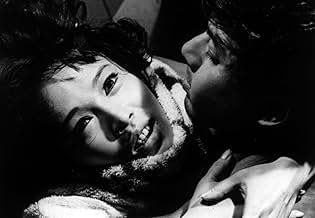
This film, from the nutty Japanese director, Seijun Suzuki, requires a extra level of resignation. Often I couldn't tell what was happening from shot to shot. Suzuki's disorienting style is sometimes marvelous and sometimes irritating; but I can't say I was ever bored. Many of the effects in this sex-and-violence-packed film are dazzling. I especially liked how the femme fatale, in her early close-ups, is perpetually drenched by a downpour whether she's out in the rain or not.
I enjoyed this film, but any viewer can be forgiven for giving up on it and saying, "I don't get it." There's no deep meaning to get. You either abandon yourself to the goofy entertainment being offered, or you don't.
I'm getting used to the idea of a certain type of crime film that is so densely plotted you never quite know what's going on and are forced to give up on it in order to enjoy the picture. American films of this type, such as "The Maltese Falcon," are usually so deftly put together that you don't realize you haven't followed everything until you stop to think about it. Other countries produce films that require a bit more patience. I recently watched the French gangster pic, "Le Doulos" (1962), and learned early to resign myself to semi-confusion.
This film, from the nutty Japanese director, Seijun Suzuki, requires a extra level of resignation. Often I couldn't tell what was happening from shot to shot. Suzuki's disorienting style is sometimes marvelous and sometimes irritating; but I can't say I was ever bored. Many of the effects in this sex-and-violence-packed film are dazzling. I especially liked how the femme fatale, in her early close-ups, is perpetually drenched by a downpour whether she's out in the rain or not.
I enjoyed this film, but any viewer can be forgiven for giving up on it and saying, "I don't get it." There's no deep meaning to get. You either abandon yourself to the goofy entertainment being offered, or you don't.


Did you know
- TriviaWhen Nikkatsu studio executives saw the finished product, they thought it was too terrible to be released, so they shelved it. Seijun Suzuki along with others in the film business, film critics, and students protested in unfairness since, by contract, Nikkatsu was supposed to release the finished film theatrically. It went to court, with a ruling in favor of the director. Nikkatsu had to pay for damages and have the film released. Suzuki's contract with Nikkatsu was terminated, and with the bad reputation, was unable to work on a feature film for the next 10 years.
- Quotes
Misako Nakajô: My dream is to die.
- ConnectionsFeatured in Seijun Suzuki | TCM (2013)
- SoundtracksKoroshi no buruusu (Killing Blues)
Lyrics by Hachiro Guryu (Yasuaki Hangai, Takeo Kimura, Yutaka Okada, Chûsei Sone, Seijun Suzuki, Yôzô Tanaka, Seiichiro Yamaguchi and Atsushi Yamatoya)
Music by Kagehisa Kusui
Sung by Atsushi Yamatoya
- How long is Branded to Kill?Powered by Alexa
Details
- Runtime
- 1h 31m(91 min)
- Color
- Sound mix
- Aspect ratio
- 2.35 : 1
Contribute to this page
Suggest an edit or add missing content